
Last Photograph
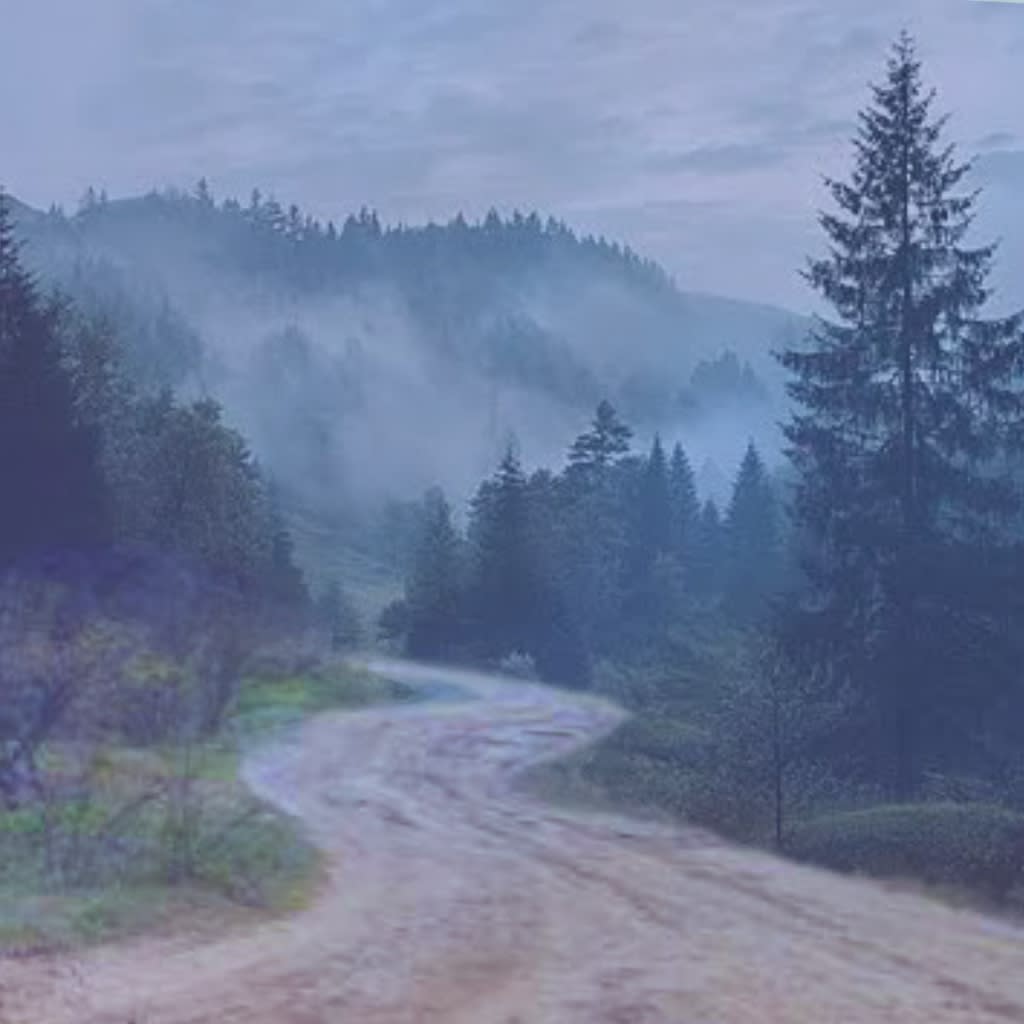
Across a darkened world, people walk toward one another.

I. NEVER SENT
Nora has been writing the message for twenty years. Not the message itself--it only took eleven minutes. It is the courage that has taken twenty years.
She reads the words again. Deletes three. Adds one. Deletes that one too.
Outside her window, rain pitters in the dark, sliding down the glass. Around her, the ordinary machinery of the evening continues: a refrigerator hums; a car passes; somewhere upstairs, a child laughs.
On her screen:
I don't know if you remember...
She stops. Of course he remembers.
She starts again. This time, she doesn't soften it, or explain the twenty years. She doesn't apologize. She writes what she should have said when there was still time to say it, before history stood between them.
Her thumb hovers over SEND.
For a moment, she sees his face like he was then: younger, freer. In her mind's eye, he smiles--a small upturned curl at the corner of his mouth. She presses the button.
The message disappears. The screen: black.
She waits. Nothing. She taps it. Nothing. She presses the power button.
Nothing.
Across the street, a woman steps onto her porch, holding her phone at arm's length.
A car stops in the intersection. The driver gets out and stares at his phone.
Then another person comes outside.
Within minutes, the neighborhood fills with people standing beneath porches, streetlights, doorways, all looking down at the same dead rectangles.
Nora tries hers again. Still nothing. She calls him.
Of course she can't.
She opens her contacts. Black. Messages. Black. Photographs.
Everything black.
The number she hasn't needed to remember in twenty years is gone.
She sits still. For a moment, the loss seems absurdly small beside whatever is happening outside.
Then she understands. She has no idea where he lives.
The rain keeps falling.
Somewhere, billions of screens have gone dark.
And across the planet, people are discovering the same terrible little fact: After years of teaching their phones to remember everything, they forgot to remember for themselves.
II. WORLD WITHOUT THE BLACK BOX
By morning, the world has learned this isn't just a small phone problem--it is a phone problem everywhere. People stand in parking lots, outside offices, in kitchens and train stations, holding phones toward the sky like sunlight might coax them awake. It doesn't.
The internet still works: computers, televisions, satellites continue circling Earth.
But smartphones are silent and dark.
For the first few hours, inconvenience disguises itself as catastrophe: cars stop at intersections because drivers cannot remember the route home; passengers crowd airport counters, asking for information they once carried in their pockets; a restaurant owner writes reservations on a pad of paper; a teenager asks her father for his phone number.
He doesn't know it. She laughs. Then realizes he isn't.
Banks, hospitals and schools open; governments issue statements through television, radio, newspapers, websites, but --
In villages where people still gather around radios, where neighbors know one another's names, where cash changes hands and directions are given with a wave of the arm, the day feels --
ordinary.
Elsewhere, entire systems reveal the tiny dependencies nobody had noticed:
Delivery drivers cannot find addresses; nurses cannot reach patients' families; workers cannot prove identities; travelers cannot retrieve reservations; a mother stands outside a school, waiting for a message that won’t arrive.
By afternoon, people start carrying paper: maps, lists, addresses in notepads, phone numbers written in hurried handwriting.
The old world returns first as an emergency measure, then as necessity.
Then, almost imperceptibly, as a habit.
Nora spends the day searching for him. She calls his old workplace from a landline. Disconnected. She contacts the school they once attended. They have no record she can access. She searches through boxes: letters, anything with an address.
She finds a photograph: they are young. She turns it over: blank on the back. She sits at the kitchen table until dark. The world outside is relearning how to ask questions. Nora has only one:
Where is he?
She doesn't know his number, his address, not even whether he is still alive.
But she remembers something: a place. Not where he lives, but where he once said he wanted to. She has no idea whether he ever got there, but tomorrow, she decides,
she will begin.
III. FIRST PHOTOGRAPH
Three weeks later, the world has stopped waiting for phones to come back.
People have learned to carry watches; businesses keep paper ledgers; radio stations broadcast addresses instead of links; post offices grow crowded again.
On the table, Nora keeps the photograph of herself and the man. By now, she has written his name on scraps of paper--not because she has forgotten it.
Because she is afraid she might.
One night, she wakes to a light in the next room. For a moment, she thinks someone left a lamp on. Then she sees it:
Her phone, screen glowing. No icons, clock, or signal. An image fills the black glass. She doesn't touch it. Just a photograph, grainy, almost old:
A narrow road disappears between mountains, weathered buildings line it, a bus sits parked, and a man stands by the door. She moves closer.
She doesn't know the place, but she knows the man. She reaches for the phone. The screen goes black. She waits. Nothing. She turns the phone over in her hand. Then back again. Dead.
Except it isn't dead anymore.
Nora carries it to the kitchen and places it beside the photograph of herself and the man. For the first time since the phones died, she feels something other than loss. Certainty or hope? No.
Something smaller--a direction.
In the morning, the photo returns. Nora takes both images she has to the library. The librarian studies the mountain, then the road, and the building. She pulls an old atlas from a shelf. She and Nora turn pages together.
Nora expects this to take hours. It takes twelve minutes. The librarian places one finger on the map. There: A REMOTE VALLEY--a road, no longer appearing on modern maps. And beside it, almost too small to read:
WAYSTATION.
Nora copies the name onto a piece of paper, then folds it carefully into her coat pocket, next to her phone. She does not know when it will light again or what it will show, but now it is the only thing in the world that gives her a way to him.
She will carry it. And wait.
IV. FIRST RIPPLE
The waystation, a wooden building beside the old road, stands empty. Not abandoned. Just empty: a bench, a rusted sign, a telephone box with no telephone inside.
Nora stands beneath the photograph she’s carried for three days. The bus is gone. The man is gone, but someone has been here. She knows because there’s a cup on the bench, still wet inside.
Nora asks the farmer at the nearest farmhouse. He studies the photograph, but doesn't recognize the man. Then he studies the road behind him.
He recognizes it.
He tells Nora about the old mountain route, where the buses used to go. Then, almost as an afterthought:
“Someone else was here yesterday—a man, carrying a photograph.”
“What was in it?” Nora asks.
He shakes his head.
“I don't know. He was looking for his sister, I think.”
Nora feels something shift. She takes out her phone--it remains dark.
“Did his phone work?”
The farmer looks at her strangely.
“No. None of them do, but he showed me a photo that appeared on his dead phone. Just one.”
Nora doesn't know what to say, except
"Thank you.”
She continues down the road. That evening, she stops at a small inn. Behind the desk, the innkeeper writes names in a ledger.
Nora recognizes one: a name she has seen before. She asks about it. The innkeeper says the man stayed two nights.
“He was looking for someone.”
“His wife?”
“No.”
“His brother. They haven't spoken in seventeen years.”
Nora looks at the ledger: six other names, all crossed out. All with dates beside them.
“Who are they?” Nora asks.
The innkeeper smiles.
“People looking for people.”
Nora waits for an explanation. None comes. Instead, the innkeeper reaches under the counter and pulls out a photograph of a young woman beside a river.
“Mine showed me this.”
Nora looks at her.
“Did you find her?”
The innkeeper shakes her head.
“Not yet," folding the photograph carefully and sets it beneath the counter.
The next morning, Nora leaves before sunrise. She walks until the road reaches a railway line, where a train awaits. On the platform, dozens of people stand with bags--some carry photographs; others, handwritten addresses. One carries a child's drawing. A man asks for directions. A woman gives them.
Nobody appears frightened—they seem purposeful as they wait. Nora boards and watches them disappear through her window. For the first time, she wonders whether the photographs are not leading people toward what they have lost, but perhaps toward what they forgot they were missing.
V. HUMAN NETWORK
The road to the waystation doesn't exist on phones--it exists in other people's memories: a bus driver knows the first part; an old patron at a roadside café knows where the bus used to stop; a farmer remembers the bridge before the flood took it; a boy, no more than twelve, points toward a mountain — his grandfather calls it the Sleeping Woman.
Each person gives Nora something: a direction, name, warning, a cup of coffee, a ride.
She begins to understand that the world has become a different kind of network: it is slower. It loses things. It makes mistakes. But it answers.
At another train station, Nora sees a man holding a photograph of a young woman standing beside a lake. He asks everyone the same question:
“Have you seen my sister? No, she is not missing. She lives somewhere in another country. We haven't spoken in eleven years.”
Nora looks at the image, then at his dead phone. She shrugs.
A few days later, Nora encounters a woman in a market, carrying a photograph of a little boy.
“My son,” she says.
“Is he missing?”
“No—he is thirty-two. I haven't seen him since he left home, twenty-five years ago.”
Another photograph appears in a village clinic--an old man looks for his brother; another at a road crossing--a young woman searches for the father she has never met.
And Nora begins to participate in connection. Her experience leads her to ask more questions. She discovers not just that people are looking for other people, but that a massive, worldwide migration of reconnection is underway.
“How many?”
“No one knows.”
“Where are they going?”
“Everywhere.”
Without phones, the world has lost the ability to watch itself. No numbers, maps, or websites collect the stories. The movement exists only from one human encounter to the next.
Nora hears about a wall in a city where people have posted names; about a church receiving photographs by mail; about a radio station broadcasting descriptions of people strangers are trying to find.
She hears that someone walked three hundred miles carrying a photograph; that someone else crossed a border; that an old woman took a train to find a friend she hadn't seen since 1964.
Nobody calls it a movement. Nobody calls it anything--They simply keep going.
At night, Nora sleeps with her dead phone beneath her pillow. She doesn't know why. Perhaps because it might light again. Perhaps because it is the only thing that knows where she is going. Perhaps because, after twenty years of silence, she finally has a reason to believe the man is still somewhere ahead.
VI. PHOTOGRAPHS AS MIRROR
Then, one morning, just before dawn, Nora sleeps in a room above a bakery, in a town whose name she cannot pronounce, the phone lights in her coat. She wakes to its light spilling across the ceiling, already lit and displaying the fourth photograph. She reaches for it and stops. This one is different: it’s not of a road or a building, but of two people sitting on the hood of an old car. she recognizes them immediately.
Herself, and him.
They are much younger--twenty years younger.
She remembers the car, the Summer, the argument. What she does not remember is the photograph being taken. She studies their faces.
They are laughing; neither knowing yet what will happen. Neither knows that this will be the last photograph they will ever share.
Nora turns the phone over. The image remains. For the first time, she wonders whether the photographs are showing her where to find him. Or why she must.
Nora thinks of the message she lost on her dead device so long ago, the words she had written so carefully, the thing she had waited twenty years to say. Then she realizes something that frightens her:
She could have written a hundred messages, could have sent photographs, found an old address, asked someone--she could have tried.
But she had done none of those things. She waited for the perfect moment—two decades of longing. Around her, the same strange journey continues:
A man on the radio looks for his brother; a woman in a bus station carries a photograph of her childhood friend; a young man has crossed three borders looking for a father he has never met; an elderly woman has taken a train to the town where her husband grew up.
Some find the people they seek. Some find empty houses. Some, graves. Some, strangers who remember them. Some—simply arrive.
The photographs never promise reunion. They only point.
Go here. Look there. Remember this.
Nora looks again at the photograph on her phone: the two young people on the hood of the car are laughing at something outside the frame.
She wonders what it was. Then she smiles.
Because she remembers.
She drops the phone into her coat. For twenty years, she had thought the distance between them was measured in miles. Now she understands:
It had always been measured in silence.
She leaves the room before sunrise. The road ahead is still dark. But she knows where she is going.
VII. VILLAGE OUTPOST
The fifth photograph comes in the middle of the afternoon. Nora is walking when the phone lights up inside her coat. She stops beneath the shade of an old willow tree. The photograph shows the same mountain as the first image, but now she sees the road, winding around the ridge and disappearing into a valley below.
At the bottom: a cluster of houses. One building stands apart from the others. A small radio tower rises behind it.
The photo vanishes before she can study it further. She doesn't need to.
The bus driver in town knows the place.
“Village outpost.”
He looks at her.
“You know someone there?”
She nods. He doesn't ask who. He drives her as far as the road goes. The rest, she walks.
The village is smaller than she imagined: children play beside a water pump. A woman carries bread from a stone oven. Someone repairs a bicycle beneath a tree. No screens glow in anyone's hands. No one seems to be waiting for anything.
At the edge of the village: the outpost, the radio tower, taller than the building. A man sits outside, mending a fence.
Nora stops. He looks up. For a moment, neither moves.
Twenty years ago, she knew his face better than her own. Now she has to learn it again: he is older.
So is she.
She walks toward him. His hair is gray at the temples, with a scar near his mouth, but his eyes haven't changed. He says her name. Not a question--recognition:
“Nora.”
“Thomas.”
She hasn't heard anyone say his name in twenty years.
Thomas doesn’t ask how she found him. Perhaps the answer would take too long. Perhaps neither of them cares. Nora reaches into her coat. Her phone, still dead.
She takes out something else from her breast pocket: a folded sheet of paper. One she has carried from border to border; one she has kept close so that she could never forget—the last message. She rewrote it by hand somewhere along the road, afraid the words might disappear again.
She gives it to Thomas. He unfolds it, reads.
The village continues around them. A child laughs. A radio crackles. A bicycle bell rings somewhere down the road.
Thomas finishes reading, looks at her. For a long moment, he says nothing.
Then:
“You could have just told me.”
She inhales, as if another thought is ready to spill out, but instead lets out a sigh of relief.
“I know.”
He folds the paper once. Not carefully—just enough to put it away. He steps aside, opening the outpost door. She looks past him. Inside: shelves of radio equipment, paper maps, handwritten lists. And photographs.
Hundreds of them, pinned to the wall: People. Families. Strangers. Faces from every direction.
She steps closer. On the largest map, hundreds of small marks cover the roads. Thomas sees her looking.
“People have been coming here for a long time, looking for people.”
Nora turns toward the photographs.
“How many?”
Thomas looks at the map, his eyes sweeping steadily from mark to mark.
“Don’t know. Neither does anyone.”
For the first time, Nora understands that whatever happened to the world's phones didn’t disconnect humanity. It changed the direction of connection.
People no longer reach through the world, they walk through it.
VIII. LAST PHOTOGRAPH
That night, Thomas and Nora sit outside the village. Her phone lies dark in her palm. Then, for the last time, it lights. A photograph. They both see it:
Her and Thomas.
Older, somewhere they don't recognize, surrounded by people. Some laughing. Some crying. All looking beyond the frame.
Nora turns to Thomas. He looks at the stars. She puts her phone away. She doesn't need to know where the photograph was taken. Somewhere, across the darkened world, people walk toward one another.
And finally, so is she.
About the Creator
Eric Brooks
Puppeteer, musician, and story creator. I bring these together to enhance the brilliant stories that connect us all.
Story Dreamer • Motion Photos
Character Creator • Songwriter
Enjoyed the story? Support the Creator.
Subscribe for free to receive all their stories in your feed. You could also become a paid subscriber, letting them know you appreciate their work.
Comments
There are no comments for this story
Be the first to respond and start the conversation.