
Is AI helping us, or is it making us duller?
Why our problem-solving skills are at risk.

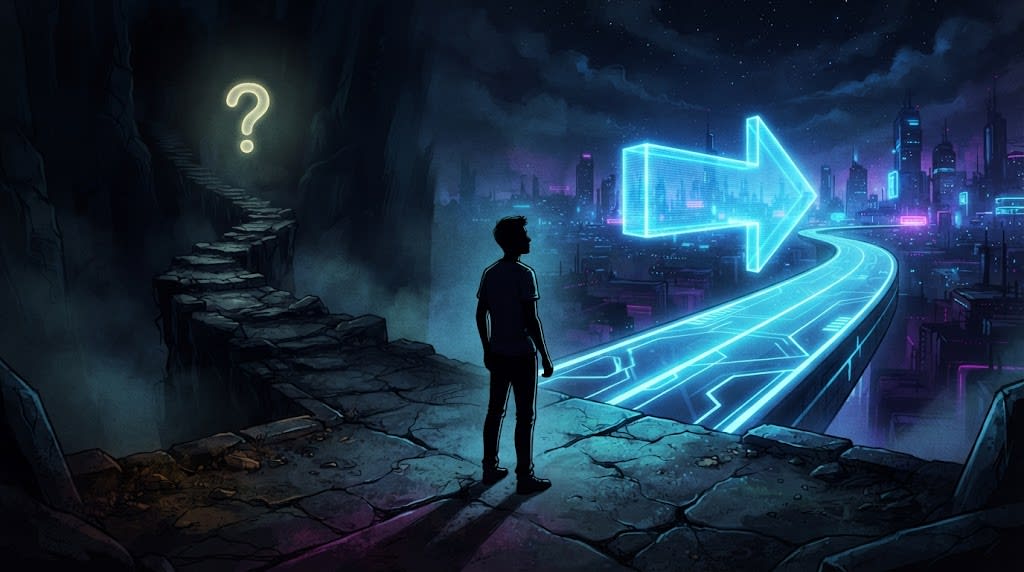
As someone who explores the intricacies of artificial intelligence on a daily basis, writes about it, and uses it professionally, I often ask myself an uncomfortable question: are we, as humans, actually moving forward in the face of such dynamic technological development? Or, in our pursuit of maximum efficiency, are we beginning to fall into a kind of cognitive atrophy? 🤔
The era of the "Oracle" and the end of critical thinking
I remember the days when finding an answer to a complex question required effort. We searched through Google results pages, verified sources, read books, and compared different viewpoints. Today, this process has been radically shortened. For every little thing, we run to a chatbot.
There would be nothing wrong with this if not for the growing phenomenon of uncritically accepting answers. Many users treat AI as an infallible digital oracle. They accept generated text without batting an eye, abandoning fact-checking, logical analysis, or even verifying whether the model is "hallucinating." We are outsourcing our decision-making processes to algorithms, forgetting that true intelligence lies in asking questions, not just consuming ready-made solutions. 🤖
A lesson from Gothic: Why old games taught us how to think
As a 30-year-old raised on classics like the Gothic series, I look back with nostalgia at the modern approach to video games. Back then, games didn't hold our hands. There was no navigation, no "magic quest marker" on the map leading us to our destination like a leash.
The task? Find an item. Location description? "Somewhere west of the old mill." What do you do? You think. You analyze your surroundings. "How do I open this gate? The lever is out of reach... maybe I can shoot it with an arrow?" This was true mental gymnastics. Today, I fear that in the face of games designed like this, many younger players would simply give up, deeming them too difficult. The mechanism for solving problems independently has been replaced by the mechanism of "following the arrow." When you don't have to think about how to overcome an obstacle, you lose the chance to learn how to reason. 🎮
Further examples: Where else are we losing agency?
This phenomenon is visible in many other fields where we used to show ingenuity:
Navigation and orientation: In the past, driving to an unknown place required a paper map or at least remembering key landmarks. Today, if the GPS on a phone fails for five minutes, many people panic, unable to find their way around the city. Our spatial memory is fading because we delegate it entirely to Google Maps. 🗺️
Writing and communication: Once, writing a letter or a report required structuring thoughts into a logical sequence. Today, we throw "keywords" at AI and let the machine give them structure. The result? We increasingly read texts that are "correct" but completely devoid of individual style and depth. We become editors for bots instead of being authors of our own thoughts. ✍️
Purchasing decisions and "algorithmic taste": This phenomenon is clearly visible in how we make consumer choices. In the past, choosing a book, a movie, or a piece of equipment was based on our own research, reading reviews, and comparing different points of view. Today, we increasingly trust algorithms blindly. We search for "Top 10" lists generated by AI instead of evaluating the quality of a product or work ourselves. We entrust our preferences to machines that serve us whatever is most predictable. We stop asking, "Is this valuable to me?" and start accepting what the algorithm fed us as the "best choice."
Technology as a crutch, not a support
The problem is that technology is beginning to serve as a crutch for our natural skills rather than a tool to enhance them. If you use AI to understand a complex issue, you grow. If you use AI to avoid thinking, you regress.
The value added in work and life is not the "quick answer." The value is understanding the process that leads to that answer. As a society, aren't we creating an environment where "easy" becomes synonymous with "better"? In ten years, will we still be able to solve any problem if the power goes out or access to the cloud is lost? 💡
Summary
Technology and AI are powerful tools that undoubtedly improve our professional and daily lives. I am not a technoskeptic—I appreciate progress and use its benefits every day. However, as a creator and a person who values challenges, I am calling for moderation.
Let's not allow convenience to turn off our critical judgment. The next time you face a problem, try to think for yourself for a moment before reaching for the "magical solution" from a chatbot. You might discover that your brain is still capable of solving puzzles—just as you did in Gothic years ago.
I am curious about your opinion. Do you also notice this decline in intellectual independence in your surroundings? Or is it simply a natural evolution of tools that we must adapt to so we don't get left behind? I invite you to discuss this in the comments. 👇
About the Creator
Piotr Nowak
Pole in Italy ✈️ | AI | Crypto | Online Earning | Book writer | Every read supports my work on Vocal
Enjoyed the story? Support the Creator.
Subscribe for free to receive all their stories in your feed.
Comments
There are no comments for this story
Be the first to respond and start the conversation.