
In the galaxy NGC 4486B, astronomers find evidence of an uncommon cosmic event.
NGC 4486B's supermassive black hole

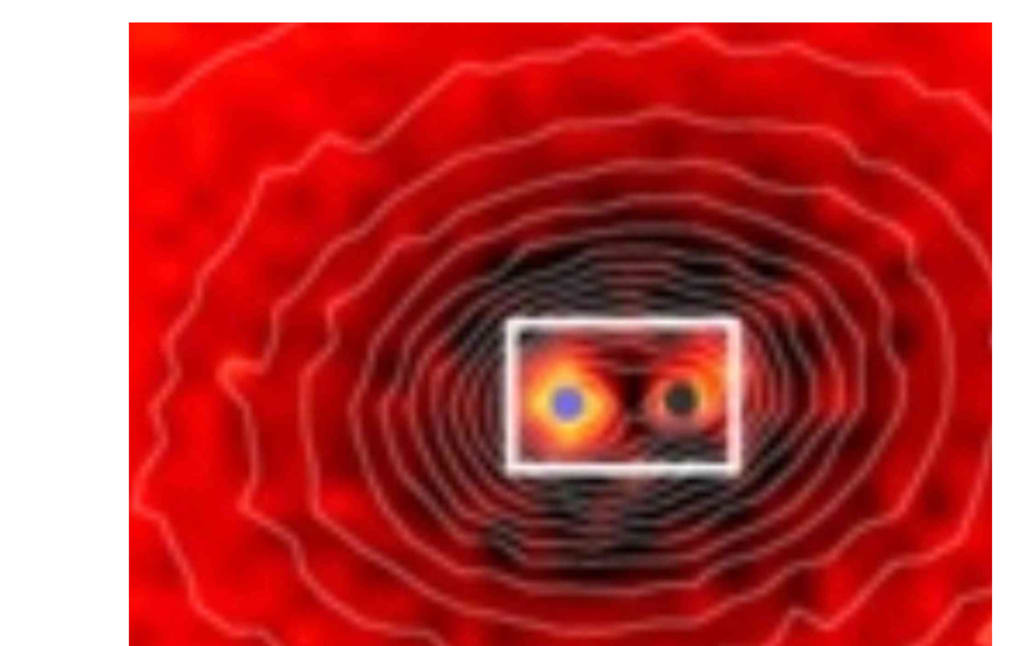
The supermassive black hole in the Virgo Cluster's tiny elliptical galaxy NGC 4486B has been found to be significantly off-center. That observation is in line with what scientists anticipate following the merger of two supermassive black holes. This normally peaceful galaxy is reframed by that displacement as clear proof of the immediate aftermath of a black hole collision.
An askew center
Two brilliant peaks and a massive black hole located roughly 20 light-years from the center of the galaxy were visible on Webb maps of NGC 4486B's nucleus. Behzad Tahmasebzadeh of the University of Michigan (U-M) linked the discrepancy to a recent merger by comparing those motions to earlier Hubble photos.
His team saw that the quickest stellar motion, a sign of the black hole's pull, coincided with the smaller, dimmer peak. The data no longer supported a settled galaxy, with gravity and light pointing to different centers.
NGC 4486B's supermassive black hole
The galaxy's supermassive black hole, or SMBH, weighs 360 million suns, which is enormous for a galaxy with nine billion stars, according to earlier Webb research. Stars accelerate due to the local tightening of gravity caused by that much mass, with the sharpest acceleration occurring off to one side.
The imbalance was further exacerbated by the stars there moving at a speed of roughly 10 miles per second quicker than the stars across from them. When taken as a whole, those disparate motions resemble a recent disruption much more closely than a tidy, settled galaxy in the nearby Virgo Cluster.
Why are there two peaks?
An eccentric nuclear disc, a lopsided ring of stars travelling on long trajectories around the black hole, is one theory. One peak is brighter than the other because stars congregate where they slow down and spread out where they speed through.
This would explain why the fainter spot is closer to the actual event while the brighter point misses the black hole itself. When the twin peaks were initially seen in Hubble photographs in the 1990s, dust or a passing star cluster were ruled out.
The kick concept
The finest match was provided by the leading gravitational-wave kick, a thrust brought on by irregular space-time ripples. The combined black hole recoils and takes a portion of its stellar disc with it if one outburst has higher momentum.
The scientists calculated a sideways speed of about 210 miles per second following the merger using the size of the disc. The thrust was strong enough to move the thing momentarily without ejecting it at that pace.
A disc that was abandoned
Additionally, their models required a large number of retrograde stars near the border of the disturbed core, which move against the main stellar flow. Because the black hole momentarily outruns outlying stars in its own frame, a powerful kick can turn them into backward trajectories.
The fit to Webb's velocity pattern deteriorated by almost 23% when the researchers eliminated those backward orbits from their calculations. Rather, the peculiar stellar pattern appeared more like the outcome of an actual collision than a modelling anomaly.
When to deliver the blow
The length of time a kicked black hole would remain displaced before being drawn back by the galaxy's gravity was next examined using computer models. It resurfaced in around 10 to 80 million years throughout a variety of kick strengths, typically
The return for the preferred shove took roughly 30 million years, which is short enough to require a new offset today. Therefore, the timing turned out to be the most telling indication that the black hole's displacement most likely occurred lately in cosmic terms.
Other concepts tested
To explore if it could replicate the offset, the scientists examined dynamical buoyancy, an outward push from a galaxy's stars. In simulations, the black hole was somewhat moved by such effect, but not far enough or long enough.
Additionally, they investigated if the displaced center might be explained by an unmerged black hole pair, but that image still failed to capture the twin peaks. A merger kick fitted the motion map and the light pattern more perfectly than anything else.
Timing of the Galaxy merger
Since NGC 4486B appears old and settled and shows no obvious signs of a recent galaxy merger, the puzzle remained more difficult. An SMBH pair moving in tandem with the galaxy's rotation may become stuck in a persistent orbital resonance in the simulations.
The final coalescence may have been postponed for hundreds of millions of years following the merger of the galaxies due to that hiatus. Tahmasebzadeh noted, "NGC 4486B appears to be the first system exhibiting multiple observable signatures of a recent SMBH merger."
Insights from the galaxy NGC 4486B
The shallow center of the galaxy, where stars are less crowded than would be expected from an unaltered past, offers another hint. A bound pair can carve a large, flat core and fling neighbouring stars outward before SMBHs join.
That type of emptied middle is seen in NGC 4486B, which lends credence to the theory that two massive black holes originally shared it. When compared to the younger offset, the older damage indicates that the galaxy has marks from two phases of a single merger tale.
Both the more recent indications of a final black hole merger and an older galaxy collision appear to be present in NGC 4486B. The frequency of gigantic black hole mergers and the duration of the indications could be determined by sharper models and more peculiar ones like this one.
About the Creator
Enjoyed the story? Support the Creator.
Subscribe for free to receive all their stories in your feed.
Comments
There are no comments for this story
Be the first to respond and start the conversation.