
In NASA data, AI discovered more than 100 secret exoplanets; hundreds more might be out there.
Using simulation to find new exoplanets

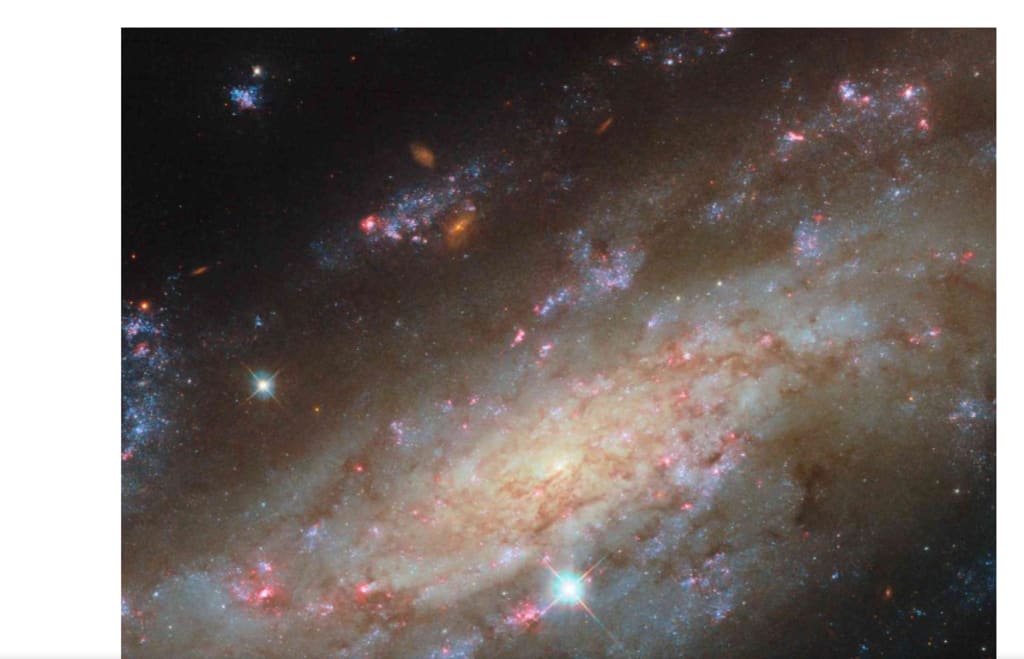
NASA's TESS spacecraft has confirmed almost 700 exoplanets in just seven years of operation. That seems like a lot. However, the majority of signals identified as promising have never been fully processed, despite the telescope monitoring more than two million stars. There are actual planets hidden in that backlog, sitting there in the data but never verified. More than 100 of them were recently discovered and verified by a research team.
Using simulation to find new exoplanets
The program is known as RAVEN, which stands for RAnking and Validation of ExoplaNets. It was developed by a team at the University of Warwick to address a challenging issue: distinguishing real planets from a lengthy list of imposters that evade detection systems.
The work was headed by Dr. Marina Lafarga Magro, a postdoctoral researcher there. Her team discovered over 100 new exoplanets and identified hundreds more promising candidates using RAVEN on TESS data from the first four years of the project.
Lafarga, the study's lead author, stated, "We were able to validate 118 new planets and over 2,000 high-quality planet candidates, nearly 1,000 of which were entirely new, using our newly developed RAVEN pipeline."
How RAVEN operates
Tiny dips in brightness are used by telescopes to identify potential planets. Numerous additional phenomena, such as two stars eclipsing one another, a weak background star seeping in, or equipment noise, can imitate that signal. It takes time to separate the truth from the phoney.
RAVEN goes in a new direction. Hundreds of thousands of simulated instances, including synthetic planets and synthetic lookalikes, were provided to it by its developers, who then allowed machine-learning algorithms to distinguish between the two.
RAVEN manages the entire chain after training. identifying, evaluating, and using math to confirm the strongest indications. Another publication published earlier this year contains the complete pipeline architecture. Dr. Andreas Hadjigeorghiou, who oversaw the pipeline, stated, "We trained machine learning models to identify patterns in the data that can tell us the type of event we have detected."
Among the haul are new exoplanets
During TESS's first four years of full-sky scanning, sectors 1 through 55, the researchers focused RAVEN on about 2.2 million common stars. Only planets with orbits shorter than sixteen days were included in the search. Wide enough to capture the most intriguing close-in environments, but short enough.
Thirty-one of the 118 planets that passed validation have never been seen before. In addition, RAVEN identified over 2,000 high-confidence candidates who have yet to receive formal validation.
Of those, about 1,000 are brand-new. Unusual single-transit candidates are a small number of signals that only passed a star once or twice within the observation frame, indicating a considerably longer orbit.
Unusual new worlds
Two uncommon groups contain some of the most intriguing discoveries. The collection included multiple instances of ultra-short-period planets, or worlds that complete an orbit in less than a day.
Neptune-sized planets are strangely absent from the Neptunian desert, a region of orbits and sizes. Its boundaries were first established in a 2016 research, but it has been more difficult to accurately count the few residents.
Tightly packed multi-planet systems with unidentified companions are also identified by the catalogue. Worlds in these systems are sufficiently enough for one star to exert a gravitational pull on one another.
Counting nearby planets
A companion study conducted at Warwick under the direction of Dr. Kaiming Cui reveals the greater reward. Using a sample of a clean planet, The frequency of close-in planets appearing around Sun-like stars was measured by the researchers.
According to their response, 9–10% of stars that resemble the Sun have one. Although the new measurement reduces the uncertainty by up to a factor of ten, it still tracks previous findings from NASA's Kepler spacecraft.
The first head count in the Neptunian desert was likewise obtained from the same clean sample. Only about 0.08 percent of Sun-like stars have such planets. According to Cui, the lead author of the population article, "we can put a precise number on just how empty this desert is for the first time."
The path ahead
The whole list of verified planets, the unverified candidates, and the instruments to examine them are all now accessible to the public. Targets for follow-up can be chosen by other researchers. telescope time to verify a planet's mass or use existing tools to investigate its atmosphere.
Researchers investigating atmospheres will be particularly interested in Neptunian desert candidates and ultra-short-period worlds since they lie at the odd boundaries of what existing planet-formation models predict.
This type of carefully selected target list will be necessary for the launch of ESA's planned PLATO mission. When new tools are introduced, science will proceed more quickly with cleaner samples.
A more accurate list of new exoplanets
The actual rarity of planets in the Neptunian desert has not been measured until this work. There's a number now. A good one. Additionally, a different mission and telescope have independently verified and tightened the Kepler-era estimates for close-in planet occurrence, which were long considered the gold standard.
This gives exoplanet researchers access to hitherto unanswered issues about planet formation. What causes certain orbits to be empty? How do systems that are densely packed maintain stability?
The next phase of theory has more to work with than conjecture thanks to a cleaner planet count to anchor the maths, and the same method can go through years' worth of TESS data that are still waiting in the archive.
About the Creator
Enjoyed the story? Support the Creator.
Subscribe for free to receive all their stories in your feed.
Comments
There are no comments for this story
Be the first to respond and start the conversation.