
IBD Treatment Market Expands as Biologic Therapies and Early Diagnosis Transform Gastrointestinal Care
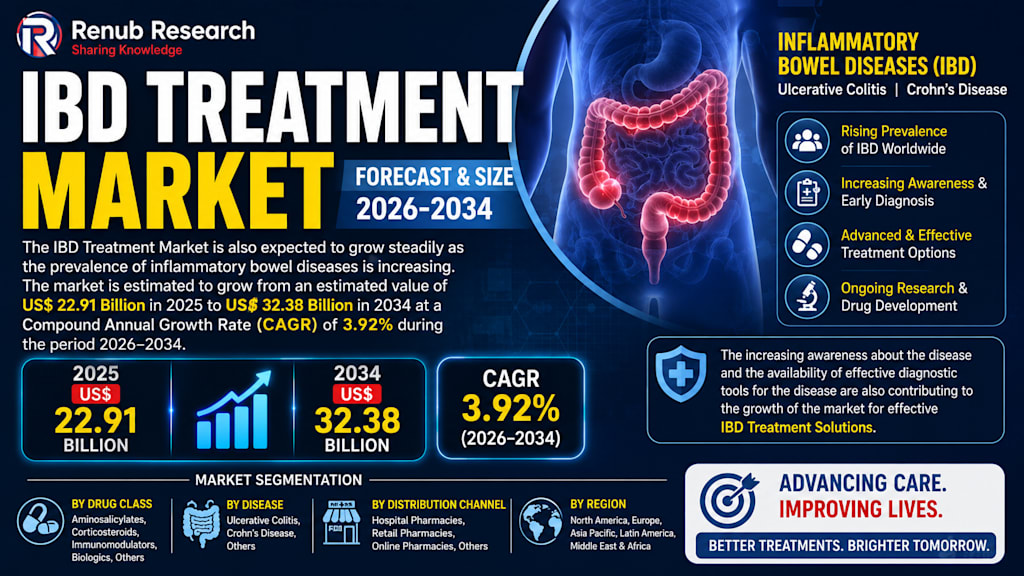
Renub Research forecasts the IBD Treatment Market to grow from US$ 22.91 billion in 2025 to US$ 32.38 billion by 2034, driven by rising inflammatory bowel disease cases, biologic therapy advancements, and increasing healthcare awareness worldwide.

Inflammatory Bowel Disease Is Becoming a Growing Global Health Concern
Inflammatory bowel disease, commonly known as IBD, is emerging as one of the most significant chronic gastrointestinal health challenges worldwide. The condition affects millions of people globally and continues to place increasing pressure on healthcare systems, pharmaceutical companies, and patients seeking long-term disease management solutions.
IBD primarily includes two major disorders: Crohn’s disease and ulcerative colitis. Both conditions cause chronic inflammation in the digestive tract and often lead to symptoms such as abdominal pain, fatigue, diarrhea, weight loss, and digestive complications. Although there is currently no permanent cure, advances in medicine and biotechnology are significantly improving patient outcomes and long-term disease control.
According to the uploaded Renub Research report, the IBD Treatment Market is expected to increase from US$ 22.91 billion in 2025 to US$ 32.38 billion by 2034, growing at a CAGR of 3.92% during 2026–2034. The report attributes this steady expansion to increasing disease prevalence, growing healthcare awareness, improved diagnostic capabilities, and the rapid development of advanced biologic therapies.
As healthcare systems place greater focus on chronic disease management and personalized medicine, the IBD treatment landscape is undergoing major transformation.
Understanding the Growing Need for IBD Treatment
IBD treatment focuses on managing inflammation, reducing symptoms, preventing disease complications, and helping patients maintain long-term remission. Current treatment strategies include anti-inflammatory medications, immune suppressants, corticosteroids, biologic drugs, and targeted therapies. In severe cases, surgery may also be required to remove damaged portions of the gastrointestinal tract.
Doctors increasingly combine medication with lifestyle changes, dietary adjustments, and long-term disease monitoring to improve patient quality of life.
The growing need for effective IBD treatment is strongly connected to the rising prevalence of gastrointestinal disorders globally. Improved healthcare infrastructure and better awareness campaigns are also enabling earlier diagnosis, which is increasing the number of patients entering treatment programs.
Medical research has dramatically advanced in recent years, helping healthcare providers move beyond symptom management toward more targeted and personalized approaches to care.
Rising IBD Cases Worldwide Are Fueling Market Growth
One of the biggest drivers of the IBD treatment market is the rising global incidence of inflammatory bowel diseases.
The report explains that changing lifestyles, environmental factors, dietary habits, and urbanization are contributing to the growing number of people diagnosed with Crohn’s disease and ulcerative colitis.
Improved diagnostic tools and better healthcare access are also making it easier to identify patients who previously remained undiagnosed.
The scale of the issue is becoming increasingly significant. According to the report, a 2019 study estimated that approximately 4.9 million people worldwide were living with IBD, with China and the United States reporting the highest patient numbers. Another study published by the Crohn’s & Colitis Foundation in July 2023 reported that 721 people per 100,000 were diagnosed with IBD in the United States. Canada alone is expected to see IBD cases rise from over 320,000 in 2023 to approximately 470,000 by 2035.
These rising patient numbers are increasing demand for more effective therapies, specialized care, and long-term disease management solutions.
Biologic and Targeted Therapies Are Reshaping Treatment
One of the most important developments in the IBD treatment market is the rapid advancement of biologic and targeted therapies.
Traditional treatment methods mainly focused on suppressing inflammation and controlling symptoms through generalized immune suppression. However, modern biologic therapies are designed to target specific components of the immune system responsible for intestinal inflammation.
This shift is transforming patient outcomes by improving disease control, reducing flare-ups, and helping patients achieve longer periods of remission.
The report explains that pharmaceutical companies are heavily investing in research and development to create safer and more effective therapies with fewer side effects than conventional treatments. Personalized medicine is also gaining momentum, allowing healthcare providers to tailor treatment strategies based on individual patient needs and disease behavior.
A major example highlighted in the report is Johnson & Johnson’s May 2024 submission to the European Medicines Agency seeking expanded approval for TREMFYA (guselkumab) for moderately to severely active ulcerative colitis and Crohn’s disease.
These innovations are helping move the industry toward more precise and patient-focused gastrointestinal care.
Awareness and Improved Diagnostics Are Expanding Treatment Access
Another major factor driving market growth is the increasing awareness surrounding gastrointestinal disorders and improvements in diagnostic technologies.
In the past, many patients remained undiagnosed due to limited healthcare access, low awareness, and inadequate diagnostic tools. Today, public health campaigns, education initiatives, and technological advancements are enabling earlier identification of IBD symptoms and faster medical intervention.
Advanced diagnostic tools such as imaging systems, endoscopy, and laboratory testing are helping doctors identify disease progression more accurately and initiate treatment earlier.
The report also highlights growing government and healthcare institution support for improving IBD care. The U.S. Centers for Disease Control and Prevention (CDC) funded a cooperative agreement titled “Improving Health Outcomes for Patients with Inflammatory Bowel Disease,” which is expected to continue through 2028. The initiative focuses partly on digital health interventions and patient engagement strategies.
As healthcare awareness continues improving globally, more patients are expected to seek professional treatment rather than living with unmanaged symptoms.
JAK Inhibitors and Anti-Integrin Therapies Are Gaining Importance
Several advanced treatment categories are becoming increasingly important within the IBD treatment market.
The anti-integrin treatment segment focuses on drugs that block inflammatory cells from migrating into the intestines, helping reduce inflammation while potentially lowering certain side effects associated with broader immune suppression therapies.
JAK inhibitors are another rapidly growing segment. These oral medications work by inhibiting enzymes involved in inflammatory responses and are increasingly viewed as important alternatives for patients who do not respond effectively to conventional therapies. The convenience of oral treatment options also improves patient compliance and treatment accessibility.
At the same time, corticosteroids continue playing a significant role in IBD management because of their strong anti-inflammatory effects and cost-effectiveness. Although they are not generally preferred for long-term maintenance due to side effects, they remain widely used during severe flare-ups and early-stage treatment.
These diverse treatment categories reflect the growing complexity and specialization of modern IBD care.
Hospitals Remain Central to IBD Treatment
Hospitals continue to serve as the primary centers for diagnosis, treatment, and long-term management of severe inflammatory bowel disease cases.
The report notes that hospitals provide advanced diagnostic technologies such as imaging systems, laboratory testing, and endoscopy facilities, enabling accurate disease evaluation and monitoring.
Specialized gastroenterology departments also support multidisciplinary care involving surgeons, nutrition experts, and other healthcare professionals who help manage severe disease complications.
Advanced biologic therapies and emergency medical interventions are frequently administered within hospital settings, especially during severe flare-ups or complications such as intestinal obstruction and gastrointestinal bleeding.
As global IBD incidence continues rising, hospitals are expected to remain a crucial component of the broader treatment ecosystem.
High Costs Continue Limiting Treatment Accessibility
Despite major therapeutic advances, high treatment costs remain one of the biggest challenges facing the IBD treatment market.
Modern biologic drugs involve complex manufacturing processes that significantly increase medication prices. Many patients, particularly in low- and middle-income countries, struggle to access advanced treatments because of limited insurance coverage and high out-of-pocket expenses.
Even in developed healthcare systems, chronic disease management can place significant financial burdens on patients due to the long-term nature of IBD treatment.
The report emphasizes that affordability remains a major barrier to broader adoption of newer therapies, particularly in regions where healthcare reimbursement systems are less developed.
Long-Term Disease Management Remains Complex
IBD is a chronic condition that requires lifelong management, making treatment complexity another major market challenge.
Many medications used to treat IBD suppress immune system activity, which may increase the risk of infections and other health complications. Some patients also experience medication intolerance, reduced drug effectiveness over time, or difficulty maintaining strict treatment routines.
Managing IBD often requires major lifestyle adjustments involving diet, medication schedules, stress management, and ongoing medical monitoring.
For patients, maintaining long-term disease control can be physically, emotionally, and financially demanding.
The United States Leads Global Innovation
The United States remains one of the most advanced and influential IBD treatment markets globally due to its strong healthcare infrastructure, high diagnosis rates, and extensive pharmaceutical research activity.
The report highlights Eli Lilly’s January 2025 FDA approval for Omvoh (mirikizumab-mrkz) as a treatment for moderately to severely active Crohn’s disease in adults. The drug had already received approval in 2023 for ulcerative colitis treatment.
The country’s biotechnology leadership, clinical trial activity, and strong insurance systems continue driving innovation and treatment availability.
India’s IBD Market Is Expanding Gradually
India’s IBD treatment market is growing steadily due to rising healthcare awareness, urbanization, changing dietary habits, and improved diagnostic infrastructure.
Hospitals in major urban centers are increasingly offering advanced diagnostic and treatment services, including biologics, imaging technologies, and specialized gastroenterology care.
The report highlights Aster Medcity’s June 2023 launch of a dedicated Inflammatory Bowel Disease Centre designed to provide specialized treatment and disease management services for IBD patients.
Although access disparities still exist between urban and rural areas, ongoing healthcare improvements are expected to support long-term market growth in India.
Saudi Arabia Continues Strengthening Healthcare Infrastructure
Saudi Arabia’s IBD treatment market is progressing steadily as the country expands healthcare access and invests in specialized medical services.
Government healthcare modernization initiatives are improving patient access to advanced therapies, diagnostic technologies, and chronic disease management programs.
Growing awareness of gastrointestinal health and increased availability of specialized treatment centers are helping more patients receive proper diagnosis and long-term care.
As Saudi Arabia continues strengthening its healthcare infrastructure, demand for advanced IBD treatment solutions is expected to increase steadily.
Final Thoughts
The global IBD treatment market is entering a new era driven by biologic innovation, targeted therapies, personalized medicine, and growing awareness of gastrointestinal health.
As inflammatory bowel diseases become more common worldwide, healthcare providers and pharmaceutical companies are focusing on developing more effective, safer, and patient-centered treatment solutions. Advances in biologics, JAK inhibitors, and diagnostic technologies are improving disease management and helping patients achieve better long-term outcomes.
While treatment affordability, side effects, and lifelong disease management remain major challenges, ongoing medical research and expanding healthcare access continue strengthening the market outlook.
According to the Renub Research forecast, the future of IBD treatment will increasingly center on precision medicine, early diagnosis, and advanced biologic therapies designed to improve quality of life for millions of patients worldwide.
About the Creator
Enjoyed the story? Support the Creator.
Subscribe for free to receive all their stories in your feed.
Comments
There are no comments for this story
Be the first to respond and start the conversation.