
Global Diabetes Drugs Market Expected to Reach US$ 120 Billion by 2034 as Innovation in GLP-1 and Advanced Therapies Accelerates
Rising diabetes prevalence, expanding access to modern therapies, and strong pharmaceutical innovation are driving sustained market growth worldwide

The global diabetes drugs market is witnessing significant transformation as pharmaceutical companies intensify innovation efforts to address the growing global burden of diabetes. Rising obesity rates, aging populations, sedentary lifestyles, and increasing awareness regarding diabetes management are collectively fueling demand for advanced diabetes therapies across developed and emerging economies.
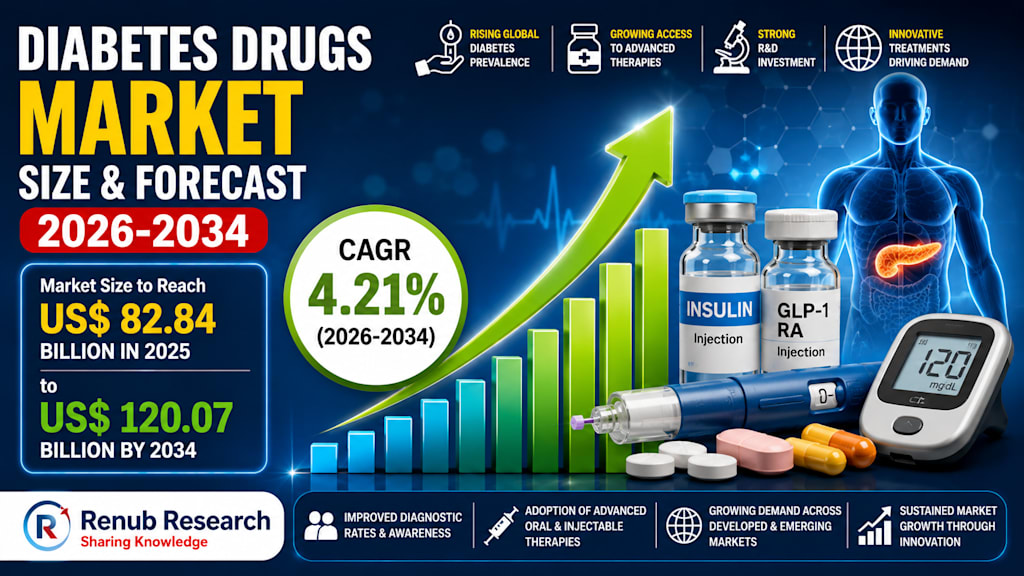
According to Renub Research, the diabetes drugs market is projected to grow from US$ 82.84 billion in 2025 to US$ 120.07 billion by 2034, expanding at a CAGR of 4.21% during the forecast period from 2026 to 2034.
The market is being driven by growing adoption of innovative drug classes such as GLP-1 receptor agonists, SGLT-2 inhibitors, long-acting insulin analogs, and combination therapies that offer improved glycemic control and additional metabolic benefits.
At the same time, advances in personalized medicine, digital health monitoring, biosimilars, and regulatory approvals are reshaping the future of diabetes treatment globally.
Diabetes Continues to Pose a Major Global Health Challenge
Diabetes remains one of the most widespread chronic diseases worldwide, affecting millions of people across all age groups. The condition requires long-term blood glucose management to reduce complications such as cardiovascular disease, kidney damage, nerve disorders, and vision impairment.
Diabetes drugs help regulate blood sugar levels through multiple mechanisms including increasing insulin production, improving insulin sensitivity, slowing carbohydrate absorption, and controlling appetite and metabolism.
Modern treatment options now include oral medications, injectable therapies, biosimilars, insulin analogs, GLP-1 receptor agonists, DPP-4 inhibitors, and SGLT-2 inhibitors.
The increasing prevalence of both type 1 and type 2 diabetes continues to strengthen demand for more effective, safer, and patient-friendly therapies.
Innovation in Drug Development Driving Market Growth
One of the strongest growth drivers for the diabetes drugs market is the rapid pace of pharmaceutical innovation.
Drug manufacturers are heavily investing in research and development to create therapies that provide stronger glycemic control, reduced cardiovascular risks, weight management benefits, and greater convenience for patients.
A major development occurred in June 2023 when Pfizer Inc. confirmed continued clinical development of its oral GLP-1 receptor agonist candidate designed for adults suffering from type 2 diabetes and obesity.
Oral GLP-1 therapies are generating enormous interest because they combine the effectiveness of injectable drugs with the convenience of tablets, improving patient adherence and expanding treatment accessibility.
Pharmaceutical companies are also focusing on long-acting insulin formulations, dual-acting receptor agonists, and metabolic-targeting drugs that deliver improved therapeutic outcomes.
Regulatory Approvals Expanding Access to Advanced Therapies
Regulatory approvals are playing a crucial role in expanding global access to innovative diabetes medications.
In March 2023, Sanofi India received marketing authorization from India’s Central Drugs Standard Control Organization (CDSCO) for Soliqua, a combination diabetes therapy available in a pre-filled pen format.
Combination therapies such as Soliqua provide enhanced glycemic control for patients who struggle to achieve desired outcomes with single-drug treatments.
The increasing pace of regulatory approvals is helping improve treatment availability, physician confidence, and competitive pricing structures, especially across emerging markets.
Governments and healthcare agencies worldwide are also supporting broader reimbursement coverage for advanced therapies, encouraging higher adoption rates.
Domestic Drug Innovation Supporting Market Expansion
Local pharmaceutical innovation is emerging as another major growth catalyst, particularly in developing countries where affordability remains a critical concern.
In February 2023, Akums Drugs and Pharmaceuticals Limited launched Lobeglitazone, a novel treatment for type 2 diabetes in India.
The development of locally manufactured antidiabetic drugs improves accessibility and affordability for broader patient populations.
Domestic innovation also strengthens supply chain resilience, encourages local R&D investment, and promotes wider penetration of advanced therapies.
As governments increasingly support local pharmaceutical manufacturing, emerging markets are becoming important contributors to global diabetes drug revenues.
GLP-1 and SGLT-2 Therapies Reshaping Treatment Standards
GLP-1 receptor agonists and SGLT-2 inhibitors have become two of the fastest-growing drug classes within the diabetes drugs market.
These therapies provide benefits beyond blood sugar control, including weight reduction, cardiovascular protection, and improved metabolic health.
The growing popularity of GLP-1 drugs is especially transforming the treatment landscape because many patients with type 2 diabetes also struggle with obesity.
Healthcare providers increasingly favor these therapies due to their strong clinical outcomes and broader health benefits.
At the same time, SGLT-2 inhibitors are gaining widespread adoption because of their effectiveness in reducing heart failure risks and improving kidney health among diabetic patients.
Biosimilars Increasing Affordability and Access
The rise of biosimilar insulin products is helping improve affordability and treatment accessibility across multiple markets.
In July 2025, Biocon Biologics received U.S. FDA approval for Kirsty, the first interchangeable biosimilar to NovoLog insulin aspart.
Biosimilars play a vital role in reducing treatment costs and increasing competition within the insulin market.
Lower-cost alternatives are especially important for patients in low- and middle-income countries where high insulin prices remain a major barrier to treatment adherence.
As more biosimilars receive regulatory approvals, competition is expected to intensify further within the diabetes drug industry.
Digital Health Integration Enhancing Diabetes Management
Digital health technologies are increasingly becoming integrated into diabetes treatment ecosystems.
Continuous glucose monitoring systems, AI-powered health applications, wearable devices, and telemedicine platforms are helping patients manage blood sugar levels more effectively.
Digital monitoring tools also support personalized treatment adjustments and improve patient engagement.
Pharmaceutical companies are increasingly collaborating with digital health providers to create integrated treatment solutions that combine medication therapy with real-time patient monitoring.
These technologies are improving treatment adherence and enabling more precise diabetes management strategies.
United States Leads the Global Diabetes Drugs Market
The United States remains the largest diabetes drugs market globally due to high disease prevalence, advanced healthcare infrastructure, and strong adoption of innovative therapies.
Demand for GLP-1 receptor agonists, SGLT-2 inhibitors, and combination therapies continues rising rapidly across the country.
The U.S. market also benefits from strong R&D activity, rapid regulatory approvals, and widespread use of digital health technologies.
However, high treatment costs remain a major challenge for uninsured and underinsured populations.
Despite affordability concerns, the United States continues serving as the primary innovation hub for the global diabetes drug industry.
Germany Maintains Strong Market Position in Europe
Germany’s diabetes drugs market benefits from advanced healthcare infrastructure, high patient awareness, and stable reimbursement systems.
Physicians in Germany strongly favor evidence-based treatment approaches, contributing to rising adoption of advanced therapies.
The country’s aging population and increasing obesity rates are also strengthening long-term market demand.
Although strict pricing controls can slow premium drug adoption, Germany remains one of Europe’s most important diabetes treatment markets.
China Emerging as a Major Growth Engine
China is becoming one of the fastest-growing diabetes drugs markets globally due to its massive diabetic population and improving healthcare access.
Government efforts promoting chronic disease management and early diagnosis are significantly increasing medication uptake.
Expansion of reimbursement programs has improved affordability for advanced therapies including SGLT-2 inhibitors and DPP-4 inhibitors.
Local pharmaceutical companies are also accelerating production of generics and innovative antidiabetic therapies, strengthening market competition.
Urbanization, lifestyle changes, and rising obesity rates continue fueling long-term demand across the Chinese market.
Saudi Arabia Witnessing Rapid Expansion
Saudi Arabia’s diabetes drugs market is growing rapidly due to increasing diabetes prevalence and expanding healthcare investments.
Government-led healthcare modernization initiatives and improved insurance coverage are supporting earlier diagnosis and treatment adoption.
Demand for GLP-1 receptor agonists and SGLT-2 inhibitors is particularly strong among patients seeking both glycemic control and weight management benefits.
However, dependence on imported therapies and affordability concerns remain important market challenges.
High Treatment Costs Continue to Challenge Market Growth
Despite technological advancements, high treatment costs remain one of the biggest barriers affecting the diabetes drugs market.
Advanced therapies such as GLP-1 receptor agonists and combination injectables are often expensive, limiting access in lower-income regions.
Insurance coverage gaps, high co-payments, and out-of-pocket expenses also impact patient adherence even in developed countries.
Cold-chain storage requirements for certain injectable therapies create additional logistical complexities.
Improving affordability and access remains critical for ensuring wider adoption of advanced diabetes treatments globally.
Safety Concerns and Side Effects Influence Treatment Decisions
Safety concerns and side effects remain important challenges within the diabetes drugs market.
Some medications may cause gastrointestinal discomfort, hypoglycemia, weight gain, or fluid retention, affecting patient compliance.
Long-term cardiovascular and renal safety monitoring remains essential for newer drug classes.
Regulatory agencies and pharmaceutical companies continue conducting post-market surveillance to evaluate long-term treatment outcomes and maintain physician confidence.
Personalized treatment approaches and improved clinical guidelines are helping reduce therapy-related risks.
Competitive Landscape Intensifies
The diabetes drugs market is becoming increasingly competitive as pharmaceutical companies race to strengthen innovation pipelines and expand global market share.
Major companies operating within the industry include:
- Novo Nordisk
- AstraZeneca plc
- Biocon
- Sanofi
- Eli Lilly
- Johnson & Johnson
- Bristol Myers Squibb Co.
- Novartis AG
Recent Developments in the Diabetes Drugs Market
Pfizer Inc. continued clinical development of oral GLP-1 receptor agonists.
Biocon Biologics received FDA approval for Kirsty biosimilar insulin.
Novo Nordisk received an FDA Complete Response Letter for insulin icodec.
Eli Lilly partnered with Amazon Pharmacy for GLP-1 drug distribution.
Glenmark Pharmaceuticals Ltd. launched biosimilar liraglutide in India.
Sanofi India received CDSCO approval for Soliqua.
Akums Drugs and Pharmaceuticals Limited introduced Lobeglitazone for type 2 diabetes.
Provention Bio received expedited FDA review for Tzield.
Amazon Pharmacy expanded access to injectable diabetes therapies.
Novo Nordisk continued expanding global GLP-1 therapy production capacity.
Final Thoughts
The global diabetes drugs market is entering a transformative phase driven by innovation, increasing disease prevalence, expanding healthcare access, and rising adoption of advanced therapeutic classes.
The emergence of oral GLP-1 therapies, biosimilars, personalized medicine, and digital health integration is reshaping diabetes management worldwide.
At the same time, pharmaceutical companies are intensifying investments in R&D, strategic partnerships, and manufacturing expansion to meet growing global demand.
While affordability, accessibility, and long-term safety remain important challenges, the market’s long-term outlook remains highly positive.
With the market projected to surpass US$ 120.07 billion by 2034, diabetes therapies are expected to remain one of the most dynamic and strategically important segments within the global pharmaceutical industry.
About the Creator
Enjoyed the story? Support the Creator.
Subscribe for free to receive all their stories in your feed.
Comments
There are no comments for this story
Be the first to respond and start the conversation.