
Fundus Camera Market Expands with Rising Eye Disorders and AI-Driven Retinal Imaging
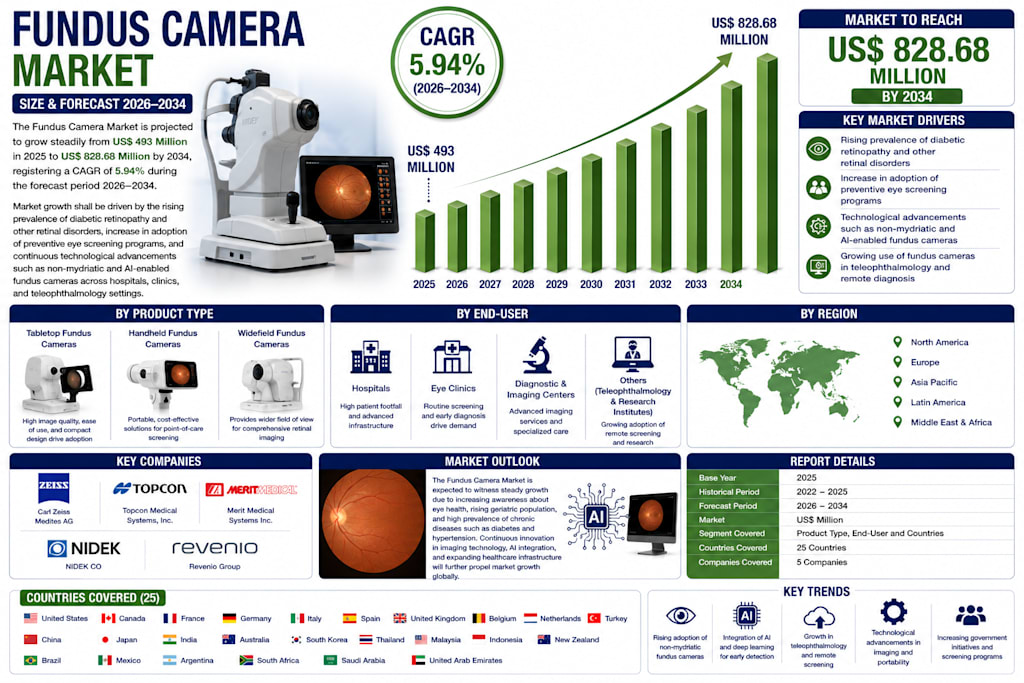
Growing prevalence of diabetic retinopathy, expanding screening programs, and technological innovation are set to drive the fundus camera market from US$ 493 million in 2025 to US$ 828.68 million by 2034, at a CAGR of 5.94% from 2026 to 2034.

The global fundus camera market is witnessing steady growth as healthcare systems increasingly prioritize early detection and management of eye diseases. With rising cases of diabetes, hypertension, and age-related vision disorders, retinal imaging has become a critical component of preventive eye care.
According to Renub Research, the market is projected to grow from US$ 493 million in 2025 to US$ 828.68 million by 2034, reflecting a compound annual growth rate (CAGR) of 5.94% during the forecast period. This growth is driven by advancements in imaging technology, increased awareness of avoidable blindness, and the expansion of telemedicine-based screening programs.
A fundus camera is a specialized medical device used to capture detailed images of the retina, optic disc, macula, and blood vessels at the back of the eye. These images are essential for diagnosing and monitoring conditions such as diabetic retinopathy, glaucoma, macular degeneration, and hypertensive retinopathy.
Rising Prevalence of Eye Diseases Driving Demand
One of the primary drivers of the fundus camera market is the increasing prevalence of eye diseases worldwide. Conditions such as diabetic retinopathy, glaucoma, and age-related macular degeneration are becoming more common, largely due to rising diabetes rates and aging populations.
Global health estimates indicate that billions of people experience some form of vision impairment, with a significant portion being preventable through early detection and treatment. Fundus cameras play a crucial role in identifying retinal abnormalities at an early stage, enabling timely intervention and reducing the risk of vision loss.
As healthcare providers emphasize preventive care, the demand for retinal screening tools is expected to grow significantly. Regular eye examinations using fundus cameras are becoming standard practice in many healthcare systems, particularly for high-risk populations.
Technological Advancements Transforming Retinal Imaging
Technological innovation is a key factor driving the adoption of fundus cameras. Modern devices offer high-resolution imaging, wide-field views, and faster processing, improving diagnostic accuracy and efficiency.
Non-mydriatic fundus cameras, which do not require pupil dilation, are gaining popularity due to their ease of use and patient comfort. These devices enable quick screenings, making them ideal for high-volume clinical settings.
Artificial intelligence is also transforming retinal imaging. AI-powered fundus cameras can automatically detect signs of retinal diseases, assisting healthcare professionals in diagnosis and reducing workload. Integration with cloud-based systems and electronic health records further enhances data management and accessibility.
Portable and handheld fundus cameras are expanding the reach of eye care services, enabling screenings in remote and underserved areas. These advancements are making retinal imaging more accessible and efficient, supporting market growth.
Expansion of Preventive Screening and Teleophthalmology
The increasing focus on preventive healthcare is significantly boosting the adoption of fundus cameras. Governments and healthcare organizations are implementing large-scale screening programs to detect eye diseases early, particularly among diabetic populations.
Teleophthalmology is playing a crucial role in this expansion. Fundus cameras enable retinal images to be captured in local clinics or community settings and analyzed remotely by specialists. This approach improves access to eye care services, especially in rural and underserved regions.
The integration of fundus cameras with telemedicine platforms is helping bridge the gap between patients and specialists, reducing healthcare disparities and improving outcomes. As telehealth continues to grow, the demand for portable and connected fundus cameras is expected to increase.
Challenges: High Costs and Skill Shortages
Despite its growth potential, the fundus camera market faces several challenges. High equipment costs remain a significant barrier, particularly for small clinics and healthcare facilities in low- and middle-income regions.
Advanced fundus cameras with digital imaging and wide-field capabilities require substantial investment, along with ongoing costs for maintenance, software updates, and training. Budget constraints may limit adoption, especially in public healthcare systems.
Another challenge is the shortage of skilled professionals capable of operating fundus cameras and interpreting results. Proper training is essential to ensure accurate imaging and diagnosis, and the lack of qualified personnel can hinder effective utilization.
Integration with existing healthcare systems and workflows can also be complex, requiring additional investment and technical expertise. Addressing these challenges will be essential for expanding market adoption.
Segment Insights: Product Types and Applications
The fundus camera market is segmented based on product types and end users, reflecting diverse clinical needs.
Mydriatic Fundus Cameras
These devices provide high-resolution images and are commonly used in hospitals and specialized clinics for detailed examinations. However, they require pupil dilation, which can be time-consuming.
Non-Mydriatic Fundus Cameras
Non-mydriatic cameras are widely used in outpatient settings due to their convenience and faster operation. They are particularly suitable for screening programs and routine examinations.
ROP Fundus Cameras
Designed for neonatal care, these cameras are used to screen premature infants for retinopathy of prematurity. Their compact design and wide-field imaging capabilities make them ideal for sensitive applications.
End Users
Hospitals represent the largest segment, driven by high patient volumes and advanced diagnostic needs. Ophthalmology clinics and optometry offices also contribute significantly, particularly for routine screenings and outpatient care.
These segments highlight the versatility of fundus cameras and their importance across different healthcare settings.
Regional Insights Highlight Market Growth
The United States is one of the largest markets for fundus cameras, supported by high diabetes prevalence, advanced healthcare infrastructure, and strong adoption of digital technologies.
Germany represents a mature European market, characterized by strict regulatory standards and a focus on diagnostic quality. Adoption of advanced imaging technologies is consistent across healthcare facilities.
India is emerging as a high-growth market, driven by a large diabetic population, increasing awareness, and government-led screening programs. Portable and cost-effective fundus cameras are particularly popular in rural areas.
Saudi Arabia is also witnessing growth, supported by high healthcare spending, increasing diabetes prevalence, and a focus on preventive care. Investments in telemedicine and advanced medical technologies are further driving market expansion.
These regional trends highlight the global importance of fundus cameras in addressing vision-related health challenges.
Competitive Landscape and Key Players
The fundus camera market is competitive, with leading companies focusing on innovation, product development, and strategic partnerships. Key players include Carl Zeiss Meditec AG, Topcon Medical Systems, NIDEK Co., and Revenio Group.
Recent developments highlight ongoing innovation in the industry, including the introduction of advanced imaging systems and AI-powered diagnostic tools. Companies are also expanding their product portfolios to include portable and connected devices.
Strategic collaborations and investments in research and development are expected to drive further advancements and strengthen market competition.
Final Thoughts
The fundus camera market is becoming an essential component of modern eye care, driven by the need for early detection and effective management of vision disorders.
Renub Research’s forecast of US$ 828.68 million by 2034 underscores the market’s steady growth and long-term importance.
While challenges such as high costs and skill shortages remain, technological advancements and expanding screening programs are expected to drive future growth.
Ultimately, fundus cameras are not just diagnostic tools—they are critical enablers of preventive healthcare, helping to reduce the global burden of vision impairment and improve quality of life for millions of people worldwide.
About the Creator
Enjoyed the story? Support the Creator.
Subscribe for free to receive all their stories in your feed.
Comments
There are no comments for this story
Be the first to respond and start the conversation.