
Denmark’s Pharmaceutical Industry Enters a New Era of Innovation, Research, and Global Growth
How Advanced Healthcare Data, World-Class Research, and Industry Leaders Are Shaping the Future of Denmark’s Pharmaceutical Market

The pharmaceutical industry has long been one of the pillars of modern healthcare, delivering life-saving medicines, groundbreaking therapies, and innovative treatments that improve the quality of life for millions of people worldwide. While pharmaceutical giants often dominate headlines in larger economies, Denmark has quietly emerged as one of Europe's most influential pharmaceutical hubs.
Known for its highly advanced healthcare system, exceptional research capabilities, and globally recognized pharmaceutical companies, Denmark continues to strengthen its position as a leader in life sciences and medical innovation. The country's commitment to research and development, combined with favorable government policies and an increasingly sophisticated healthcare data infrastructure, has created an environment where pharmaceutical innovation thrives.
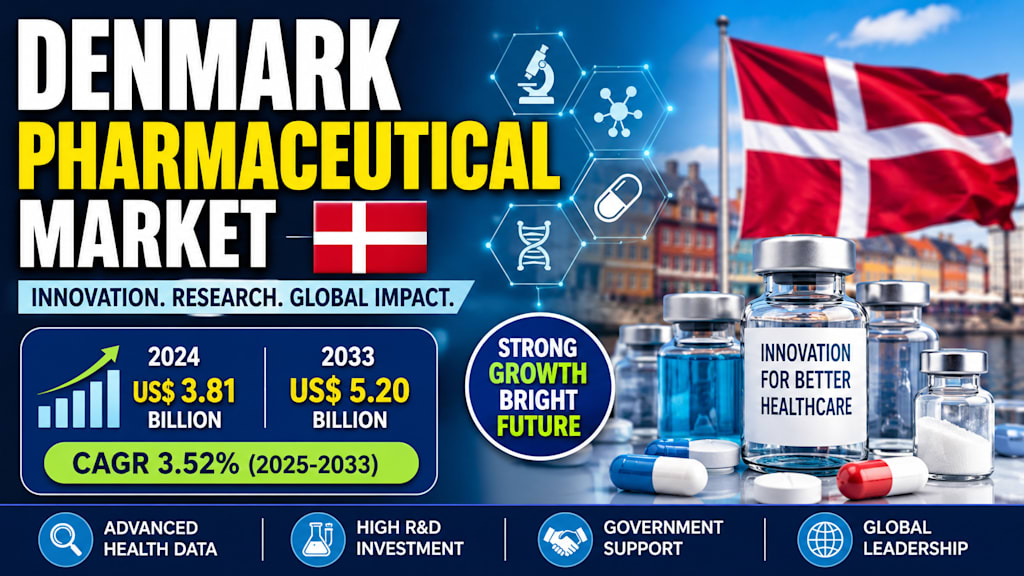
According to Renub Research, the Denmark Pharmaceutical Market is projected to grow from US$ 3.81 billion in 2024 to US$ 5.20 billion by 2033, expanding at a CAGR of 3.52% between 2025 and 2033. This steady growth reflects the country's ability to adapt to evolving healthcare needs while maintaining a strong focus on scientific excellence and patient outcomes.
Why Denmark Has Become a Pharmaceutical Powerhouse
Denmark's rise in the global pharmaceutical landscape did not happen overnight. Over several decades, the country has built a robust ecosystem that combines government support, academic excellence, healthcare innovation, and private-sector investment.
The nation is home to globally respected pharmaceutical companies that continue to develop innovative treatments for chronic diseases, neurological disorders, diabetes, allergies, and various other medical conditions. These companies not only serve domestic healthcare needs but also export medicines worldwide, contributing significantly to Denmark's economy.
One of the most remarkable aspects of Denmark's pharmaceutical success is the close collaboration between universities, hospitals, research institutions, and pharmaceutical companies. This collaborative environment accelerates the development of new therapies while improving clinical outcomes for patients.
As healthcare systems around the world increasingly focus on personalized medicine, digital health, and biotechnology-driven treatments, Denmark is exceptionally well-positioned to capitalize on these emerging trends.
Growing Healthcare Demands Are Driving Market Expansion
Healthcare demands are evolving rapidly, and Denmark is no exception. Like many developed nations, the country faces demographic shifts that are creating greater demand for pharmaceutical products and healthcare services.
An aging population is among the most significant factors influencing market growth. As people live longer, the prevalence of chronic illnesses such as cardiovascular diseases, diabetes, respiratory disorders, and neurological conditions continues to rise. These conditions often require long-term medication management, increasing pharmaceutical consumption over time.
Diabetes, in particular, has become a major focus area for pharmaceutical innovation. The increasing number of patients requiring effective treatment options has encouraged pharmaceutical companies to invest heavily in research aimed at developing more advanced therapies.
Additionally, healthcare professionals and patients are becoming more aware of the benefits of early diagnosis and preventive care. This trend supports increased pharmaceutical usage across multiple therapeutic categories.
Denmark's Advanced Healthcare Data Infrastructure Creates a Competitive Advantage
One of the most distinctive strengths of Denmark's pharmaceutical industry is its highly integrated healthcare data infrastructure.
Every Danish citizen is assigned a unique personal identification number that enables healthcare information to be linked across hospitals, clinics, pharmacies, and research institutions. This system creates one of the world's most comprehensive healthcare databases.
For pharmaceutical companies, this infrastructure offers enormous advantages.
Researchers can access real-world evidence to study treatment outcomes, monitor drug safety, and identify patient populations for clinical trials. This significantly reduces the time and cost associated with pharmaceutical research while improving the accuracy of scientific findings.
The availability of long-term healthcare data also supports personalized medicine initiatives. Pharmaceutical developers can gain deeper insights into how treatments affect different patient groups, allowing for more targeted and effective therapies.
As precision medicine continues to gain momentum globally, Denmark's data-driven healthcare ecosystem is expected to become an even more valuable asset.
Research and Development Remains the Industry's Lifeblood
Innovation remains at the heart of pharmaceutical success, and Denmark has consistently demonstrated its commitment to research and development.
The country invests heavily in scientific research, allocating substantial resources to pharmaceutical and biotechnology innovation. Government funding, private investment, and academic partnerships collectively contribute to one of Europe's most dynamic life sciences environments.
Major pharmaceutical companies continue to invest billions in discovering new treatments, conducting clinical trials, and expanding production capabilities.
Research efforts are particularly focused on areas such as:
Diabetes treatment
Oncology and cancer therapies
Neurological disorders
Autoimmune diseases
Respiratory conditions
Personalized medicine
Biotechnology innovations
The close relationship between academia and industry allows discoveries made in research laboratories to move more efficiently into commercial development and patient care.
This strong innovation culture helps maintain Denmark's competitiveness in the global pharmaceutical market.
Government Support Continues to Strengthen Industry Growth
Government support plays a crucial role in maintaining Denmark's position as a pharmaceutical leader.
The Danish government has introduced several initiatives designed to encourage innovation, attract investment, and simplify regulatory procedures for pharmaceutical companies.
One notable initiative is the country's Life Sciences Growth Plan, which includes multiple measures aimed at enhancing clinical research, accelerating drug approvals, and improving collaboration between stakeholders.
Efforts to create streamlined regulatory processes have made it easier for pharmaceutical companies to establish and expand operations within Denmark. These initiatives reduce administrative burdens and encourage investment in research, manufacturing, and commercialization activities.
Government agencies also work closely with industry participants to ensure that innovation remains aligned with patient safety and healthcare quality standards.
Biotechnology Is Transforming the Pharmaceutical Landscape
Biotechnology is becoming increasingly important within Denmark's pharmaceutical sector.
Advanced biologic therapies, gene-based treatments, and precision medicine solutions are creating new opportunities for pharmaceutical manufacturers and healthcare providers.
Biotechnology companies are leveraging cutting-edge scientific discoveries to address diseases that were once considered difficult or impossible to treat effectively.
The combination of Denmark's strong academic research institutions and highly skilled workforce provides fertile ground for biotechnology innovation.
As demand for biologic drugs continues to increase worldwide, Denmark's expertise in this area is expected to support long-term industry growth.
Challenges Facing Denmark's Pharmaceutical Market
Despite its many strengths, Denmark's pharmaceutical industry faces several important challenges.
Regulatory Complexity
Pharmaceutical companies operating in Denmark must comply with both national regulations and broader European Union requirements.
While these regulations help ensure patient safety and product quality, they can also increase administrative burdens and prolong approval timelines.
Smaller pharmaceutical firms and biotechnology startups may find it particularly difficult to navigate complex compliance requirements, potentially slowing innovation and market entry.
Sustainability Pressures
Environmental sustainability is becoming a major concern across the pharmaceutical industry.
Manufacturing processes often require substantial energy consumption and water usage. Pharmaceutical companies are therefore under increasing pressure to reduce carbon emissions, minimize waste, and adopt greener production methods.
Meeting Denmark's ambitious climate goals requires significant investment in sustainable technologies and operational improvements.
Balancing environmental responsibility with profitability and competitiveness remains a critical challenge for many industry participants.
Market Segmentation Highlights
The Denmark pharmaceutical market encompasses a wide range of therapeutic and product categories.
By Therapeutic Class
Cancer
Infectious Diseases
Cardiovascular Diseases
Diabetes
Respiratory Diseases
Central Nervous System Disorders
Autoimmune Diseases
Others
Among these segments, diabetes and cardiovascular treatments continue to generate substantial demand due to increasing disease prevalence and ongoing innovation.
By Drug Type
Branded Drugs
Generic Drugs
While branded medications remain dominant in terms of innovation, generic drugs continue to play an essential role in improving healthcare affordability.
By Prescription Type
Prescription Drugs
Over-the-Counter (OTC) Drugs
Prescription medications account for a significant share of market revenue, driven by chronic disease management and specialized therapies.
By Distribution Channel
Hospital Pharmacies
Retail Pharmacies
Others
Hospital pharmacies remain critical distribution channels, particularly for advanced therapies and specialty medications.
10 Recent Developments from Key Pharmaceutical Companies
1. Novo Nordisk Expands Diabetes Innovation
Novo Nordisk continues investing heavily in next-generation diabetes and obesity treatments to meet growing global demand.
2. Lundbeck Strengthens Neuroscience Research
Lundbeck has expanded research programs targeting neurological and psychiatric disorders.
3. Bavarian Nordic Increases Vaccine Production
The company significantly expanded vaccine manufacturing capabilities to address rising global demand.
4. Novo Nordisk and Echosens Collaboration
Novo Nordisk partnered with Echosens to improve awareness and early detection of non-alcoholic steatohepatitis (NASH).
5. Leo Pharma Advances Dermatology Solutions
Leo Pharma continues developing innovative treatments for skin diseases and inflammatory conditions.
6. ALK-Abelló Expands Allergy Treatment Portfolio
The company has strengthened its allergy immunotherapy offerings across international markets.
7. Ferring Pharmaceuticals Focuses on Reproductive Medicine
Ferring continues expanding research initiatives in fertility and reproductive healthcare.
8. FUJIFILM Diosynth Biotechnologies Expands Bioprocessing Capabilities
The company is increasing capacity to support growing biologics manufacturing demand.
9. Orifarm Strengthens Generic Medicine Operations
Orifarm continues broadening access to affordable pharmaceutical products throughout Europe.
10. Xellia Enhances Anti-Infective Manufacturing
Xellia has increased focus on specialized anti-infective products and manufacturing excellence.
The Future Looks Bright for Denmark's Pharmaceutical Industry
Denmark's pharmaceutical industry stands at the intersection of innovation, technology, and healthcare transformation. The country's unique combination of world-class research institutions, advanced healthcare data systems, supportive government policies, and globally recognized pharmaceutical companies provides a strong foundation for future growth.
As chronic disease prevalence rises and personalized medicine becomes increasingly important, Denmark is well-positioned to remain a leading force in pharmaceutical innovation. Investments in biotechnology, digital health, and sustainable manufacturing practices are expected to further strengthen the industry's competitiveness.
With the market forecast to reach US$ 5.20 billion by 2033, Denmark's pharmaceutical sector is likely to continue influencing global healthcare advancements while delivering economic value and improved patient outcomes.
Final Thoughts
The Denmark Pharmaceutical Market demonstrates how a relatively small nation can achieve outsized influence through innovation, collaboration, and scientific excellence. By leveraging advanced healthcare data, maintaining strong research investments, and fostering supportive government policies, Denmark has created a pharmaceutical ecosystem capable of competing on a global stage.
As healthcare challenges become increasingly complex, Denmark's commitment to research, patient-centered care, and technological advancement will continue to drive growth and shape the future of medicine worldwide.
About the Creator
Enjoyed the story? Support the Creator.
Subscribe for free to receive all their stories in your feed.
Comments
There are no comments for this story
Be the first to respond and start the conversation.