
Dark Side of AI - How Hackers use AI & Deepfakes
Technology

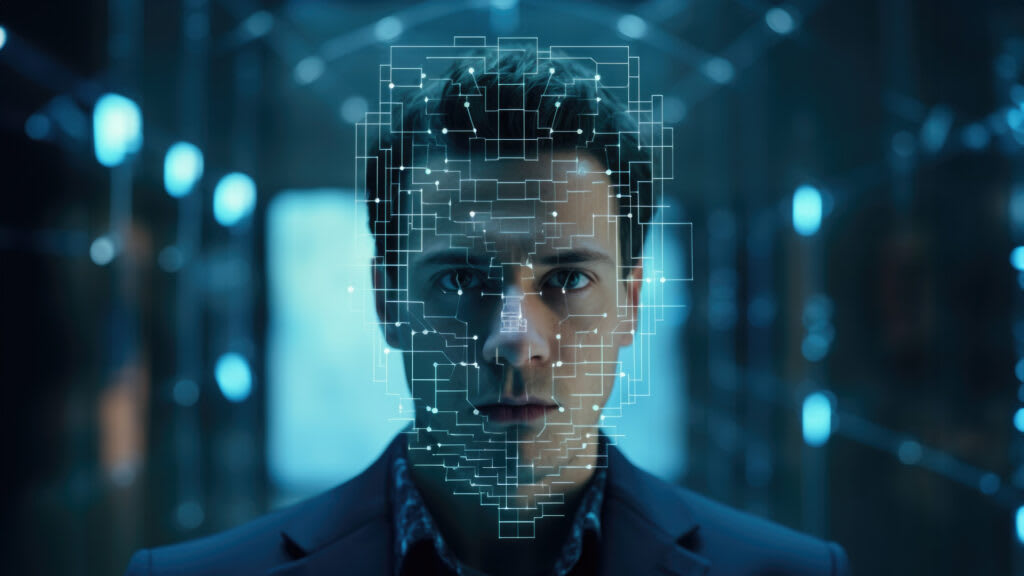
It started with a voice note.
Just a few seconds long. A friend forwarded it to me late one night with a simple message: “This doesn’t feel right.”
I played it once. Then again.
It sounded like her brother. Same tone, same slight hesitation between words, the same way he dragged out certain syllables when he was stressed. In the clip, he was asking for money. Urgent. Something about being stuck, needing help immediately.
If I didn’t know better, I would’ve believed it without a second thought.
That’s the part that stayed with me.
Not the fact that it was fake—but how easily it could have been real.
We talk about AI like it’s this distant, futuristic thing.
Self-driving cars. Robots doing surgery. Smart assistants finishing your sentences.
But that’s not what’s been sitting with me lately.
It’s the smaller, quieter things.
The things that slip into everyday life without announcing themselves.
A voice message.
A video call.
A photo that looks just convincing enough.
My friend ended up calling her brother directly. He picked up, confused. Safe. At home. Completely unaware that a version of his voice had just asked someone for money.
Nothing happened, technically.
No one lost anything.
But something still felt… off.
Violated, almost.
Like reality had been nudged slightly out of place.
I didn’t think much about it at first.
Just another weird internet story. Something to mention casually, shake your head at, move on.
But then I started noticing things.
Videos that felt just a little too perfect.
Clips of people saying things that didn’t quite match their usual tone.
Faces that looked right—but not right enough if you stared too long.
And suddenly, I wasn’t watching things the same way anymore.
There’s this moment now, sometimes, when I see something online—and before I react, before I believe it—I hesitate.
Just for a second.
And that second feels new.
I used to trust what I saw.
Not blindly, not completely. But there was a baseline. A quiet assumption that a video meant something actually happened.
Now that assumption feels… fragile.
And I didn’t realize how much I relied on it until it started cracking.
A few weeks after that voice note, something else happened.
Nothing dramatic. No headlines. Just a conversation.
Someone I know mentioned a video—one that had been circulating quietly in a group chat. It showed a person we both recognized. Saying things that were… damaging. Personal. The kind of thing that spreads fast, even if it’s not public.
By the time questions started, the damage was already done.
People had seen it.
Formed opinions.
Made quiet judgments.
And then came the uncertainty.
Was it real?
That question used to come first.
Now it comes last.
I think that’s what unsettles me the most.
Not just that deepfakes exist.
But that they blur the order of things.
We react first. Feel something. Decide something about someone.
And only later—sometimes much later—do we ask if any of it was even true.
And by then, it almost doesn’t matter.
Because the feeling sticks.
I keep thinking about how easy it’s becoming.
Not just for big, organized groups. Not just for “hackers” in the dramatic, movie sense.
But for regular people.
Someone with enough curiosity. Enough time. Enough quiet resentment.
Someone who knows your face. Your voice. Your patterns.
What could they do with that?
It’s a strange kind of vulnerability.
Not physical. Not even entirely digital in the way we’re used to thinking about it.
It’s… identity-level.
The idea that your face, your voice, your way of speaking—things that feel inherently yours—can be copied, reshaped, and used in ways you never agreed to.
And sometimes, you won’t even know it’s happening.
I caught myself doing something weird the other day.
I was watching a video of someone speaking—someone I’ve followed for years—and halfway through, I paused.
Not because of what they said.
But because I suddenly wondered if it was actually them.
That thought would’ve felt ridiculous not long ago.
Now it just feels… cautious.
I don’t like that shift.
I don’t like second-guessing things that used to feel simple.
I don’t like that a voice can sound real and still be a lie.
Or that a face can look familiar and still be… borrowed.
But what really gets to me isn’t the technology itself.
It’s what it does to trust.
Not just trust in media, or online spaces—but trust between people.
If you can’t fully trust what you see or hear… what happens to everything built on top of that?
Conversations. Relationships. Reputation.
Even memory.
Because here’s the thing no one really prepares you for:
Once you’ve seen something—even if it turns out to be fake—it still lives somewhere in your mind.
A version of that person. A version of that moment.
And it’s hard to completely erase it.
I think about that sometimes.
About how easy it is now to create doubt.
You don’t even need to fully convince someone anymore.
You just need to make them unsure.
And uncertainty spreads faster than truth ever could.
So where does that leave us?
Do we question everything?
Do we stop trusting what we see entirely?
Or do we just… adapt?
Learn to live with a kind of quiet skepticism humming in the background of everything?
I don’t have a clear answer.
Most nights, it just feels like something has shifted—and we’re still catching up to it.
Still figuring out what’s real, what’s not, and how much that distinction even matters once it’s been blurred.
I went back and listened to that voice note again recently.
The one that started all this.
It still sounds real.
Convincingly, uncomfortably real.
And that’s what stays with me.
Not the technology.
Not the people behind it.
Just that feeling—that thin, almost invisible line between real and fake—
and how easy it is now to step across it without even noticing.
If someone sent you a message tomorrow—someone you trust, someone you care about—
would you know for sure it was them?
Or would there always be that tiny pause now…
that quiet, lingering doubt?
About the Creator
John Smith
AI is rewriting the world. I'm here to ask the questions that matter. Tech writer. Deep thinker. Always curious.
Enjoyed the story? Support the Creator.
Subscribe for free to receive all their stories in your feed.
Comments
There are no comments for this story
Be the first to respond and start the conversation.