
America’s HDPE Boom: Why the United States High-Density Polyethylene Market Is Entering a New Growth Era
From Packaging to Pipelines, Demand for HDPE Is Rising Across Key U.S. Industries

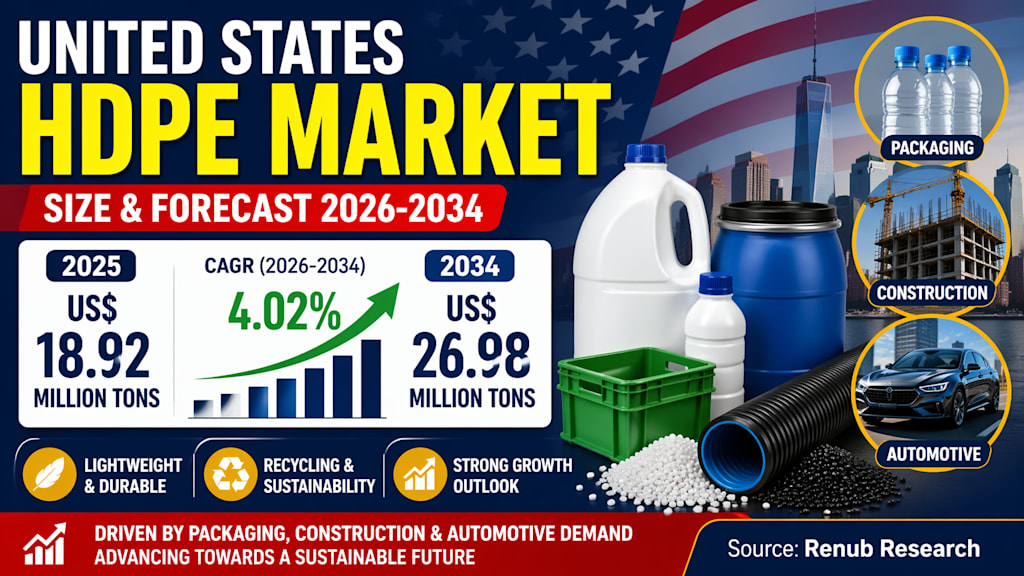
The United States High-Density Polyethylene (HDPE) market is moving into a strong expansion phase as industries increasingly rely on durable, lightweight, and recyclable plastic materials. According to Renub Research, the U.S. HDPE market is expected to grow from US$ 18.92 Million Tons in 2025 to US$ 26.98 Million Tons by 2034, advancing at a CAGR of 4.02% during 2026–2034.
This growth story is not just about plastics—it reflects larger changes in packaging, infrastructure, manufacturing, sustainability, and consumer behavior. As the United States modernizes supply chains, upgrades water systems, and increases recycling commitments, HDPE has become one of the most strategically important materials in the market.
Used in everything from detergent bottles and milk jugs to gas pipes and automotive components, HDPE continues to prove its value in a rapidly evolving economy.
What Is HDPE and Why Is It So Important?
High-Density Polyethylene is a petroleum-based thermoplastic polymer known for its excellent strength-to-density ratio. It is highly resistant to moisture, chemicals, corrosion, and impact, making it ideal for both industrial and consumer applications.
Unlike many materials that sacrifice performance for cost, HDPE delivers both durability and affordability. It is lightweight, easy to transport, simple to mold into different shapes, and highly recyclable.
That combination makes it especially attractive for sectors looking to cut costs, improve efficiency, and meet environmental goals.
Common uses include:
- Bottles and containers
- Food and beverage packaging
- Household chemical packaging
- Water and sewer pipes
- Geomembranes
- Industrial drums
- Automotive parts
- Crates, pallets, and bins
As industries search for smarter materials, HDPE is increasingly becoming the default choice.
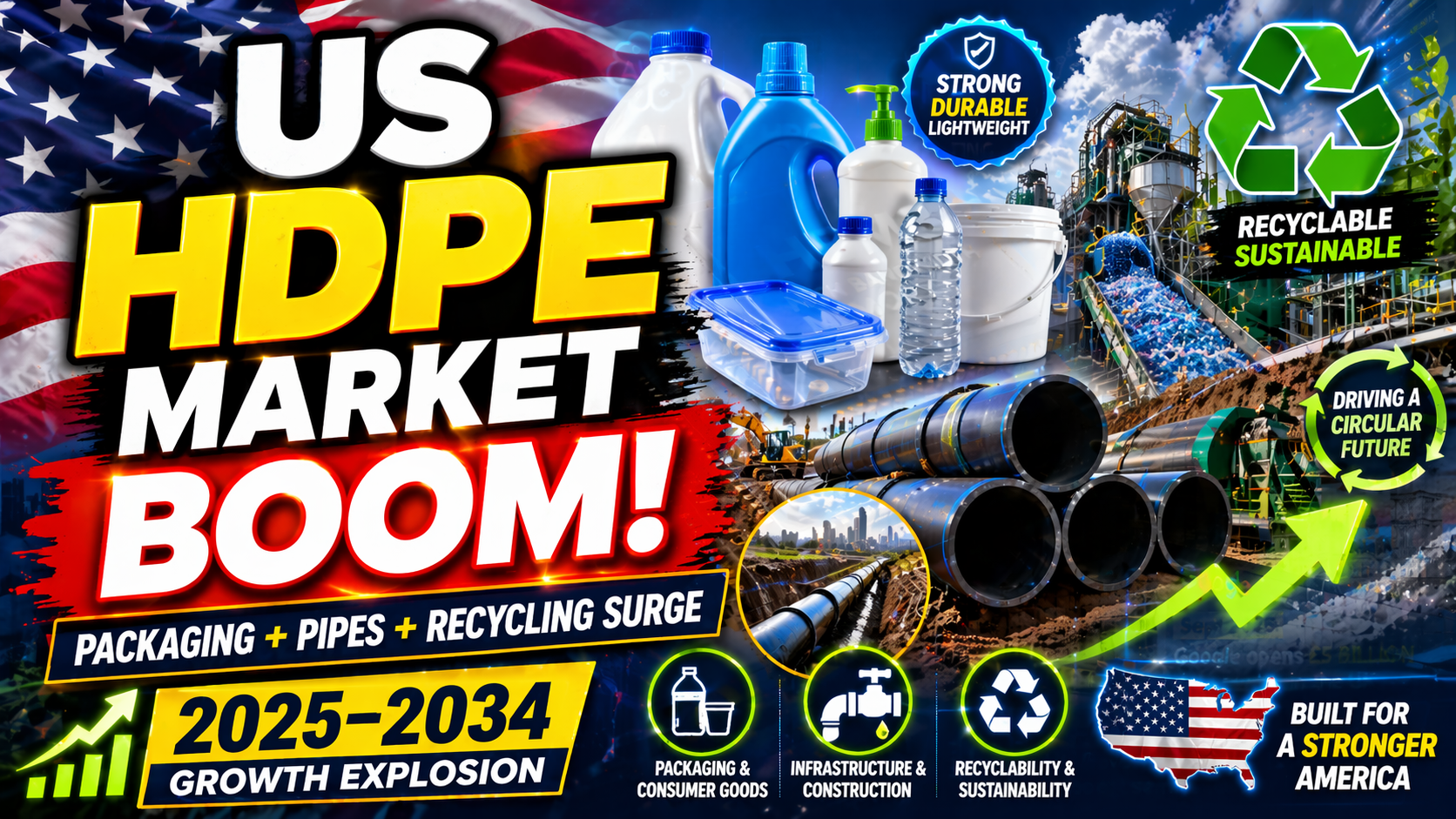
Packaging Demand Is Powering Market Growth
One of the biggest drivers behind the U.S. HDPE market is the growing packaging sector.
Consumers today demand convenience, hygiene, portability, and safety. This has increased the need for reliable packaging materials in food, beverages, cosmetics, pharmaceuticals, and homecare products.
HDPE is particularly favored because it is:
- Strong but lightweight
- Leak resistant
- Food safe
- Easy to mold into bottles and caps
- Recyclable
The continued rise of e-commerce and home delivery services has further accelerated demand. Online retail requires packaging that can withstand handling, transportation, and storage without adding excessive shipping weight.
As brands seek packaging solutions that balance performance and sustainability, HDPE remains a leading option.
Infrastructure Spending Creates Massive Opportunity
America’s aging infrastructure is another major reason the HDPE market is expanding.
Across the country, municipalities are replacing outdated water, sewage, and gas systems. Traditional materials such as metal and concrete often suffer from corrosion, cracking, and expensive maintenance. HDPE pipes offer a better alternative.
They are:
- Flexible
- Corrosion resistant
- Long lasting
- Easier to install
- Lower maintenance
This makes them ideal for water supply systems, drainage networks, irrigation lines, landfill liners, and energy transport.
As public and private infrastructure investment continues through the next decade, HDPE demand from the construction sector is expected to remain strong.
Sustainability Is No Longer Optional
Environmental pressure has transformed the plastics industry, and HDPE is benefiting from that shift.
Among major plastics, HDPE is one of the most widely recycled materials. Recycled HDPE (rHDPE) is now increasingly used in packaging, automotive applications, construction products, and industrial goods.
Major brands are setting circular economy targets, requiring more recycled content in their packaging. Governments are also tightening waste reduction rules and encouraging recyclable materials.
This creates a major opportunity for HDPE because it already has a relatively mature recycling ecosystem compared with many alternative plastics.
Advancements in sorting technology, chemical recycling, and reprocessing are helping improve the quality of recycled HDPE, making it more viable for premium applications.
The Rise of Blow Molding and Injection Molding
Different manufacturing processes are helping widen HDPE’s market reach.
Blow Molding
Blow-molded HDPE is used to make hollow products such as:
- Bottles
- Jerry cans
- Industrial drums
- Storage containers
This segment is booming because consumer packaging demand remains high.
Injection Molding
Injection-molded HDPE is used for:
- Caps and closures
- Pallets
- Bins
- Crates
- Automotive components
- Household goods
Its precision, scalability, and durability make it a favorite among manufacturers seeking high-volume output.
As supply chains become more automated and product volumes rise, these HDPE processing methods will continue expanding.
Texas Leads, But States Nationwide Are Growing
While HDPE demand is national, some states are especially important.
Texas
Texas remains one of America’s largest HDPE hubs due to its strong petrochemical base, abundant feedstock supply, export advantages, and manufacturing scale. Demand comes from construction, agriculture, packaging, and industrial uses.
California
California’s large population and strict environmental standards create strong demand for recyclable HDPE packaging, utility piping, and sustainable material solutions.
New York
New York’s dense population, retail economy, and infrastructure modernization projects support packaging and pipe demand.
Washington
Washington benefits from sustainability leadership and recycling innovation, making it a strong market for eco-friendly HDPE applications.
Challenges the Industry Must Overcome
Despite strong momentum, the market still faces obstacles.
Environmental Criticism of Plastics
Even recyclable plastics face public scrutiny. Single-use packaging bans and anti-plastic sentiment could pressure some HDPE applications.
Oil and Gas Price Volatility
Because HDPE is derived from petrochemical feedstocks, raw material costs can fluctuate sharply when crude oil or natural gas prices move.
Need for Better Recycling Infrastructure
While HDPE is recyclable, collection and reprocessing systems remain uneven across regions. Greater investment is needed to fully unlock circular growth.
Still, these challenges are pushing innovation rather than stopping demand.
Why Investors and Businesses Are Watching This Market
HDPE sits at the intersection of several high-growth trends:
- Smart packaging
- Infrastructure renewal
- Sustainable materials
- Industrial automation
- E-commerce logistics
- Lightweight manufacturing
That makes it more than just a commodity plastic. It has become an enabling material for modern economies.
Companies that can improve recycled HDPE quality, reduce production emissions, or develop premium HDPE applications may gain significant market advantage over the next decade.
What the Future Looks Like by 2034
By 2034, the United States HDPE market is expected to reach 26.98 Million Tons, showing steady and resilient expansion.
Future growth will likely come from:
- Advanced recyclable packaging
- Smart water infrastructure
- EV and automotive lightweight parts
- Sustainable construction materials
- High-performance industrial containers
- Circular economy innovations
HDPE may not be the most glamorous material in the economy, but it is quietly becoming one of the most essential.
Final Thoughts
The U.S. High-Density Polyethylene market tells a bigger story about how materials shape economic growth. From the bottle in your kitchen to the pipeline under your city, HDPE supports daily life in countless ways.
Its strength, versatility, affordability, and recyclability make it uniquely suited for the future. While challenges around sustainability and raw materials remain real, the long-term outlook is clearly positive.
About the Creator
Enjoyed the story? Support the Creator.
Subscribe for free to receive all their stories in your feed.
Comments
There are no comments for this story
Be the first to respond and start the conversation.