
America’s Growing Allergy Crisis Is Fueling a Multi-Billion Dollar Treatment Boom
From seasonal sneezing to life-threatening food allergies, the U.S. allergy treatment market is entering a new era of innovation and demand.

For millions of Americans, allergies are more than a seasonal inconvenience. They are chronic, disruptive, and in some cases life-threatening conditions that affect work, sleep, school performance, and overall quality of life. Whether it’s pollen in spring, pet dander indoors, food allergies, or asthma triggered by environmental irritants, allergic conditions are becoming a growing public health concern across the United States.
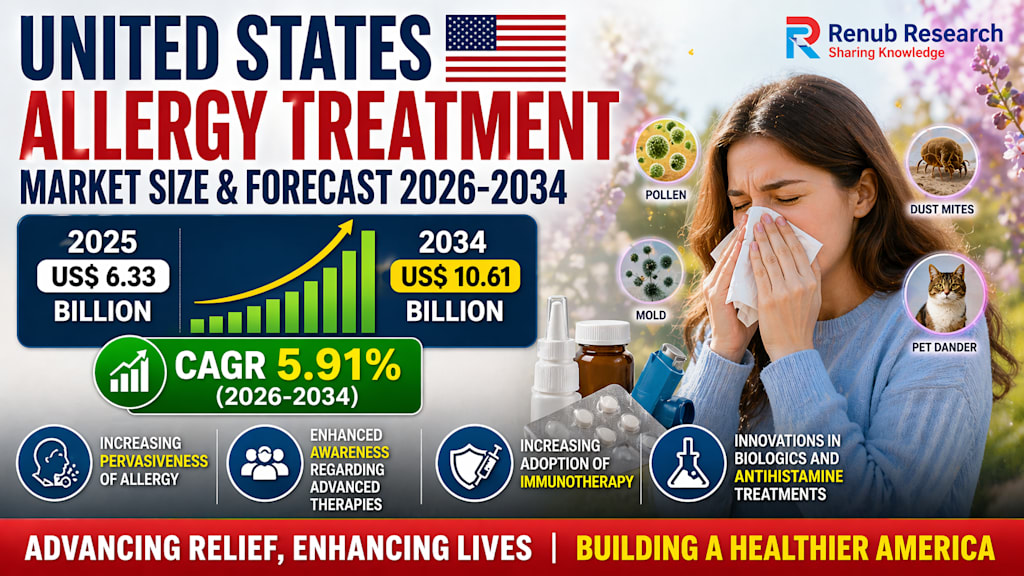
That rising burden is now translating into major economic opportunity. According to Renub Research, the United States Allergy Treatment Market is projected to increase from US$ 6.33 billion in 2025 to US$ 10.61 billion by 2034, expanding at a CAGR of 5.91% between 2026 and 2034.
This steady rise reflects more than just population growth. It points to changing lifestyles, worsening environmental triggers, new treatment innovations, and growing awareness among patients seeking better long-term solutions.

Why Allergies Are Becoming More Common in America
Allergies occur when the immune system overreacts to substances that are usually harmless. These can include pollen, mold, dust mites, insect stings, certain foods, or medications.
In the United States, allergies are increasingly common among both adults and children. According to the data cited in the market report, nearly 1 in 3 adults and more than 1 in 4 children in the U.S. reported having seasonal allergies, eczema, or food allergies. That equals over 100 million people nationwide dealing with some form of allergic condition.
Several factors are contributing to this trend:
- Rising air pollution in urban areas
- Longer pollen seasons due to climate shifts
- Indoor allergens from modern lifestyles
- Better diagnosis and awareness
- Changes in diet and immune system exposure
As these triggers grow stronger, so does the need for effective treatment.
The Shift From Quick Relief to Long-Term Management
For decades, many Americans relied mainly on over-the-counter antihistamines or decongestants for short-term symptom relief. While these still play an important role, treatment preferences are evolving.
Patients increasingly want solutions that address the root cause rather than temporary relief. This has led to growing demand for:
- Prescription anti-allergy drugs
- Nasal corticosteroids
- Leukotriene inhibitors
- Allergy shots
- Sublingual tablets
- Biologic therapies
Oral immunotherapy for food allergies
The market is moving toward long-term disease control instead of symptom suppression alone.
Biologics Are Transforming the Industry
One of the most exciting developments in allergy treatment is the rise of biologic drugs. These advanced medicines target specific immune pathways responsible for allergic reactions.
Unlike traditional medications, biologics are often designed for patients with severe or treatment-resistant allergies, asthma, eczema, or food allergies.
A major milestone came in February 2024, when the U.S. FDA approved Xolair (omalizumab) injection for reducing allergic reactions caused by accidental exposure to certain foods in eligible adults and children aged one year and older.
This approval signaled a huge leap forward in food allergy care, especially for families living with constant fear of accidental exposure.
Biologics are helping reshape the market because they offer:
- Stronger symptom control
- Better outcomes for severe cases
- Lower emergency risk
- Personalized treatment pathways
- Premium revenue opportunities for manufacturers
As more biologics enter the market, competition and innovation are expected to accelerate.
Food Allergy Treatment Is Becoming a Priority
Food allergies have become one of the most emotionally and medically challenging health issues in the country. Peanut, shellfish, milk, egg, and tree nut allergies can trigger severe reactions and require constant vigilance.
For years, avoidance was the only strategy. But now the market is evolving with new therapies focused on desensitization and prevention.
Parents, schools, healthcare providers, and insurers are taking food allergies more seriously than ever before. This growing urgency is helping expand the food allergy treatment segment significantly.
Eye Allergies and Digital Lifestyle Effects
Eye allergy treatments are another growing segment in the U.S. market. Seasonal allergens such as pollen and dust remain major causes, but modern lifestyle changes are also playing a role.
Longer screen time can worsen dryness and irritation, making allergic eye symptoms feel more severe. Combined with pollution exposure, this has increased demand for:
- Antihistamine eye drops
- Mast cell stabilizers
- Prescription steroid drops
- Combination eye care solutions
As hybrid work and digital lifestyles continue, this category may see stronger long-term demand.
Retail Pharmacies Still Dominate Sales
Despite the growth of specialists and online healthcare, retail pharmacies remain central to allergy treatment distribution in America.
Their strength comes from:
- Easy accessibility
- Extended hours
- OTC medication availability
- Prescription fulfillment
- Pharmacist guidance
- Seasonal product promotions
Large pharmacy chains and growing e-commerce prescription services are expected to keep this channel highly competitive in the years ahead.
States Leading the Market Growth
Not all regions experience allergies the same way. Geography, climate, pollution levels, and healthcare access create regional differences in demand.
California
California remains one of the largest allergy treatment markets due to:
- Massive population size
- Wildfire smoke exposure
- Air pollution
- Diverse climates and pollen zones
- Strong healthcare infrastructure
New York
Urban density, pollution, and seasonal allergens support robust demand in New York. Access to specialists and strong retail pharmacy networks also strengthen treatment uptake.
Washington
Washington’s climate contributes to pollen, mold, and moisture-related allergens. Preventive healthcare awareness further supports market growth.
New Jersey
Dense population centers and proximity to major healthcare hubs make New Jersey an important regional market, supported by insurance coverage and pharmaceutical presence.
What Could Slow the Market?
Even with strong growth prospects, the industry faces notable challenges.
High Cost of Advanced Therapies
Biologics and long-term immunotherapy can be expensive. Insurance coverage varies widely, and out-of-pocket costs can prevent patients from starting or continuing treatment.
Poor Treatment Adherence
Many allergy treatments require months or years of consistent use. Patients may stop early due to inconvenience, side effects, or slow improvement, reducing effectiveness and slowing recurring revenue.
Access Inequality
Rural areas and lower-income communities may have less access to specialists, diagnostics, or newer therapies.
What the Future Looks Like
The future of allergy treatment in America is likely to be shaped by:
- Personalized medicine
- AI-driven diagnosis tools
- New biologic launches
- Home-based testing kits
- Oral and needle-free therapies
- Digital adherence tracking
- Expanded insurance support
As healthcare systems shift toward prevention and quality-of-life outcomes, allergy treatment will move from optional care to essential chronic disease management.
Final Thoughts
America’s allergy problem is no longer just about spring sneezing. It now spans food safety, childhood health, asthma control, skin conditions, and serious immune responses affecting over 100 million people.
That is why the United States Allergy Treatment Market, projected to grow from US$ 6.33 billion in 2025 to US$ 10.61 billion by 2034, represents much more than a financial trend—it reflects a healthcare system adapting to one of the country’s fastest-growing chronic challenges.
About the Creator
Enjoyed the story? Support the Creator.
Subscribe for free to receive all their stories in your feed.
Comments
There are no comments for this story
Be the first to respond and start the conversation.