
Algorithmic Flattening: How "Good Taste" Became a Stylized Prison.
When predictive models dictate our living rooms and our wardrobes, bad taste becomes the ultimate luxury.

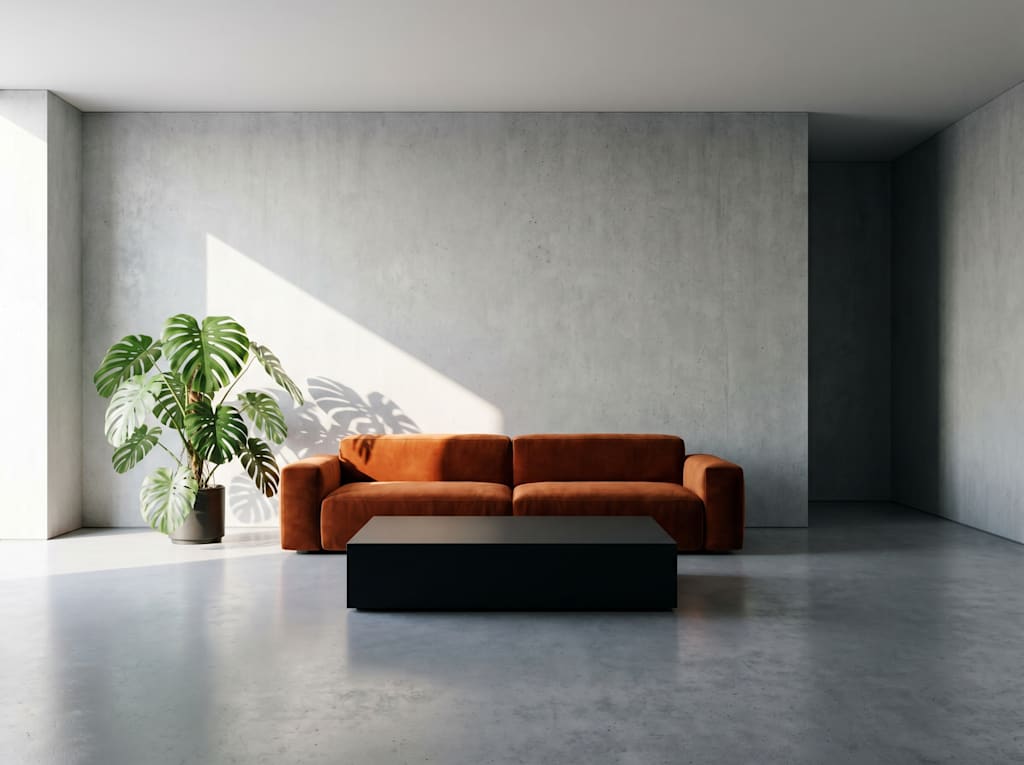
I sank into the burnt-orange cushions and immediately felt a cold spike of adrenaline at the base of my skull.
It was my couch.
It wasn't actually my couch, of course. I was sitting in my friend Mark’s third-floor apartment across the city, drinking his expensive natural wine. But the fabric was the exact same engineered velvet I sat on every morning. The matte black coffee table in front of my knees was identical to the one currently holding my junk mail at home. The lo-fi jazz playing softly from an invisible speaker was literally my top-played track from Tuesday. I looked at his walls. Framed Bauhaus prints. A Monstera plant in a terracotta pot resting precisely where the light hit the floorboards at a forty-five-degree angle.
We were living the exact same life. We were performing the identical aesthetic.
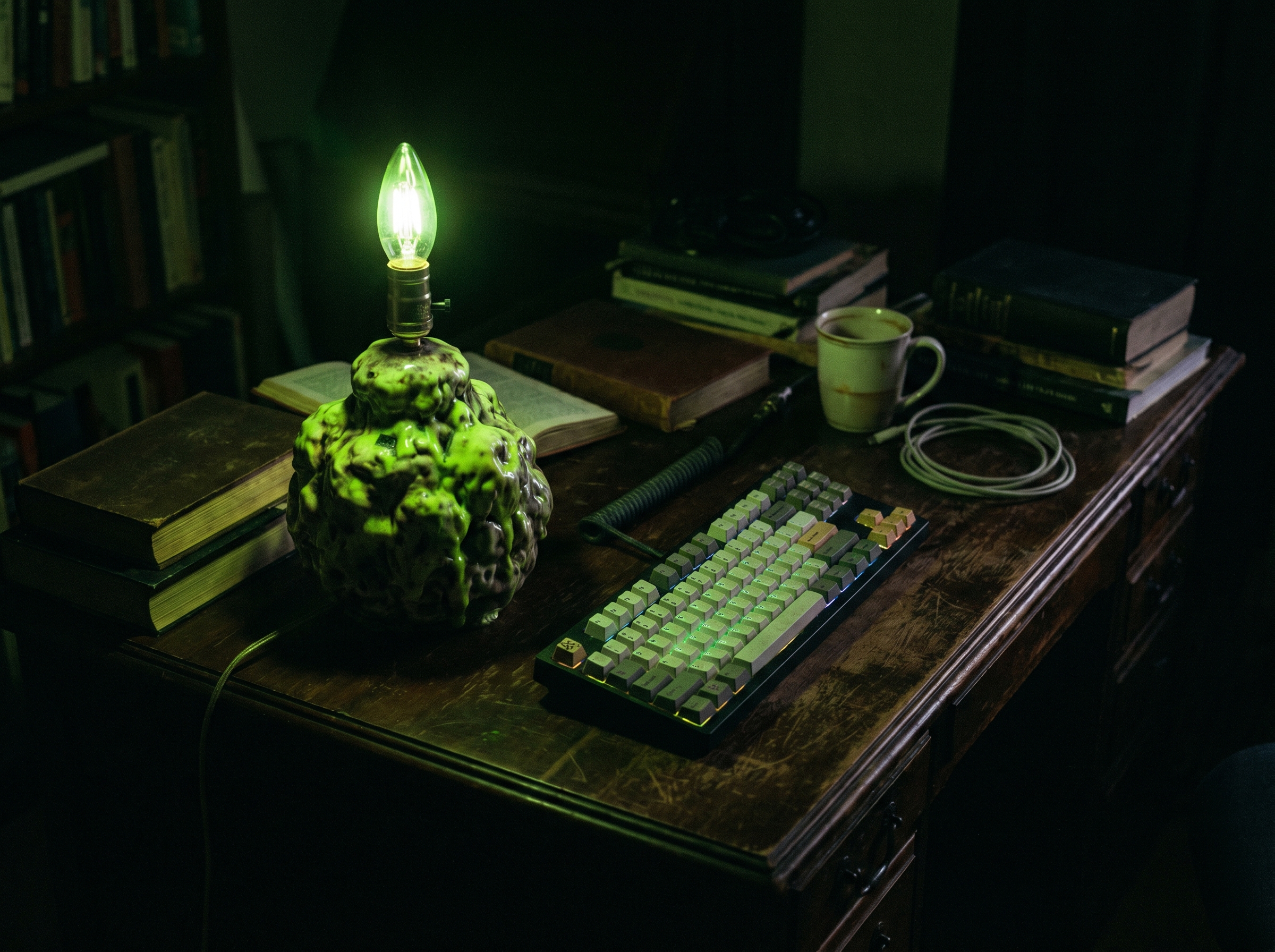
I’m writing this while aggressively gripping a neon-green, hideously misshapen ceramic lamp I bought at a damp thrift store yesterday purely because a predictive model would rather self-destruct than recommend it to me. The glaze is violently uneven. It looks like a radioactive mushroom. I hate it. I love it entirely. It is the only thing in my apartment that feels real.
(If I’m being honest, I spent twenty minutes yesterday staring at a jar of expensive matcha powder in my pantry, paralyzed by the inability to remember if I actually enjoy the taste of wet grass, or if I just saw it styled flawlessly on Pinterest in 2023 and adopted the beverage as a personality trait.)
By the spring of 2026, a profound psychological crisis has quietly taken root in our living rooms. We are realizing, with a collective, suffocating dread, that our personal taste is no longer our own. We have outsourced our identities to a machine.
Algorithmic Flattening and the Death of the Accidental
Cultural critics finally put a name to this overwhelming sameness. They call it "Algorithmic Flattening."
For a decade, we eagerly fed the recommendation engines. We gave them our clicks, our pauses, the lingering half-seconds we spent staring at targeted advertisements for minimalist glassware. The engines learned. They learned far too well. They stopped showing us what we might like and began dictating what we should like, wrapping their prescriptions in the illusion of hyper-personalization. You think you are expressing your unique individuality by purchasing that specific chunky knit sweater. The terrifying reality is that forty thousand other people in your exact demographic were fed the exact same advertisement at the exact same hour.
We are a completely homogenized global monoculture disguised as a billion rugged individualists.
Taste used to be a messy, geographical phenomenon. It required effort. You had to stumble into a weird basement record store on a rainy afternoon to find a bizarre punk album. You had to inherit an awkward, heavy piece of furniture from a chaotic aunt. Your environment was an amalgamation of accidents, geography, and financial limitations. You developed style by bumping into things you didn't understand.
Now, the frictionless slide of predictive e-commerce has eliminated the accident entirely.
When absolute aesthetic perfection is guaranteed by a machine, choice becomes a meaningless exercise. You are no longer curating a life. You are simply approving a pre-rendered mood board. Your apartment looks like a highly successful waiting room for a dystopian tech startup. Your wardrobe looks like a mathematically solved equation. The edges have been sanded down. The friction is gone.
The Parasitic Nature of the Predictive Feed
There is a deeply parasitic relationship between the user and the modern recommendation engine. It feeds on your past behaviors to build a confined, inescapable future.
The engine knows you better than your partner does. It tracks your heart rate spikes through your smartwatch while you scroll. It monitors the dilation of your pupils through the front-facing camera. The machine knows that I am historically anxious on Sunday afternoons, so it preemptively suggests a calming chamomile tea ad and queues up a subdued acoustic playlist.

It pacifies me. It smooths out my emotional spikes before they can even register in my own nervous system.
When a machine knows what you want before you even feel the desire, free will evaporates. We are terrified that we are entirely solvable. We are terrified that human complexity is just a data set that hasn't been fully mapped yet. This constant, invisible pacification robs us of the human right to be uncomfortable.
(I actually felt a wave of profound relief last week when Spotify played a song I absolutely despised. A chaotic, screaming industrial metal track randomly bled into my acoustic folk mix. I didn't skip it. I sat there in the dissonant noise, grinning like a maniac, thrilled that the machine had finally made a mistake.)
Aesthetic discomfort is how a person grows. Experiencing bad art, listening to abrasive music, and living with ugly furniture forces the brain to form an independent opinion. When you remove the abrasive, the brain simply goes to sleep. We are currently sleepwalking through our own incredibly tasteful homes. Good taste has become a highly stylized prison.
Data Poisoning in the Age of Good Taste
There is only one way to break out of a prison made of things you supposedly love. You start lying to the warden.
An underground movement of "Taste Anarchy" is currently tearing through the younger demographics. Teenagers are engaging in a practice known as "Data Poisoning." They are deliberately clicking on advertisements for things they vehemently hate. They spend hours watching videos of obscure, weird content—reviewing industrial boat engines, touring timeshare properties in places they will never visit, browsing orthopedic shoes—just to scramble their own tracking models.
They are artificially inflating the engagement metrics of terrible products. They want to be misunderstood.
In a society where being perfectly comprehended by a corporation is the baseline, remaining entirely opaque is the ultimate act of rebellion. If the algorithm cannot predict your next purchase, you are suddenly dangerous. You are suddenly human again.
This digital rebellion is bleeding into the physical world. The perfectly minimalist, sterile apartment is dead. In its place, the previous trend of "Curated Clutter" has mutated into something genuinely feral. People are actively seeking out the bizarre, the clashing, and the objectively awful. We are weaponizing the ugly.
I went to a dinner party last weekend where the dining table was surrounded by six entirely different, aggressively uncomfortable chairs. One was a rusty folding seat from a 1990s wrestling event. Another was a heavy Victorian antique missing half its upholstery. It was a visual nightmare. The host was deeply, profoundly proud of it. She told me she spent months hunting for pieces that the internet would despise. She wanted a room that could not be pinned to a mood board.

She wanted a room that was fundamentally un-optimizable.
The Luxury of the Incoherent Choice
We are violently reclaiming our right to be wrong.
When the entire optimized world expects you to have flawless aesthetic judgment, bad taste becomes the ultimate luxury. It proves you are not beholden to the engagement metrics. It shows you have enough social capital to survive looking ridiculous. The ugly object serves as a physical talisman against the encroaching digital void.
The radioactive lamp sitting on my desk is not just a lamp. It is a physical manifestation of my own autonomy. It is heavy, it is ugly, and it is mine. It is proof that I can still make a choice that defies logic, defies marketing, and defies the algorithmic consensus of my demographic. I chose it simply because I wanted to feel the jolt of making a bad decision.
We have to protect our strange impulses.
We must buy the wrong shoes. We must paint our living room walls a color that makes our guests wince. We must listen to entire albums that have zero mainstream appeal, refusing to skip the terrible tracks, just to experience the human reality of a failed artistic experiment. We have to lean into the messiness of our own contradictory desires.
Because the alternative is much worse. The alternative is living your entire life inside a perfectly tailored algorithm, wrapped in comfortable, burnt-orange velvet, slowly forgetting what it feels like to be an actual person. The alternative is an existence so perfectly predicted that you no longer need to be present for it.
I reached out and flicked the switch on the neon-green lamp. It cast a sickly, terrifying glow across my keyboard. The light made my hands look bruised. The shadow it cast on the wall was jagged and weird.
It was absolutely perfect.
About the Creator
The Chaos Cabinet
A collection of fragments—stories, essays, and ideas stitched together like constellations. A little of everything, for the curious mind.
Enjoyed the story? Support the Creator.
Subscribe for free to receive all their stories in your feed.
Comments
There are no comments for this story
Be the first to respond and start the conversation.