
AI - The Phantom Menace
Some Unexpected Challenges


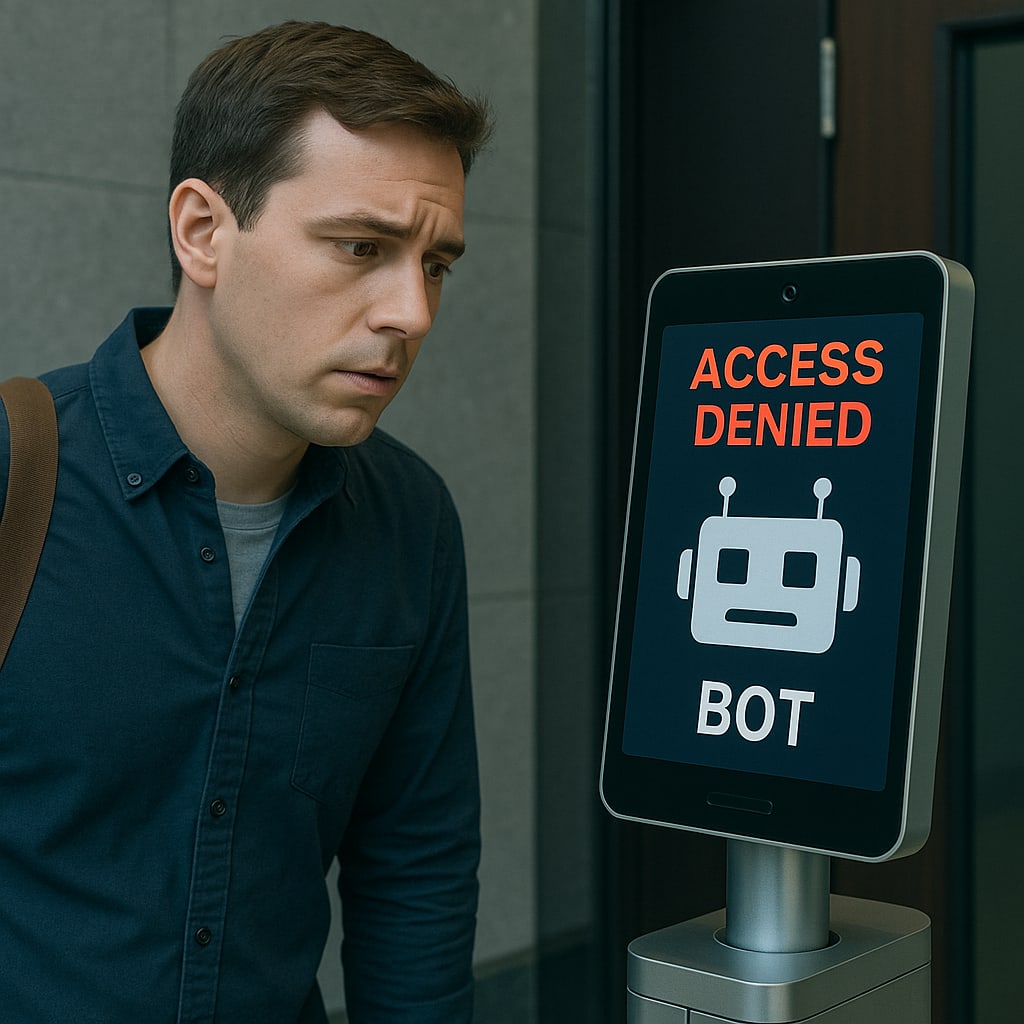
We’ve all read and heard about the various problems that artificial intelligence (AI) can bring. Some are already happening—like job losses or media being flooded with AI-generated texts and images. Others remain in the realm of science fiction.
The title here is, of course, a joke. But as it turns out, there's another unexpected problem with AI—one I hadn’t even considered. And I imagine many others haven’t either.
I recently read about a Bulgarian science fiction writer who prepared one of his own books—originally published ten years ago—for republication. Before doing so, it had to be checked for plagiarism and AI usage. To his shock—and save your breath now—the checker reported that 90% of the book was AI-generated. That’s a book written and edited more than a decade ago!
As you may recall, ten years ago there was no publicly available AI capable of generating texts like the ones we see today. Perhaps some early prototypes existed in research labs, but nothing like what we now use daily.
I assume the checking algorithm used was fairly basic—not a powerful program, let alone true AI. Still, this raises a new issue.
On many websites, bots are used to check if the visitor is human. Now, ironically, bots are checking for AI visitors. It may not be long before AI systems are used to detect non-human entities —or even to exclude humans from certain digital spaces.
I wouldn’t be surprised if someday AIs create their own platforms where human access is restricted.
But how effective are the algorithms that aim to distinguish AI-generated content from human-created work?
I've read about multiple experiments where AI systems fail to tell whether a work was made by a human or by another AI. People often struggle with this too.
In many cases, this may be harmless, but sometimes it can be frustrating—or worse. In rare situations, someone’s fate could depend on these flawed mechanisms.
To be clear: I’m not against AI or new technologies. I’m not afraid of them.
I simply want to point out that as these technologies become more deeply integrated into our lives, we may face entirely new and unexpected challenges.
On the other hand, let’s not forget that several tragic airplane crashes in recent years were caused by mentally unstable human pilots. One case occurred in Europe a few years ago; another happened just weeks ago in India. For the second one, the investigations are ongoing, but early reports suggest the Indian crash may also have been due to a disturbed pilot.
So perhaps the idea of replacing—or at least supporting—human pilots with AI isn’t so far-fetched. AI might also help reduce road rage and reckless driving.
In conclusion: Don’t be afraid of AI or the innovations it brings.
Just be ready for surprises—some good, some bad.
And learn how to integrate AI into your life and work in smart, thoughtful and usable ways.
Back in 1983, the band Styx released the song “Mr. Roboto,” where they sang:
“The problem’s plain to see
Too much technology
Machines to save our lives
Machines dehumanize”
At the time, the musicians could hardly have imagined the level of technology we’ve reached today. Artificial intelligence, smart devices, virtual reality—these were still the stuff of science fiction. And yet, even though our technology has advanced far beyond what anyone in 1983 could predict, I don’t believe we’ve become more dehumanized.
In fact, the real trend seems to be the opposite. Technology is becoming increasingly human-centered—designed to understand us, help us, connect us, and even care for us. Rather than stripping away our humanity, machines are beginning to reflect it.
Of course, we still face challenges. We must be thoughtful, responsible, and ethical as we integrate new tools into our lives. But the fear that machines would somehow erase what makes us human hasn’t come true—and may never need to.
So, let’s finish with the words from “Mr. Roboto”—this time with optimism:
"どうもありがと Mr. Roboto
どうも (どうも)
どうも (どうも)
どうもありがと Mr. Roboto
どうも (どうも)
どうも (どうも)
どうもありがと Mr. Roboto
どうもありがと Mr. Roboto
どうもありがと Mr. Roboto
どうもありがと Mr. Roboto
Thank you very much, Mr. Roboto"
Thank you for helping us move forward.
About the Creator
Bozhan Bozhkov
Hi, dear readers. I'm Bulgarian. I used to be a physicist, that's my education, but now I work as a network administrator. For many years, I have been writing a blog, and have also written several fairy tales and short stories, and a novel.
Enjoyed the story? Support the Creator.
Subscribe for free to receive all their stories in your feed. You could also become a paid subscriber, letting them know you appreciate their work.
Comments
There are no comments for this story
Be the first to respond and start the conversation.