
The Obi System
by Henry Bernstein
The Obi System
by Henry Bernstein
I was sitting in a kitchen that night. The windows were dark, like it was always night in that kitchen. It was a room in which I'd never been before. May have seen it once in a TV show. The way the black tiles on the floor were warped, not uniform, becoming a new iteration of themselves every time I looked. It was certainly a kitchen I would have remembered, the tablecloth and window curtains changing color on sight. But in its unfamiliar I felt warm and meaningful, like I was supposed to be there.
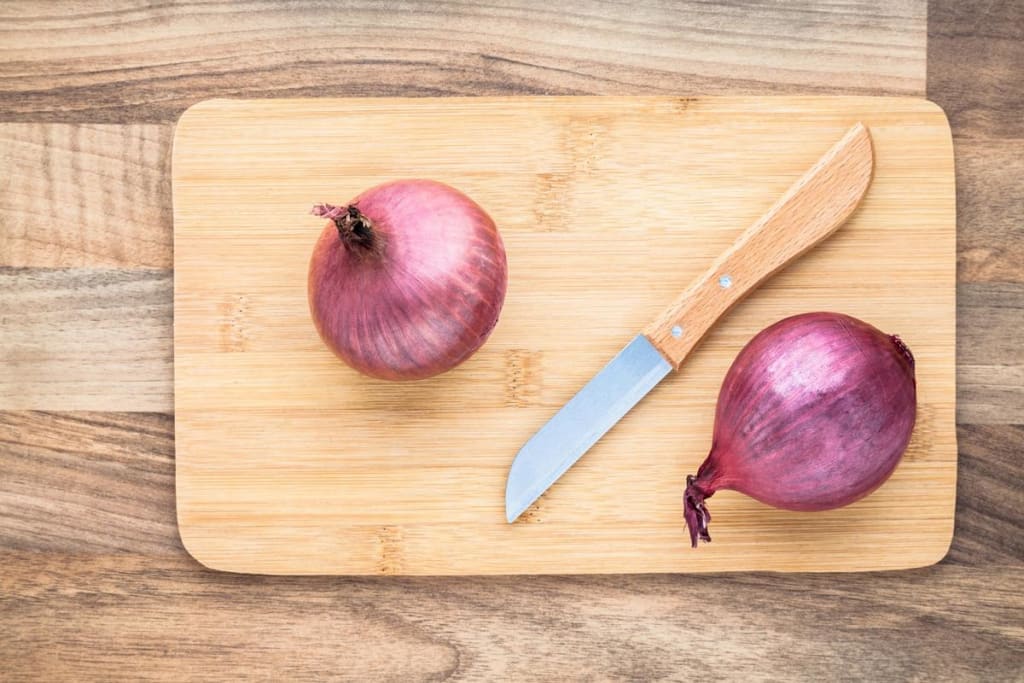
I sat at the table chopping onions. We’d need them for the stew later. The girl next to me stared with her sunglasses on. I stared back, my hand beating faster against the cutting board. She scoffed at me, flipped her hair and went back to whatever she was eating.
That’s when three Natives entered.
“We’re called the Obi System,” they said.
“What are you doing here?” I said.
“You’re not from here, are you?” said one of the men. I guessed he was their leader.
“No. As far as I know, I’ve never been here before. But you know how it can be with memory. That’s why I’m chopping these onions. I’ve been told they help with memory. I have to remember how I got here, so I can get home.”
The Native man approached the table. He was tall and shirtless, tattoos ringing his arms. He wore straps over his broad chest, daggers and beaded pouches swinging from his athletic figure. He stood over me and looked down at the onion as if determining its value for a dish he would prepare- something far finer and more medicinal than anything I could cook up. I said nothing. I felt like I should wait for him to speak, such was his regency in the dim light.
“It’s tradition in this area that local tribes will come through as they journey West or East.” His voice was soft and kind, but also carried a sense of danger. I decided to play it cool.
“Is that so?” I said. “How old are you?”
“In my culture, I’m considered a young adult.”
“Same,” I said. “Maybe we could have been friends in a different life.”
“Probably not,” he said. “But maybe.”
“So what’s the protocol here?” I said. “How does this go? How do you pass through the kitchen? Do I have to say something, or give you something, or do you have to prove your worth? Seriously, this is my first week. I’m just sitting here chopping onions, man.” I turned to the girl, maybe she knew. But she was now busy writing down everything that was happening and turning it into a short story. She wouldn’t be of any help at this point. The artist is merely a vessel.
Luckily the Native man was well versed. “It’s customary to leave a gift,” he said. The woman on his left stepped forward. “This is Sunshine Susan,” he said. Sunshine Susan was even more decked out in pouches than he was. She unwrapped a small box from her beaded satchel. She handed it to me. The man looked at her, stern and profuse. His eyes were wide at her, the whites were terrifying.
I took the box and unwrapped it. It was a gold-plated box, though the gold was clearly a fake. Perhaps these poor collectivists had been duped in a trade. Inside the box were a dozen pieces of chocolate, each more ornate than the next. Certainly these were not fake. Maybe they were more clever than I gave them credit for. I put the box on the table where it blended in with the gold foiling and leaves in the tablecloth.
“This is weird for someone who’s taking acid,” said the girl who was sitting next to me.
I turned to her. “Guess who else is taking acid,” I said, because it reminded me at that moment I was indeed still tripping. I lifted my sunglasses and broke out in a grin. We shared a laugh at this, me and her. It was an intimate laugh with undertones of barking lunacy. Like the lunacy could break out at any time, but the laugh was still genuine. There’s a power in knowing the other person is also on drugs.
The Native man stood silent, looking from me to her and back. I couldn’t tell if he knew the depths to which I was swimming at that moment, or if he’d even heard of acid.
“Do you do acid where you’re from?” I said.
“What’s that?”
“It’s a tool to clear your mind and spirit,” I said. “Crushes the ego. Expands the mainframe. If you abuse it it can make you crazy and scrambled to insane paragraphs like the one I’m saying now.”
“In our culture,” he began, “when a boy turns thirteen, his family sends him into the woods with nothing but a slingshot, a cask of pear juice and one psychedelic toad. They give him no instructions on how to survive. The toad is his guide. We call it a ‘Quocking’.”
The man wiped his lips as if remembering a devastating event. He looked back at his compatriots. The other man stood with a square jaw and iron eyes, clenching his fists, ostensibly holding in a massive poop. It was clear the minute he arrived that he had to poop but he did not have the language nor the standing to communicate his predicament, so he stood with the gutlessness of a French soldier. Sunshine Susan on the other hand was cradling a quiver of arrows against her bosom like a baby. She, I believed, did not have to poop. She was ready for any sudden movements or calls to action. Their custodian; their silent guardian angel. I was beginning to understand the hierarchy of these Obi Natives who’d entered my world through the catflap in the kitchen door. The leader was the orator, the negotiator. I would have to be on my toes with him. Sunshine was their champion. She put arrows into the hearts of heretics and tongue-speakers and thought nothing of it. The other man, what was he good for? He hadn’t yet made his role clear. It was this unknown variable that bothered me.
The leader continued his strange tale.
“The ugly toad secretes a substance from a hole in its head. It has the appearance and consistency of honey. The boy is told to rub the secretion on his forehead. When he does this he will start to feel like he’s on fire and take all his clothes off, usually running around laughing like a maniac. Then he will start to see spirits. Sometimes his ancestors appear to him. Sometimes he’ll see a person from his tribe. Other times it’s a person he’s never seen before. The person will give the boy advice on how to survive in the woods and will tell him what job he should have when he returns to the village.”
“Interesting. Who knew a toad could have such insight?”
“Indeed.”
“But what happens if the vision is wrong? They just leave the boy there to die?”
“No. The tribe leaves the boy for ten days. If he returns, he returns to the tribe a man. No one asks what happened in the woods; no one will ever know. The only rule is to return alive. On the other hand if the boy does not return, the elders send a search party to find him. If they bring him back alive he’s marked with shame. Not shunned, like the mouthbreathers, but frowned upon and sometimes ridiculed. He loses his chance at manhood for another year, and thus is still considered a boy. He must wait another year to be allowed to touch his own penis and stay out past midnight. It can be a harrowing or transformative experience.”
I stared at him from behind my sunglasses, my mouth open. Here I was, in front of a real life example of a nation on the brink. These people did not even have the wheel in their society, yet they had portals to an unseen dimension. And it occurred to me- who needs wheels when you can cross time?
“I see you people for what you are,” I told him. “The foundation for our society today. Your tragedies we avoid. Your mistakes we analyze. Your triumphs we borrow. Your discoveries we record. You don’t have the written word, but you use beads to represent integers. Do you know that your nation will live on in storybooks of the White Man for millennia? Not even Jesus will survive that long in the West.”
This seemed to honor the Obi System. They looked up at the ceiling with pride. They each put their fist on their heart and held it there until, I soon realized, an outsider would interrupt the ritual. I was honored to be that outsider.
“Before you go,” I said, “any way you could point me home? I have onions on my hands, and I’m not sure this tincture will work. If it doesn’t I’m stuck here forever. This girl is essentially useless. She’s tripping but we took different batches and it seems we’re on different wavelengths, so the communication collapsed long ago. Besides, it’s pretty clear she’s supposed to stay here for now.”
“Could you check your phone?” the leader asked.
“No, I lost it.”
“A White Man with no phone is like an eagle with no fish.”
“Precisely.”
“Well, to borrow from my experience during my own Quock, it occurs to me that when one does not know his way home, he has two options. The first option is he can simply wait and hope to God that they’ve sent the brown foxtrots to find him. Now this option can work, but you’re putting your fate entirely in the hands of the authorities. And at this point you have to gauge how much you in fact trust the authorities.”
This one had me thinking. I gazed at the ceiling which was shifting again in the fractals of my vision.
“The other option,” he went on, “is he can start walking in one direction until he gets to the main road, at which point he can find help. Try to head downhill if available. At the very least he can call an Uber from the main road. The only trick here is, he has to believe with some finality that he’s not in enemy territory. Getting in an Uber in the wrong hands can be a deathwish. Remember Runs-With-Wolves?” He turned to his comrades. They hung their heads to honor their fallen tribesman. “You have to be sure of yourself. Known to have had a little luck in your past. Maybe even the flawed kind of luck. Are you the kind of person for whom engineers falter and the skies devise a sugar rain of their own making? Do you render entire zeitgeists obsolete and turn grand parades into cross-walks?”
“I’m not sure I can claim that,” I said. “But shit, I’ve never voted for a president who lost. I’ve never been dumped or even had my heart broken. And I’ve won thousands of imaginary dollars playing Jeopardy on my couch. My grandma says I should try to get on the show.”
“Useless information is the key here. I say go for that option, little White brother. Fate often has a curfew.”
I decided right then and there, completely on my own with no help from anyone else, that I was going to walk down to the main road and see if I could find an upstanding citizen, someone sober or at least in their right mind, who could order me an Uber. Unknown to the Obi System at the time, I didn’t recall where home even was, so I wouldn’t be able to request a true destination. But this was a problem I would address when it arose. One thing at a time, I told myself. I looked to the girl next to me. She stared back, licking a blunt she just rolled. She said nothing, the whites of her eyes shining in the dim light. It appeared she had trashed her sunglasses which lay in pieces on the floor. This was a sign I should get going.
I turned back to the Obi System. It seemed they were getting restless, in their prideful yet gentle way. They didn’t want to hurt my feelings that I was boring them to death, and that the unnamed man had to poop. He was now waddling around the back of the kitchen. It was obvious he was starting to freak out the girl next to me (which was saying something given her own freakishness).
“You should be on your way,” I said. “You’ve certainly proven your worth and may pass through the kitchen unharmed. In fact, take some rations. Water, food. Onions. Whatever you need.” I pointed to the fridge in the background, it moving further and further away from my extended finger. “I’d help you out, but it appears I’m glued to my seat.”
The leader stepped forward. He put his fist to his chest again. I did the same. He put his hand on my shoulder. I reached up and put mine on his. In this moment I knew I would always be a friend to the Obi System and they to me. And maybe one day, just maybe, I would bring my children to their tribal village deep in the woods of Narragansett, and their great medicine men would take my son on his own Quocking. And under their starry pines he would become a man.
About the Creator
Enjoyed the story? Support the Creator.
Subscribe for free to receive all their stories in your feed.
Comments
There are no comments for this story
Be the first to respond and start the conversation.