Young Adult
The Girl Behind the Door
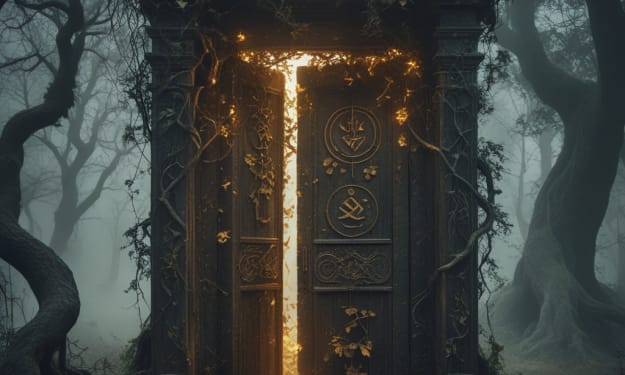
1. The Whispering House In the overlooked town of Elmbrook—where the wind murmured like a overlooked bedtime song and the crows roosted like prophets—stood an ancient, exhausted house. It had no title, but everybody called it The Wilt House. Children strolled quicker close it; older folks whispered supplications; and those who had once challenged to trespass carried their hush like a mystery curse.
By Muhammad Abdullahabout a year ago in Fiction
The Whispering Library
The Whispering Library Genre: Mystery / Fantasy Theme: Truth vs. Family Loyalty | Power of Knowledge Word count: ~750 --- In the forgotten town of Elderbrook, where fog rolled in like soft ghosts over broken cobblestone streets, stood a building that no one dared enter: The Elderbrook Library. Its roof sagged, ivy gripped its crumbling walls, and rusted chains held the massive oak doors shut like the mouth of some ancient creature. But the real reason no one went near it was the whispers. Anyone who wandered too close on a quiet night swore they heard them—voices calling from inside, soft as breath, repeating secrets no one could quite understand. Sixteen-year-old Lila Maren had grown up with the stories. Some said witches once kept spells there. Others claimed it was cursed. But for Lila, it was something more personal. Her grandfather—Elias Maren—had vanished years ago after spending countless hours in that library. No one in her family spoke of him. If she asked, her mother’s lips tightened into a thin, pale line. That silence was what led her here. One evening, armed with a flashlight, a notebook, and a stolen iron key she found hidden inside her grandfather’s old writing desk, Lila stood at the entrance. Her heart raced as she slid the key into the old lock. The chains fell away with a sharp, metallic clatter, echoing into the quiet night. As she pushed the heavy door open, a gust of stale, cold air rushed past her. Dust swirled in the beam of her flashlight, and tall shelves stretched endlessly into the darkness. Books sat forgotten, their spines cracked and worn by time. And then she heard it. Whispers. They drifted from the shelves, curling around her like silk threads — soft voices, some speaking clearly, others just murmurs on the edge of meaning. Some told stories, others whispered names, dates, regrets. Drawn by a voice clearer and more urgent than the rest, Lila moved deeper into the library. The voice seemed to know her. Finally, she stopped in front of a solitary table. On it sat a large, worn book, its leather cover cracked with age. The title, barely visible under layers of dust, read: “The Maren Lineage: Truths Unspoken.” Her breath caught. Maren. Her family name. Hesitating only for a second, she opened the book. A sudden, cold draft swept over her. Then, the whispers stopped — all except one. “Lila… at last.” The voice was familiar and distant, like an old record playing in another room. It was her grandfather. Frozen in place, Lila listened as the voice continued: "They buried the truth, but you deserve to know. I was not lost—I was hidden, hidden by those who feared what I uncovered here.” As Lila turned the pages, strange glowing ink swirled to life, forming words, maps, family trees. Images rose from the pages like smoke, forming fleeting pictures in the air—memories from another life. She saw her grandfather standing in the very library where she stood now, surrounded by books whispering ancient histories. She saw council meetings in shadowed rooms, decisions made to protect some great secret. “Beneath this very building,” Elias’s voice whispered, “is something our family was tasked to guard for generations — a hidden archive of knowledge too dangerous for the world above. But greed grew within the family. They locked me away with silence because I refused to keep it hidden any longer.” Lila’s hands trembled. Suddenly, everything made sense — the unspoken words at family dinners, the missing photos of her grandfather, the quiet shame that hung like a fog over their home. The last pages of the book formed a map. “There’s a door below the library,” the whisper said. “The truth is yours to find. But beware — once you know it, you cannot un-know it. Knowledge is power, Lila, but it’s also a burden.” The whispers around her resumed like a storm starting in the distance, louder now, echoing truths long forgotten. For the first time, Lila didn’t feel afraid. She felt chosen. Clutching the book to her chest, she walked toward the back of the library, where the floor sloped downward into darkness. The truth waited for her there, and with it, the answers her family had buried. And the whispers followed her every step of the way. Moral :Knowledge is a gift — and a responsibility.”
By Abdul Musawer about a year ago in Fiction
Until the Sky Fails .
They made the promise when they were ten. Sitting on the rusted roof of an abandoned train car, legs swinging over the edge, dirt on their cheeks and sun in their hair, Eli turned to Mara and said, “Promise me you’ll never leave.” Mara laughed, twirling a blade of grass between her fingers. “Not until the sky fails.” It became their thing. Not just words, but a bond. “Will you still talk to me when we’re old and boring?” “Until the sky fails.” “Will we still climb trees and swim in the river?” “Until the sky fails.” “Will you still love me?” “Always. Until the sky fails.” --- The world shifted as they grew. Childhood melted into adolescence, soft edges turned sharp, and dreams grew heavier. The river they swam in shrank with each summer drought. Factories shut down. People moved away. The sky never failed—but life cracked in other ways. Eli got a job at his father’s garage straight after high school. Mara wanted something more—more than dirt roads and rust and the same four corners of town. She left with a suitcase and a full scholarship to a city school. Eli stayed behind, grease under his fingernails and silence in his heart. They wrote. At first. Every week a letter. Then every month. Then birthdays. Holidays. A quiet message when someone in town passed away. Then the letters stopped. But the promise didn’t. Not for Eli. --- Years passed. The town shrank further. The sky grew stranger—storms that came too fast, heatwaves in winter, ash in the air some summers from fires far away. Still, he’d look up and whisper, “Not yet.” He met someone, once. A girl named Kate. She liked poetry and painted her nails green. She kissed softly and listened deeply. But after six months, she asked, “Is there someone else?” And he could only say, “There was.” She left the next week. --- It was thirteen years before Mara came back. The news spread fast: Mara Ashton, the girl who made it out, was back in town. Her mother had passed. The house was hers now. No one knew if she’d stay. Eli didn’t go to the funeral. He stood by the river instead, skipping stones that sank too fast. He thought about calling. Walking over. Saying anything. But he didn’t know how to begin. Then, one night, his doorbell rang. There she stood, hair shorter, eyes older, but still her. “I drove past the tracks,” she said quietly. “The train car’s gone.” “It collapsed years ago,” Eli replied. “Figures. The sky’s still up, though.” He smiled, lips trembling. They talked until midnight. Caught up. Tiptoed around what hurt. Laughed at what didn’t. She hadn’t found forever in the city. Just noise and walls and more people than warmth. She missed the stars. The silence. “You waited,” she said suddenly, her voice soft. “Yeah,” he said. “Until the sky fails.” --- They didn’t pretend to start over. They began again, with what they had: older hearts, old stories, and something stronger than memory. They restored her mother’s house together. He showed her how the town had changed—barely. She taught art classes at the school. He still fixed cars. And every evening, they walked hand in hand through the same old fields, under a sky that never failed them. Not yet. --- Years later, when their hair grayed and their hands trembled, they sat in rocking chairs under a violet sky. “Do you think the sky ever will fail?” Mara asked. Eli looked up, smiling. “Someday, maybe. But not today.” She leaned her head on his shoulder. “And even if it does,” she whispered, “we had this.” --- Because some promises aren’t broken by time. They hold—quietly, fiercely—until the sky fails.
By Azmat Roman ✨about a year ago in Fiction
Letter to the Ocean.
They said she talked to the ocean like it was an old friend. Every morning at dawn, Lena would walk barefoot across the cold sand of Greyrock Bay, a folded piece of paper clutched in her hand. She’d stand where the waves met the shore, let the foam kiss her toes, and read her letter out loud. No one ever knew what the letters said. She never showed them to anyone. When she finished, she’d place the letter in a glass bottle, seal it tight with a cork, and toss it into the sea. Some said it was ritual. Others said it was madness. But Lena believed the ocean was the only one still listening. --- It had started years ago—five, to be exact. The day her brother Jonah disappeared. He was a fisherman, like their father before him. He had salt in his blood and tides in his soul. He used to say the ocean spoke to him in dreams. Lena had always thought it was poetic nonsense. Until the storm. It came without warning. One moment, the sky was clear, the boat steady. The next, wind howled like a wounded animal, and the waves rose like giants. Three boats were lost that day. Most of the bodies were recovered. Jonah’s never was. Lena had been only sixteen. --- She wrote her first letter to the ocean a week after the storm. It was more like a scream than a message. She cursed the sea, cursed its cruelty, cursed herself for not telling him to stay ashore that day. But when she finished, she didn’t burn the letter. She didn’t bury it. She placed it in a bottle and threw it into the water. And the next morning, she wrote another. The letters changed over time. From rage to sorrow, from sorrow to longing. She wrote about her dreams, her regrets, her joys and mistakes. She told Jonah about the boy who kissed her on the old pier, about the time she failed her math exam, about the night she snuck out to watch the stars. She told him about their mother’s silence, their father’s drinking, about how their dog still waited at the door every evening like he might come home. Every single day. For five years. The villagers stopped asking questions. Some mornings, children would gather quietly to watch her, and go home mimicking the ritual with shells and driftwood. Artists sketched her from a distance. Tourists whispered and took photos they thought she didn’t see. She didn’t care. Because one morning, everything changed. --- It was late August, and the fog was thick. The ocean stretched out, endless and gray, swallowing the horizon. Lena walked to the shore, her letter folded as always, ready to send it into the world like a prayer. But something caught her eye. A bottle. Rolling with the tide, then caught in the sand. A bottle—with paper inside. Her breath caught. She ran to it, hands trembling. The glass was familiar, but the handwriting on the parchment wasn’t hers. She pulled out the note. It read: “Lena. I never stopped listening. — J.” She stared at it, heart pounding. It couldn’t be real. It had to be a cruel trick, some prank or coincidence. But deep in her chest, she felt it—a warmth, a knowing. The ocean didn’t answer in waves or thunder. It answered in whispers. She sank to her knees, tears mixing with saltwater, letter pressed to her chest. For the first time in years, she didn’t toss her own letter into the sea. She held it close and whispered, “Thank you.” --- Lena still walks the shore, but not every day. She writes less often now. Not because she’s forgotten—but because she’s healing. Her letters are gentler, sometimes joyful. Sometimes short. But she always ends them the same way: “Wherever you are, keep listening. I’ll always write.” And the ocean, in its patient hush and endless motion, listens still.
By Azmat Roman ✨about a year ago in Fiction
I Found Out My Brother Wasn’t My Real Brother
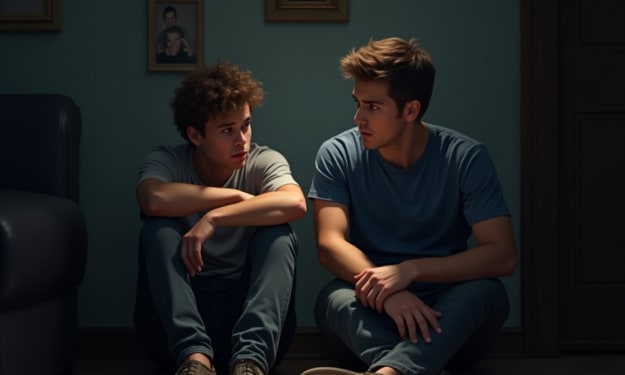
We grew up as brothers. Same house. Same school. Same bunk bed. My older brother, Adil, was always the calm one. The responsible one. He looked out for me, helped me with homework, taught me how to fight back against bullies, and gave me advice I didn’t always ask for but secretly needed. If someone had asked me who I trusted most in the world, my answer would have been instant: Adil.
By Umar Faraz Gulabout a year ago in Fiction
Where the Quiet Things Wait.
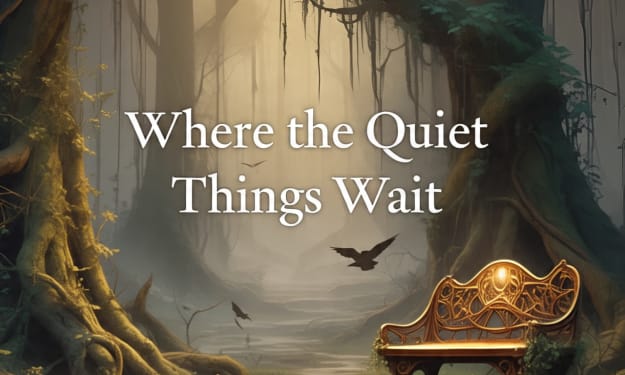
It began with a hum. Not a loud one, not anything you’d notice in a crowd. But in the stillness of the woods behind the old Thatcher house, it hummed low and constant—like the earth itself was whispering. Mara heard it first. She was twelve the summer her family moved into the Thatcher house, a lopsided structure that looked like it was exhaling. Her parents loved its "character." Mara loved its attic—dusty, quiet, full of trunks and forgotten books that smelled of cedar and ghost stories. The woods behind the house were thick, tangled, and wrapped in silence. The neighbors warned her not to go in too far. “They’re different,” the old woman next door had said, pointing with her cane. “Those trees remember things.” But Mara wasn’t afraid of quiet things. She was made of quiet—soft-footed and daydream-shaped, her thoughts filled more pages than her voice ever could. So on a cloudy Tuesday, with a notebook in her satchel and crumbs in her pocket, she slipped into the woods. The humming began by the third tree. She stopped. Listened. It vibrated through the soles of her sneakers, barely there, but somehow alive. The deeper she walked, the stranger the forest became. Not threatening—just still. Leaves didn’t rustle. Birds didn’t sing. No twigs cracked beneath her step. It was like she had wandered into a memory not quite her own. Then she found it. A clearing, perfectly round. In its center stood a small wooden bench, carved with words nearly worn away by time. Ivy coiled gently around its legs. The air was thick but gentle, like standing inside a breath. And on that bench, something waited. Not a creature. Not a ghost. Just a feeling—presence without form. It wrapped around her softly, like warm wool and half-forgotten lullabies. Mara sat down. At first, nothing happened. Then she took out her notebook and began to write. “I am Mara, and I have found the place where the quiet things wait.” The words poured out—memories she hadn’t known she kept, stories of dreams half-dreamed, the sound of her grandmother’s voice, the way it felt to lose her once and never say goodbye. She wrote until the sun shifted, and the hum faded gently into the dusk. She came back the next day. And the next. Each time she sat on the bench and wrote, the clearing welcomed her. The ivy grew a little thicker. The air grew a little warmer. Once, she heard laughter—not loud, not even quite human—but joyful and far away, like it had been waiting a long time to be remembered. Her parents worried, of course. “Don’t wander so far,” her mother would call. “You spend too much time alone,” her father frowned. But Mara didn’t feel alone. The quiet things had taken root inside her—gentle truths, aching thoughts, beautiful sorrows. She began to hear them even outside the woods: in raindrops, in candlelight, in her own careful voice. One day, she brought a second notebook. She left it on the bench. “If someone finds this,” she wrote on the first page, “this place is safe. It doesn’t speak with words. But it remembers everything you forget.” Years passed. The Thatcher house changed hands. The woods grew denser. The bench remained. Children grew up with rumors of the quiet clearing where strange things lived—things that didn’t chase or bite, but waited. Listened. Held you softly when the world felt too loud. They said if you found it, the hum would greet you. And if you sat down and opened your heart, the quiet things would stir. Not to haunt. Not to harm. But simply to be with you. Because in a world that rushes and shouts, someone must rememb h wait.
By Azmat Roman ✨about a year ago in Fiction
When the Birds Forgot to Fly
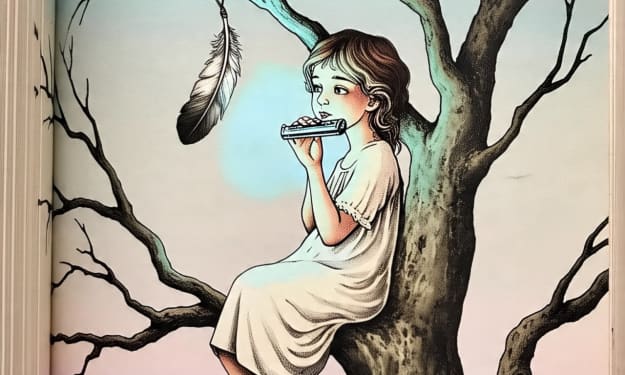
No one noticed at first. A few birds lingering longer on tree branches. A flock of starlings circling but never soaring. People thought it was the weather—too warm, too cold, too still. The scientists called it an anomaly, a disruption in migratory patterns, nothing to worry about. But Ava noticed. She always did. At eight years old, Ava had eyes that paid attention to the things adults forgot to see. Like how the sparrows outside her window stopped dancing in the morning. How the robins on the wire stared into the sky but didn’t leap. They just sat. Waiting. By the third week, the skies were quiet. It wasn’t just that birds weren’t flying—they weren’t singing either. No flapping wings overhead, no bursts of feathers from treetops. The world felt heavier, the air still. Like the sky had forgotten it was supposed to move. Ava’s parents didn’t say much. They spoke in hushed tones, eyes glued to news anchors who no longer smiled. Experts offered guesses—magnetic field shifts, global disorientation, mass trauma from environmental change. But no one had answers. Just questions. And silence. So Ava decided to find one herself. Every morning, she went outside with a sketchbook and her red boots. She drew the birds—how they perched, still and restless. She talked to them. Told them stories. Some days, she left crumbs. Other days, she played her grandfather’s harmonica, hoping the wind might remember music. The birds never responded. But they listened. Then, one evening, as the sun dipped behind the mountains and painted the clouds orange and rose, Ava saw something she hadn’t in weeks: a feather fall from the sky. Just one. Floating slowly. Like a whisper from above. She picked it up gently. It shimmered faintly, tinged with gold, like it remembered how to catch the sun. The next day, she returned to her tree—the old pine at the hilltop—and climbed to the third branch. She sat there for hours, the feather tucked behind her ear, eyes scanning the horizon. And she sang. Softly, then louder. A tune her grandmother used to hum in the kitchen while baking cinnamon bread. The melody was old and full of warmth. Ava didn’t know all the words, but the birds didn’t mind. By the end of the song, something stirred. A finch fluffed its feathers. A dove shifted its feet. A swallow tilted its head as if remembering something half-forgotten. The next day, she brought her harmonica. Played the tune again. This time, two sparrows hopped closer. The robin fluttered its wings. Still no flight. But motion. By the end of the week, she wasn’t alone. Other children came, some with flutes, others with violins, and one boy with a tiny drum. They played and sang and laughed under the wide, quiet sky. And then, one morning, as dew clung to the grass and the earth held its breath, a single lark launched into the air. It was wobbly at first. A strange, uncertain glide. But it rose. Higher and higher, until it was nothing more than a dot in the sky, silhouetted against the pale blue morning. The next day, ten birds flew. A week later, thousands. The skies bloomed again with wings and sound—coos and chirps and songs that had been buried beneath the hush. People wept watching flocks return to their patterns, their rhythms, their skies. The scientists still debated the cause. But Ava knew. The birds hadn’t forgotten how to fly. They had simply forgotten why. And when the world stopped singing, they’d grounded themselves in mourning. It wasn’t the mechanics of flight they needed—it was the memory of joy, of purpose, of belonging to the sky. They had waited for the world to remember how to feel. And Ava, in her red boots and song-filled heart, had reminded it.
By Azmat Roman ✨about a year ago in Fiction
The Last Photograph.
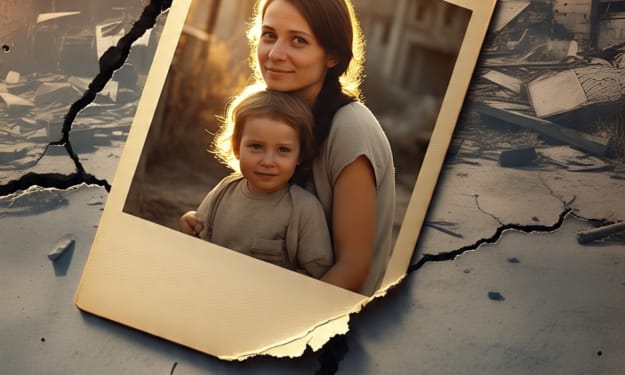
They found the camera in the rubble—an old Polaroid, scuffed and half-buried beneath the collapsed beams of what used to be a café. It still had film inside. That, more than anything, felt like a miracle. Elias cradled it in his dust-covered hands like it was made of porcelain instead of plastic. The war had taken almost everything—his home, his brother, the city’s laughter. But somehow, this camera had survived. Somehow, it was still waiting. They had orders to move north by sundown. The city was being evacuated sector by sector. But Elias stayed back a few extra minutes, standing in the broken shell of the café, his boots crunching over shattered glass and faded menus. The air smelled of old coffee, smoke, and memory. He lifted the camera and looked through the viewfinder. It was muscle memory. His father had taught him photography before the war, back when Sundays meant slow breakfasts and dusty albums filled with crooked smiles. His father had said, “Photographs are time-catchers, Elias. They remember for us when we forget how to.” He hadn’t taken a photo in three years. Elias aimed the camera toward the café’s counter. The stools were still upright, a strange defiance amid ruin. A child’s drawing clung to the far wall—crayon flowers in a world that no longer bloomed. He clicked the shutter. The camera whirred, then spat out a photo with a mechanical sigh. It was warm in his hand. Real. Tangible. He shook it gently, the way his father used to. Slowly, the image emerged: broken stools, fractured tiles, but light slicing through the cracked ceiling like hope peeking in. He stared at it. Then he turned. Outside, the street was ghosted with silence. Burned-out cars and shattered windows lined the road. The wind carried the distant sound of sirens, and even farther away, maybe—just maybe—a bird. He walked down the road with the camera dangling from his neck. People moved past him, faces drawn, eyes cast downward. Some carried bags. Some carried nothing. All carried stories. At the end of the street, he saw a woman and her daughter sitting on a bench near the old park gates. The girl clutched a teddy bear missing one eye. The woman’s hands trembled as she tried to braid her daughter’s hair. It was an act of gentleness in a world that had forgotten the word. “May I?” Elias asked, holding up the camera. The woman blinked, wary, then nodded. He knelt, framed them in the viewfinder, and clicked. This time, when the photo developed, it bloomed with quiet magic—the girl’s uncertain smile, the woman’s tired eyes, the softness between them. He handed it to them. The girl held it like treasure. “You’re giving it to us?” the woman asked. “Yes,” Elias said. “Photos are meant to belong to the moment.” He took a few more shots as he walked—an old man feeding pigeons seeds he could’ve eaten himself, a young couple holding hands like they were anchoring each other to the earth, a soldier giving his only chocolate bar to a crying child. One by one, he gave the pictures away. Then, as the sun dipped behind the scorched skyline, Elias reached the top of the hill overlooking the city. The evacuation trucks waited below, rumbling softly, their backs open like mouths ready to swallow what remained. He turned back one last time. From this height, the city looked bruised but not broken. Shadows stretched long, but light still touched the edges of rooftops, painting them gold. He lifted the camera for one final shot. Click. The last photograph developed slowly. In it, the city stood silent but enduring. Cracks spiderwebbed through its surface, but there were flowers peeking through pavement, and a boy standing at the hill’s edge, camera in hand, refusing to forget. Elias tucked that one into his coat pocket. He boarded the truck, gripping that last photograph as if it were proof—not of what had been lost—but of what was still worth remembering. Wasell
By Azmat Roman ✨about a year ago in Fiction
The Silence Between Lighting.
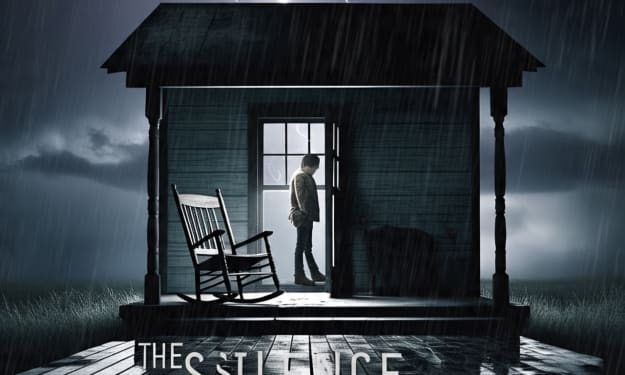
The storm began the night my father stopped speaking. At first, I thought it was just the rain—thick sheets slamming against our farmhouse windows like fists of water. The lightning came in bursts, brief and violent, illuminating the hollow look in his eyes. Then came the silence, longer than thunder’s pause, deeper than the quiet that follows grief. He sat in the wooden rocking chair on the porch, unmoving, hands gripping the armrests, as if holding on would keep him from slipping away. My mother had died two weeks before, and since the funeral, he hadn’t said a word. Not even to me. I was fourteen, with lungs full of unasked questions and a notebook full of sketches I no longer showed anyone. We lived miles from the nearest neighbor, and even farther from anyone who understood how a house full of silence could be louder than any scream. I sat beside him that night, my own hands trembling as I watched the storm roll over the wheat fields. Lightning split the sky again, searing a white scar across the horizon. I counted: one Mississippi, two Mississippi, three— Thunder crashed like the sky falling in on itself. Then silence again. Not peace—that sharp, suspended silence, like the moment between inhale and exhale, when the world is holding its breath. That’s where my father lived now—in the silence between lightning. Somewhere unreachable. He hadn’t always been like that. I remembered his voice like a warm coat around me. He used to tell stories during storms, made-up tales about cloud beasts and thunder drums. He'd say, “You know, lightning never asks for permission—it just shows up, loud and bright, and dares the dark to swallow it.” But the storm that took my mother had changed everything. It had been a quiet one. No lightning, no rain, just a strange heaviness in the air. She’d gone to sleep and never woken up. A stroke, the doctor said. Sudden. Unexpected. As if the silence had stolen her away. That night, as lightning flashed again, I decided I couldn’t let the silence steal my father too. I leaned toward him. “Dad,” I said softly, barely louder than the rain, “do you remember the story about the thunder drums?” His eyes didn’t move. I tried again. “You used to say the sky was an orchestra. That thunder was percussion, and lightning was the conductor's baton.” Still nothing. I clenched my fists, angry at the air, at the storm, at everything. I stood and shouted, “I miss her too, okay?! But you’re still here—and I’m still here—and you can’t just disappear into the quiet!” Lightning flared. I didn’t wait for the thunder. I turned to leave, tears burning, when I heard something creak behind me. The rocking chair had stopped. I turned back. My father’s eyes were closed, his face pale, but his lips… they were moving. “What?” I said, stepping closer. He opened his eyes and looked at me—not through me. At me. “The thunder… used to come quicker,” he murmured, voice cracked like old wood. I froze. “What?” “When you were little,” he said, staring into the dark. “The storms were closer. Brighter. Now they just… pass through.” A breath hitched in my throat. “You’re talking.” He nodded slowly. “I didn’t know how to carry it. Her absence.” “I know,” I whispered. “Me neither.” Silence returned—but not the same kind. This silence wasn’t empty. It held weight, but not isolation. It was like the hush of snowfall, or the pause before a melody continues. He reached out and held my hand. Lightning flashed once more, but we didn’t count this time. We waited. The thunder came, softer now, like a memory easing back into place. We sat that way for hours, letting the storm wash the dust off the world. The next day, he came into the kitchen and made breakfast. He even smiled once. He didn’t speak much, but he didn’t have to. Something had shifted. In the days that followed, he began to tell stories again. Quietly, at first. Then with more warmth. He helped me plant a sapling in the garden, one my mother had planned to plant herself. Years later, I would return to that house, older, changed, and find that tree tall and strong, its leaves whispering in the wind. And I would remember how healing began not with answers, but in the pause between pain and comfort—in the silence between lightning, where we found each other again.
By Azmat Roman ✨about a year ago in Fiction
We Bloomed us in The Dark.
The power cut out on the first night of the siege, sealing the city inside a hush so absolute that we could hear our own heartbeats scraping fear across our ribs. Windows glowed faint ember-orange from candle stubs; the streets outside lay ink-black, littered with echoes of distant shell bursts. That was when the caretaker herded the remaining tenants of Ashgrove Apartments—four families on the brink of unraveling—into the building’s unused basement greenhouse. “No bombs can burrow this deep,” she said, voice trembling behind forced certainty. “And the soil will keep us sane.” So we gathered in the subterranean glasshouse, a long-forgotten relic from the building’s more prosperous era. Ivy choked the steel beams. Flowerbeds held only skeletal stems curled like fingers of beggars. Above us, panes of dusty glass met the cracked ceiling, letting in neither moonlight nor threat—only darkness pressed tight as a lid. There were twelve of us: Mrs. Halim with her newborn; the Morales twins who never stopped arguing; widowed Mr. Liang, fixing his broken radio; my younger brother Milo and me, still tasting the smoke that had chased us down nine flights of stairs; and the caretaker herself—Miss Idris—whose left hand was always bandaged though she never spoke of why. “Plants know how to wait,” she said. “So will we.” We lit oil lamps and rationed canned beans. Days bled into nights without horizon or clock. Aboveground, the city thundered. Below, time wilted. But on the fifth evening, Milo found a packet of seeds sealed in wax, buried beneath a crooked shelf. Night-blooming cereus, the faded label proclaimed, though the ink had run like tears. He cupped the seeds in his palm, his twelve-year-old face illuminated by the lamp’s thin flame. “Flowers that open only after dusk,” he whispered, as if telling a ghost a secret. Miss Idris’s eyes flickered. “In folklore,” she murmured, “they bloom once a year—sometimes once a lifetime. But when they do, they perfume the dark so sweetly you forget all war.” We were skeptical—until hope proved cheaper than doubt. Milo and the twins prepared a planter box, mixing dusty soil with what little clean water remained. Mr. Liang cannibalized the radio’s copper wiring to rig a feeble grow-lamp from a car battery. We planted the seeds in careful rows, tiny graves for tiny promises, and waited. We waited through hunger, through newsless nights broken only by sirens that never descended to rescue us. We told stories to the newborn so she would learn laughter before she heard gunfire. We sketched constellations on the glass panes overhead, naming each imaginary star for someone missing: my mother, Mrs. Halim’s husband, the Morales’ dog. And every evening, just after the final rumble faded, Milo whispered to the planter, “Bloom for us. Please.” Weeks passed. The car battery died; the grow-lamp winked out. Yet when lamplight brushed the soil one dawnless hour, we saw green—frail shoots unfurling like shy tongues tasting air for the first time. Against all reason, they grew faster than any botany book allowed, each stem thickening, twisting, reaching for invisible moonlight. One night, when the city overhead lay silent as a graveyard and even the rats dared not scurry, the greenhouse filled with a scent—subtle, then sudden, a flood of honey and rain and old lullabies. Lamps weren’t necessary: the blossoms themselves glowed, petals thin as parchment, luminous in the pitch. They opened in synchronized slow motion, unveiling centers gold as sunrise no one above could see. We stood ringed around them, mouths parted, eyes reflecting starless halos. “We bloomed us in the dark,” Milo whispered, grammar bending under awe, and none of us corrected him because the sentence felt perfectly wrought by the moment. The newborn stopped crying. Mr. Liang’s radio crackled to life unassisted, catching a faint broadcast: Cease-fire negotiations underway. Hold on. Dawn is coming. Perhaps interference, perhaps miracle—no one cared. The blossoms’ perfume stitched courage through our lungs like new lining. We harvested nothing; we needed only to inhale. Each night thereafter, the flowers opened, as if the seeds had rewritten their own biology to soothe us. In their phosphorescent glow we shared buried confessions: Miss Idris revealed the bandage hid a shrapnel scar from the first day of shelling, when she’d dragged strangers out of a burning tram. The Morales twins admitted they argued because silence reminded them of their parents’ absence. I confessed I’d feared I would fail Milo, that I was too small to be anyone’s protector. But the flowers did not judge. They exhaled forgiveness. Forty-nine days after we descended, the doors at street level unlocked with a groan like thawing ice. Soldiers escorted us into sunlight so blinding I wept. Ashgrove Apartments was a husk amid rubble, yet pockets of ordinary life glimmered—neighbors boiling water over barrel fires, children drawing chalk rainbows on broken pavement. The soldiers offered transport to refugee stations. We accepted—but not before Milo, careful as a priest, uprooted one cereus cutting. The stalk pulsed faintly even in daylight, as though remembering its private night logic. “A reminder,” he said, placing it in a shoe box with holes poked for breath. Of what? I asked. “That something beautiful can decide to live where living makes no sense,” he replied, age sliding across his voice like sunlight on wet leaves. When the convoy rolled away, we looked back. Through a shattered basement window, darkness still pooled—yet I imagined the greenhouse glowing, patient, courageous, seedling-bright. A lantern no bomb could blow out. And I understood: we had not merely survived the dark. We had bloomed us there—together, fragrant with the proof that hope, like night-blooming cereus, is rare but real: a flower that chooses the darkness simply because someone, somewhere, still needs its light.
By Azmat Roman ✨about a year ago in Fiction