thriller
Doctor Doom The Marvel’s Supreme Villain
Few villains in comic book history got as much respect, fear, and complexity as Doctor Doom. Created by Stan Lee and Jack Kirby, Doom first appeared in Fantastic Four #5 in 1962. Since then, he has become one of Marvel Comics’ most iconic antagonists, a master of both science and sorcery, and a character whose motivations and philosophies challenge the very nature of heroism and villainy.
By Islam Shamsabout a year ago in Fiction
The Stranger on the Bench
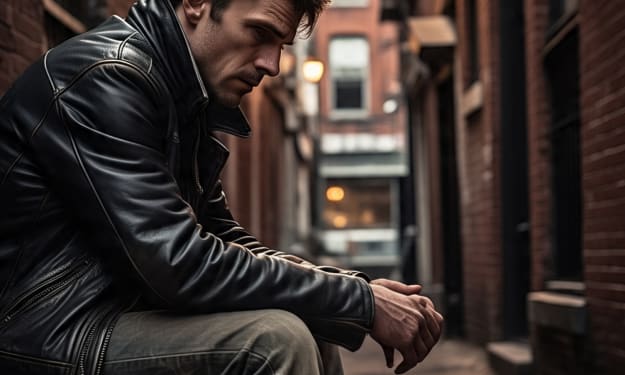
It was a gray Tuesday afternoon, the kind of day that feels like it forgot to wake up. I was sitting on a park bench, hands in my coat pockets, watching a leaf spin hopelessly in the wind. Life had lost its color for me—my career had stalled, a long-term relationship had ended, and my father had just been diagnosed with early-onset dementia. I didn’t know where to go or who I was anymore. That’s when the old man sat beside me. He didn’t say anything at first. Just adjusted his brown fedora, straightened his scarf, and looked straight ahead as though he’d come to watch the same spinning leaf. He carried a small canvas bag that looked older than time, and a cane with a lion’s head carved on top. I glanced at him, then quickly looked away. He seemed ordinary, but there was something about his presence—something... grounded. Like he belonged to a different time where people looked you in the eye and meant what they said. “Rough day?” he asked, without turning to me. I hesitated. “You could say that.” He nodded. “Yeah. You can feel it in your chest, like a rock sitting there. Heavy. You breathe around it, but never through it.” I blinked. “That’s... exactly how it feels.” He smiled faintly. “I used to be a rock collector. Geologist, technically. Traveled the world. You’d be surprised how much a rock can tell you—how it was formed, what it endured, how it adapted. You can learn a lot from rocks.” I chuckled despite myself. “I’m not sure I want to become a rock right now.” He looked at me then, his eyes a steely blue with a surprising fire behind them. “But you already are. You just don’t know what kind yet.” There was a pause. I wasn’t sure what he meant, but something in me wanted to hear more. “I lost my wife in '92,” he said softly, turning his gaze back to the path. “Cancer. The kind that whispers and then screams. I thought I’d fall apart after she passed. Came to this bench every day for months. Sat right where you are.” I looked down at the weathered wood beneath me, suddenly feeling the weight of it. “You don’t forget pain,” he continued. “You just learn to carry it. Mold it. Like lava becoming stone.” “What helped you?” I asked. He tapped his chest. “Time, mostly. And purpose. I started talking to strangers. Helping where I could. Sometimes, people just need someone to sit next to them and say, ‘Hey, I see you.’ Not ‘fix’ them. Just *see* them.” Something about those words hit me like a soft punch. I’d spent so much time feeling invisible—going through the motions, pretending I was okay. “I used to write,” I said. “Poetry, short stories. Haven’t touched a notebook in three years.” “Why not?” “Life got in the way. Or maybe I stopped believing anything I said mattered.” He leaned back. “Ah. The old ‘why bother’ question. I asked myself that once. You know what I figured out?” I shook my head. “You create because you must. It’s not about mattering to the world. It’s about mattering to *you*. If you’re the only one who ever reads what you write, and it keeps you alive—then it matters.” I swallowed hard. I hadn’t realized how badly I needed to hear that. How starved I’d been for validation not from applause, but from honesty. We sat in silence for a while. A breeze stirred the trees, sending leaves tumbling across the path like lost thoughts. “I come here every Tuesday,” he said eventually. “Same bench. Maybe you’ll come back. Maybe you won’t. But either way, write something tonight. Anything. A word. A sentence. Just let it out.” I nodded slowly. “Okay.” He stood up, wincing a bit as his joints protested. Then he gave me a smile that was both sad and hopeful. “Be the rock,” he said. “Not the one that sinks. The one that holds the mountain up.” And then he walked away. I never saw him again. I came back the following Tuesday, hoping he’d be there. I came back the next Tuesday too. But he was gone—like a ghost, or maybe a teacher who appears just long enough to give you the nudge you need. But I wrote that night. And the night after that. It wasn’t good writing, not at first. But it was *me*. And eventually, it led to more—freelance gigs, short stories published online, and then, slowly, a life that started to breathe again. My father still has his bad days, but I visit him more often. I even read him my poems. He always says, “That’s good,” even if he forgets he heard it the day before. It’s been two years now. And every Tuesday, I sit on that same bench, with a notebook and a pen. Sometimes strangers sit next to me. Some cry. Some just stare ahead. I don’t fix them. I just see them. And I tell them about the stranger who once changed my life.
By Muhammad Ahmar about a year ago in Fiction
Fail, Fight, Rise: The Power of the Human Spirit
Introduction Failure. A word we often associate with shame, regret, and loss. But what if failure isn’t the end? What if it's the beginning of something extraordinary? "Fail, Fight, Rise" is not just a phrase—it's a mindset, a way of life embraced by those who refuse to be defined by their lowest moments. In this article, we explore the incredible power of the human spirit through real-life stories of people who fell hard, fought fiercely, and rose even stronger. These are not just success stories—they are life lessons wrapped in pain, perseverance, and personal growth.
By Mian Nazir Shahabout a year ago in Fiction
Whispers from Tomorrow
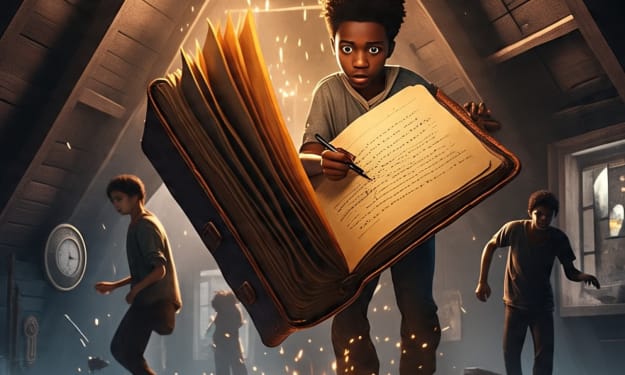
It at floor where relics of forgotten decades sat under sheets and cobwebs. But when the rainstorm poured through the broken roof, his mom sent him up with towels and a bucket. That’s when he found the diary. It was lying under an old chest, dry despite the leak, its leather cover aged but intact. Curiosity outweighed the damp smell, and Jamie opened it. The handwriting inside was neat, looping, and strangely familiar. August 15th *Don’t go near the corner store. There’s going to be an accident at 4:17 PM. Trust me. Jamie blinked. That was today’s date. A chill slid down his spine. Just a prank, he thought. A weird coincidence. But at 4:00 PM, he found himself sitting across from the corner store, half-laughing at his own stupidity. At 4:17 PM exactly, a silver car skidded on the wet road and slammed into a lamppost outside the shop. No one was hurt, but Jamie dropped the diary as if it had burned him. Back home, he flipped through the pages. Most were blank. But a few scattered entries were filled in—each one with a date just a day or two ahead, written in the same careful handwriting. August 16th *Don’t let Dad leave for work early. The bridge is unstable after the storm.* He hesitated. His dad *always* left at 6:30 AM. But the next morning, Jamie faked a fever, begged for help with schoolwork, anything to keep his dad until 7:15. The news came on later. A small landslide had collapsed the westbound bridge—right at the time his father would’ve crossed it. Jamie didn’t know what scared him more: the diary’s accuracy, or the thought that someone knew the future… and was trying to help him. The entries kept coming. A few days later: August 20th *Tell Rachel she matters. Don’t let her walk home alone.* Rachel, his neighbor and best friend, had been unusually quiet lately. Jamie took her aside, gave her a clumsy but heartfelt hug, and told her she was important to him. That night, she texted him: *Thanks. I almost didn’t make it home. Some guy was following me. But I remembered what you said. I ran.* Jamie’s hands shook as he held the diary. It wasn’t just random advice. It was saving lives. But the scariest entry came a week later. August 26th *You’re running out of time. Don’t ignore the signs. The fire starts in the basement. Midnight.* Midnight. That night. Jamie ran to check the basement. Everything seemed normal—no smell of gas, no exposed wires. But his gut churned. He filled a jug of water and stayed up late, diary clutched in one hand. At 11:58 PM, the smoke alarm blared. He bolted down the stairs to find an old fuse box sparking wildly, cardboard boxes nearby catching fire. He doused them quickly, yelling for his parents. They evacuated safely. The fire didn’t spread. The fire department called it a “close call.” After the fire, the diary changed. New pages began filling in with longer entries. They started using “I” instead of “you.” August 27th I can’t hold this timeline much longer. Every time I send a message, it costs me a piece of memory. You’re doing well. But soon, I won’t remember how to warn you. August 28th Jamie, it’s me. I’m you. From the future. I found a way to bend time back—just enough to send words, not bodies. Every entry I write fades from my mind as soon as I send it. But I remember the fire. The bridge. Rachel. Jamie stared at the page. Future *him*? The handwriting matched. The voice felt right. The next few entries became more erratic. August 29th She’s the key. The one in the library. You must find her. She can fix the loop. Who? Jamie skipped school and went to the local library. A girl he’d never seen before was reading alone in the back corner, surrounded by dusty books on quantum physics. Their eyes met. “I’ve been waiting for you,” she said simply. Her name was Elara. A prodigy in theoretical time dynamics. She’d been getting messages too—in binary code, in books she hadn’t read, dreams she couldn’t explain. Together, they pieced it together: a time-loop anomaly caused by an experiment gone wrong in a future that hadn’t happened yet. Future Jamie, alone, had found a way to send memories back through the diary. But the more he sent, the more of himself he lost. They had to break the loop before he was erased completely. The final entry came on August 31st: *This is my last page. If you're reading this, you made it far enough. End the loop. Live your own future. Be better than me. —J.* And then... silence. Jamie never wrote in the diary. He didn’t have to. He and Elara destroyed the temporal node causing the feedback loop, using knowledge they hadn’t yet earned. Paradoxically, it worked. The diary stopped changing. The future stopped bleeding into the past. Jamie kept it anyway. A reminder of who he had been—and who he might’ve become. Because sometimes, saving the world starts with listening… to yourself.
By Muhammad Ahmar about a year ago in Fiction
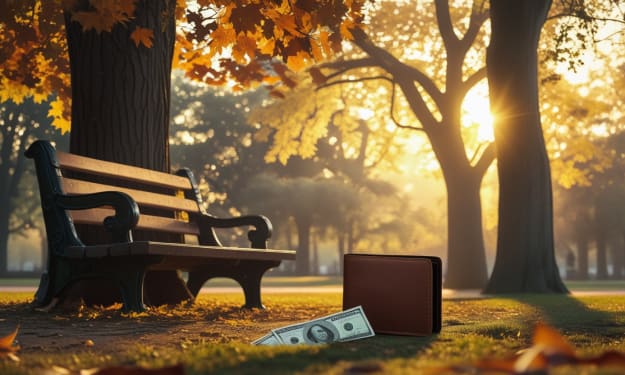
The Wallet in the Park
It was the kind of morning that whispered secrets to the trees. Golden sunlight filtered through the canopy of Everbrook Park, and the air smelled like fresh-cut grass. Thirteen-year-old Ravi wandered down the path, dragging his feet, a little bored and a lot curious. School was closed for the day. His friends were out of town, his parents were working, and worst of all—his phone was dead.
By Ahmad Malikabout a year ago in Fiction
The Honest Woodcutter — A Moral Story About Integrity
In a quiet village nestled at the edge of a vast forest, lived a poor woodcutter named Harun. Each day before sunrise, he ventured into the forest, his worn axe resting on his shoulder and hope in his heart. Life wasn’t easy—his hands were blistered, his clothes faded, and his earnings barely enough to care for his ailing mother. But Harun had something rare: he was honest to the core.
By Ahmad Malikabout a year ago in Fiction
My girlfriend is dead and so is my friend. They think I killed them.
Lena said the cabin would help. Something cheap and quiet, buried in the Upper Peninsula. Just me, her, and Marcus—our old friend from college. The listing described it as “a cozy off-grid escape, perfect for disconnection and healing.” Lena booked it that night.
By sagar dhitalabout a year ago in Fiction
Billionaires Playboy
"The world mistook him for a man chasing pleasure. In truth, he was chasing a ghost." Every tabloid from Los Angeles to London knew his name — Chase Riker. Billionaire heir. Yacht collector. Fashion week regular. A man who once accidentally bought an island during a poker game in Monaco. Women adored him, the media worshipped him, and competitors feared him. But none of them really knew him.
By USAMA KHANabout a year ago in Fiction
The lost phone
The Lost Phone: The Next Picture Is You It was nearly dusk when Emma spotted the phone. It sat alone on a bench under a flickering park lamp, next to a scarf fluttering like it had been left in haste. There was no one else in sight, just the low hum of insects and the distant whirr of traffic.
By Muhammad Ahmar about a year ago in Fiction