Short Story
The True Story of Sam. Runner-Up in You Were Never Really Here Challenge.
I met him the summer I turned seven. Down by the creek where I used to play on my grandparent's farm. He waited behind the toolshed. He told me his name was Sam, and he told me that like he wasn’t sure it still was.
By Tim Carmichaelabout a year ago in Fiction
A Promise in Ash
Before dawn, beneath a sky heavy with unshed stars, the Night Market held its breath. Lanterns swayed like flickering souls caught in a restless wind. Shadows leaned close, whispering secrets that time had forgotten. And in the heart of this ancient, bleeding place, the Mender moved—a figure woven from sorrow and quiet resolve, his cloak trailing faint echoes of prayers long spent.
By Paper Lanternabout a year ago in Fiction
Haunting Notes
Every year, the anniversary of her kidney transplant sneaks up on Noelle, leaving her feeling oddly grateful and unsettled at the same time. In the days before she starts losing things. Not just her keys, which she found in the freezer next to the peas, but her train of thought, mid-sentence. She craves a quiet that feels impossible, a silence so deep it could swallow the hum of the refrigerator. One random afternoon, while wandering the library, she finds a folded note tucked in a book:
By Tracy Stineabout a year ago in Fiction
Perfect Summer
June 31 It’s my last summer and it needs to be perfect. I have my bucket list spread out on my bed. Each think with a blank little box at the front. It’s everything I want to do, both the things I love to do and the things I want to do before I die. And the very first thing is to hand in my resignation tomorrow. I’ve always wanted to have an entire summer off again, like when I was a kid. And the only way I can achieve that is if I leave my job. I’m not really looking forward to that one. I love my boss, Amelia. She’s been so good to me over the past few years, especially when my mum passed away. But I have to. I’m sure she’ll understand.
By Lane Burnsabout a year ago in Fiction
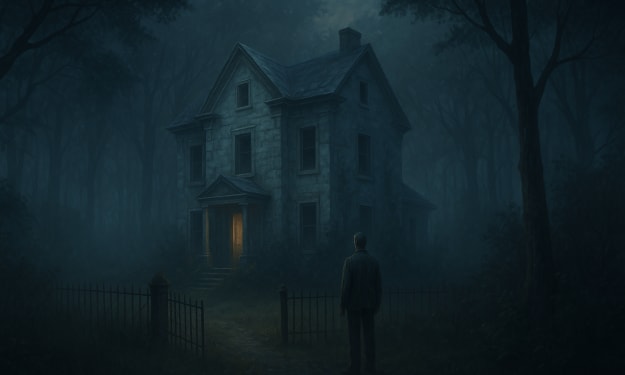
The House at the End of Memory
I was eleven the first time I saw the house. It perched at the end of a road swallowed by trees, a path my grandmother told me never to follow. “Where the branches hush the world,” she’d whisper, “some silences carry echoes louder than screams.”
By Muhammad Abdullahabout a year ago in Fiction
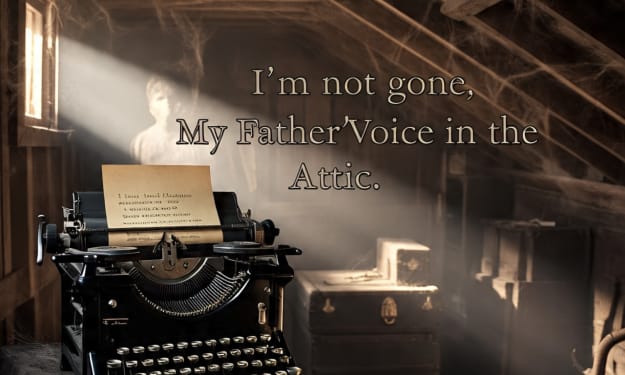
My Father's Voice in the Attic.
It started with a voice—soft, unmistakable, and impossibly familiar. I was alone in the house, brushing dust from old photo albums in the parlor, when I heard it. A low murmur floated down from the attic, like a conversation overheard through a wall. My heart stuttered. It had been three years since my father passed away. The funeral was quiet, somber—just as he would have wanted. He was a private man, a writer of some small renown in his day, and he’d lived most of his final years holed up in this very house, surrounded by papers and silence. Now that Mom had moved into a smaller place, it fell on me to sort through everything. The house still smelled faintly of pipe smoke and ink. I told myself I imagined it. The wind maybe, or the moan of the old beams settling under the June heat. I went back to organizing the old letters. Then I heard it again. This time, clearer: “Anna…” My name. I froze. My father’s voice. Raspy, deep, unmistakable. He used to call my name that way when I was little, when he found me buried under a pile of books in the corner of the study, or when I’d fallen asleep on the sofa while he wrote late into the night. I stood, grabbed the flashlight, and made my way up the creaky stairs. The attic door groaned on its hinges as I pulled it open. The warm air hit me like a wave, thick with dust and old paper. “Dad?” I called, feeling ridiculous. Nothing. The attic looked the same as always—stacked boxes, a few old paintings, yellowed newspaper clippings of his book reviews pinned to the rafters. And then I noticed it: the typewriter. His old black Remington sat in the middle of the attic floor. I was sure it hadn’t been there before. Slowly, I approached. A single sheet of paper was fed into the carriage. On it, one line typed in the faded ink of a ribbon long expired: “I'm not gone, Anna.” My hands trembled. The key bars were cold to the touch, unmoving. I looked around, heart thumping. Dust clung to every surface, undisturbed. No footprints but mine. I backed away, closed the attic door behind me, and didn’t sleep that night. --- The next day, curiosity won over fear. I returned with gloves, a mask, and determination. If someone was playing tricks on me, I needed to know. I searched the attic thoroughly. No speakers, no electronics. No prankster hiding in the boxes. But the typewriter? It had more pages. One each day. Each with a new line in his voice, his phrasing, the kind of poetic insight only my father could produce. “You always understood the silence between words.” “There are stories I never told you, Anna.” “You are the final chapter I never got to write.” It became a ritual. Each morning I climbed into the attic and read what he’d left behind. And then came the day the typewriter stopped. The last page sat there with a single sentence: “Look beneath the floorboards.” My breath caught. I hesitated. But something deeper than fear pushed me forward. I pried up the floorboards near the typewriter, coughing as dust billowed around me. There, wrapped in oilskin and bound with string, was a manuscript. The title page read: "For Anna – The Story of Us" It was a memoir—his memoir. A deeply personal, beautiful, and painfully honest chronicle of his life, his regrets, and his love for me and Mom. Things he never said aloud. Stories he never shared. I read through the night, tears soaking the final pages. --- When the publisher saw the manuscript, they wept too. “It’s his masterpiece,” they said. “A voice from beyond.” But I knew better. It wasn’t a ghost story. It was love—my father’s final act of connection. Somehow, some way, he had waited until I was ready to hear it. And now, whenever I sit quietly, I sometimes hear the clack of old typewriter keys, echoing faintly from the attic above.
By Azmat Roman ✨about a year ago in Fiction
Teach Me Love!
The first time Leo heard her voice, he nearly crashed his bike into a streetlamp. It was a rainy Thursday in Seattle, the kind of gray morning where coffee was essential and eye contact optional. Leo, headphones in, had been shuffling through his usual playlist of indie rock and post-breakup ballads when a glitch on his music app played an unfamiliar song.
By USAMA KHANabout a year ago in Fiction
Where the Sky Held Its Breath
The clouds sat heavy on the horizon, glowing gold and bruised violet in the falling light. The wind had gone still. Even the insects had quieted. Martha stood near the back of the wagon, hands resting on the worn wooden frame. Her arms ached, not just from the day’s travel, but from the child wrapped tight against her chest, dozing, as if the miles had never touched him. They had made camp late. The wheel had cracked on one of the wagons ahead, and half the train had waited while the men repaired it with rope and borrowed wood. The tents were pitched quickly, the fires lit in silence. No one laughed tonight. Martha didn’t speak much anymore. There was no one left to talk to. Her husband had died on the second week of the journey—fever, they said. She had buried him in a shallow grave off the side of the trail, covered the spot with stones, and walked on. Two nights later, she found the baby. Or rather, heard him. The crying came from a canvas bundle near the remains of an abandoned cart, left half-burned at the edge of the grasslands. The others had passed it by without stopping. Martha had not. The child was wrapped in linen, bloodied and wailing, his mother lying cold beside him. No one knew how long they had been there. The wolves hadn’t come yet. So Martha had picked him up. No one argued. The wagon behind her creaked as the wind shifted. She turned toward the hills and watched the storm build, far off in the distance. The trail would be mud by morning. “Hungry again, are you?” she murmured, feeling the child stir. She had no milk. That had stopped days ago. Her body had long since stopped bleeding, long since stopped preparing for the child she lost two winters past. But other women still had enough to spare. She would walk, every night, from fire to fire. Always the same question, asked with quiet resolve. “Will you nurse him?” And they always did. Without hesitation. Tired women, sore and sunburnt, still opened their arms. Not for her. For him. He was growing. Thighs thickening. Eyes sharpening. He watched things now — the flapping of canvas, the flicker of flame, the motion of passing wagons. And sometimes he smiled. Martha hadn’t known it was possible for a smile to wound. She stepped away from the wagon and walked slowly toward one of the nearer tents. Smoke drifted up from a small fire. A woman sat beside it, rocking gently, feeding a child of her own. Martha hesitated, just a moment. Then: “Ma’am… mine hasn’t eaten since morning.” The woman looked up, eyes weary but warm. She shifted, freeing one arm. “Come sit.” Martha lowered herself carefully to the earth. Her knees cracked as she moved, her skirts brushing the grass. The stranger took the boy without question, cradling him to her breast like he belonged there. Silence passed between them as the baby latched, as the sun bled away behind the wagon line. “You his kin?” the woman asked quietly. “No,” Martha said. Then, after a pause: “But I’m all he’s got.” The woman nodded. “Then that’s enough.” For a moment, the weight of everything fell away. The trail. The dust. The graves left behind. There was only this: the sound of nursing. The whisper of wind in the grass. Two women, and a child who did not yet know what it meant to be alone. Martha stared into the fire and let herself breathe. Tomorrow, there would be more walking. More hunger. More sky pressing down on their backs. But tonight, there was milk. There was warmth. And there was one more mile behind them. --- Thank you for reading. Inspired by the resilience of women who carried more than just their own burdens across the vast American trail.
By Waqif Khanabout a year ago in Fiction
Carried Across the Dust
The child was heavier today. Wrapped tight against her chest, his warmth seeped into her bones, already damp with sweat under the worn shawl. He slept the way he always did on the trail—mouth slightly open, fists curled near his chin, breath warm against her collarbone. The scent of him hung in the folds of her clothing. Thick with milk, slightly sour now, mingling with dust, sweat, and the faint smoke of last night’s fires. She didn’t mind it anymore. It was the only thing in her life now that felt familiar. They had been walking for weeks. Maybe longer. Maggie had stopped counting after the first few hundred miles. The wagon train rolled forward every morning and scattered every evening to make camp. Dust was their only constant companion. The baby had no name. Or none that Maggie had been told. His mother had died two nights before Maggie found him, bundled loosely in rough cloth, squalling and red-faced in the arms of a distracted old man who had no idea what to do with an infant. The others in the wagon said it was only a matter of time. Motherless babes didn’t last long out here. But Maggie hadn’t been able to look away. Maybe it was the weight of the journey settling in her bones. Maybe it was the memory of her own empty arms. Whatever it was, she reached for him—and never let go. Now he slept against her heart, unaware of the world’s hunger and cruelty. Unaware of his own luck. “It’s alright for some,” she muttered under her breath. Her feet ached with every step, the worn soles of her boots barely cushioning the bite of sharp stones. Every muscle screamed for rest, but stopping wasn’t an option—not here, not now. She glanced down at his small face, the curve of his cheek soft as butter, lashes dark against pale skin. Four hundred miles. Maybe more by now. And still they walked. The caravan was both danger and salvation. Maggie knew better than to trust everyone who traveled in it. She avoided the wagons with only men, kept to herself when she could, and slept with her small knife hidden in the folds of her skirts. But at night, when the fires were lit and the children cried for their mothers, she found them. The women. The mothers. Each evening was the same. As the wagons circled and camp took shape, Maggie would scan the spaces between canvas and wheel. Looking for the women who still nursed their own. They were easy to find—babies fussing at their breasts, mothers with that heavy look of exhaustion in their eyes, shoulders sagging with the weight of life and hunger. Maggie would approach carefully. A polite greeting. A deferential nod of her head. And then the words she repeated like a prayer. “Ma’am, your little one—does he still take the breast? Only, he’s got no mother, you see. And I’ve got no milk.” Some women looked at her sharply at first, suspicion flaring behind tired eyes. But none ever refused. Not once. “Come on then,” they’d sigh, adjusting their shawls and holding out their arms. “Poor little thing.” And the boy would go to them eagerly, rooting and wriggling, as though the universe itself owed him that meal. And maybe it did. Maggie always stood by, close enough to take him back if needed, watching carefully for any roughness or impatience. But most of the women held him as they would their own, stroking his hair, whispering soft things, rocking on their heels as they hummed quiet lullabies. The songs were sometimes in languages Maggie didn’t recognize, but the melody was always the same. Comfort. Survival. Love. Night after night, a different fire, a different hand, a different voice—and yet always the same mercy. The women might not have had much to give, but they shared what they could, even when it left them emptier. And the boy thrived. Fat cheeks. Soft skin. Tiny fists always ready to fight the air. It was more than many others had on this trail. More than Maggie herself had. As darkness gathered and another fire hissed in the distance, the baby stirred. A little grunt, a wrinkle of the nose, the first signs of hunger returning. “Alright,” she murmured softly, pressing a kiss to his warm forehead. “Let’s go find you a mother.” --- Thank you for reading. Inspired by the true words of Margaret Inman, 1852: “I carried a little motherless babe five hundred miles, whose mother had died, and when we would camp I would go from camp to camp in search of some good, kind motherly women to let it nurse, and no one ever refused.”
By Waqif Khanabout a year ago in Fiction