Short Story
when the town stopped dreaming
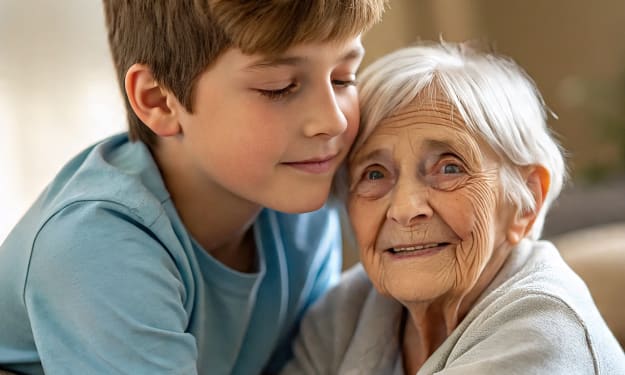
There was a time when the people of Windmere dreamed in color. They dreamed of dragons soaring over the hills, of bridges made of stardust and oceans that whispered secrets. The butcher once confessed he'd dreamed of baking cinnamon rolls in the shape of galaxies. The schoolteacher wrote poems based on visions she saw while asleep—poems that made even the mayor cry. Children giggled in their sleep, mumbling about magical creatures and kingdoms hidden beneath their beds. But one day, the dreams stopped. No one noticed it at first. One person waking without a dream is hardly newsworthy. But then, another. And another. And within a week, the entire town of Windmere woke up to silence—not just in the world, but in their minds. No more surreal landscapes. No more flying. No more unexpected reunions with long-gone loved ones. The canvas of sleep had gone blank. At first, people shrugged it off. "Maybe it’s the weather," someone said. "Probably just stress," another offered. The town physician checked for pollutants, sleeping disorders, even mass psychosis. But everything came back normal. Perfectly, frustratingly normal. The town's color began to fade—not literally, but in spirit. Conversations dulled. Laughter lost its luster. The bakery stopped experimenting with whimsical recipes and returned to plain white bread. The library, once filled with eager readers chasing fantasies, stood dusty and quiet. Even the birds seemed to sing less. Children stopped drawing. And that was when people really began to worry. --- Ten-year-old Elsie Maddox was the first to ask the question everyone had been avoiding: “Where do dreams go when they disappear?” Her parents, like most grown-ups, gave her a soft smile and changed the subject. But Elsie was not like most children. She noticed things. She noticed the silence. She noticed her goldfish no longer danced in its bowl at night, the way it used to when she had adventure dreams. She noticed that her dog, Patches, whined in his sleep now, instead of chasing imaginary squirrels. And so Elsie, determined and brave in a way that only children can be, decided to find the answer herself. She packed a notebook, a flashlight, and two peanut butter sandwiches. After everyone had gone to bed, she tiptoed out into the foggy streets of Windmere. She visited the wishing well in the town square, where people once threw coins and asked for dreams to come true. She looked down into its depths and whispered, “Bring them back. Please.” Nothing. Then she visited old Mrs. Dellarose, who was known for reading tea leaves and once claimed she dreamed in languages no one had heard of. Mrs. Dellarose hadn’t spoken in days, her eyes distant. But when Elsie held her hand and whispered her question again—“Where did the dreams go?”—the old woman blinked and murmured, “They were stolen.” Stolen. The word echoed in Elsie’s mind. --- She spent the next week asking everyone if they remembered their last dream. Most didn’t. A few remembered fleeting flashes: a tree made of mirrors, a song they couldn’t hum, a face they almost recognized. Each time, Elsie drew what they described in her notebook. Patterns emerged. The same tree. The same melody. The same face. She followed those clues to the edge of Windmere, to a long-forgotten shack covered in ivy and moss. Inside, she found journals stacked high—every one full of dream fragments. Thousands of them. Torn from sleep, stolen, collected. And sitting in the center, hunched over a book, was a figure wrapped in shadows. “I didn’t mean to take them all,” it whispered. “But I was lonely. And dreams… dreams are company.” Elsie stepped forward. “But they’re not yours to keep.” “I know,” the figure said, its voice trembling. “But I couldn’t help it. The world forgot me. I thought if I held their dreams, I’d be remembered.” Elsie sat beside it. “Maybe we can remember you another way.” She took the figure’s hand. “Come back to the town. Tell us your story. Let us dream with you.” The figure, once feared and forgotten, nodded. --- That night, Windmere dreamed again. First it was a baby who smiled in her sleep. Then a teenager who woke up sketching impossible machines. The librarian dreamed of a flying whale that lived in a cloud library. The mayor dreamed of dancing on a rooftop with his childhood dog. And Elsie? Elsie dreamed of a girl with a notebook, walking hand-in-hand with a shadow that no longer felt alone. The color returned. The laughter bloomed again. And Windmere learned that dreams aren’t just about sleep—they’re about connection, about remembering even the forgotten, about hope lighting up the dark corners of our minds. Because when a town stops dreaming, it starts to fade. But when it dreams again—oh, how brightly it shines.
By Mati Henry about a year ago in Fiction
See you soon
From our kitchen window, I watch my best friend Tommy waiting for the school bus. I know it’s wrong, but seeing his grin stretch wider than his face, doubling over with laughter—probably from one of Clayton’s stupid jokes—makes something twist inside me. I should be out there laughing with them. But the moment I spot Billy Krudd, the class bully, my legs freeze. My stomach churns like a pack of candy pop rocks exploding, while my eyes blur with tears gathering at the corners. On mornings like this, Nana used to drive me to school. But those days are gone. She was my strength—my knight in a flowered dress—tall, beautiful, and brave. Her knowing smile helped me through countless storms. She understood the tears I brought home. While Dad would get frustrated and tell me to stand up to bullies, Nana comforted me with gentle words. She was always there when I needed her most. Then I hear her voice—soft and familiar. “What’s troubling you, Hooty?” She used to call me that because when I was a toddler, instead of talking, I’d hoot like an owl. Turning around, I see her by the kitchen sink, smiling, wiping her hands on her favorite apron—just like the last time I saw her. I shrug, glance down, and mumble, “Nothin’.” “Nothing?” She arches an eyebrow. She never liked bad grammar. But she smiles anyway and waits patiently. I glance back at the bus—Tommy and Clayton are getting on. “Ah,” she says gently. “You wish I could drive you, don’t you?” My chest tightens so hard it hurts. I nod slowly. “Yes,” I whisper. With the grace of an angel, she floats over to the kitchen table and pats the chair beside her. “Oh, Hooty. I wish I still could.” Sitting this close to her, I want to hold her hand, or curl up on her lap like I used to—but I know I can’t. I tried once before. It felt like falling into a bowl of whipped cream. Knowing I’ll never truly feel her arms again—that’s the hardest part of losing her. A light autumn rain begins to fall, just like it always does the first week of school. We sit in silence, watching mist cloud the window as raindrops tap softly against the glass, like they’re asking to come inside. Then I notice something strange—a beam of sunlight breaks through the clouds and wraps around her like a golden halo. I close my eyes and picture the inside of the school bus: the buzz of nervous laughter, the squeak of the windshield wipers, Angela Wheeler’s blonde hair swaying across her face as she whispers secrets to Becky, the driver shouting for kids to sit down. I should be part of that noise, that life. I should be on that bus. This was the year I promised Nana I’d go on my own. I glance at her again and see that same knowing look in her eyes. “Do you think the teachers will notice I’m not there today?” I ask. “I think they will.” “It’s only the first day. Maybe they’ll be too busy.” “They’ll still know.” “Tommy didn’t even notice. He’s supposed to be my best friend.” “I think he still is,” she says gently. “Then why didn’t he come to camp with me?” “You know why,” she replies, calm but firm. That week before camp, I’d been anxious—nervous to leave my family, scared of being alone. Tommy would’ve made it easier. Nana had talked me into going. I know now she had her reasons, but I can tell even she wonders if it was the right choice. That morning, something felt… off. Not wrong, just different. I told her that. She smiled, hugged me, and told me it was just nerves. But she was the one shaking when she said goodbye. We never say goodbye. It’s always “See you soon.” “I really thought camp would help you,” she says quietly. “I remember how magical it was for me when I was your age. I wanted that for you—to make friends, to have adventures.” “I did make friends. I still talk to one of them.” “Oh? Who?” She looks puzzled. Then again, lately she forgets things more often. Mom told me not to worry—Nana’s just tired. “Dillon. We bunked together. There’s also a new kid who cries a lot. They’re nice… just not like Tommy or Clayton.” “People change, Hooty. Sometimes we grow apart. It’s hard, but making new friends is part of life.” “Tommy doesn’t care that I don’t hang out with him anymore. Clayton’s his best friend now.” Nana stays quiet. I press on, needing her to hear me. “They didn’t even notice I wasn’t at the bus stop today.” Her eyes grow serious—not harsh, but firm with love. “Tommy came to this house every day for the rest of the summer. And as for today, Hooty, I drove you to school more times than I can count.” “But still…” “No buts. Children live in the moment. When he realizes you’re not at school, he’ll remember.” Her words settle deep. She’s right. Nana always is. I change the subject. “Mom was sad this morning. She smiled, but I know it wasn’t real. Dad left for work without saying anything.” Nana nods. “They’re grieving. It takes time. Your mother will adjust. When I lost someone, it took me a long time, too. I was about her age. You never really get over it.” We sit in silence. These are the memories I treasure most—just her and me, no need for words. Then her eyes drift again, like she’s looking for something lost. In a distant, dreamlike voice, she whispers, “I’d love a cup of tea.” A smile forms on my lips. I remember those rainy days—sitting side by side, Nana telling me stories from her childhood. Sometimes she’d pour me a tiny cup of tea with milk and honey. I wasn’t allowed coffee, but tea was our little loophole. I stand, instinctively reaching for the teapot—then stop. That moment can’t happen again. And I know she feels it too. To make her smile, I say, “I’m not afraid of Billy Krudd.” I almost believe myself. Then wonder—why do we always say a bully’s full name? “I always believed in you, Hooty,” she says, her voice soft, almost breaking. The rain hammers harder now, and the house gives a gentle shudder. The rhythm on the roof fills the stillness. Then I feel it—a deeper kind of loss, something I didn’t understand until now. This is the third time I’ve seen her since… but like that day before camp, something still feels wrong. “I miss you, Nana.” Her eyes shimmer with unshed tears, like they always do when I see her. A sorrow so big, a child can’t name it. Then she starts to fade. I see her try to speak, but the words won’t come—not this time either. I don’t want her to feel guilt. She meant well. She thought sending me to camp would help me grow, help me escape the bullies. How could she have known that all I ever needed… was her? I shrug and say, “I wish Dillon and I hadn’t snuck out with the canoe that night.” The silence is thick. I watch her hands tremble. “When we flipped, I wasn’t scared. Really.” She needs to know—it wasn’t her fault. The water was cold, the night was black. We couldn’t see the shore. Dillon wasn’t a strong swimmer, but he was bigger than me. I don’t remember much—just that it felt peaceful. “There was no pain, Nana.” The black mascara around her eyes begins to run down her cheeks like watercolor paint in art class. Her lip quivers as she finally says, “I miss you so much. I’m sorry… so sorry. If only I hadn’t insisted you go to camp…”
By Muhammad Tayyab about a year ago in Fiction
The Secret of the Old Diary.
When Zara agreed to spend a few weeks at her grandfather’s old house in the quiet village, she had imagined peaceful days, maybe a chance to sketch or catch up on reading. What she didn’t expect was to uncover a secret that would change how she saw her family forever. The house was tucked away at the end of a dusty lane, its wooden doors weathered by decades of rain and sun. Inside, everything smelled faintly of sandalwood and old books. Her grandfather spent most of his days sitting on the veranda, sipping tea, lost in thoughts. One afternoon, when the sun was high and birds chirped lazily from the neem trees, Zara decided to explore the attic. She climbed the narrow staircase carefully, brushing aside cobwebs. The attic was dim, with tiny spears of sunlight piercing through cracks in the wooden roof. Pushed into a corner was an old chest, covered in dust so thick that her fingers left deep trails when she touched it. Curiosity overpowered hesitation. She pulled the heavy lid open. Inside were bundles of old letters, sepia photographs of people she did not recognize, and at the very bottom, a leather-bound diary. Its cover was cracked, the gold lettering nearly faded away, but she could still make out: “Memories & Secrets.” Zara sat down on an old trunk, the diary balanced on her lap. As she opened it, a gentle scent rose from the pages — something like dried roses mixed with time itself. The first few entries were simple. Notes about village life, small joys, descriptions of market days and rains that turned roads to rivers. But then, about halfway through, Zara found something that made her heart catch. It was a letter, written in her grandfather’s hand, but never sent. > “My dearest Fariha, I wonder if time will ever be kind enough to let us be together. Each day, I see your smile in every flower that blooms, hear your laughter in the rustle of leaves. But our families would never allow it. I hope one day, when we are old and the world has tired of its stubbornness, we will sit under the mango tree, your hand in mine, with nothing left to fear…” Zara closed her eyes. Her grandfather had always been a figure of calm strength — gentle, wise, but never someone she thought of as a man who had once been desperately in love. The diary unfolded more letters like this, little passages that spoke of secret meetings by the riverbank, stolen glances during village fairs, dreams of a future that never came to be. Then came an entry that was different — dated many years later. > “I saw Fariha today, after all these years. Her hair is silver now, her laughter softer, but she is still the girl who made my heart race under the old neem tree. We spoke of gardens, of grandchildren, pretending the past never happened. But when she left, she pressed a jasmine into my hand. Some things, it seems, never truly fade.” Tears filled Zara’s eyes. She thought of her grandfather sitting on the veranda downstairs, looking out over fields where perhaps he once dreamed of walking hand in hand with the love of his life. All these years, he had carried this quiet ache, and no one had known. Gently, Zara closed the diary, holding it to her chest as if she could feel the heartbeat of the young man her grandfather had once been. She went back downstairs, the afternoon light now mellow and golden. Her grandfather looked up and smiled. “Find anything interesting in the attic, beti?” Zara walked over and sat by his side. For a moment she simply looked at him, seeing not just the gentle old man she’d always known, but also the boy who once wrote love letters under starlight. “Yes, Nana,” she said softly, slipping her hand into his wrinkled one. “I found memories. Beautiful ones.” He chuckled, a sound both wistful and warm. Then he squeezed her hand. “That’s all life is, my dear — a box of memories. We’re lucky if we get to share them before they turn to dust.” They sat there together as the sun dipped lower, painting the sky in strokes of orange and lilac. The breeze carried with it the faint scent of jasmine. Zara closed her eyes, imagining a younger version of her grandfather, standing under the neem tree with Fariha, love shining bright and fearless in their eyes. Some secrets, she realized, weren’t meant to stay hidden forever. Sometimes they waited quietly, tucked away in old diaries, hoping to bloom again in someone else’s heart.
By Aman Ullahabout a year ago in Fiction
After the Last Notification
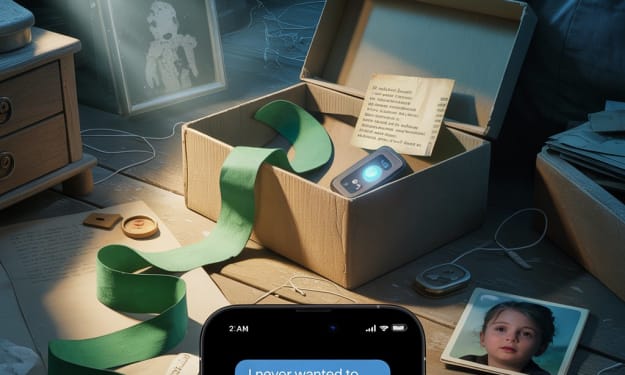
After the Last Notification In the year 2042, death was no longer silent. When someone passed away, their loved ones didn’t discover the news in sterile hospital rooms or through the murmured condolences of neighbors. Instead, it came with a soft chime — a final notification on your PersonalFeed: "One final message from [Name] has arrived. Would you like to view it now?"
By Kine Willimesabout a year ago in Fiction
How to Invent Your Second Life After 40
How to Invent Your Second Life After 40. When I turned 41, my mother called to wish me a happy birthday and casually said, “Well, it’s all downhill from here.” She laughed when she said it, but I remember sitting on my couch, staring at the ceiling, and feeling the heavy weight of those words settle into my chest.
By Kine Willimesabout a year ago in Fiction
A Big Soul in a Small Body
I'm not sure what happened. The last thing I remember was falling from the sky and hitting the ground too hard. My head felt wonky and discombobulated, and I realized I couldn't fly. I tried—I fluttered my wings with force, but it didn't help. I couldn't take off. I was stuck. And I was afraid. I could sense and see big creatures pass me by all the time. I was scared I'd get trampled, or worse, mutilated and left suffering on that sterile and dry pavement… suffering a slow death.
By Natalia Perez Wahlbergabout a year ago in Fiction
She's Bananas
CLICK TO BEGIN RESTART Bob hovered his finger over the restart button. Once he hit that button he knew there would be no turning back. He would officially be… offline… all night long. He knew that the restart would take 8 hours and he was going to sleep through most of that anyway. His friends teased him about having a phone addiction, but he knew he could always put it away.
By Amos Gladeabout a year ago in Fiction
Her Other Life
The house was too quiet now. Quiet in the way of old tombs, where even the air forgets to move. Clara sat by the window, pale light of dawn staining her face in ashen hues. The cracked glass trembled against the wind, but the storm was inside her - raging, constant, endless.
By Aspen Nobleabout a year ago in Fiction
A Beautiful Mind. Content Warning.
A Beautfiul Mind I rose with the morning sun. Lately I have been unable to stay asleep, tossing and turning throughout the night, no position seems comfortable, eventually forcing myself to get up knowing I will never get the adequate sleep I long for. Today, will be another caffeine filled day to help push me through it. I throw on my robe, pull my bedridden hair into a messy bun and walk towards the kitchen. The natural sunlight peering through the window above the sink is more than enough light to allow my brain and body to adjust. The smell of dark Italian toast blend lingers through the air as I pour myself a nice cup of coffee. The newspaper on the table is from over a month ago. I pull it towards me, reading the funnies as if I hadn’t done that over a hundred times already. They never get old to me. Finishing my coffee, I place it in the sink and head over to our bedroom, the room is quiet, not wanting to wake my husband, I tiptoe to the bathroom and turn the shower on. The hot water feels good, refreshing as my brain activates and becomes alive once again. Standing there I allow the water to wash over my head, drowning out all the sounds around me. I close my eyes and let my body succumb to the sensational feeling of contempt and safety. Like a warm hug wrapping itself around me. After several minutes, I finish washing up and turn the shower off. I get dressed quietly in my closet and make my way down the hall to our daughter’s room. I pull open her drapes ever so slightly. I don’t want to startle her. Walking over to the edge of the bed I sit and rub her back, “good morning sunshine. Time to wake for the day,” I say to her. Her little eye lids peering slightly open, she lets out a big yawn and a stretch, “mommy, I just want to lay here all day. How come we can’t do that?” She asks. Tickling her little chin, “because sweetheart you have school today, and sometimes even though we want to stay in bed all day. We still need to do them, even disappointing things like go to school or mommy and daddy having to go to work trust me if I could, I would lay in bed all day too. Especially here cuddling and tickling you until your tummy aches from laughing so hard,” I said as I leaned in and tickled her whole body. Giggling she rolls out of bed, “okay, okay, I will get up,” she says, moving sloth like to her bathroom. “Brush your hair and brush your teeth! For two minutes little miss!” I sternly.
By Aubrie Sandnessabout a year ago in Fiction