Short Story
How Old Maps Lied to Us
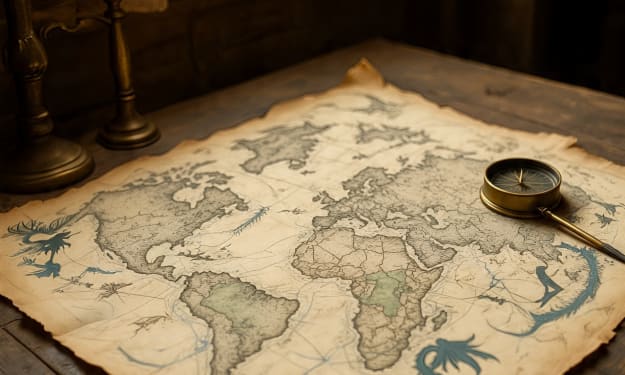
Sea monsters, phantom islands, and continents that vanished—why the maps of the past were as much fiction as they were navigation tools. If you’ve ever looked at an ancient map, you might notice something odd. There’s a stretch of ocean where a massive serpent curls around a ship. There’s a continent you’ve never heard of floating somewhere between Asia and North America. And then there’s a strange warning scrawled across the sea: “Here be dragons.” It’s beautiful. It’s fascinating. It’s also wrong. For centuries, maps were less about accuracy and more about imagination, politics, and—sometimes—sheer guesswork. The story of old maps isn’t just about navigation; it’s about how humans saw their world, and how those visions were often shaped by fear, ambition, and the limits of their knowledge. When the Unknown Became the Untrue Before satellites and GPS, mapmaking was part science, part storytelling. Explorers relied on sailors’ tales, merchants’ rumors, and even secondhand descriptions from people who had never left their hometowns. If one traveler claimed to have seen a giant island far out at sea, cartographers might simply add it in. One of the most famous examples is Hy-Brasil, a “phantom island” said to lie west of Ireland. For centuries, it appeared on maps as a real place, despite no one ever actually finding it. Some claimed it was shrouded in mist, only visible once every seven years. Eventually, it faded from maps—not because it was discovered, but because people finally stopped believing it existed. The Creatures That Never Lived Old maps weren’t complete without a few terrifying creatures lurking in the corners. Medieval cartographers often filled uncharted waters with drawings of whales, giant squids, and sea serpents. These creatures were based on a mix of real sightings—like a distant whale spout mistaken for a monster—and pure artistic license. They weren’t just decoration. These illustrations warned sailors: Danger lies here. If you’re venturing into unknown waters, be ready for the unimaginable. The monsters may not have been real, but the fear of the unknown certainly was. Political Borders That Never Existed Maps were also tools of power. Rulers often instructed cartographers to stretch borders in their favor, making kingdoms appear larger and more impressive than they actually were. Colonial powers used maps to claim lands they’d never even set foot on. For example, during the Age of Exploration, European maps often carved up entire continents based on treaties and royal decrees—ignoring the fact that people already lived there with their own borders, cultures, and histories. In this way, maps didn’t just reflect reality; they actively reshaped it. Continents That Disappeared The biggest lies on old maps weren’t just islands—they were entire continents. Take Terra Australis Incognita, a massive landmass drawn across the Southern Hemisphere. Ancient and medieval scholars believed it must exist to “balance” the continents in the north. For centuries, this fictional continent appeared on maps, influencing exploration and fueling expeditions. When European explorers finally reached Antarctica, they discovered it was nothing like the lush, habitable land they’d imagined—it was a frozen, inhospitable desert. The dream of Terra Australis melted away, but not before inspiring countless voyages. Why They Lied—and Why It Mattered Not all these inaccuracies were intentional. Many cartographers did their best with the information they had. But others knew that a good story sold better than a dull truth. A map with mysterious islands and monsters captured imaginations. It inspired sailors to seek riches—or rulers to fund voyages. These “lies” shaped history. Some explorers set out in search of lands that never existed. Others avoided promising trade routes because maps warned of monsters or endless storms. In some cases, entire wars were fought over places that were later revealed to be myth. From Dragons to Data Points Today, we can zoom in on nearly any spot on Earth from our phone. Google Earth doesn’t leave room for dragons in the margins. Yet, even our modern maps aren’t perfect—they can still be influenced by politics, incomplete data, or even deliberate omissions. The difference is that now, our inaccuracies are harder to hide. A misplaced border on a digital map can cause an international incident in hours. And while the age of sea monsters might be gone, the age of misinformation is very much alive—only now, it travels at the speed of Wi-Fi. The Beauty in the Lies Despite their flaws, old maps hold a certain magic. They’re windows into how our ancestors dreamed about the world. A medieval mariner might not have known where the Pacific Ocean ended, but his map told a story—of courage, curiosity, and the human desire to fill in the blanks. Even their errors have value. They remind us that knowledge is always evolving. What we see as fact today might be seen as fantasy tomorrow. And perhaps that’s the greatest lesson old maps can teach: the world is always bigger, stranger, and more surprising than we think.
By LUNA EDITHabout a year ago in Fiction
after dark. Content Warning.
I wish I was better at telling lies. I could tell my wife I love the haircut, tell the server the food was great or tell my boss the work will be done by Friday. The reason I wish I could lie better is because it would soon be time to use the skill I hadn't got. It was going to be a beating, maybe a murder, of someone who deserved it. Unfortunately saying that in a police interview probably wouldn't work.
By ASHLEY SMITHabout a year ago in Fiction
The Memory Vending Machine
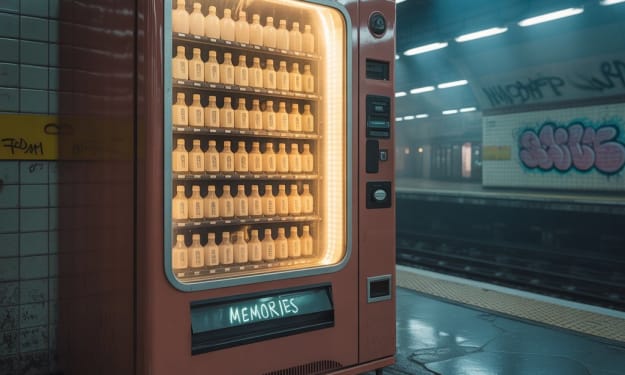
I first saw the vending machine on a Tuesday night, half-hidden between a cracked pillar and a graffiti-covered bench on the lower platform of East 12th Street Station. It didn’t sell chips or soda. Instead, rows of tiny glass bottles lined the inside, each one glowing faintly, a handwritten label tied around its neck. Above the coin slot, in faded gold letters, were the words: “Memories — $3 each.” I almost laughed. New York was full of gimmicks, but this one was charming enough to make me stop.
By Musawir Shahabout a year ago in Fiction
I Tried Many Ways to Find Someone on Hinge — Here’s What Worked
Disclosure: Some links, like Social Catfish, are tools I’ve personally used and found helpful. If you use them, I may receive a small commission at no extra cost to you. My recommendations are based on genuine experience.
By Sophia Davisabout a year ago in Fiction
The Letter She Never Sent. AI-Generated.
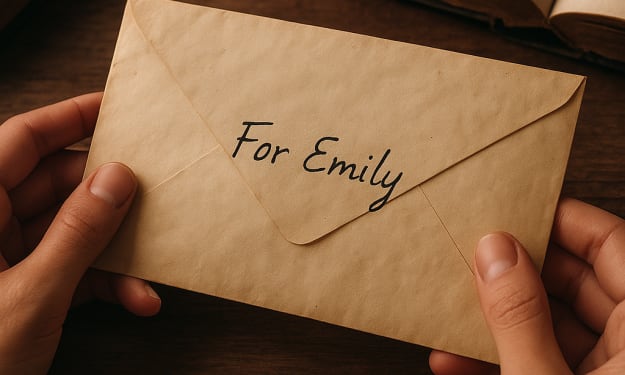
The envelope was yellowed at the edges, its paper thin from years of hiding. Sarah found it wedged between the pages of her mother’s old cookbook, the one that still smelled faintly of cinnamon and something else — something sad. The handwriting on the front was familiar, but shaky. For Emily. Emily had been gone for thirteen years. Sarah’s little sister. She was only nine when the accident happened — a rainy road, a driver in a hurry, and a silence that settled into their home like dust. Her mother had never spoken about that day. Sarah sat at the kitchen table, the letter trembling in her hands. She had always wondered what her mother carried inside, the words she never spoke. With a deep breath, she unfolded it. --- My sweet Emily, If you’re reading this, then I’ve found the courage I couldn’t find while you were here. The day you left, I learned something terrible — that time is not a promise. I thought we had years. I thought I could say “I love you” tomorrow, after the dishes were done, after I was less tired. I should have said it more. Do you remember the night you told me you wanted to be an artist? I said something silly — that it wasn’t practical. You went to your room, quiet. I thought you’d forgive me by morning. But there was no morning. Not with you. If I could have one more day, I’d let you paint the walls, the windows, even the floor if you wanted. I’d tell you your dreams are the most beautiful thing I’ve ever seen. And I’d say, over and over, until the stars grew tired of hearing it — I love you. I’m so sorry I didn’t say it enough. Love always, Mom --- The paper blurred as Sarah’s tears fell. She read the letter twice, then a third time, feeling the weight of every word. Her mother had passed away last winter. This letter was a piece of her heart Sarah had never seen — a fragile bridge between the past and now. She tucked it back into the cookbook, but not before slipping in a note of her own. --- Dear Mom, I found your letter to Emily. I wish you’d told me sooner how heavy your heart was. I wish I’d told you how much I loved you every single day. I can’t send this to you, but I’ll speak it into the air tonight, under the same stars you used to point out to us. Maybe you’ll hear it. Love, Sarah --- Sarah closed the cookbook and placed it back on the shelf. In the quiet kitchen, she whispered to no one and to everyone: “I love you. I love you. I love you.”
By Daily dose of amazing stories about a year ago in Fiction
Sneaking Out. Content Warning.
I shifted uncomfortably on the grit of the still-warm roof shingles, trying to arrange my legs into a position that was casual but attractive. Adrian's brother should have been there to pick me up by 11pm- it was probably 11:30. I'd waited so long that my legs were sweaty and my hands had imprints and black granules embedded in the palms. I examined the backyard fence close to the roof- it was an improbable but not impossible leap from one to the other. My way back in the house. Finally, headlights turned on to the street and a boxy boat of a car made its way slowly towards my house. I jumped from the roof but had misjudged the distance to the ground and landed ungracefully. I could see Adrian's brother's big arm hanging out of the window, flicking a cigarette with one hand impatiently. "Come on, girl." he said.
By Chelsea Curtisabout a year ago in Fiction
I Was Born a Slave
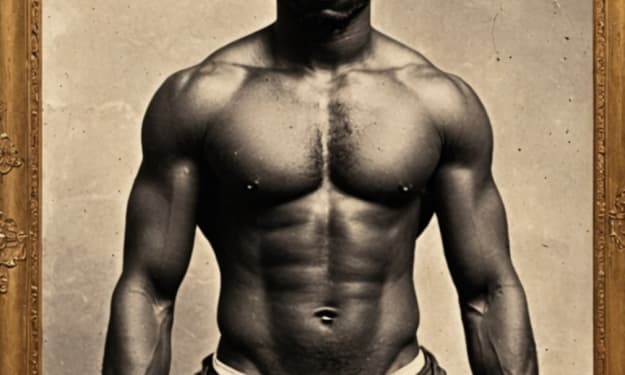
I Was Born a Slave I was born in the heat of a field, not in a house, not in a bed, not even in the shade. The women worked with me still inside my mother, and when I came there was no rest for her hands. She bit her lip, finished tying the bundle of cane, and only then knelt to wrap me in a strip of cloth torn from the hem of her dress. Her sweat was the first thing I smelled. Her heartbeat was the first thing I heard.
By ♿ V+ Marie381Uk about a year ago in Fiction