Short Story
The Portrait of Matteo. Top Story - April 2026.
Seventeen-year-old Manny got off a public bus at a busy intersection in downtown Philadelphia. When the bus released its brakes and passed his narrow view, he checked whether the art museum across the street was still there. He had been visiting it every day that week but wondered for a second the veracity of its presence. Now, the spring sun betrayed its gray highlights, giving it a warm glow.
By Paul Aaron Domenick6 months ago in Fiction
How to Break a Monstrous Curse. Honorable Mention in The Unhappy Ending Challenge. Top Story - April 2026.
1. Extraction - remove yourself from all sources of conflict; the birthplace of curses. A week before your eighteenth birthday, your mother will sit you down and tell you not to panic, “there’s something you need to know—”
By Lauren Everdell6 months ago in Fiction
The Last Customer at Closing Time. AI-Generated.
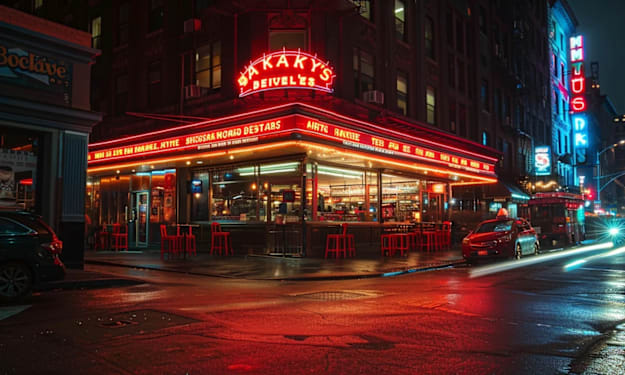
The fluorescent sign above the diner buzzed its final warning: Closed. Grace wiped down the counter for the third time that night, her rag moving in slow, tired circles. It was 11:47 p.m. on a Tuesday in late October, and the rain outside fell like it had nowhere better to go. She had worked the graveyard shift at Benny’s Diner for six years — long enough to know that after midnight, only the lonely, the lost, and the strange wandered in.
By Waleed khan6 months ago in Fiction
The Eastern Junction
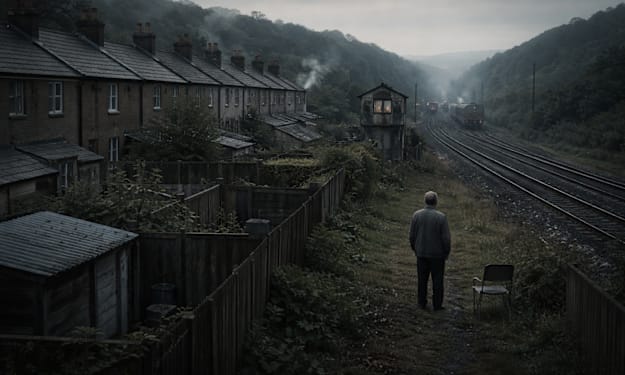
The village of Strale sat between two hills and a railway line that had carried goods east for forty years. The men who worked the line lived in a row of identical houses along Cutter Road, and Raymond Hesk had lived in the third of these houses for seventeen years, since the day he married Dorla and carried her suitcase up to the second-floor room that faced the tracks.
By Tim Carmichael6 months ago in Fiction
The Moment Empires Stop Following the Rules
The empire had lasted for more than three hundred years. People in the capital liked to say it was eternal. Children learned its history in school. Old men in tea houses repeated the same line again and again: empires survive because they follow rules. There were rules for kings. Rules for soldiers. Rules for judges. Rules for trade. Rules for war. That was what separated the empire from the tribes beyond the mountains and the kingdoms across the sea. At least, that was what everyone believed. Elias had spent most of his life inside the royal archive, copying old letters and recording taxes from distant provinces. He was not an important man. Nobody noticed him. Nobody remembered his face. That was why he saw things others did not. Every morning, sealed documents arrived from the palace. Elias and the other scribes sorted them into shelves. One winter morning, a letter arrived with the royal seal. It was a report from the northern province. A governor had refused to pay taxes because a drought had destroyed the farms. According to imperial law, the governor should have been questioned by a court. Instead, the emperor ordered the governor’s entire family executed. Elias read the order twice. Then a third time. He thought perhaps it had been written by mistake. But the next week, another letter came. A city in the east had protested against rising prices. Imperial law said soldiers could only enter a city if local leaders requested help. The emperor ignored the law. Five thousand soldiers entered the city. Hundreds of people disappeared. The official report called it a peaceful operation. By spring, the old rules had become meaningless. Merchants could be arrested without trial. Land could be taken without compensation. Judges who disagreed with palace orders simply vanished. At first, people stayed silent. They told themselves the empire was only going through a difficult season. “Things will return to normal,” they whispered. But nothing returned to normal. One evening, Elias visited his friend Adrian, who had once served as a military officer. Adrian lived in a small house near the river. He poured tea into two cups and listened quietly as Elias described the letters. When Elias finished, Adrian stared out the window. “Do you know what holds an empire together?” Adrian asked. “The army?” Elias said. Adrian shook his head. “Belief.” He pointed toward the city outside. “People obey because they think the system is fair. Soldiers fight because they think the law matters. Judges judge because they think someone above them still respects the rules.” He looked back at Elias. “The moment rulers stop following their own laws, the empire starts dying. Maybe slowly. Maybe quietly. But it starts dying.” Elias wanted to disagree. He wanted to believe that great walls, strong armies, and gold-filled treasuries were enough. But deep down, he knew Adrian was right. The summer brought food shortages. The emperor blamed traders and had several of them publicly executed. Then he blamed local officials. Then foreign spies. Each week, new enemies appeared. Fear spread across the empire. People stopped trusting neighbors. Shopkeepers hid their money. Families spoke in whispers behind closed doors. Even soldiers no longer trusted their commanders. In the south, an army captain refused an order to burn a village. He and his men were killed. After that, more soldiers deserted. Some joined rebel groups in the hills. Others simply went home. The empire still looked strong from the outside. Its flags still waved above government buildings. Its coins were still used in markets. Its armies still marched through the streets. But inside, everything was rotting. Elias saw it clearly in the archive. The shelves were full of reports about missing grain, unpaid soldiers, angry villages, and broken roads. Every province was sending warnings. Nobody in the palace listened. Then, one autumn morning, the bells of the capital began ringing. Crowds gathered in the streets. Smoke rose near the palace walls. A group of soldiers had turned against the emperor. Other soldiers joined them. By sunset, the palace gates had fallen. The emperor disappeared. Some said he escaped through a secret tunnel. Others said his own guards killed him. No one ever learned the truth. That night, Elias stood outside the archive and watched flames rise into the dark sky. The empire that had seemed eternal was collapsing in front of him. Not because of foreign invasion. Not because of famine. Not because of weak armies. It collapsed because the people at the top stopped obeying the rules they expected everyone else to follow. And once that happened, the empire was already broken. It simply took time for the rest of the world to notice.
By JAMES NECK 6 months ago in Fiction
"non-material gift of love for anniversary"
“Eidgah,” written by Premchand, is a touching short story that highlights the values of love, sacrifice, and selflessness through the innocent perspective of a child. The story revolves around a poor orphan boy named Hamid, who lives with his grandmother, Amina. Despite their poverty, Hamid is hopeful and content, believing that his parents will return someday with gifts and happiness.
By hamad khan6 months ago in Fiction
The Coffee Shop Goodbye
Ethan never believed in love at first sight. He believed in routine. Every morning at 7:30, he walked into the same coffee shop in downtown Chicago, ordered a medium black coffee, and sat by the window with his laptop. His life was predictable, quiet, and safe. Until she walked in. Her name was Lily. It was a cold fall morning when Ethan first saw her. Leaves were blowing across the street, and the sky looked gray and heavy. Lily stepped into the café, brushing her hair back and smiling like she carried her own sunshine. She looked around, searching for a seat. The place was full. Except for the chair across from Ethan. “Hey, is this seat free?” she asked. Ethan looked up, slightly startled. “Yeah… go ahead.” That was it. No music, no dramatic moment—just a simple question. But somehow, everything changed after that. At first, they didn’t talk much. Just polite smiles. A quick “good morning.” But over time, small talk turned into real conversations. Lily loved art, road trips, and country music. Ethan was more of a quiet thinker—he liked books, late-night coding, and silence. But with her, silence never felt necessary. Days turned into weeks. Their schedules aligned without planning it. If Ethan came early, Lily would show up soon after. If she was late, he would wait. It became their place. One morning, she didn’t come. Ethan told himself it didn’t matter. People have lives. Things happen. But he kept glancing at the door. Again and again. That’s when it hit him. He wasn’t just used to her. He needed her. The next day, she returned. “Sorry, I missed yesterday,” she said, sliding into the chair. “Crazy day.” Ethan smiled, trying to hide how relieved he felt. “It’s okay.” But inside, something had changed. He was in love. The problem was… Ethan didn’t know how to say it. He wasn’t the kind of guy who confessed feelings easily. He overthought everything. What if she didn’t feel the same? What if things got awkward? What if he lost her completely? So instead of speaking, he started writing. Every night, he opened a blank document on his laptop and typed letters to Lily. He wrote about how her laugh made his stressful days easier. How her presence made the noisy world feel calm. How she had quietly become the best part of his life. But he never showed her. Not once. Then one evening, everything shifted. “I got some news,” Lily said, stirring her coffee slowly. Ethan looked up. “Good news or bad news?” She smiled—but it didn’t reach her eyes. “I’m moving to California. New job. It’s… a big opportunity.” Ethan felt his chest tighten. “When?” he asked. “Next week.” Next week. Seven days. That’s all he had left. He wanted to say it right then. Don’t go. Or take me with you. Or at least know that I love you. But instead, he nodded. “That’s amazing. I’m happy for you.” Lily looked at him carefully, like she was searching for something deeper. But Ethan stayed quiet. The last day came faster than he expected. They sat across from each other, both unusually silent. “I guess this is it,” Lily said softly. “Yeah,” Ethan replied. There was so much he wanted to say, but the words felt stuck somewhere between his heart and his voice. “Take care, Ethan.” “You too, Lily.” She stood up, hesitated for a moment… then walked out. And just like that, she was gone. Ethan sat there long after she left, staring at the empty chair. That night, he gathered every letter he had written. Dozens of pages. All the words he never said. He printed them, tied them together, and left them at the coffee shop the next morning. “If she ever comes back… give this to her,” he told the barista. Time moved on. Weeks turned into months. The seasons changed. Lily never came back. Until one year later. It was another cold morning when the café door opened, and Ethan looked up out of habit. His heart skipped. It was her. Lily walked toward him, holding a thick stack of papers. “You’re still here,” she said, smiling softly. Ethan stood up, speechless. “I got these,” she said, lifting the letters. “The barista mailed them to me.” She paused. “I read every single one.” Ethan’s chest tightened. “Why didn’t you ever tell me?” she asked. He looked down. “I was scared.” Lily let out a small, bittersweet laugh. “I was waiting.” The words hit him harder than anything else. “I loved you too,” she added quietly. For a moment, everything felt like it could rewind. Like maybe this story could still have a different ending. But then she continued— “I’m engaged now.” The world went still. “I didn’t come back to change anything,” she said. “I came back because… I needed to say goodbye the right way.” She placed the letters on the table. “You mattered to me. More than you know.” Ethan nodded, trying to hold himself together. “Some things just… don’t happen at the right time,” she said. Then she turned and walked away. This time, Ethan didn’t stop her. Not because he was afraid— But because he understood. Love isn’t always about holding on. Sometimes, it’s about learning… feeling… and letting go. Ethan sat down, holding the letters that once carried his heart. Outside, the wind blew through the empty streets. Inside, for the first time in a long time— He felt peace.
By Think & Learn6 months ago in Fiction
The Porcelain Protocol
The morning toast was slightly burnt, but Elias didn’t mention it. He couldn’t. To complain about the toast would require looking at the person who made it, and looking at Clara this morning was an exercise in extreme discipline.
By Edward Smith6 months ago in Fiction
When the Streetlights Come On
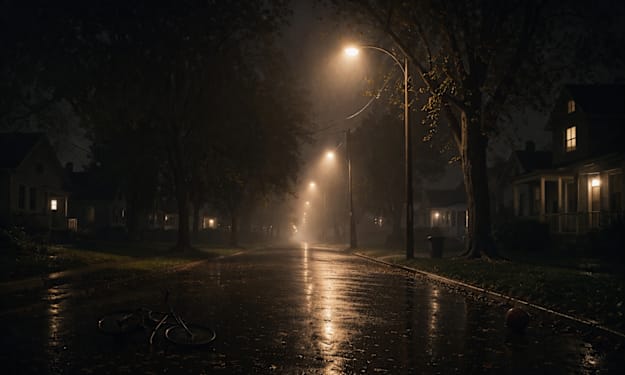
Nobody had to tell us to be home before the streetlights came on. We just were. Not because we were good. Not because we listened. Kids don’t work like that. We rode our bikes too far. Let the basketball roll into the street. Climbed fences we weren’t supposed to touch. Skinned our knees. Lied about where we’d been. Came home sweaty, filthy, and half wild. But when the streetlights flickered, the whole neighborhood changed shape. You could feel it before you saw it. A tightening. Like the evening itself had drawn in a breath and decided not to let it go. The glass over the bulbs would buzz once, then tremble into light, pale and sickly at first, and all at once the street would break open. Bikes dropped mid-spin. A ball left bouncing into somebody’s yard. Kids running full tilt for porches and screen doors and the square yellow safety of kitchen windows. Mothers in doorways with dish towels in their hands. Fathers on the porch with that sharp-edged patience adults get when they’ve already asked twice. And from outside—always from outside—you’d hear your parent call your name. That was enough. You ran faster. No one stood there wondering why the voice sounded farther away than it should. No one stopped to ask why their mother sounded like she was calling from the dark instead of the porch. No one tested it. You heard your parent. You ran. You didn’t stop to think about it. Until Leo. We were twelve when he disappeared, and old enough to think that made us harder to kill. Leo was my identical twin, which meant people said dumb things about us all the time. That they couldn’t tell us apart. That it was like seeing double. That if one of us smiled, the other one looked guilty. We hated most of it, but there was one part that was true: I knew his voice better than anything else in this world. Better than my own, maybe. That night, the streetlights flickered while we were still in the woods. We had cut through because it was faster. Because we were late. Because the long way home felt like admitting we’d misjudged the time, and boys would rather gamble with the dark than lose to a clock. The trees were already going black around the edges. The path was barely a path, just dirt packed hard by years of bad decisions. Roots rose through it like knuckles. The air smelled wet and green and old. Then, from somewhere behind us, our mother called: “Leo. Nico. Get home. Now.” Clear as church bells. We ran. I can still feel the first blind burst of it in my chest. Shoes tearing through leaves. Branches lashing at my arms. That ugly panic that comes when your body decides before your mind does. Leo was right behind me. Until he wasn’t. I heard him hit the ground. A hard sound. Flesh, dirt, roots. All the breath in him leaving at once. I slowed. Not enough. Just enough to know I had. Then his voice split through the trees. “Wait.” Not our mother. Leo. I turned my head just enough to see him in pieces through the dark—one hand in the dirt, one knee bent wrong, face turned toward me— And then something yanked him backward. Not dragged. Not pulled. Yanked. Like the dark itself had gotten tired of waiting. I ran. I ran out of the woods and across the ditch and up the porch steps so fast I nearly broke my face on the front door. My mother grabbed my shoulders. I remember that. Her hands, hot and solid. The porch light. The smell of fried onions coming from the kitchen like the world had the nerve to still be normal. “Where’s Leo?” “He fell,” I said. That was what I gave her. He fell. Like that covered it. Like the woods had simply misplaced him. We went back with flashlights. My father crashed through brush like noise alone could scare the dark into giving his son back. My mother called until her voice shredded. I stood there shaking and watched our lights move across tree trunks and briars and the uneven ground where the path dipped. All we found was his baseball cap. And the marks. The dirt looked torn up. Not like footprints. Not like an animal, either. More like someone had tried to hold on with both hands and failed. Furrows cut into the ground. Lines dragged through leaves. The shape of fear left behind after the body was gone. The forest here was too quiet. The kind of silence that feels heavy, like it’s holding its breath. There was no blood. Just those deep, desperate gouges in the loam. They ended at the base of a tree, bark stripped raw where something had met it hard enough to leave a mark. Whatever had taken him hadn’t lifted him up; it had simply made him cease to be part of the ground. No one said much after that. They didn’t have to. Something in the whole town bent. Parents got meaner when the sun went down. Kids got quicker. By late afternoon, yards started emptying on their own. Nobody played near the woods anymore. Nobody cut through them. Nobody looked toward them if they could help it. And when the streetlights flickered, every porch became a mouth and every house swallowed its children whole. We moved before winter. My mother called it needing a fresh start. My father called it practical. I called it nothing. I stopped calling it anything at all. Years passed. The kind that make people think what happened to them has settled into the past, when really it has just found a quieter room to wait in. Then we came back. The town had shrunk. You could see it in the empty houses with grass grown up around the steps, in the playground with more rust than paint, in the school windows gone dark wing by wing. But our street was still our street. Same poles. Same tired wires overhead. Same road split by old cracks like healed bones. Same woods at the end of the block, dense and silent and pretending to be just trees. I avoided them at first. Then I avoided thinking about them. Then one evening I lost track of time. That’s how it happens. Not with intention. Not with drama. Just a day that runs longer than you meant it to. A sky going from gold to gray while you tell yourself you’ve still got a minute. A block becoming two. Then the whole neighborhood pulling tight around you like a fist. The streetlight above me flickered. My stomach dropped so fast it felt like missing a step in the dark. I ran. The long way home would take too long. I knew that before I had fully turned. My body chose the shortcut before my guilt could object. The woods. Same path. Same mistake. I hit the tree line at a sprint. Branches clawed at my shirt. Dirt kicked loose under my shoes. The smell hit me first—that same wet rot, same green-dark stink of earth and leaves and things left too long alone. I knew this path. I knew every bend of it. I knew where it narrowed, where the roots broke through, where the ditch ran shallow after rain. I knew it right up until the second I didn’t. My foot caught. I went down hard enough to skin both palms and bite my tongue. For one long second everything emptied out. No wind. No insects. No sound but blood hammering in my ears. Then— “Wait up.” I froze. Every part of me went cold at once. Because I knew that voice. Not the way you know a familiar song. Not the way you recognize somebody after years apart. Closer than that. It sounded like me. Not because it was mine. Because it was his. Leo. I shoved myself off the ground and ran. Branches snapped across my face. My breath came ragged and wet. My heart was beating so hard it felt less like panic and more like impact, like something trying to get out. Behind me: “Wait…” Closer. Then, with a crack in it—small, human, almost ashamed— “Please.” My legs kept moving. That was the worst part. Not that I wanted to stop. That I almost did. The trees thinned ahead. Through them I could see the road and the scattered burn of porch lights—warm squares in windows, yellow bulbs over doors, the thin ordinary glow of people washing dishes and arguing and living. Home was there. The world was still there. I only had to reach it. Then the voice came again. Quieter now. Not chasing. Not angry. Almost tired. “Don’t leave me again.” That slid under my ribs and opened something rotten. Because I had heard that plea before. The night I left him. “Don’t leave me.” I didn’t stop. Memory doesn’t need truth. It feeds on what you felt. And this— this felt the same. Leo on the ground. Leo reaching for me. Leo’s voice breaking behind me while I ran— and kept running. I still dream about it with my teeth clenched. My stride faltered. The road was right there. The ditch. The curb. My porch light burning like a tiny private heaven. Behind me: “Wait.” Then softer— “Please.” I slowed. Just enough to feel it. The pull. Not a hand. Not breath on my neck. Nothing I could name and survive naming. Just that awful, intimate certainty that if I turned around, something would be there waiting in the shape of what I loved most. My head started to move. Barely. The beginning of a turn. The first betrayal. Then porch light hit my face through the trees, sudden and gold, and I lunged toward it like a man surfacing from deep water. I broke out of the woods at a stumble, hit the road wrong, nearly fell again, caught myself on the porch rail, and shoved through the front door hard enough to rattle the frame. I barely made it inside. The house smelled like detergent and old wood and whatever my mother had cooked hours ago and forgotten to put away. The clock over the stove ticked too loudly. The kitchen light made everything look flatter than it should have, like the room had been copied from memory and pasted back wrong. My mother stood at the sink. She turned when she heard the door slam. For one second neither of us said anything. I must have looked wrecked. Mud on my jeans. Blood on my palms. Face white as paper. She took a step toward me. I flinched. That stopped her. The silence that followed felt crowded. Like the house was no longer empty around us. Like I had dragged something in with me without meaning to. Then, from the living room— Static. Thin at first. Then louder. A dry electrical hiss, like a voice trying to be born through sand. Neither of us moved. The television was on. Or had been. The screen washed the wall in cold blue pulse. A newscaster’s voice pushed through the static in broken pieces. “…local officials are urging families to keep children indoors after dark…” “…another disappearance reported late last night…” “…residents describe hearing voices—” The signal cut. More static. “…school districts are considering closures due to declining enrollment…” “…authorities continue to advise—” The screen flickered. Then another voice came through. Not the newscaster. Quieter. Closer. “…don’t leave me out here.” My mother crossed the room in three steps, snatched up the remote, and turned the TV off. The black screen held us both. Nobody said a word. Outside, down the block, a porch light stayed on too long.
By Tifani Power 6 months ago in Fiction