Script
The Wrong Number
It was a quiet evening in the city. Dipak sat near the window of his rented apartment, waiting impatiently for an important parcel that still hadn’t arrived. He had work early the next morning, and the package contained documents he desperately needed for his startup proposal.
By Roshan Chauhan4 months ago in Fiction
The Crashed Train in the Jungle.
The Crashed Train in the Jungle We were five friends chasing an old rumor during our trip through Central Java. Me (Adi), my cousin Budi, Lina, Reza, and Sara. The story was about a passenger train that derailed and disappeared into the jungle in the 1980s. Locals said it was still there, overgrown and untouched. It sounded like the perfect adventure for our last night before heading back to the city. We hired a local guide who took us deep into the jungle for four hours until he suddenly refused to go further. “That place is not for visitors,” he said, then turned back alone. We laughed at his superstition and kept walking. Then we found it. The train was lying on its side like a dying metal snake, half swallowed by thick vines and trees. The carriages were covered in moss, but the windows were strangely clean. Some doors were still closed. The number on the side read “KA 472” — a train that officially vanished in 1987. “Wow… this is insane,” Reza whispered. The sun was already setting. Instead of turning back, we decided to explore quickly and camp nearby. Big mistake. We entered the first carriage through a broken window. Inside, everything was eerily preserved. Seats were upright. Luggage still sat in the racks. A newspaper dated 1987 lay on a table. The air smelled of old dust and something sweet, like rotting flowers. That’s when we first heard the breathing. Soft, wet breathing coming from multiple directions at once. We told ourselves it was just the jungle wind. But then we saw the first creature. It was sitting in seat 14C, wearing the remains of a faded blue train uniform. Its body was twisted — spine bent at an unnatural angle, arms too long, fingers stretched like they had been pulled. Its head was turned 180 degrees, facing backward. The skin was pale gray and stretched tight. No eyes. Just smooth skin. But it knew we were there. It slowly turned its head toward us with a wet cracking sound. Its mouth opened slightly, showing small, crowded teeth. Then it whispered in perfect Indonesian: “Ticket… please.” We ran to the next carriage. The further we went, the worse it became. Every carriage had more of them. Twisted passengers still sitting in their original seats. Some had broken necks. Some had limbs folded in impossible positions. They all looked like they had been rearranged after the crash — bones reset wrong, bodies forced back into sitting positions. Lina started crying when one of them reached out and gently touched her hair. Its fingers left a wet black smear on her cheek. “You smell like my daughter,” it whispered with a voice that sounded like multiple people speaking at once. We tried to leave, but the jungle had changed. The path we came from was gone. Vines had grown across it in minutes. We were trapped. Night fell fast. The creatures began moving. They didn’t run or chase aggressively. They moved slowly, patiently, crawling over seats and along the ceiling like broken spiders. Their joints made constant soft popping sounds. They seemed to enjoy our fear. The more we panicked, the more active they became. Reza was the first. At around 1 a.m., while we were hiding in the dining car, one creature pressed its face against his. It stayed there for a long time, breathing into his mouth. Reza started shaking violently. When the creature pulled away, Reza’s eyes were completely white. He looked at us with a sad smile and said, “The train is leaving soon. We have to stay in our seats.” Then he walked straight to an empty seat and sat down. His neck snapped backward with a loud crack as he settled in. He never moved again. We couldn’t even scream anymore. Sara lasted until the third night. She kept saying she could hear her mother calling her from another carriage. One of the creatures had learned her mother’s voice perfectly. It kept whispering “Sara… come home” from the darkness. Eventually she broke. She walked toward the voice crying. We heard her scream once, then nothing. When we found her body later, she was sitting neatly in a seat, hands folded on her lap, with a peaceful expression. Her spine was bent exactly like the others. Budi tried to burn the train. He poured our remaining kerosene on the floor of one carriage. The creatures watched him silently from the shadows. When he lit it, the fire burned for only a few seconds before dying out completely, as if the train itself refused to burn. One creature then slowly crawled down from the ceiling and placed its long fingers around Budi’s head. It pressed until we heard his skull crack. He died whispering apologies to his mother. Now only Lina and I remain. We have been here for six nights. The creatures no longer hide. They sit around us, watching. Sometimes they copy our voices and have conversations with each other, pretending to be us. They argue about whose turn it is to die next. Lina is getting weaker. She hasn’t spoken in two days. One of the creatures has been sitting next to her for hours, gently stroking her hair and whispering childhood memories only she would know. Her eyes are starting to turn white. I am typing this on my phone with 6% battery, hidden in the toilet of the last carriage. They know I’m here. I can hear them outside the door, breathing patiently. The train feels different now. Sometimes I feel it moving slightly, as if trying to continue its journey. The creatures seem excited. They keep bringing me food — fruit and rice that appears fresh every morning. They want me strong enough to last longer. If you ever hear about a crashed train in the jungle, do not look for it. The passengers never completed their journey. And they are still collecting tickets. Lina just screamed my name from the next carriage. But it wasn’t her voice. It was mine. They have learned me now. The door is opening.
By Esmat Zafari4 months ago in Fiction
Color of Divide part 4
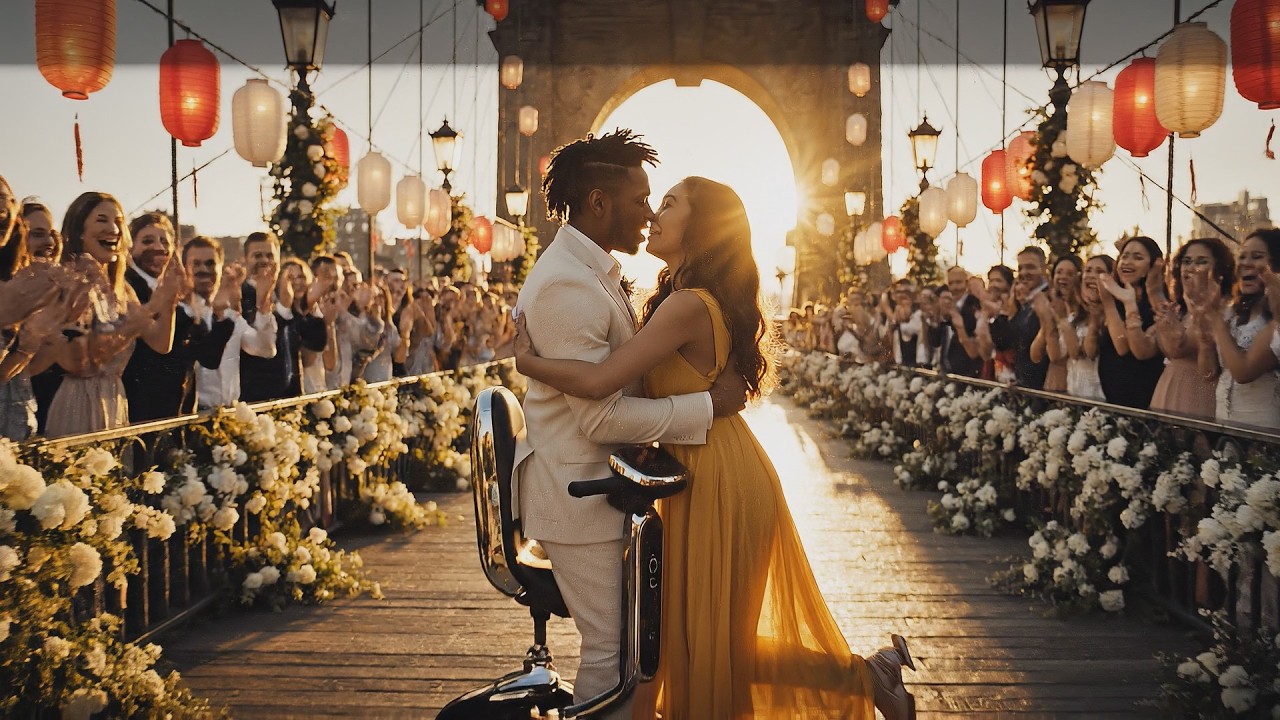
This is the finale for Color of Divide part 4 ending on a happy note. I wrote this, created, & edited for hours. Mirabella and Kaden marry. Kaden gets nano and robotics treatment for his legs. Mirabella graduates as Dr. Solis. The ending is the birth of their baby. I wish life had fairy tale endings.
By Vicki Lawana Trusselli 5 months ago in Fiction
Color of Divide part one. Content Warning.
This is a fictional story about Forbidden Love between two lovers. Mirabella is from Maravelle Heights, a wealthy neighborhood and Kaden is from South Lydell, the other side of the working class neighborhood. The Lydell River separates the two cities.
By Vicki Lawana Trusselli 5 months ago in Fiction
The Well of Secrets
I. The Village of Mirabad The village of Mirabad had no secrets — or so the elders claimed. Nestled between two hills like a sleeping child between its parents' arms, it was the kind of place where the smell of bread from one household drifted to another, where every birth was celebrated by the whole street, and every death was mourned by every soul who could walk to the graveyard. People believed that here, under the open sky, nothing could stay tv hidden for long. But there was the well. It stood at the very center of the village square, older than anyone could remember. The stone walls were dark with age, the rope that hung over it had been replaced a hundred times, and the water that rose from its depths was the coldest, clearest water in the entire valley. Children drank from it. Women washed vegetables beside it. Old men sat on its edge and told stories that had no endings. Everyone used the well. But no one — not even the oldest elder — knew how deep it truly went. It was beside this well that the trouble began, on the last Tuesday of October, when the body of Tariq the miller was found. ⸻ ✦ ⸻ II. The Morning After Rukhsana was the one who found him. She had come before dawn, as she always did, to draw water before her mother-in-law woke and demanded tea. The lantern in her hand threw a pale circle of light onto the cobblestones — and there he was, Tariq, slumped against the base of the well, his eyes wide open, staring at nothing. She did not scream. Rukhsana had grown up in this village and she had seen death before — her father, a drought that killed their crops and then their animals, two children buried before they could learn to speak. She set down her lantern. She pressed two fingers to Tariq's neck. Cold. Long gone. Then she noticed something. His right hand was clenched tight around a piece of cloth — torn, dark blue, the kind of fabric the wealthy men of the village wore. Rukhsana stared at it for a long moment. Then she looked up, into the dark mouths of the houses surrounding the square, the shuttered windows, the closed doors. She felt the village watching her, even in its sleep. She left the cloth where it was and went to wake the headman. "In a village this small, a secret is not something you keep. It is something you bury — and pray the rains do not come." III. The Questions Begin By midmorning, the square was full. The headman, old Bismillah Khan, sat on a wooden chair that had been brought out from his house, and one by one the men of the village came to stand before him. The women watched from a distance, gathered in tight clusters, their voices low. The constable from the district town had been sent for, but the road was muddy from the night's rain and it would be hours before he arrived. In the meantime, Bismillah Khan asked the questions himself. Who had seen Tariq last? His wife, Zainab, said he had left after the evening prayer, saying he needed to check on his mill wheel. He had not returned. She had assumed he stayed there, as he sometimes did when the work ran long. She had gone to sleep. Who had been in the square after dark? No one admitted to it. And the cloth in Tariq's hand? Bismillah Khan held it up. The crowd went very quiet. It was good fabric, fine weave, the colour of deep water. Several eyes shifted — briefly, involuntarily — toward the house of Saleem the merchant, the richest man in Mirabad, whose long coat was made of exactly that kind of cloth. Saleem stood at the edge of the crowd, arms folded, his face as smooth and unreadable as river stone. ⸻ ✦ ⸻ IV. What Rukhsana Knew It was Rukhsana who held the real secret, though she had not yet decided what to do with it. Three weeks ago, she had been drawing water late at night — her mother-in-law had been feverish, and she needed water for the medicine. The square had been empty, the village asleep. But as she pulled up the bucket, she had heard voices from the alley beside the merchant's storehouse. Tariq's voice and another — hushed, urgent, arguing. She had caught only fragments. "You promised. The land was to be mine—" "Keep your voice down. Things have changed." "I have the papers. I have proof of what you did." Then silence, and footsteps fading, and she had gone home and told herself it was none of her business. Village men argued about land constantly. It meant nothing. Now Tariq was dead and Rukhsana stood in the crowd with the weight of those words pressing against her ribs like a stone. She looked at Saleem. He was already looking at her. Their eyes met for just a second — and in that second, something passed between them. An acknowledgment. A warning. Rukhsana looked away first. ⸻ ✦ ⸻ V. The Well Gives Nothing Back That afternoon, one of the boys threw a stone into the well to measure its depth. They waited for the sound. And waited. And waited. There was no splash. The boys went pale and ran home and told their mothers, who told their husbands, and by evening everyone in Mirabad was talking about the well — about how deep it truly was, what was really at the bottom, whether it had always been so silent or whether something had changed. The constable arrived at dusk, a tired young man with mud on his boots and no patience for village superstitions. He examined Tariq's body, took the cloth as evidence, wrote in his notebook, and told Bismillah Khan that the cause of death appeared to be a blow to the back of the head. Murder. He would return in three days with an investigator from the city. Three days. The village settled into an uneasy silence. That night, Rukhsana lay awake listening to her mother-in-law snore. She thought about Tariq's wife, Zainab, who had wept all afternoon with a grief that looked genuine. She thought about the papers Tariq had mentioned — proof of what Saleem had done. Where were those papers now? Had Saleem found them? Had he been searching Tariq's mill, even now, in the dark? She rose before her husband could stir, wrapped her shawl around her shoulders, and slipped out into the night. ⸻ ✦ ⸻ VI. The Mill The mill sat at the edge of the village where the stream ran fast over smooth rocks. The door was ajar. Rukhsana pushed it open and stepped inside. A figure was already there, crouched by the far wall, holding a lantern. He stood when he heard her — and the light fell on his face. It was not Saleem. It was Zainab. Tariq's wife looked at Rukhsana with red, swollen eyes and clutched something to her chest — a folded bundle of papers, tied with string. "I knew he kept them here," Zainab said. Her voice was very calm, in the way that voices go calm when all the fear has already passed through them. "He told me once, when he was drunk. He said: if anything ever happens to me, go to the loose stone behind the millstone. He knew this day might come." Rukhsana stepped forward. "Are those—" "Land records. Forged signatures. Saleem has been stealing land from the families of this village for fifteen years. Tariq found out six months ago. He was going to give these to the investigator from the city." Zainab's jaw tightened. "He waited too long." Outside, the stream rushed over its stones. Somewhere in the village, a dog barked twice and went quiet. "What will you do?" Rukhsana asked. Zainab looked down at the papers. Then she looked up, and in her eyes was something that Rukhsana recognized — the look of a woman who has nothing left to lose and has therefore become the most dangerous kind of person in the world. "I will not wait," Zainab said. ⸻ ✦ ⸻ Epilogue When the investigator arrived from the city three days later, Zainab was waiting for him at the entrance to Mirabad, the papers in her hands. Saleem the merchant was arrested before the afternoon prayer. The stolen land was the subject of a case that would take two years to resolve but would, in the end, return what had been taken. No one ever determined exactly how deep the old well was. But the morning after Saleem was taken away, the boys threw another stone into it — and this time, faint and far below, there was a sound. Small. Distant. Real. A splash. The village of Mirabad breathed again. — The End —
By Ikram Ullah5 months ago in Fiction
The Letter I Received 10 Years Before it Was Written
The Letter I Received 10 Years Before it Was Written The floorboards groaned under my weight as I knelt in the corner of my father’s attic, the air thick with the smell of damp insulation and forgotten lives. I wasn't looking for a miracle. I was looking for a tax return from 1998. Instead, my fingers brushed against an envelope wedged deep behind a rusted filing cabinet.
By Unfiltered Guy5 months ago in Fiction
Andreas Szakacs on Michael: An Actor’s Reflection on Legacy, Performance, and Emotion
As an actor, I didn’t approach this film as a historian or critic. I approached it as someone trying to understand performance, emotion, and the weight of becoming a legend. And in that sense, the film offers more questions than answers.
By Andreas szakacs5 months ago in Fiction