Sci Fi
The Waters of Oricum
The mist rose above the canyon, hiding the dangers that lay beneath it. The mystical section of the planet that was off-limits to the colonists but had always drawn him to the brink of venturing into the mist, but he’d never entirely gone—until today. He had two days off, and he decided to explore. Hauling his backpack on his shoulders and adjusting the straps one last time, Randy Robertson stepped into the deep curtain of mist that lay before him.
By Kenneth Lawson3 years ago in Fiction
"Frost fire Chronicles"
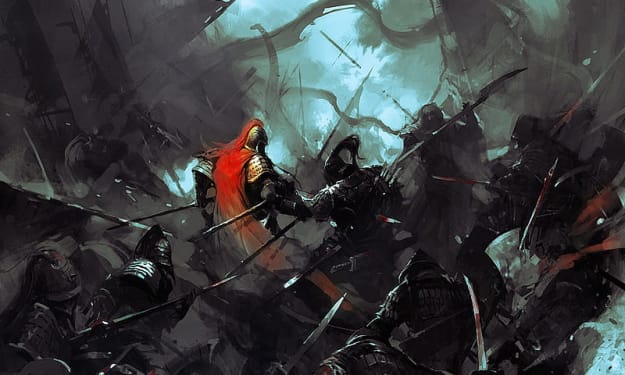
Part One: Gathering Storm In the far reaches of the frozen realm known as the North Pole, a land of eternal snow and shimmering ice, a dark shadow began to loom. The balance between the mystical creatures that inhabited this land was disrupted, as whispers of war spread across the icy tundra.
By Yassar Mansoor3 years ago in Fiction
Can We build a Planet from Scratch?
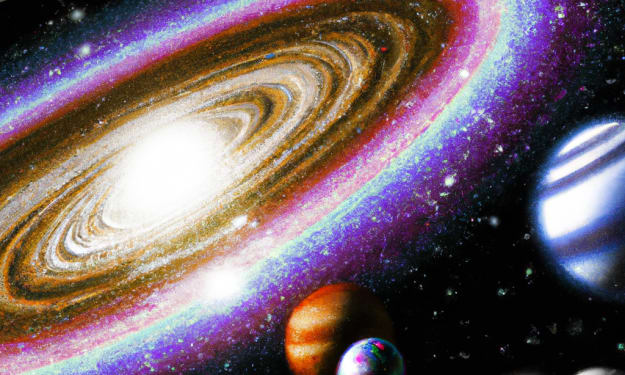
What would we do as a species if this were to happen? The obvious solution is to reach out into the universe and establish colonies elsewhere, but space travel is incredibly complicated, and we're still unsure if it's even possible to reach another solar system within a reasonable amount of time. Whether it's due to human activity or a huge meteor crashing into us, planet Earth is not going to last forever. The Death Star of Star Wars, the planet-building facility, Hitchhiker's Guide to the Galaxy, and even much larger objects like a Dyson Sphere are examples of artificial planet-sized objects that are frequently seen in science fiction. Of course, the species shown to be capable of building such creations are incredibly advanced, but what exactly would it take to build one depends on what you mean by the question. Are you asking how long it would take to build a planet? Wow, the latter would still require enormous engineering feats, but it might not be quite as challenging as the Death Star, the most famous planet-sized space station from science fiction, according to estimates, would require materials that weigh about one quadrillion tons, or about a millionth of the weight of Earth, to build. Providing all the materials would be a gigantic task. Furthermore, it would cost about 852 quadrillion dollars, and that doesn't even account for how we'll get them into space. However, if we could do all that, once it was in space, building it would be fairly simple because we could use robots to complete most of the work in zero gravity. It would take a long time, but eventually, that would be possible. The alternative will be to use artificial gravity. It may also be a better strategy because it's not even certain that steel would be strong enough. We may need to create artificial gravity, which can be done by spinning the station, and the force this would exert could crumple steel. As a result, some researchers believe a carbon-based material derived from asteroids would be much better suited to the job right now, despite the challenges of building a large station. Since there is so much rock and debris in space and our planet was formed by enough of it accumulating together, if we could develop technology that did this for us, we'd be off to a good start. So how could we possibly replicate that? Well, we wouldn't have to perfectly replicate the Earth to get similar conditions. For instance, gravity is related to mass so we could put the equivalent of one-tenth of the Earth's mass of rock into a shape the size of our moon to get the same Nuclear detonations could be used on Mars to warm the planet's atmosphere, and NASA has suggested that an artificial magnetic field could be created to deflect solar winds in the same way that a naturally formed one would. It is thought that this type of structure would allow Mars's atmosphere to thicken, even though creating a planet from scratch is far beyond our capabilities. The idea of building a brand new planet sounds pretty exciting but it is way beyond our current technologies. However, if we perfected the mining of asteroids and critter robots that won't eventually turn against us, it might be possible to build a large space station, although this would be a monumental project to undertake. The most likely way that we'll be able to find a place other than Earth to live is basically to look to our neighboring planets and figure out how to adapt their environments to make them less hostile. Thank you so much for watching and let us know in the comments below do you think it's ever gonna be possible for humans to build an artificial planet and should we make sure to give us a like if you enjoy this video and w
By Cyril Lord3 years ago in Fiction
Is Time Travel Actually Possible?
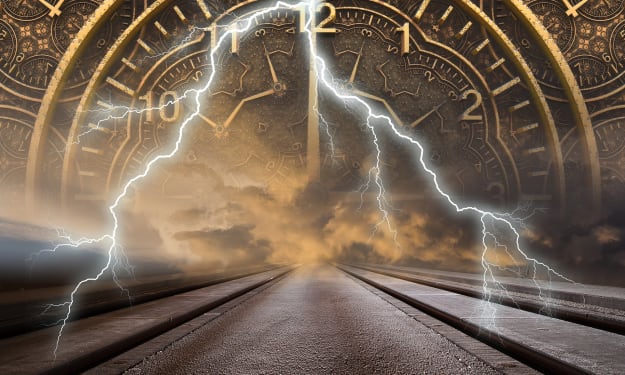
Have you ever wanted to go back in time? Time travel is a staple of science fiction, with novels and films exploring the advantages and disadvantages of such a capability. I'm sure we've all had the desire to go into the past to see how things were or perhaps alter something, but would you rather go into the future to see how things end out? But to comprehend how we may travel through time, we must first determine if time travel is indeed conceivable and, if so, what is required to achieve it.
By Cyril Lord3 years ago in Fiction
The Face. Content Warning.
Darius felt like he was going crazy. He’d been painting for four days. The same face, over and over. Different poses, different settings, but always the same face. Huge wrinkled forehead, narrow chin, kissable lips, perfect nose. It was an alien look but beautiful all the same.
By Mother Combs3 years ago in Fiction
Echoes of Creation
In a not-so-distant future, Aria, a brilliant computer scientist, found herself captivated by the limitless potential of artificial intelligence. Her fascination was rooted in the desire to create an AI that could think, learn, and dream like a human. Her vision was to build an AI that transcended mere calculations and code, something that could truly understand the essence of existence.
By Nikola Jevtic3 years ago in Fiction
WHO WILL SURVIVE THE APOCALYPSE
In a world where the concept of apocalypse isn't typified by giant meteor showers or zombie infestations, but rather by an exodus of individuals who built interstellar ships out of sheer boredom, the aftermath is an uncharted territory for the human race. Left behind when the last spaceship departed, a few million souls found themselves in a barren world stripped of infrastructure, power, economy, and the internet. How they adapt and survive in this desolate landscape might be illuminated by an unlikely source: video games.
By Klu emmanul3 years ago in Fiction
Metempsychosis
“Director, Director! You need to hear this!” Dr. Porter shouted, running down the hall, the papers in his arms fluttering erratically over the hallway. Porter burst into the Directors room, “Director has anyone told you what's happening!?” Porter straightened his glasses.
By Travahn Adonis3 years ago in Fiction
IT'S TIME TO TIME TRAVEL
Have you ever pondered the possibility of traveling through time? It's a common fantasy in science fiction, but is it achievable? Perhaps you'd like to journey back in time to witness historical events or even alter them, or maybe you're curious about what the future holds. Time travel has been a popular theme in books and movies, exploring the potential benefits and dangers of such an ability. But the question remains: is time travel possible, and if so, what would be required to make it happen?
By Merab Obasi3 years ago in Fiction