Psychological
I Remember the Future
Static Blooming Time hiccups. That’s the only way I can describe it — a lurch in my chest, a stutter in the world. The colors shift too fast. My hand is holding a mug I don’t remember picking up, and the tea inside is cold, though I remember just pouring it.
By Alain SUPPINIabout a year ago in Fiction
Salt and Vinegar Summers
The gravel crunched beneath her tires as the car rolled to a stop beneath the familiar canopy of pine. The air smelled of sap and sun-warmed wood, with just a trace of last night's rain lingering in the ferns. Sylvie sat for a moment with the engine off, her fingers curled loosely around the wheel. The silence settled around her like a held breath.
By Oula M.J. Michaelsabout a year ago in Fiction
The Crime- Final night
We walked down the hall till she got to the classroom she needed. I saw that it was dark, but for her others were waiting and the lights went on, and she said you better move on with your work, and she said thanks for listening and for setting me on my way. I continued down the hall and the locker was closed with a lock. Suddenly, I felt a light tap on my shoulder and a peck on my cheek and a warm feeling all over. I smiled and looked up. There she was all in glory and smiling.
By Mark Grahamabout a year ago in Fiction
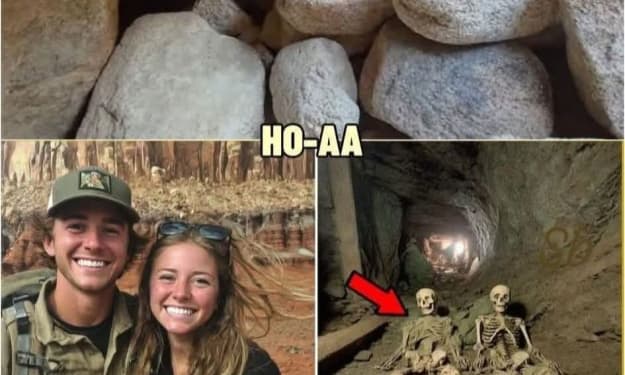
Colorado Couple Missing Since 2011 Found Dead in Abandoned Mine Eight Years Later
Colorado Couple Missing Since 2011 Found Dead in Abandoned Mine Eight Years Later A haunting mystery that tormented two families and baffled authorities for nearly a decade was finally laid to rest in 2019. The remains of Sarah Bennett, 26, and Andrew Miller, 28—two Colorado residents who vanished without a trace in 2011—were discovered deep inside a long-sealed uranium mine in Utah’s unforgiving San Rafael Swell. The revelation brought closure, but also raised chilling new questions about how and why they ended up there. In May 2011, Sarah and Andrew set off on what was supposed to be a peaceful three-day camping trip. Both avid nature lovers and amateur photographers, they were drawn to Utah’s remote desert landscapes. The San Rafael Swell—a stark, breathtaking expanse of red rock cliffs, abandoned mining sites, and winding slot canyons—was the perfect escape from the demands of city life. “They weren’t thrill-seekers,” recalled Sarah’s younger sister, Emily Bennett, in a 2020 interview with The Denver Post. “They weren’t looking for danger. They were just looking for silence. Some time away from the noise of work and life.” The couple was last seen alive at a gas station in Green River, Utah. Surveillance footage showed them smiling, laughing, refueling their Subaru Outback, and buying a paper map of Emery County. They appeared relaxed and excited. After that brief stop, they vanished. The disappearance sparked an immediate and intensive search. Local authorities, park rangers, volunteers, and even federal agencies scoured the area by foot, ATV, helicopter, and drone. Search dogs combed the desert, and tips from the public poured in. But despite the massive effort, no clues were found. The Subaru, their camping gear, their phones—everything had simply disappeared. As months turned to years, theories ran wild. Some speculated the couple had been murdered, perhaps stumbling upon something they weren’t meant to see in the remote desert. Others believed they’d become victims of drug traffickers. Conspiracy theorists floated ideas of government cover-ups, even alien abduction. The lack of evidence only deepened the mystery. Then, in August 2019, the long-cold case was suddenly reignited. A group of geology students from the University of Utah, conducting field research near Temple Mountain, ventured into a little-known uranium mine that had long been sealed and marked as unstable. About 300 feet into the shaft, they stumbled upon something unimaginable: two fully clothed skeletons sitting side by side on rusted folding chairs, as if frozen in time. Scattered nearby were personal belongings—an old thermos, a broken lantern, and a dusty Nikon camera still intact despite the passage of time. A partially collapsed section of the mine had sealed the area off, creating a hidden chamber that had preserved the eerie scene almost perfectly. Dental records quickly confirmed the identities. After eight long years, Sarah and Andrew had finally been found. The Emery County Sheriff’s Office reopened the investigation, led by Detective Laura Martinez, a veteran officer who had reviewed the case more than once in the past. The official cause of death was listed as “undetermined.” There were no signs of trauma or foul play, but experts suggested that the couple may have become trapped after entering the mine and experiencing a collapse. Toxic gas buildup—common in abandoned uranium mines—was also considered a likely factor. But it was what was found on the camera that disturbed investigators most. Inside were several undeveloped photos, miraculously preserved. They depicted scenes from within the mine: old mining carts, graffiti, rusted tools—and then, a self-timer photo of Sarah and Andrew sitting on the very chairs where their remains were found. The timestamp? Just over an hour after they were seen at the Green River gas station. “They went in willingly,” Detective Martinez said in a 2019 press briefing. “There was no sign they were being chased or coerced. They weren’t running from anything. It looks like they went in, explored, sat down... and just waited.” Why they remained inside remains a mystery. Some believe they became disoriented in the maze-like tunnels and chose to stay put rather than risk wandering deeper. Others wonder if something more psychological or symbolic was at play—perhaps they intended to disappear, though loved ones dismiss that theory. A modest memorial now marks the mine’s entrance: a stone slab engraved with their names, flanked by wild desert flowers and offerings from strangers who followed the story over the years. “Sarah and Andrew went looking for peace,” said Emily Bennett during a memorial service held at the site in 2021, marking ten years since their disappearance. Her voice trembled as she added, “I hope they found it—wherever they are.” Though the case is technically closed, its emotional and psychological impact lingers. To many, Sarah and Andrew’s story is a haunting reminder of nature’s beauty and danger, and of how, even in our modern world, people can still vanish—quietly, completely, and without warning. And sometimes, even when they're found, the answers don’t come easily.
By Israr khanabout a year ago in Fiction
Whispers Behind the Walls
The old house at the end of Willow Street was a shadow of its former self. Weather-beaten and worn, its wooden siding cracked and peeling like the pages of an old book long forgotten. The windows, clouded with years of dust, seemed to stare blankly at the world around it. To anyone else, it was just another relic destined to be torn down or left to rot. But to Marla, it was a legacy.
By Rameez Khanabout a year ago in Fiction
NOT ALL HOMES WELCOME YOU. Content Warning.
My friend Mr. Sinha had always believed in logic. A retired forest officer with a stern face and a steady voice, he laughed off the idea of ghosts and curses. When he bought a sprawling but decaying zamindar house in a remote Bengal village, he felt like he had found peace at last.
By Isabella Woodabout a year ago in Fiction
The Mirror Between Worlds
Chapter One: The Forgotten Antique In the heart of an old European town nestled between misty hills, a young historian named Lena Ashford stumbled upon a crumbling shop labeled “Timeless Echoes.” The door creaked open with an eerie familiarity, as if it had been waiting.
By Echoes by Shafi--about a year ago in Fiction
The Warsaw Echo
The Tape in the Tomb Rain slicked the cobblestones of Warsaw’s Old Town, tracing old wounds through centuries of stone. Lena Kovac, a historian with more ghosts than colleagues, pulled her coat tighter against the cold. Her footsteps echoed as she approached St. John’s Archcathedral, heart pounding with disbelief. The email had been brief. Anonymous. But it used her childhood nickname. And the sender’s name—Aleksy Kovac—was impossible. Her grandfather had died in 1989, shot during the chaos of the Polish uprisings. “Find Bishop Bogoria’s tomb. Play the tape. Save her.” The cathedral’s doors creaked like a warning. Inside, incense clung to ancient stone, mingling with the scent of mildew and dust. Light from stained glass fractured across marble saints, but the shadows felt heavier today. She descended into the crypt. Her fingers brushed across carved limestone, searching. Then—a click. A hidden crevice gave way, revealing a weathered cassette tape marked: Gdańsk, 1981 She hesitated. Then pressed play. A woman’s voice filled the crypt. Shaky but steady. Brave. “They silenced the shipyard whistle… Solidarity’s list is buried in the—” A gunshot cut her off. Before the silence settled, a shadow detached itself from the confessional. Someone had been listening. Watching. Lena didn’t wait. She ran, the tape clutched like a ticking bomb. The Ghosts of Gdańsk The voice belonged to Anya Petrov, a Solidarity activist who had vanished without a trace during martial law. To the world, she was just another casualty of the regime. But to Lena, she became something more. Research and fragments from family letters revealed the truth: Anya was her grandfather’s lover. A fighter. A ghost. And her death wasn’t an accident. It tied to something called Operation Krysztal—an unholy mission orchestrated by the secret police to silence dissenters through staged suicides and “incidents.” Lena followed the trail to Shipyard No. 10, now a rusted museum to forgotten bravery. Inside the old canteen, she located a crumbling wall where a brick jutted out. With trembling fingers, she pried it loose. Inside, wrapped in oilskin, was Anya’s journal. “Colonel Vladek ordered it. He always wears the wolf’s-head ring. If I die, find the list. It names every traitor within Solidarity.” It wasn’t just about the past anymore. It was about who had betrayed the dream. That night, back at her hotel, a photo awaited her—stabbed to her door with a switchblade. It was a photo of her grandfather’s grave. But it was freshly dug. And in red ink, scrawled across the photo: “Stop digging, or lie beside him.” The Wolf’s Ring In Berlin, Lena bribed a clerk in the Stasi Archives with a bottle of Polish vodka and a fake academic badge. One image sealed it all. Colonel Ivo Vladek, grinning at the Brandenburg Gate in 1989. On his hand gleamed a ring—a silver wolf devouring a star. The symbol chilled her more than the cold. “He’s not in hiding,” whispered an aging librarian who’d once catalogued surveillance footage. “He’s the brain behind the New Dawn Party. He’s back—wearing a suit instead of a uniform.” The far-right populist group had risen fast, feeding discontented citizens half-truths and entire lies. On the train back, Lena’s phone buzzed. A video: Vladek, pristine in a Brioni suit, addressing a massive rally. “Europe forgets its martyrs. But we remember. We cleanse. We restore.” Behind him, a banner unfurled: CLEAN HANDS. PURE NATION. A message followed seconds later: “Anya’s list exposes my allies. Bury it, and your grandfather’s ‘suicide’ stays buried too.” The Bloody Ballot In Prague, under the mist-veiled statues of Charles Bridge, Lena met a man named Tomas, an exiled data engineer who once worked for Poland’s state media. “They rigged the last election,” he whispered, eyes scanning the fog. “New Dawn switched thousands of votes in Podkarpacie. Anya’s list confirms who helped.” He handed her a USB drive. It was more than damning. It was a roadmap—from Kremlin accounts to Polish politicians. From Vladek to media heads. From Moscow, with love. “Vladek’s not just a fascist. He’s Putin’s puppet.” A sharp whistle. Then a crack. Tomas staggered, crimson blooming on his coat. He collapsed at her feet. Lena ran, barely hearing the screams of tourists. In her fist, the drive pulsed like a live wire. A tour guide’s headset crackled behind her as she vanished into the city’s maze: “History always eats its children, Lena,” Vladek’s voice taunted. The Broadcast Back in Warsaw, thunder rolled as Lena entered the Palace of Culture and Science—Stalin’s looming gift, now a monument to ghosts and power. It was election night. New Dawn’s landslide victory was being broadcast live from the tower’s spire. But Lena had a plan. Inside a forgotten broadcast control room, she plugged in the USB. Anya’s voice returned. Not a whisper, but a roar. “They silenced us. But we kept the list.” Then: data. Names. Account numbers. Surveillance footage. The truth stormed across every major screen in Europe. Vladek, mid-speech, faltered. His grin turned to steel. “This won’t matter,” he spat, drawing a pistol. “They’ll call it Russian disinformation. Fake news. No one cares.” The fire alarm howled. Lena stepped from the shadows. A fire extinguisher in hand. One swing. CRACK. The wolf’s-head ring shattered across the stage. “Anya sends her regards.” Outside, protesters filled the streets. Fists raised. Phones recording. A chant surged, thunderous and true: “WOLF IN SHEEP’S CLOTHING!” As police dragged Vladek into custody, rain began to fall again—washing Warsaw clean. Lena looked to the sky. Not all revolutions needed guns. Some needed a tape, a name, and someone willing to remember.
By Muhammad Abuzar Badshah about a year ago in Fiction