Psychological
The Books
As I went into that reading room there it was 'The Book". I walked up to the table, and I heard "Read the book." I stood there wondering what should I do for I thought that I had put all the books back on the shelves. I inched closer to the table, and it seemed like I was being gently pushed to that table with that book. My phone rang. I answered it, 'Read the book." Again, the feeling of being pushed to the table. I was closer to the table and the book turned out to be "The Bible".
By Mark Grahamabout a year ago in Fiction
The Books
When walking through the library one dark and gloomy evening when I was placing books back in the stacks there was this one study carrell that seemed to whisper. I slowly went over to it, and it kept saying "Read the book. Read the book." I thought what book as I finished putting books back on the shelves. I went about straightening chairs and picking up items that students left behind and put in the lost and found box. "Read the book, read the book." Again, what book. I went into the next room and there it was "The Book".
By Mark Grahamabout a year ago in Fiction
Episode 12: John Doe
So there was screaming. That’s how it started. In the room — one of those white, blinking kinds that smells like bleach and static and something dying in the walls. Someone was strapped down. Someone else was talking too calmly. There were machines. Needles. Silver bags of blood hanging from hooks like ornaments from a Christmas no one would survive.
By Paper Lanternabout a year ago in Fiction
The Cup Was Still Warm
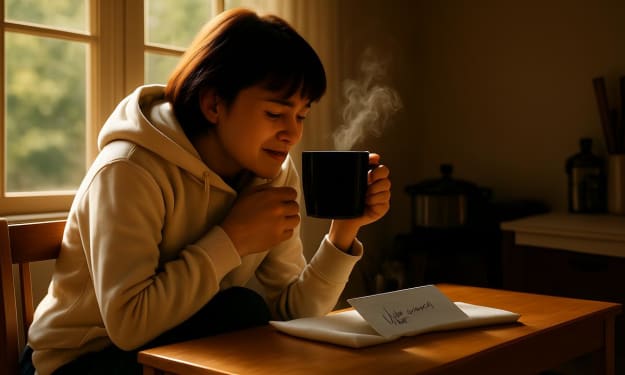
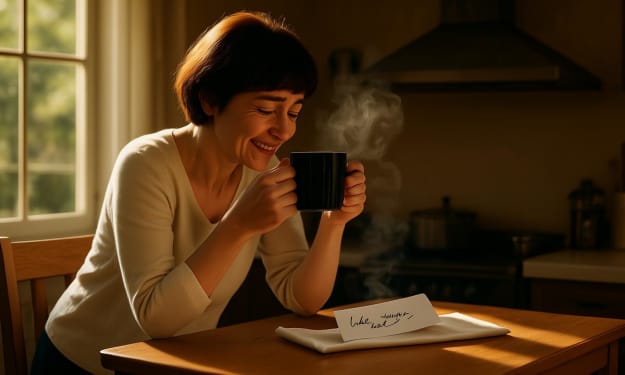
The Cup Was Still Warm By Mahboob Khan Sundays always felt too quiet after Adam left. It wasn’t that he slammed the door or made a scene. Adam was the kind of man who left like morning mist — quietly, slowly, until you weren’t sure he’d ever been there at all. And this time, he hadn’t even said goodbye.
By Mahboob Khanabout a year ago in Fiction
The Fall From Innocence
The rain hadn’t let up since morning. It fell in cold, steady lines across the windshield, blurring the world beyond it. I gripped the steering wheel tighter, my knuckles bone-white, the wipers squeaking rhythmically like something crying out to be heard. We were late. Very late. And worse—we were the hosts.
By Paper Lanternabout a year ago in Fiction
A World Without Sleep. AI-Generated.
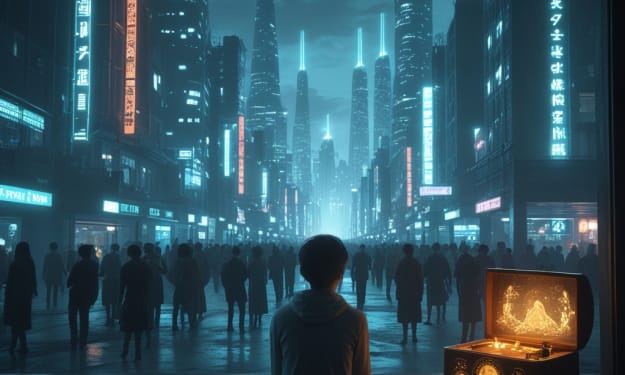
The Day the Night Died It began with a whisper—an unexplained global shift. First, the insomniacs noticed. They stopped complaining. Then, the dreamers found their nights empty. No yawns, no fatigue, no need for rest. Within weeks, it was official: humankind no longer needed sleep. At first, it was hailed as a miracle. Scientists called it the Lucid Surge—an evolutionary jump no one could explain. “The brain has found a new rhythm,” they said. No one aged faster. No one fell ill from exhaustion. Our bodies simply… adapted. We had won back a third of our lives. But the cost wasn’t what we expected. --- The Endless Grind With no need for sleep, days became endless. What once were evenings of rest and reconnection turned into bonus work hours. Employers extended shifts. Schools ran 24/7. Cities buzzed with activity around the clock. Capitalism rejoiced. Rest became laziness. “Why nap when you can produce?” became the mantra on corporate billboards. People were always available, always reachable. Burnout didn’t disappear—it mutated. Mental exhaustion grew in strange new shapes. Without dreams, creativity suffered. Without rest, perspective blurred. The world had gained time, but lost stillness. --- The Dreamless Generation Children born after the change had never felt the joy of waking up refreshed, never whispered secrets under blankets at midnight, never asked for just five more minutes in bed. They didn’t understand why lullabies existed or what nightmares were. A new branch of psychology emerged: Nocturnia, a condition where people missed sleep not physically, but emotionally. Therapists began prescribing “dark time”—eight hours a day of stillness, silence, and solitude, mimicking the old sleep cycle. Parents dimmed lights, drew curtains, and asked children to pretend to sleep. Not to rest, but to remember. --- Black Markets and Sleep Clubs Underground movements began to form. People who craved sleep met in hidden basements and blackout rooms. They hired sound engineers to recreate the soothing hum of a fan, or the drip of rain against windows. Some paid scientists for neural “sleep simulations,” downloaded into their minds like black-market dreams. The elite bought hours of fake REM sleep to remember what it once felt like to surrender control. A new drug—Somnia—emerged. It didn't make you sleep, but it created vivid dreams in a conscious state. People took it just to feel tired again. --- The Silence in the Stars Astronomers noticed something curious. With no one sleeping, city lights never dimmed. The stars grew fainter. No one looked up anymore. Before, the quiet hours of the night had belonged to the sky. Now, noise filled every second. There were no more midnight walks. No secret kisses under moonlight. Romance began to fade, not because people stopped loving—but because they stopped pausing. With no night, there was no mystery. Everything was visible, immediate, and lit up. --- The Rebellion of Rest It took years, but the backlash began. A movement called “Return” spread across the globe. It wasn’t anti-science—it was pro-stillness. Returners advocated for rest, reflection, and boundaries. Their motto: “Time is not enough—what we do with it matters.” They closed their shops at sunset. They dimmed their screens. Some even taught themselves to simulate sleep, lying in stillness and letting their minds wander. The world had given up sleep in pursuit of productivity. But people were starting to remember that sleep was never wasted time—it was sacred time. --- Epilogue: In the Quiet I sit now in a quiet room, lights low, Somnia softening the edges of my thoughts. My body will not sleep. It cannot. But my mind can drift. Outside, a child sings a lullaby they don’t understand. Their voice is off-key but gentle, a ghost of the old world echoing in this sleepless one. We thought sleep was just a physical need. But it was more than that. It was the boundary between doing and being. Between surviving and dreaming. And I—like many—have begun to miss it.
By Shafi Ullahabout a year ago in Fiction
The House that We Build
The House That We Build: A Haunting of Our Parents The house still stood, even after all these years. Leaning slightly westward with age, the shingles curling like dried petals, its gray frame cloaked in ivy and memory. It was ours once—The House That We Built, as our father used to say. Only, we never built it. We inherited it, like we inherited the sadness and silence that filled its rooms.
By Huzaifa Dzineabout a year ago in Fiction