Psychological
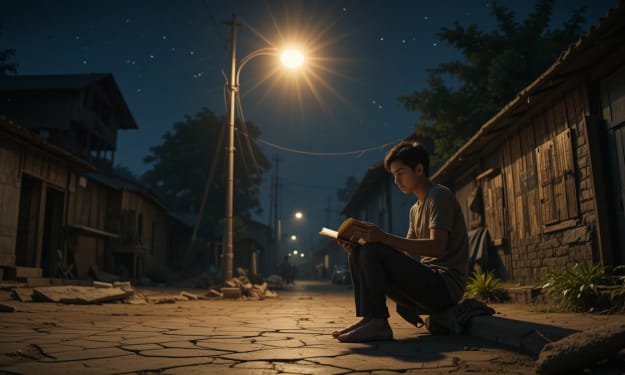
The Light Beneath the Streetlamp. AI-Generated.
The Light Beneath the Streetlamp Written by Noor Muhammad In the heart of a crowded Pakistani city, where honking rickshaws and endless duststorms ruled the day, lived a boy named Ahsan — a name that meant "perfection" in Arabic, though life had rarely been perfect for him. Ahsan was 17, tall for his age, and had eyes that always seemed to be searching for something beyond the narrow streets he walked every day. He lived in a one-room house with his widowed mother and younger sister. His father had passed away when he was only nine — a construction accident, and just like that, their world broke into pieces no one knew how to fix. There was no inheritance. No savings. Only his mother’s willpower and a tiny job stitching women's clothes for barely 300 rupees a day. But Ahsan had dreams — not the kind that sparkle in movies — the kind made of necessity. He wanted to earn enough to send his sister to school, to buy his mother new glasses, to maybe one day own a home with two rooms and a working ceiling fan. 🌙 Streetlamp Classroom By day, Ahsan sold boiled eggs outside a college gate. Most students ignored him. Some felt sorry. A few bought from him out of kindness. But at night, after he cleaned the small cart and washed hiThes hands with water from a leaking pipe, he sat under the only working streetlamp near his house — his makeshift classroom. An old man once left a torn English grammar book at the tea stall nearby. Ahsan asked if he could keep it. That book became his treasure. Each night, he read the same chapters again and again. He copied words into a notebook made of scrap papers stapled together. Some nights, stray dogs circled him. Other nights, drunk men shouted nearby. But Ahsan kept reading. One day, a college professor who had noticed the egg-seller before, saw him studying under the streetlamp. Curious, the professor approached and asked, “Why are you reading this?” Ahsan stood up respectfully and said, “Because I want to change my life, sir.” The professor was quiet for a moment, then said, “Meet me tomorrow morning. I’ll bring you something better.” 📘 A Push from Fate The next day, the professor handed Ahsan a used smartphone and said, “It’s old, but it has internet. Learn whatever you can.” That phone changed everything. Through free Wi-Fi from the college gates, Ahsan started watching YouTube videos on grammar, freelancing, and even coding. He didn’t understand everything at first. But he tried. And retried. Eventually, he discovered a freelancing platform for writing product descriptions. His English wasn’t perfect, but his work ethic was unmatched. He’d take hours to write what others did in minutes — but clients noticed his dedication. His first payment: $5. Enough to buy a new notebook, a full meal, and a spark of belief. 🌟 Ahsan, The Mentor By the time he turned 20, Ahsan had stopped selling eggs. He was now making over $200 a month — not a fortune, but a lifeline for his family. His sister was in school. His mother no longer stitched at night. And the ceiling fan? It finally worked. But Ahsan didn’t stop there. He started a small WhatsApp group for local boys who had dropped out of school — teaching them freelancing basics, sharing free courses, and encouraging them to read under the same streetlamp that once taught him. One of them got a $20 gig in two weeks. Word spread. Now, every Friday evening, under that very streetlamp, a group of young dreamers gather — notebooks in hand, eyes full of purpose. They call it “The Lamp School.” 💬 Why His Story Matters Ahsan didn’t win a medal. He wasn’t a viral sensation. He had no fancy degrees or foreign sponsors. But he changed lives — quietly, persistently, with nothing but a cracked phone, a streetlamp, and unshakable hope. One of his students once asked him, “Bhai, what if we fail?” He smiled and replied, “Even if we fail, we’ll fail forward.” And that’s the story of Ahsan — the boy who studied in the dark so others could learn to shine.
By Moonlit Lettersabout a year ago in Fiction
The Window Without Glass. AI-Generated.
The Window Without Glass By Noor Muhammad In the dusty corner of a crowded street in Lahore stood a crumbling house with no proper gate, faded paint, and a window that hadn’t seen glass in years. Behind that window lived a boy named Haris. Haris wasn’t the kind of boy people remembered. He wasn’t loud. He wasn’t especially bright in school. He wasn’t athletic or funny. What made Haris different was that he noticed things—quiet things, like the way his mother sighed after folding laundry or how his father’s hands trembled every evening after pushing a fruit cart all day. Their house was small—two rooms, a leaking roof, and a kitchen that barely functioned. The broken window in Haris’s room faced a school playground across the street. Every day, he watched kids in clean uniforms play, laugh, and run freely. He watched them while tying the same worn laces of his school shoes for the third year in a row. But Haris never complained. He had learned early on that complaints didn’t change anything. What changed things was belief. 📻 The Day the Radio Broke One evening, while helping his father repair the old fruit cart, Haris heard something from a nearby shop—an English news broadcast on the radio. He didn’t understand all the words, but he caught some: “global... effort... innovation... future.” Those words stuck in his mind like a song. The next day, he went back to that shop and stood outside until the shopkeeper waved him in. “You like the news, boy?” he asked. Haris nodded. “You understand English?” “Not all. But I want to.” That’s how it started. Every day after school, Haris would stop by the shop and listen for ten minutes. The shopkeeper, amused at first, grew fond of the boy’s curiosity. He gave Haris an old grammar book. “Try learning from this.” And so, Haris did. He practiced verbs and tenses under candlelight. He repeated English sentences in front of the broken window, imagining he was talking to someone on the other side of the world. 💻 An Accidental Discovery At 15, Haris was given a gift by his cousin—an old, barely-working smartphone with a cracked screen and no SIM. But it connected to Wi-Fi. Haris didn’t waste time. He found a free online English course. He watched motivational videos. He discovered Google Translate. He typed slowly, one thumb at a time, and wrote small paragraphs about his life just to see how they sounded in English. Then one night, while browsing YouTube, he found a video titled: “How to earn money online through writing.” His heart skipped a beat. He clicked. That video changed his life. ✍️ His First Story He spent three days writing his first story—about a boy who wanted to fix his broken window and see the world clearly. It was fictional, but it was also him. He submitted it to a small writing website. Days passed. Then came an email: “Your story has been accepted.” They didn’t pay him. But they published it. And that was enough. He wrote another, and another. People left comments: “This moved me.” “You have a gift.” “Keep writing.” He cried the night someone messaged him from Canada saying, “Your story reminded me of my childhood.” 💡 When Hope Became Purpose Haris saved enough from online gigs—rewriting blogs, editing captions, translating Urdu essays—to buy a better phone. He started a blog. He posted quotes and small fictional stories in English and Urdu. His followers grew. At 18, he applied for a remote internship with a digital magazine. The editor wrote back: “We don’t usually hire people your age... but your writing feels real.” He got the job. 🌍 The View Now Today, Haris still lives in the same house. The window is still there, still without glass. But now, he sees more than just the playground. He sees messages from readers in Indonesia, Pakistan, even Germany. He sees story ideas. He sees freedom. He teaches writing to younger kids in his neighborhood. He tells them, “Your words are more powerful than your wallet. Never forget that.” One evening, while watching the sunset through that same old window, his little brother asked, “Will we ever live in a better house?” Haris smiled. “We already do. It's not the walls that matter. It's what lives inside them.”
By Moonlit Lettersabout a year ago in Fiction
Hearts against the Storm
The sun had barely risen over the horizon when I opened my eyes in Hamza’s small apartment. The air was still, heavy with tension. Alya lay beside me on the mattress, curled up, clutching the shawl Hamza had given her the night before. I could see the bruise on her arm — Azeel’s mark. My blood boiled at the sight.
By Mehmood Niazabout a year ago in Fiction
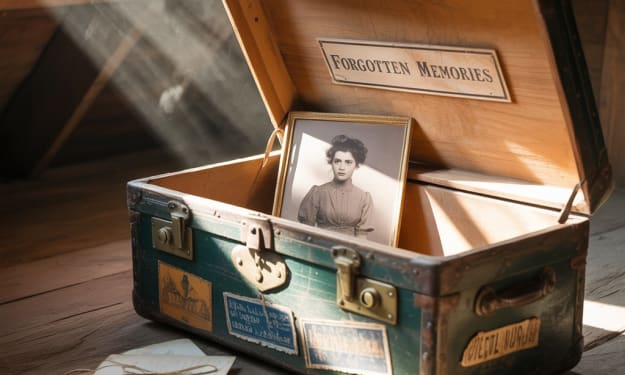
The Last Letter in the Attic
The Last Letter in the Attic It was a cloudy Sunday morning when Maya decided to finally clean out the attic of her late grandmother’s house. The wooden ladder creaked beneath her as she climbed, each step sounding like a whisper of time gone by. The attic smelled of old paper and cedar, the scent of things that had remained untouched for decades.
By Musawir Shahabout a year ago in Fiction
The Last Phone Call Before Midnight
It had been six months since Emily's husband, Daniel, died in a vehicle accident that was brought on by a slick, rainy road. Her sadness turned into a profound stillness rather than disappearing. The vibrant atmosphere of her home was now dominated by the soft hum of appliances and the occasional creak of the old wood.
By Shahjahan Kabir Khanabout a year ago in Fiction
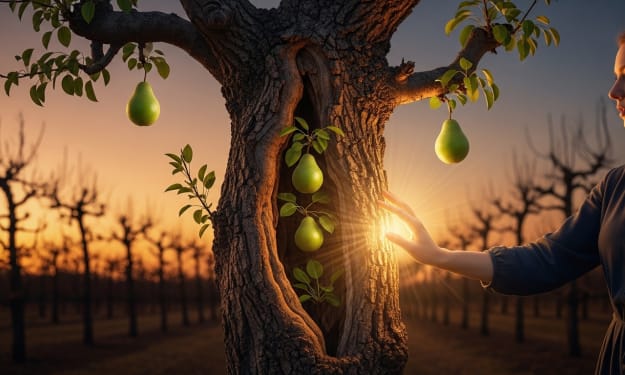
The Tree That Grew Backward
The last time Maya saw her grandfather’s orchard alive, she was seven. Rows of pear trees stretched like disciplined soldiers, branches heavy with fruit he called "sunlight made solid." Now, twenty years later, she stood in the same spot, breathing air thick with decay.
By Habibullahabout a year ago in Fiction
Episode 14: The Meeting Beneath the Ash
They called it neutral ground, but there’s no such thing anymore. The city library had burned down in the third month—flames and screams and paperback confetti—but the basement was still standing. So that’s where we met. Between the cracked pillars and the sleeping mold, beneath a banner that used to say SUMMER READING IS LIT!
By Paper Lanternabout a year ago in Fiction
Another Night at the Library
Working for two libraries usually during the night shift is for some a lonely time to work such a job, but for me it's a chance to work and do something that makes me feel good about myself. There was a night not so long ago at another library where I kept hearing the phrase 'Read the Book." "Read the book." so at the end of the shift the voice or more of a whisper lead me to a certain table that had an open book to a particular story and I read the book which by the way was 'The Holy Bible' and open to the story of the 'Good Samaritan' which helped me to make a decision for my life.
By Mark Grahamabout a year ago in Fiction
TESTIMONY OF AN EYE-WITNESS BY VICTOR HUGO. AI-Generated.
In the days leading up to December 1, 1851, France was calm—too calm. Charras, a cautious man by nature, even unloaded his pistols. The idea of a coup seemed ridiculous. People laughed at the thought that Louis Bonaparte, the President, could ever destroy the Republic. After all, who would believe a man like him capable of such a massive betrayal?
By Ahsan ullahabout a year ago in Fiction
The Edge of Emptiness
The Edge of Emptiness When silence becomes louder than any scream. The wind howled like a beast outside the cabin. It came in gusts, rattling the windowpanes and clawing at the door, as if the storm wanted to be let in. But inside, it was still. Too still.
By Pir Ashfaq Ahmadabout a year ago in Fiction
Before the Morning
Leah stepped into the house with a tired sigh, the kind that came from too many hours smiling at people she didn't like. The takeout bag in her hand swung gently as she shut the door behind her. The lights were off, though the porch lamp had been glowing when she parked. That was strange. James always turned them on for her when she worked late.
By Shai Andersonabout a year ago in Fiction