Mystery
The Choice. Content Warning.
"Does he love me?" The question should be so simple to answer. But for Thea, it was anything but simple. She never expected to fall in love with Tom. She was determined to never fall in love again after experiencing nothing but heartbreaks her whole life.
By Luna Verity2 years ago in Fiction
The Nameless Stranger
A Nameless Man I Still Think About You know how some people just pass through your life—and yet, somehow, they leave this strange, quiet mark behind? You don’t remember their name, maybe even forget their face... but what they made you feel? That sticks. There was this one man—completely unknown, totally ordinary—who sat beside me during a train ride. Just for about an hour. And yet, I think about him even now. Weird, right? It was July. One of those brutally hot days. I was on a train from Khulna to Dhaka. The kind of journey where you’re sweating even before the train moves. Inside, I was probably more restless than outside. My head was a mess—work wasn’t going anywhere, life felt stuck, and honestly, I was mad at myself. You ever get that feeling? Like no matter how much you try, you're just… stuck? The train was packed—people standing, kids crying, someone’s elbow always in your side—but I managed to grab a window seat. Still, couldn’t relax. Couldn’t even enjoy the view. Then he came. Just this regular guy. Tanned face, worn-out clothes, an old dusty bag slung over one shoulder. Could’ve been anyone. He sat next to me. Didn’t say anything at first. I figured he’d do what most people do—plug in his earphones or doze off. But after a bit, he turned to me and asked, “Brother, what’s your name?” I kind of blinked. I mean—who even asks that anymore? Still, I said, “Matiur.” Then asked him, “And you?” He chuckled and said, “Doesn’t matter. No one remembers names in places like this. Just remember my story.” I didn’t know what to say. It was such a simple thing to say, but it hit deep, you know? And somehow—don’t ask me how—we started talking. Like really talking. I found myself telling him stuff I hadn’t told anyone. Things about how my dreams felt like they were slipping through my fingers, about people who had humiliated me, about nights where I felt completely invisible. And the strange part? He didn’t try to “fix” anything. He didn’t give me advice or say something cheesy like, “Don’t worry, things will get better.” No. He just listened. Sometimes he nodded, sometimes said “Hmm” or “That’s rough.” But he was really there. Fully present. And that—God, that felt like a warm blanket on a cold day. I didn’t even realize how badly I needed someone to just… listen. After a while, the train stopped at a small station. He got up. I felt this weird panic in my chest. I said, “Wait… I still don’t know your name.” He smiled again, soft and calm. “What would you do with it, brother? People forget names. Even faces. But some moments… they stay.” And with that, he stepped off. I watched him walk away through the window, his figure slowly blending into the crowd and dust. Then the train jerked forward again, and all I could see were trees and fields flashing by. But in my head, it was just his voice repeating that last line. It’s been years now. I’ve forgotten so many things—conversations, faces, places. But that one interaction? Crystal clear. His words. His silence. The way he made space for me without asking for anything in return. We always think the people who’ll change us will be the ones closest to us. Friends, family. But sometimes, it’s a total stranger—someone you never see again—who touches your heart in a way you didn’t even know was possible. These days, when I see someone sitting quietly, I catch myself wondering—what’s their story? Are they carrying something heavy too? Maybe they’re just waiting for someone who’ll actually listen. I never knew his name. Probably never will. But his presence—that short, quiet hour—taught me something I’ll never forget.
By Md Motiur Rahman2 years ago in Fiction
Replying Without Saying Anything: Modern Relevance & Social Tension. AI-Generated.
Modern communication has changed dramatically in our fast-paced, hyper-connected world. Keeping in touch with others has never been easier, thanks to the rise of social media, texting, and instant messaging platforms. Yet this explosion of communication methods has introduced a new and arguably even more passive ambiguous form of engagement: responding without saying anything.
By Best Effort2 years ago in Fiction
They Told Me the Ocean Was Empty. They Lied.
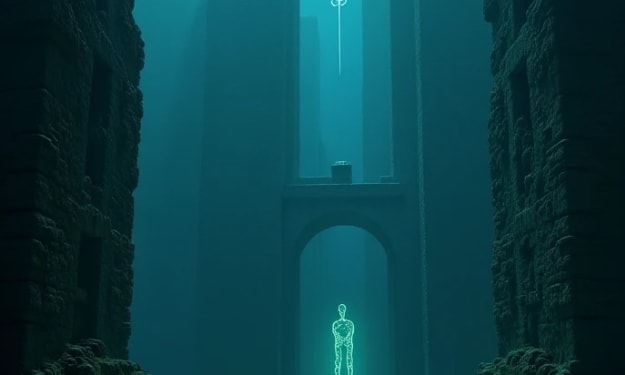
I always thought the ocean was just a vast, uncharted emptiness—an endless abyss stretching beyond the horizon, a place where few ventured, and fewer returned. They told me the ocean was empty. A wasteland. The idea that something could exist beneath its surface seemed like nothing more than a childish fantasy. After all, why would we look down when we have the stars above? Why waste time thinking about what lies beneath the waves when we already know everything about the world above? But I was wrong. It happened one evening, while I was on a research trip in the Pacific, with nothing but the gentle hum of the boat’s engine and the endless rhythm of waves to keep me company. Our crew was mapping the ocean floor, searching for ancient shipwrecks and forgotten ruins. The charts we’d been given suggested little more than a few scattered remnants of history lost to time—just debris. Then, we found it. At first, it was only a flicker on the sonar. A strange shape, buried deep beneath the currents. Curiosity was the only thing that kept us diving deeper, ignoring the odd feeling creeping up my spine. The deep ocean has a way of disorienting you, of making you feel like something ancient is watching, waiting. The descent felt endless. For hours, we sank into the cold darkness, until the sunlight above was nothing more than a distant memory. I remember the eerie silence pressing in around us, the only sound coming from our breathing. When we finally reached the ocean floor, we were in awe of the sprawling ruins sprawled before us. We’d found Atlantis. Not the fabled, mythic city that people had dreamed about for millennia. No, this was something different—something darker. This was a hidden empire, far older than any of the legends I had heard as a child. And the deeper we explored, the more the truth began to reveal itself: the ocean had not been empty all this time. It had been hiding the past. The city was immense, with towering spires that seemed to pulse with some forgotten energy. Statues lined the streets, their faces twisted in agony or despair, as though they had been frozen in time, waiting for the world above to forget them. We moved cautiously through the ruins, as though every step threatened to disturb a delicate balance, and every creak of our equipment sounded too loud in the unnatural silence. But the most terrifying part? The city was not as abandoned as it seemed. Strange markings covered the walls—symbols that shifted and changed as we approached them. At first, I thought it was just an optical illusion caused by the shifting lights from our submersible. But then, the walls seemed to pulse. The symbols weren’t just drawings—they were alive. And as we continued our search, we discovered something even more chilling. Beneath one of the massive stone pillars, hidden in the depths of the forgotten empire, lay a giant stone door. It was cracked open just enough for us to slip through, but when we did, we found ourselves in a chamber filled with a strange, glowing blue liquid. In the center of the room, a figure stood. It was human in form, but its skin shimmered with iridescent scales. Its eyes were pure black, reflecting our own fear. The being didn’t speak, but its presence was overwhelming—an ancient intelligence that seemed to stretch back beyond human memory. It gestured for us to approach, and against all instinct, we did. As we moved closer, the figure began to speak—its voice was not a sound, but a feeling, deep inside our minds. It told us a story older than any we had known—a tale of an empire that had thrived beneath the waves, of people who had discovered powers far beyond their comprehension. Powers that could bend reality, alter the course of time, and raise cities from the depths of the ocean. But those powers came at a cost. The empire had once ruled the world, controlling the oceans and the skies. They had harnessed the energy of the deep, forging technologies so advanced they could have reshaped humanity itself. But greed, like all things, had brought them to ruin. They sought immortality, and in their quest to cheat death, they triggered a cataclysm—one that drowned their city and buried their empire beneath the waves. Now, the ruins were all that remained, but the knowledge—and the curse—still lingered in the depths. The ocean was never empty. It was a vault, protecting the secrets of the past from the world above. And those secrets were not meant to be uncovered. The being’s final warning was clear: Leave now, while you still can. The ocean will reclaim you. We didn’t question it. We fled the ruins, the ghostly figure’s eyes following us all the way to the surface. As we resurfaced and looked back at the vast ocean stretching out before us, I realized how little we truly know about the world around us. They told me the ocean was empty. They lied. The ocean holds more than just water. It holds memories—memories of civilizations long forgotten and secrets that are better left undisturbed. And now, I fear the ocean is waiting for us to forget again, before it decides to reclaim what it has buried beneath its waves.
By Gift Abotsi 2 years ago in Fiction
The Failed Miracle. AI-Generated.
Hope is typically described as a life raft, something that allows us to stay afloat when the whole thing else around us is sinking. It’s a beacon in the dark — a promise of some thing better just on the other side of the horizon. But sometimes hope, despite its voltage, does not provide. This type the decayed miracle is a concept that requires us to challenge our convictions regarding the redemptive strength of hope. It’s a reminder that, every once in a while, even the most ardent hope can’t change the course of events or protect us from what’s coming. This parable — in which want no longer always suffices — challenges us to reconsider how we recognize the way to APPREHEND the MIS understanding of hope in our lives and the environment around us.
By Best Effort2 years ago in Fiction
He Who Wasn’t There . AI-Generated.
I met him the way you meet a shadow — in your sideways vision, which is best not to turn and discover it’s empty. It began innocuously enough. A cafe in the center of town, a busy spot, with chipped tables and classic jazz softly playing in the background. I’d been doing this for years, a ritual I couldn’t abandon even though nothing ever actually changed. Despite Not Being Identified, The Faces Have Always Been The Same
By Best Effort2 years ago in Fiction
Ayala Foxman
Deep into the heart of Buenos Aires is a non-descript ten-storey apartment building. On the fourth floor is apartment number D7, staying in which currently is a peculiar yet commendable tenant by the name of Ayala Foxman. She was quiet, paid her bills on time, donated handsomely for any fundraisers, and was always willing to loan a cup of sugar but never asked for one in return. What more could you want from a neighbour?
By Shrean Rafiq2 years ago in Fiction
The Maestros
In the opulent courts of 18th-century Portugal, Lords Jean Michel De Quiroz and Ray Markus Aguila were revered as paragons of art, intellect, and elegance—known simply as The Maestros. Celebrated for their patronage and dazzling minds, they were the very image of nobility. Their salons, fragrant with roses and filled with music, were the heart of Lisbon's cultural elite. Poets wrote of them. Scholars admired them. Women flocked to them.
By The Crash Test Facility2 years ago in Fiction