Mystery
The Window That Never Closed
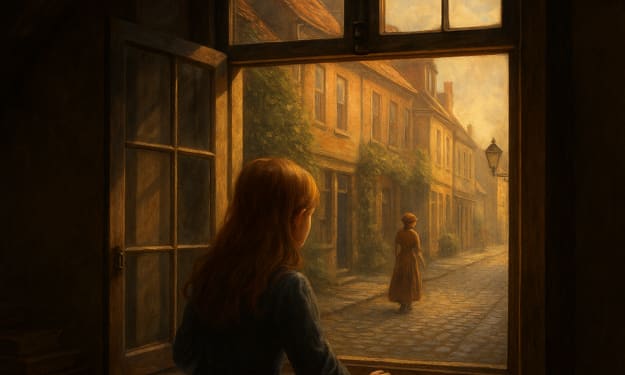
At the edge of a quiet village stood a weathered stone house with ivy crawling up its walls. It had a red door, crooked chimney, and one peculiar window on the third floor. No matter the season — rain, snow, or wind — the window never closed. Some said it was stuck. Others whispered that it chose not to. But no one really knew why. Talia, a twelve-year-old with too much curiosity and not enough fear, had just moved into that house with her grandmother. Her parents had gone abroad for work, leaving her in the care of Granny Mae. The house smelled like old books and lemon soap, and each floor creaked with its own rhythm. But what fascinated Talia most was that window — tall, narrow, and always slightly open. She could feel a breeze from it, even when the rest of the house was still. One morning, while unpacking dusty boxes in the attic, Talia finally approached it. Outside, the garden lay overgrown and misty. But as she looked through the glass, something changed. The garden wasn't there. In its place stood a cobbled street with horses, carriages, and women in bonnets walking under gas lamps. She blinked. Rubbed her eyes. Looked again. The view remained. Her heart raced. She stepped back, unsure. The attic around her was silent, unchanged. But the window showed a world not her own — not even her time. That evening, she told Granny Mae, who only smiled. “That window has always been strange,” she said, stirring soup. “I looked through it once when I was your age. Never forgot what I saw.” Talia wanted to ask more, but the look in her grandmother’s eyes said: not yet. The next day, Talia returned to the window. This time, she placed a hand on the glass. It felt cool, like touching a calm river. Suddenly, the latch clicked — the part that never worked before. The window creaked open a little wider, and with barely a breath, she was pulled through. Not fallen — not jumped — just passed. As if the window accepted her. She landed softly on a cobbled path. The air smelled different — smoky, earthy, alive. Children played with hoops, a man sold newspapers shouting headlines from 1891, and a girl around her age stared at her with wide eyes. “You’re not from here,” the girl said plainly. “No,” Talia admitted. “And neither is that window.” The girl nodded. “I’m Elsie. It brought you here too, didn’t it?” Elsie took Talia’s hand and led her through the streets. Everything buzzed with life, but it felt like a faded memory — a photograph given breath. “I found the window when I was smaller,” Elsie explained. “It shows people what they need to see, when they need to see it.” Talia was puzzled. “But why me?” Elsie stopped. “Maybe to remember something… or to change something.” They wandered to a park where an old bench sat under a tree that looked oddly familiar. “This is where I come to think,” Elsie said. “I never knew anyone else could come through.” Talia sat, looking around. “How long have you been here?” she asked. Elsie looked down. “A long time. I think… I forgot how to leave.” Talia felt a chill. Back at the window, time passed differently. In the house, Granny Mae noticed the breeze had stopped. For the first time in fifty years, the window was fully closed. She climbed the stairs slowly and pressed her hand against the glass. “She’s gone through,” she whispered. “Just like I did once.” But her voice wasn’t afraid — only thoughtful. In the past, Talia realized something. The buildings, the people, even Elsie — they weren't alive in the usual way. They were memories, moments. “This isn’t time travel,” she said aloud. “It’s… time remembering.” Elsie nodded slowly. “That’s why I couldn’t leave. I forgot who I was outside this place.” Talia reached for her hand. “Then let’s remember together.” Talia began to speak of her grandmother, the lemon soap, the attic’s creaks, and the books filled with pressed flowers. Elsie’s eyes filled with tears. “I remember now,” she whispered. “Granny Mae… was my sister.” Talia gasped. “You’re my great-great-aunt.” The wind stirred around them. The window had opened for a reason. Back in the attic, the latch clicked once more. The window opened with a long breath, as if waking. A breeze swept through the room, carrying the faint scent of cobblestone and roses. And then, softly, Talia stepped back inside — her feet dusty, her heart full. Behind her, Elsie faded like morning mist, smiling. Granny Mae was waiting. “You saw her, didn’t you?” she said. Talia nodded. “She remembers now.” The two stood by the window together. It remained slightly open, always. But now, it felt like it belonged. Not a mystery — but a memory, kept alive. A window between worlds, and within hearts.
By The Pen of Farooq about a year ago in Fiction
Cupcakes and Sunshine
It was one of those easy, quiet afternoons when the sun was warm but not too hot, and the sidewalk seemed to stretch out like a gentle path to nowhere in particular. I wasn’t rushing, wasn’t on any schedule. I was just enjoying the day — something that doesn’t happen often enough in our busy lives.
By ibrahim khanabout a year ago in Fiction
The Librarian’s Clock
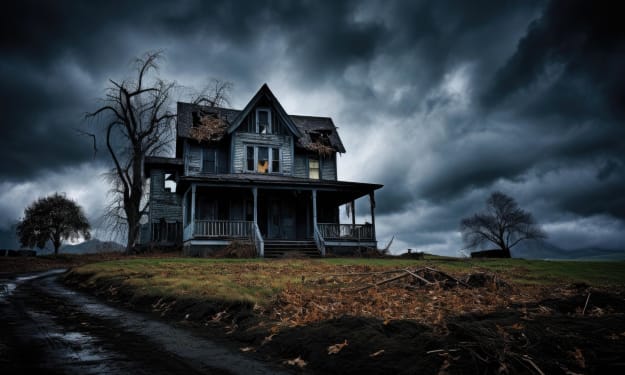
Elias Whitlock had never planned to return to the old library. It had always felt more like a museum than a place to read—a grand, forgotten structure filled with dust, silence, and secrets. But when his grandfather, Arthur Whitlock, passed away, the town's only library and everything inside it was left to Elias. Along with it came a letter:
By Musawir Shahabout a year ago in Fiction
The Last leaf of Hope
The Last Leaf of Hope By Haya Princess In a small, cozy café, Emma sat alone, nursing a cup of cold coffee. She stared out the window, watching the autumn leaves rustle in the gentle breeze. The café was a haven for her, a place to escape the chaos of her life! As a child, Emma had been fascinated by the story of the last leaf. Her grandmother would tell her about the old artist, Behrman, who had saved a young girl's life by painting a leaf on a bare branch during a harsh winter. The story had always moved Emma, and she felt a deep connection to it. Emma's own life was a struggle. She had lost her job, her relationship was strained, and she felt lost and alone. The world outside seemed to be moving forward, while she was stuck in place. As she gazed out the window, Emma noticed a lone leaf clinging to its branch, refusing to let go despite the wind's gentle prodding. Inspired by the leaf's resilience, Emma decided to take a walk in the nearby park. The crisp air and vibrant colors of the changing leaves invigorated her. She felt a sense of peace wash over her as she strolled along the winding paths. As she walked, Emma stumbled upon a small art studio tucked away in a corner of the park. The studio's window display caught her eye – a beautiful painting of a single leaf, clinging to its branch. Emma felt drawn to the studio, sensing a connection to the artist's work. Inside, she met the artist, an elderly man named Jack. He was kind and gentle, with a warm smile that put Emma at ease. As they talked, Emma shared her story, and Jack listened intently. He told her about his own struggles, about the losses he had faced and the lessons he had learned. Jack showed Emma his art, and she was struck by the beauty and emotion that poured from each piece. He explained that his paintings were a reflection of his own journey, a way to process the challenges he had faced. Emma felt a sense of solidarity with Jack, knowing that she wasn't alone in her struggles. As the days passed, Emma found herself returning to the studio, drawn by Jack's wisdom and creativity. He taught her about the power of art, about the way it could transform pain into beauty. Emma began to explore her own creativity, finding solace in painting and drawing. The last leaf outside her window became a symbol of hope for Emma. She realized that, just like the leaf, she had the strength to cling to her dreams, to refuse to let go despite the challenges she faced. With Jack's guidance, Emma started to rebuild her life, finding a new sense of purpose and meaning.
By Haya princessabout a year ago in Fiction
The Unranked Heir
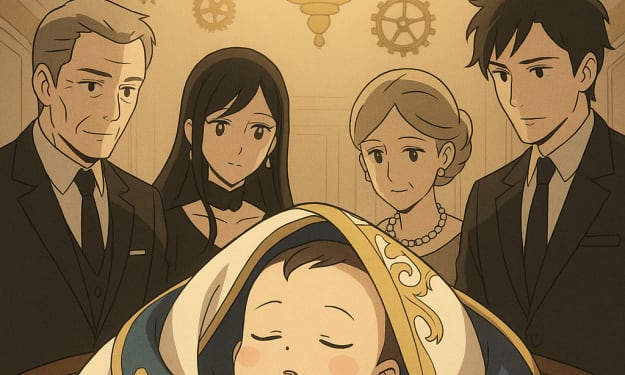
Chapter 1: The Weight of Inheritance Power isn't inherited—it's imposed. I learned this the moment I drew my first breath, when the world seemed to hold its breath with me. My uncle, a man who had lived in penthouses for two decades and witnessed every excess wealth could buy, called my birth "the grandest celebration he'd ever seen." Coming from someone who'd attended the coronation of oil princes, that meant something.
By Emmanuel Ikerionwuabout a year ago in Fiction
Love of Souls
Some love stories are written in letters, some in looks - but this one lives in silence. This is the story of a boy who painted the soul of a girl he never truly saw because he loved her not through her smile or beauty, but through the kindness she once gave him. Time passed. They grew up, took different paths. But her presence never left his world. She wore a niqab now. He went to a boarding school. But in the quiet corners of his room, and deeper corners of his heart, she remained faceless… yet unforgettable.
By Muhammad Ahmadabout a year ago in Fiction