Love
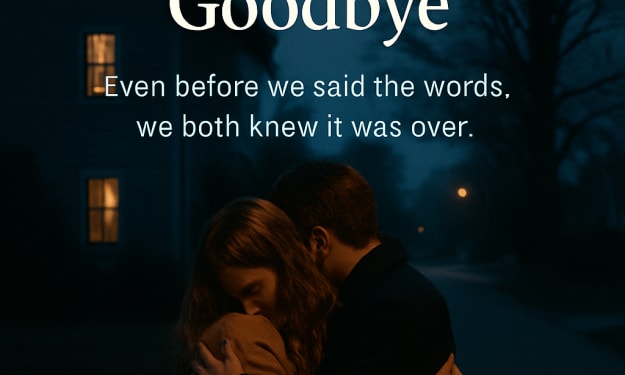
"Our Last Hug Was the Real Goodbye". AI-Generated.
It wasn’t the message. It wasn’t the call. It wasn’t even the silence that came after. It was the hug. That final hug. The one where we held on just a second too long, as if we both already knew it would be the last.
By Muhammad Riazabout a year ago in Fiction
The Wounds You Never See
I laughed when I had to, smiled when it was expected, and nodded through conversations I barely heard. To most people, I looked fine—normal, even happy. But what they didn’t know was that I was falling apart in silence. There are wounds that bleed out loud, and then there are the ones you never see. The ones that don’t leave bruises or require stitches. The ones that linger in the mind, echo in the heart, and shape who you become.
By Hanif Ullah about a year ago in Fiction
The Neighbor’s Note
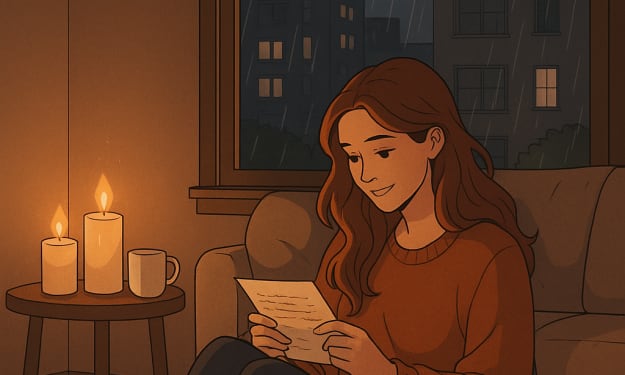
Chapter One: Rain and Silence Rain poured down like it had something to prove. Ava Winters curled on her couch in Apartment 3B, listening to the storm batter the windows. The power had been out for hours. Her tea was cold, her book unread. Flickering candles cast long shadows over her tiny living room. Outside, the wind howled through the city like a creature searching for something.
By Shakespeare Jrabout a year ago in Fiction
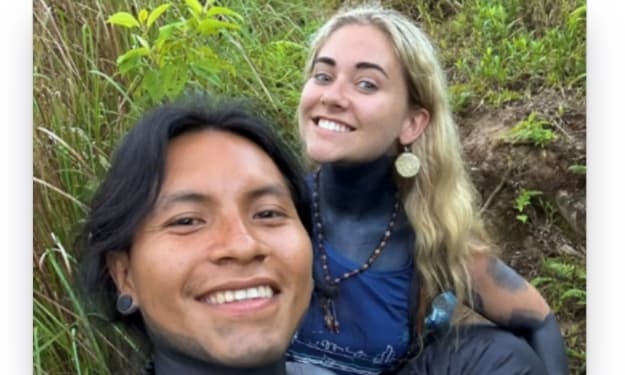
A Love Without Borders: Jordan and Pitiuruk's Remarkable Journey How far would you go for love?
A Love Without Borders: Jordan and Pitiuruk's Remarkable Journey How far would you go for love? For 26- year-old Jordan Hauenschild, an adventurous woman from the Gold Coast of Australia, the answer turned out to be more than 13,000 kilometers — all the way to the heart of the Amazon jungle. In a time when most modern relationships begin in the same city or at least the same country, Jordan’s story is a rare reminder that love, when it’s real, knows no boundaries. It all started in 2023 with a simple scroll through Instagram. Among the millions of accounts, one in particular caught Jordan’s eye — a profile belonging to Pitiuruk, a 24-year-old Indigenous Ecuadorian man living in the depths of the Amazon rainforest. His page was filled with glimpses of a life that was worlds away from her own — lush green landscapes, traditional attire, and a peaceful rhythm guided by nature, not city noise. Something about his photos and the way he spoke about his culture moved her. Without overthinking it, she sent him a message. To her surprise, he replied. That first conversation turned into many. Over the course of four months, their bond deepened through video chats and late-night messages. They spoke about their daily lives — Jordan in her fast-paced world of work and city living, and Pitiuruk in his tranquil, rural environment surrounded by nature. They shared stories, dreams, and laughter, learning about each other’s cultures, values, and hopes for the future. Despite the distance, a strong emotional connection formed. There was something magnetic and authentic about their conversations. What began as curiosity slowly bloomed into something more profound — a genuine affection and desire to meet in person. In March 2024, Jordan made a life-changing decision. She quit her job, packed her bags, and set off on a journey that would take her more than 35 hours across the globe — from Australia to the Amazon. It was a bold move, full of risk, but driven by faith in the bond they had built. Arriving in Ecuador, she was welcomed not only by Pitiuruk but also by his extended family and community. The days that followed were nothing short of magical. They took long canoe rides through winding rivers, kissed under jungle waterfalls, and embraced the beauty of each other’s world. Jordan adapted quickly to a slower pace of life — one that didn’t require a smartphone in hand or a Wi-Fi signal to feel connected. Perhaps the most touching part of her journey was how warmly she was accepted by Pitiuruk’s family. Despite language barriers and cultural differences, love served as a universal translator. She learned their customs, helped with daily chores, and immersed herself in a way of life that, though unfamiliar, felt surprisingly natural. As their story unfolded, Jordan began documenting parts of her journey on TikTok. Her videos — filled with sincerity, humor, and beautiful scenes of Amazonian life — quickly gained traction. Viewers around the world were captivated by their unlikely love story. Many were inspired by Jordan’s courage, while others admired the couple’s authenticity and the way they bridged such different worlds with kindness and openness. By June, their story had gone viral. Recognizing the incredible journey Jordan had undertaken and the story’s impact on others, Flight Centre, a major travel company, stepped in to offer her a return flight to Ecuador. It was a gesture that not only made headlines but also symbolized how deeply their story had resonated with people across cultures. Despite the obvious challenges — distance, cultural contrasts, and language differences — Jordan and Pitiuruk continue to prove that when two people are truly connected, love can find a way. Their relationship stands as a powerful example of what can happen when we allow our hearts to lead, even when the path is uncertain. In a world often focused on convenience, quick connections, and digital distractions, their story reminds us of something timeless: that real love sometimes requires taking great risks, making huge sacrifices, and being open to the unknown. Jordan and Pitiuruk didn’t just fall in love — they built a bridge between two vastly different worlds, and on that bridge, they found something real.
By Israr khanabout a year ago in Fiction
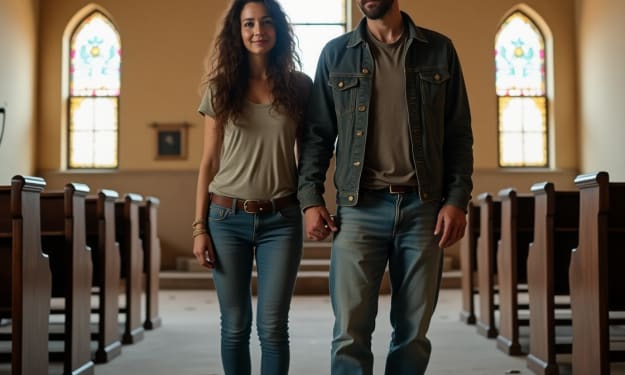
New Mexico Couple Missing Since 2014 Found in Ghost Town Chapel Ten Years Later
New Mexico Couple Missing Since 2014 Found in Ghost Town Chapel Ten Years Later In the autumn of 2024, authorities finally found the remains of Lydia Reyes and Ethan Caldwell, a New Mexico couple who vanished without a trace in October 2014. Their bodies lay undisturbed in the crumbling remains of a century‑old chapel hidden in an abandoned ghost town—discoveries that ended a decade‑long mystery, yet left more questions than answers. Lydia, 24, and Ethan, 25, shared a love of antiquities, old architecture, and the haunting beauty of desert landscapes. In October 2014, they drove north from Albuquerque in Ethan’s aging Jeep, seeking solitude among the ruins of once‑thriving mining settlements. Their destination: the long‑dead town of Los Silencios, a ghostly remnant of New Mexico's mining past, nestled in the Rio Puerco badlands. They arrived as colored leaves turned gold, filming drone footage of the derelict buildings and exploring the skeletal town. On their final evening, they were last seen by a ranch hand near Magdalena, where they stopped for directions. Lydia streamed a short night video of a flickering oil lamp in their Jeep—visible on social media for a few hours—before it vanished entirely. Search parties combed the area for weeks. The Bureau of Land Management and local sheriff’s deputies covered the canyonlands, while volunteers hiked slot canyons and ridgelines. Their Jeep was found abandoned on a scrub‑covered plateau—but without key gear, phones, or backpacks. It was as if the couple had disappeared into thin air. Over the years, dozens of theories emerged: some speculated they had discovered a hazardous mine shaft and slipped inside; others suggested they might have fallen victim to an accident, animal attack, or foul play. Online sleuths even claimed Lydia had sent cryptic final messages—“Look for the little chapel”—before her account was deleted. Nothing conclusive ever emerged—until September 2024. A father and son on a late afternoon hike in the badlands stumbled upon collapsed limestone walls and arches hidden in a side canyon. Unearthed beneath rubble, they uncovered the cracked roof of an old chapel, half‑buried by earth and sand, its door long sealed by fallen beams. Inside, skeletonized remains of two people lay side by side on a decayed pew. Nearby, Ethan’s digital camera—still functional despite a shattered lens—rested on the floor, and Lydia’s leather journal lay open on a stone altar, exposed to dust and time. Dental and DNA analysis confirmed the identities. Inside the journal were hand‑written entries from October 30 and 31, 2014, describing the couple’s excitement at finding the chapel, their plan to record drone footage over its old stained‑glass windows, and a note: “We’ll be safe here. It feels like home.” The last entry included a simple sketch: two figures seated inside the chapel beneath a cracked rose window. Photos retrieved from the camera—which survived remarkably—showed Lydia and Ethan exploring the shuttered chapel, sitting in the pews, filming the silent interior. A final image, time stamped minutes before sunset, captured them smiling beneath the shattered rose‑window arch—the same pose and location where their remains were later found. Sheriff’s office investigators, led by Detective Marisol Alvarez, concluded from the physical evidence that no foul play was apparent. There were no signs of struggle. The chapel roof had partially collapsed after a small rockfall sealed the entrance behind them. As autumn turned winter, temperatures plunged; combined with lack of supplies and dehydration, the couple likely succumbed to exposure. Over time, shifting sands and debris covered the site entirely. The official cause of death was declared as hypothermia and dehydration, but the silent diary and their deliberate choice to enter the chapel suggested they entered knowingly, perhaps even willingly. Was it curiosity? A final symbolic gesture—seeking sanctuary in a place frozen in time? Or simply, two people entranced by solitude in ruins? A memorial plaque now marks the canyon rim above the chapel; locals leave small offerings—old film canisters, lanterns, hand‑written notes. Lydia’s family has published her final journal entries, and Ethan’s footage has been preserved by the local historical society, allowing people to peer into the chapel as they did years before. At a gathering for the tenth anniversary of their disappearance, Ethan’s father spoke quietly: “They went looking for beauty in decay—they found more than they expected. Perhaps that was enough.” Though their story is closed, it echoes with unresolved feelings: romantic, tragic, and mysterious. Two young people who vanished in pursuit of silence and history, choosing to linger in a ruined chapel that whispered of the past. In the windswept badlands, Lydia and Ethan’s story remains a sobering reminder: beauty can lure—and sometimes trap; tranquility can carry its own peril; and sometimes, even after survivors become stories, their reasons remain beyond our reach.
By Israr khanabout a year ago in Fiction
Love Letters I Never Sent (But Wrote Anyway). AI-Generated.
Love Letters I Never Sent (But Wrote Anyway) They say closure is a conversation. I say it’s a letter you never send. I used to think the only love stories worth telling were the ones that ended in forever. But now, I believe the ones that end quietly—half-healed, half-open—teach us just as much. Maybe more.
By waseem khanabout a year ago in Fiction