Love
When the Sirens Stopped
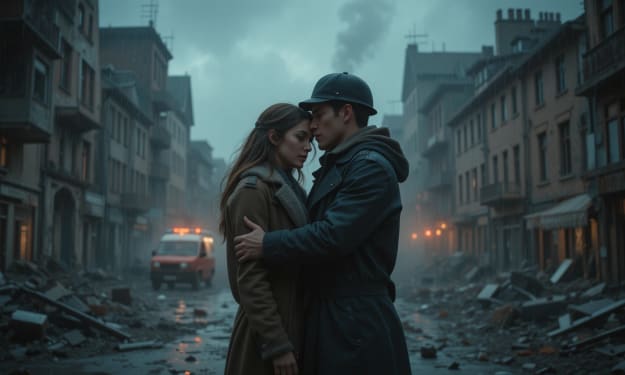
When the Sirens Stopped Written by Noor Khan The air smelled like smoke, and the sky never turned blue anymore. In a shattered corner of Eastern Ukraine, just miles from the frontlines, 22-year-old Lena clutched her backpack tighter and glanced over at Amir. Dust clung to his eyelashes, and his hands trembled as he checked the half-broken radio for updates. The sirens had stopped two days ago, but no one knew whether that meant safety — or silence before the storm. Lena had grown up in Luhansk. She was a university student when the war escalated again, studying literature and dreaming of teaching. Amir was a foreign volunteer medic, half-Ukrainian, half-Turkish, who had arrived to help civilians. Their paths crossed during an airstrike at the local hospital. Amid chaos, their eyes met. She was bleeding from her arm; he wrapped it with a torn shirt and whispered, “You’ll be okay.” She wasn’t. Nothing was. But she followed him anyway. They had been hiding together for eleven days in a collapsed train station basement with no heating, little food, and one flickering flashlight. The city above them was rubble — bones of what once was home. But in that underground darkness, something quietly bloomed. “Do you still think we’ll make it out?” Lena asked one night, her voice barely a whisper. Amir looked at her and smiled faintly. “I don’t think. I believe.” That was Amir. A man of belief. Belief in survival, belief in hope, belief in her. Every few hours, they took turns peeking through a shattered concrete crack above the stairs. Drones still buzzed in the sky. Gunfire echoed like thunder. They scribbled poetry on the back of ration wrappers just to feel human. Then came the twelfth night. They heard footsteps. Loud. Unhurried. Foreign. Amir held his breath and slowly turned off the flashlight. Lena pressed her back to the cold wall, her heartbeat louder than any bomb. The footsteps passed. Then returned. “Russian patrol?” Amir whispered. She nodded silently. They had no weapons. No way to run. Just each other. Suddenly, the footsteps stopped. A voice called out in broken Ukrainian, “We know someone is here. Come out.” Amir grabbed Lena’s hand. “No,” she whispered. “They’ll shoot.” “We can’t stay. We’re out of food. If they find us here, it’s worse.” “But…” “If anything happens—remember your name. And that I love you.” She wanted to scream. Instead, she kissed his forehead, and they stood up together. But fate is strange. As they reached the top of the stairs, a sudden blast rocked the building. Dust rained from the ceiling. The patrol scattered. A nearby apartment tower had been hit — not them. Using the confusion, Amir pulled Lena through a broken side tunnel he had spotted days ago but never dared to use. They ran. Through collapsed corridors. Through narrow alleys lined with burnt-out cars. Through snow dusted with ash. That night, they reached an abandoned Red Cross outpost. It had no doors, no staff, and no medicine. But it had maps. And a working radio. Amir managed to call an NGO in Poland using an old frequency. “Two survivors. One injured. Near checkpoint Bravo 9. Need extraction.” They waited 48 hours in the broken building, feeding on crackers and hope. Finally, a drone hovered above, dropping a flare. Minutes later, a black van appeared from the west — silent, fast, foreign-plated. They were rescued. 💬 Why This Story Matters Lena and Amir now live in Warsaw. She teaches Ukrainian refugee children; he volunteers at a trauma clinic. They still write poems on the backs of receipts. They say war took everything — except what mattered most. Love in a dangerous place is not romance. It's survival. It's staying when everything says to run. It's sharing silence in a room full of fear. It’s believing in life when death is outside your door. Their story never made headlines. But somewhere, in a city still broken, a wall stands with faded graffiti: “The sirens stopped — but we didn’t.”
By Moonlit Lettersabout a year ago in Fiction
The one I couldn't forget. AI-Generated.
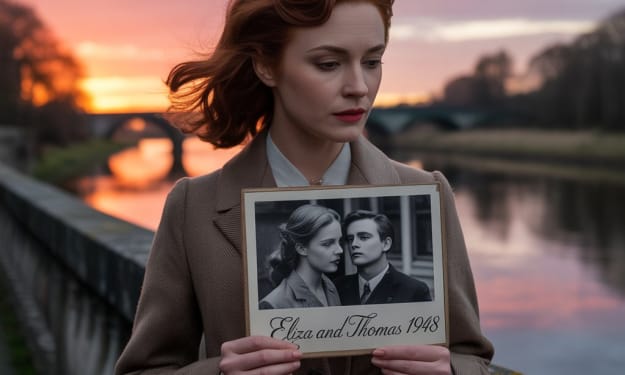
I met Ayaan when I was seventeen. He was sitting alone on the school bench during lunch, reading a book no one cared about. He wore a black hoodie, headphones around his neck, and had a calm, quiet smile that never left his face. Nobody really talked to him. He was that kind of boy — always distant, always somewhere else. But I was curious. One day, I sat beside him and asked, “What are you reading?” He looked at me, a little surprised, and replied, “It’s a story about a boy who travels the world to find what he already has.” I laughed. “That sounds confusing.” He smiled. “Sometimes, life is confusing too.” That was the start of something beautiful. We became friends. Slowly, but surely. Ayaan wasn’t like the other boys. He never made fun of people. He didn’t talk loudly or show off. He listened. Really listened. And when he spoke, his words felt like they came from a deeper place. I started sharing things with him I never told anyone. About my dreams, my fears, and the songs I loved. He told me about the stars, his favorite writers, and how he believed people meet for a reason. He always said, “Everything happens when it’s meant to.” A year passed. Then another. By the time we finished school, we were inseparable. Everyone said we looked good together, but we never said anything about love. It was there, unspoken, floating between our words and smiles. Then came college. We went to different cities. I cried the night before he left. He held my hand and said, “We’ll meet again. This isn’t the end. Just a pause.” We texted every day at first. Then once a week. Then… silence. I don’t know what happened. Life happened, maybe. New people, new places, new dreams. I sent him a message once: “Do you still remember me?” He never replied. I waited. One month. Two months. A year. Still, nothing. It broke me in ways I didn’t understand. How could someone who knew me so well forget me so easily? But life moves on. And so did I. Five years passed. I graduated. Got a job. Made new friends. Smiled in photos. Laughed at jokes. But at night, when everything was quiet, I thought of him. Every bridge I crossed. Every song I heard. Every time it rained. He was there. Like a ghost I never wanted to forget. Then one day, out of nowhere, I got a letter. A real letter, not a message. Just an envelope with my name on it. I opened it with shaking hands. It was from Ayaan. > Dear Zara, I don’t know if this will reach you. I don’t even know if you still live at this address. But I had to try. I’m sorry. For the silence. For disappearing. For making you feel forgotten. You were never forgotten. Life got hard. I lost someone in my family. I couldn’t talk about it, not even to you. I didn’t know how. So I shut the world out. Including you. That was my biggest mistake. I came back to our old school last week. Sat on the same bench. I remembered your laughter. Your questions. Your dreams. You’re the one person I still carry in my heart. I don’t expect anything. I just hope… maybe we could meet again. Even just for a walk. Like old times. If you ever feel the same, I’ll be at the bridge — the one near the lake — this Sunday at 5 PM. If you don’t come, I’ll understand. But I’ll still wait. Yours, always, — Ayaan I read the letter a hundred times. My heart felt heavy and light at the same time. Sunday came. I stood in front of my mirror for an hour. Should I go? Would he really be there? Or was it just another goodbye? I took a deep breath and left. The sun was setting when I reached the bridge. The same colors painted the sky — orange, pink, gold. I walked slowly, my hands shaking. And there he was. Leaning against the railing. Looking at the water. Just like before. He turned. His eyes met mine. And suddenly, nothing had changed. We didn’t speak at first. Just stood there, the silence saying more than words ever could. Then he whispered, “I didn’t think you’d come.” I smiled, my eyes full. “I didn’t think you’d wait.” He pulled something from his pocket — an old photo of us sitting on that school bench. “I carry this everywhere.” Tears ran down my cheeks. “I never forgot you,” I said. “I never stopped loving you,” he replied. We talked for hours. About everything. About nothing. We laughed. We cried. We remembered. That night, as the stars appeared one by one, I realized something: Some people come into your life for a moment. Some stay for a season. But a few — just a few — are meant to stay forever. Even if they leave, even if time passes, their place in your heart never fades. They are the ones you can never forget.
By Asad Ullah khan about a year ago in Fiction
A Love Letter to photography
I write this from the edge of a cliff in Santorini, the Aegean stretched out like a brushstroke of blue beneath the sun. You’d love this place—the way the sky kisses the sea, the quiet whispers of the wind, the hum of life that pulses beneath the whitewashed walls. It reminds me of you. Everything beautiful does. You once asked me why I chose this life—why I always run toward the horizon, camera in hand, chasing fading light and fleeting faces. I never had a good answer then. Maybe I didn’t know. Maybe I didn’t want to admit that every road I follow is just another attempt to find a piece of you in the world. The truth is, I fell in love twice. Once with you. And once with the world. But they aren’t separate. You see, I carry you with me in every sunrise I shoot, every stranger’s eyes I try to capture, every hidden alley I wander. You are in every frame, tucked between the shadows and light, as if the world echoes your presence back to me, no matter where I go. I remember that day in Kyoto—the cherry blossoms falling like pink snow, the air soft with spring. You were laughing, your hands full of postcards we’d never send. I had my camera slung around my neck but I couldn’t take a single photo. Not because the scene wasn’t beautiful, but because it would never match the memory. Some moments are too sacred to trap in pixels. You told me once that you worried I’d choose the road over you. That my heart belonged more to airports and alleyways than to quiet dinners and morning coffee. I didn’t know how to answer then. I guess I thought love was something you came back to, not something you took with you. But I know now: love is a lens through which you see the world. I see you in the storm clouds over Iceland, in the early light of a Moroccan market, in the laughter of children running barefoot through the streets of Cartagena. I see you in the pauses between shutter clicks. I hear your voice in the silence after the sun sets. I used to chase the perfect shot. Now I just try to capture the feeling—of being alive, of being in love, of being lost and found all at once. There’s a photo I took last week in Rajasthan. A woman in red stood in the doorway of her home, light slanting across her face like poetry. Her eyes held centuries. When I showed her the photo, she smiled without looking. “You’re not looking for photos,” she said, “you’re looking for someone.” She was right. Maybe I photograph places hoping one day you’ll follow the trail. Maybe I send you these prints and postcards like breadcrumbs across the world. Maybe each shutter click is my way of saying I miss you, I love you, I remember. But love isn’t always about being in the same place at the same time. Sometimes it’s about holding someone so deeply that even the sky starts to resemble their smile. I don’t know when I’ll stop. Maybe I never will. Maybe the road has no end, and maybe that’s okay. Because every step forward is a memory of you, every mile is a testament to what we shared. I hope you still keep the photo of us in Lisbon—our hair windblown, your eyes half-laughing, my hand mid-reach toward yours. That was the moment I knew. It wasn’t the city, the light, or even the composition. It was you. It’s always been you. Wherever I go, you are my home. I’ll write again from the next place. Maybe the Andes, maybe a rooftop in Havana. Or maybe I’ll knock on your door one day, no map in hand, just a camera full of stories and a heart full of you. Until then, With all my love, Yours in every frame, L.
By Israr khanabout a year ago in Fiction
Hearts against the Storm
Two weeks later, the world had changed — or maybe we had changed enough to see it clearly. The headlines were still buzzing. Investigations were underway. Arrests had been made in the land fraud case tied to my uncle’s death. My father's political allies had started to disappear like shadows under sunlight.
By Mehmood Niazabout a year ago in Fiction
Hearts against the Storm
The night was colder than usual, with a restless wind scraping across the empty roads as I rode toward the old farmhouse. I had no backup. No phone. Just the folded copy of the evidence Hamza had given me, tucked in my inner coat pocket. And a flicker of hope that somehow, this meeting — this trap — might be the end of it all.
By Mehmood Niazabout a year ago in Fiction
Hearts against the Storm
The sun had barely risen over the horizon when I opened my eyes in Hamza’s small apartment. The air was still, heavy with tension. Alya lay beside me on the mattress, curled up, clutching the shawl Hamza had given her the night before. I could see the bruise on her arm — Azeel’s mark. My blood boiled at the sight.
By Mehmood Niazabout a year ago in Fiction
Hearts against the Storm
The SUV disappeared into the dust of the road before I could even take a step. I stood there frozen, the world spinning around me. Alya had been crying. Her eyes had locked with mine. She wanted me to stop him. To save her. But I was too slow.
By Mehmood Niazabout a year ago in Fiction
Hearts Against the Storm
The first time I saw Alya, she was standing beneath the old mulberry tree in our school’s back garden, sunlight tangled in her hair, her scarf fluttering like a silent rebellion against the breeze. She was humming to herself — unaware, I think, that someone was falling in love with her from across the corridor.
By Mehmood Niazabout a year ago in Fiction
The Last Letter in the Attic
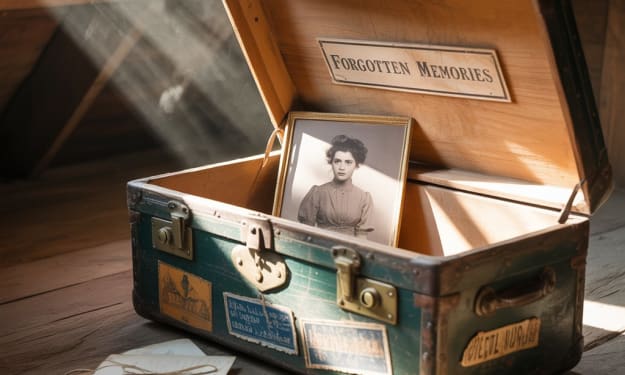
The Last Letter in the Attic It was a cloudy Sunday morning when Maya decided to finally clean out the attic of her late grandmother’s house. The wooden ladder creaked beneath her as she climbed, each step sounding like a whisper of time gone by. The attic smelled of old paper and cedar, the scent of things that had remained untouched for decades.
By Musawir Shahabout a year ago in Fiction
The Tree That Grew Backward
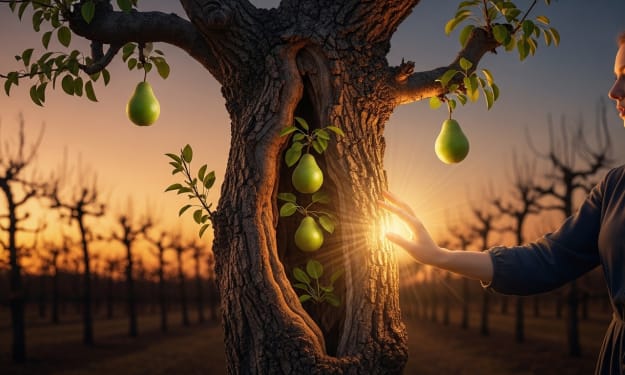
The last time Maya saw her grandfather’s orchard alive, she was seven. Rows of pear trees stretched like disciplined soldiers, branches heavy with fruit he called "sunlight made solid." Now, twenty years later, she stood in the same spot, breathing air thick with decay.
By Habibullahabout a year ago in Fiction