Love
Where the Birds Waited for Her
Where the Birds Waited for Her Written by Shah Zeb Every morning at 6:45 AM sharp, Eleanor stepped onto her small balcony with a cracked ceramic bowl full of seeds. Her balcony overlooked the modest garden she tended to herself, a little square of green in an otherwise graying suburban neighborhood. A line of small wooden birdhouses hung from the awning above, painted in pale blues and gentle pastels. They looked like a row of forgotten memories, faded but tender. The birds came with the sun. Chickadees first, then cardinals, then the plump mourning doves who always arrived late, like tired guests at a Sunday brunch. She had names for them all—not based on science or species, but on feeling. The tiny brown one with the crooked wing was Pip. The red-breasted visitor was Clara. The loud, bossy one with the attitude? That was Detective. Eleanor was 82 and lived alone. Her husband had passed away ten years earlier, and her daughter, now grown, lived two states away with children of her own. They called weekly, sent cards on birthdays, and promised to visit more often. Eleanor never resented the distance. She understood life moved fast, and she had made peace with her solitude. Her birds, however, were daily guests she could rely on. "Morning, Clara," she'd whisper, gently tossing seeds across the railing. Clara would hop once, then twice, before pecking the ground gracefully. Pip would flap around anxiously, waiting for his moment. The ritual was always the same, as familiar to Eleanor as her own heartbeat. The neighbors had noticed her little ritual, though few ever spoke of it. They thought of Eleanor as kind but quiet, the sort of neighbor who’d smile softly but never overstay a conversation. Some of the children had called her the Bird Lady. One summer, a group of them had even drawn bird footprints with chalk leading up to her gate. And then, one morning, Eleanor didn’t come out. At first, the birds waited on the roof and railing like always. Pip fluttered his wings in a nervous rhythm. Clara perched on the balcony's edge, her head cocked toward the window. Detective let out two loud chirps and flew away. But Eleanor’s window remained still. By noon, the seeds remained in their ceramic bowl by the kitchen sink. She had passed away in her sleep. The news trickled slowly. A concerned neighbor noticed the mail piling up. The garden, always tidy and lovingly trimmed, was beginning to wilt. A wellness check was made. Her daughter arrived two days later, her face pale and lips pressed into a thin line. She stood on the balcony in the early morning, clutching the bowl of seeds in her hands. She scattered them. And the birds came. Pip landed first, more hesitant than usual. Clara followed. Even Detective made a rare, quiet appearance, as if sensing something different. Eleanor’s daughter wept behind the curtain of her long sweater sleeves as the little wings fluttered and dipped, feeding in silence. In the weeks that followed, the balcony stayed empty. But the birds kept coming. Every morning at 6:45 AM. The neighbors noticed. The woman was gone, but the birds—dozens of them—still came. They lined up on the balcony railing, perched on the old birdhouses, and waited. No food was there, but they came anyway. Pip still flapped nervously. Clara still tilted her head, scanning the window. It became a quiet mystery. A retired teacher who lived across the street wrote about it in the neighborhood newsletter. Someone else posted a photo online, captioned: “She’s gone, but they remember.” The story spread. Comments flooded in. “Nature remembers kindness.” “Proof of soul.” “Not all routines die with us.” One morning, a child from the neighborhood—maybe nine or ten—climbed the gate and placed a small bowl of seeds on the balcony. Her parents scolded her later, but the next morning, when she returned with her father, the seeds were gone. Birds, full and bright, fluttered into the sky as she beamed. So began the second ritual. Neighbors took turns. They left seeds. Hung new birdhouses. Repainted the railing in Eleanor’s favorite pale blue. The garden was weeded and watered. Even the mailman brought a bag of sunflower seeds one morning, leaving it neatly by the gate. Eleanor’s daughter visited on the anniversary of her passing. She stood among people she’d never met—neighbors, children, elders. Together, at 6:45 AM, they watched as the birds came again. And waited. The ceremony was brief. No speeches. Just seeds scattered, and wings rising into the morning light. Someone had made a small plaque: “She gave, they remembered. Eleanor’s Birds.” Years passed. The house eventually sold to a young couple. They kept the garden. Refilled the feeders. The tradition stayed. Tourists even visited sometimes, drawn by the quiet beauty of it. The birds kept coming. Not because of habit. But because, perhaps, they felt something there. Something left behind. Not all goodbyes are echoes. Some are seeds. And some seeds bloom with wings.
By Moonlit Lettersabout a year ago in Fiction
The Power of Pages
The Power of Pages How Books Shape a Better You In a world that hums with distractions, a book is a quiet revolution. Reading isn’t just an escape—it’s a path to a sharper mind, a stronger self, and a kinder society. Each page you turn is a step toward personal growth, success, and a life lived with purpose.
By Shohel Ranaabout a year ago in Fiction
Beneath the Mango Tree
By[Hubaib Ullah] In the heart of a dusty village in Sindh, Pakistan, where summers hung heavy like secrets and children ran barefoot through sugarcane fields, there stood an old mango tree. Its trunk was thick with time, its roots tangled deep into the earth, and its branches arched like open arms over the narrow path between two homes.
By Hubaib ullahabout a year ago in Fiction
The Man Who Sat in Silence for 10 Years
The Man Who Sat in Silence for 10 Years Written by Raza Iqbal In the small village of Bramble Hollow, nestled between misty hills and forgotten trails, there lived a man named Elias Wren. No one had heard his voice in ten years. Not even a whisper.
By Moonlit Lettersabout a year ago in Fiction
The House That Waited for Her
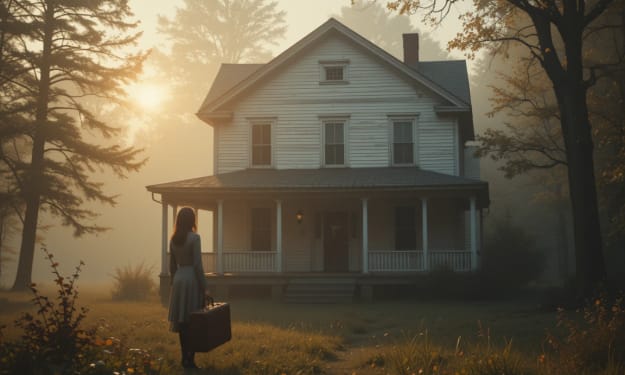
The House That Waited for Her Written by Mirza The house sat at the edge of a forgotten road, with white paint peeling like old memories and vines growing over the porch railings like stubborn thoughts no one had trimmed back. For forty years, it had waited — quietly, patiently — for her to return. To the rest of the town, it was just the “old Barlow house,” the one people drove by without really seeing. No one lived in it. Not since Ellie left. They said Mr. Barlow never moved a single piece of furniture after she ran away. The curtains remained drawn, her bedroom untouched, and the porch light — it stayed on, every night, like a lighthouse in case she ever came home. Ellie Barlow had been a spark in a quiet town, a girl with fire in her voice and wildness in her heart. She talked about New York, Paris, and places most people only read about. She wanted more than her small town could give. So on a humid July morning in 1985, just sixteen, Ellie packed a bag, left a note on the kitchen table, and boarded a bus that didn’t stop for goodbyes. And she never looked back. She became Eleanor Barlow in the city. Dropped the southern lilt, the denim jackets, and the scent of honeysuckle. She wore blazers and heels and built a life out of ambition. Editor. Director. Then, finally, her name in the corner of a hardcover book jacket — a memoir of someone else's life, written in her own words. But she never wrote about herself. She told friends she was an only child, that her parents were dead, and that she didn’t miss the place she came from. She told herself the same lies, until they became easier to carry than the truth. But on her 56th birthday, a letter arrived. A real one, with a crooked stamp and shaky handwriting she hadn’t seen in decades. > "Dear Ellie, If you’re reading this, it means I’m gone. The porch light is still on. You can come home now. — Dad." The house smelled like old wood, dust, and the faintest trace of lemon soap. Ellie stood in the foyer, her hands trembling as they used to when she was five and had knocked over her mother’s vase. Nothing had changed — not the photos on the wall, not the grandfather clock frozen at 3:17, not even the tiny pencil mark that still measured her height on the kitchen doorframe. The dining table still held the lace runner. Her chair still wobbled at the leg. And on the fridge was the last thing she ever drew — a crayon sketch of a girl flying a kite. Her father's shoes were still by the door. She found the note on her old bed: > “Thought you might come one day. Bedroom’s still yours. Welcome home, little star.” She didn’t cry. Not at first. She made coffee in the same chipped kettle. She sat on the porch and listened to crickets. She looked across the field where she used to chase fireflies and remembered the night her father built a campfire and promised her the stars would wait for her. They had. The neighbors were older. A few recognized her. Most didn’t. She didn’t explain. She helped Mrs. Heller carry groceries and fixed the swing in the old park. She walked past the school and stared at the empty lot where her best friend’s house once stood. One afternoon, she sat down at the same wooden desk in her old room. And for the first time in decades, she wrote about herself. About the girl who left. And the woman who came back. She stayed for a month. The house whispered to her, each room unlocking a version of herself she had buried. The girl who used to sing into hairbrushes. The teenager who kissed a boy named Luke under the bridge. The daughter who once believed her father didn’t understand her dreams. But he had. He had left the light on for 40 years. And when she opened the attic, she found a box labeled “For Ellie.” Inside, were postcards she had never sent, old newspaper clippings of her achievements, and a small tape recorder. She played it. > “You don’t have to forgive me. I just hope you find peace. Wherever you go, you’ll always have a place here. Love you forever, Dad.” Ellie didn’t sell the house. She returned to the city, but she visited every summer. Eventually, she wrote a second book: “The House That Waited for Me.” It wasn’t a bestseller. But readers loved it. Because it was real. And it made them remember their own unfinished stories.
By Moonlit Lettersabout a year ago in Fiction
Daisies
The chair she sat on was an intricately carved piece of woodwork upholstered with the finest silk in all of Europe dyed a brilliant blue. She’d loved it when Gerard had brought it home from one of his frequent visits to the Italian coast, but now she was beginning to despise it. Not for reasons of physical comfort, no. The chair was plush in all the right places, perfect for hours of sitting perfectly poised, staring straight ahead. But for each hour that she stared, her repulsion for the disgustingly gorgeous piece of furniture multiplied.
By Anna Scanlanabout a year ago in Fiction
Something Old
I've been here for the longest time. Nobody comes, nobody touches me. I cannot remember the sun, or music, laughter or tears. Life changed, stopped, even. Things moved on, and they placed me here, in the dark forever. I have no idea where I am. All I have now are memories of the women I have loved and sadly left behind. But it hadn't always been like this.
By J M Hunterabout a year ago in Fiction
Echoes of the Heart
The coastal town of Windmere had always been wrapped in a quiet fog, both literal and emotional. People came here to forget, to start over, or to vanish into the sound of crashing waves and gull calls. For Emily Hart, it was all three.
By Pir Ashfaq Ahmadabout a year ago in Fiction
A Gift from the Grave
It was a warm Saturday. Sandalwood incense burned on the counter. The dryer whined loudly, releasing subtle bursts of Snuggle into the air. I had just finished cleaning the house and was sitting down for lunch when the radio suddenly turned on.
By Baby Josieabout a year ago in Fiction