Love
Every Sunday at 4 PM, He Waited for Her—Even After She Died
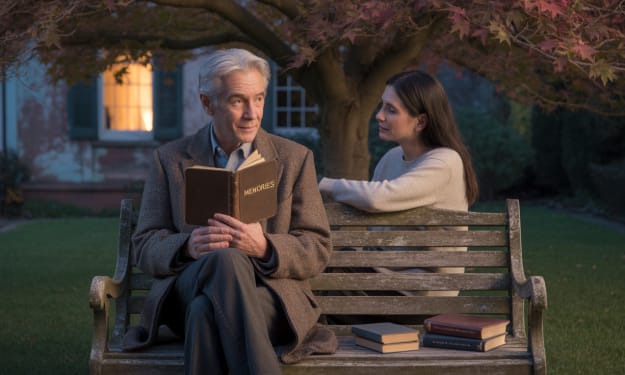
Every Sunday at 4 PM, He Waited for Her—Even After She Died Written by Raza Iqbal The bench on the corner of Maple and 3rd wasn’t special—not to anyone else. Worn wood, a few cracks, and an old iron frame. It faced the tiny flower shop that had been closed since spring, and beside it stood a coffee cart that had seen better years. But to Harold, that bench was a sacred place. Every Sunday at 4 PM, he sat there—rain or shine, wind or snow. He wore the same old gray sweater, the same polished shoes she loved. He brought two cups of coffee—black with a single sugar in the second one. Her cup. The city around him rushed. Children played. Teenagers skateboarded. Workers passed by with bags of groceries and worries in their eyes. But Harold sat still, eyes fixed on the street, waiting. He'd been waiting for seven years. Her name was Margaret. Maggie, to him. They had met in 1964 at the town library. She was reading Wuthering Heights. He was reaching for the same copy. Their hands touched. Her smile reached her eyes. He stuttered something about Brontë, and she corrected his pronunciation gently. They married two years later. For fifty years, they lived quietly but beautifully—Sunday mornings in bed, handwritten notes stuck to the fridge, laughter over burned toast, dancing in the kitchen to jazz. And every Sunday at 4 PM, they sat on that bench with coffee and watched the city pass. It was Maggie’s idea. “Let’s have a little moment just for us,” she said. “Every Sunday. No matter what. That way, life never pulls us too far apart.” They never missed it. Not once. Until the spring of 2016. Cancer doesn't wait, even for love. Maggie had been sick quietly. She kept the pain away from Harold for as long as she could. But by the time he knew, the doctors were speaking in weeks, not years. Her final Sunday came with a weak smile and trembling hands. She sipped her coffee slowly. “Don’t stop coming here,” she whispered. “Even if I’m not with you.” “I won’t,” he had said, barely managing the words. And he didn’t. The neighbors thought it was sweet at first. A beautiful gesture. A symbol of love. Then the years passed. Children grew. The coffee cart changed owners twice. Seasons rolled by like a carousel, but Harold kept coming. Some thought he was senile. Others believed he had lost his mind entirely. But if you asked him, he'd say, “I just like our conversations.” You see, Harold talked to her. Not out loud. But in the quiet of his thoughts, where her voice still echoed. Sometimes he imagined her telling him about heaven. Other times, he just told her about his week. Once, in the second year after her death, a young woman sat beside him on the bench. She was crying. Heartbreak, he guessed. He handed her the cup meant for Maggie. “She won’t mind,” he said softly. “She’d want someone else to feel warm today.” The woman blinked through tears. “Who’s ‘she’?” “My wife.” “Where is she?” He smiled gently. “Still here, just quieter now.” On what would have been their 58th anniversary, Harold brought tulips instead of coffee. Maggie’s favorite. He didn’t cry. He just smiled at the bench beside him. “Remember when you spilled hot coffee all over that banker who kept talking on his phone? You said, ‘Oops, sorry, the universe wants you to shut up.’” He chuckled. “God, you were brilliant.” A gust of wind rustled the trees, and he closed his eyes, pretending it was her brushing past. Time stopped on that bench. One Sunday, he didn’t show up at 4 PM. The coffee cart man, Ravi, who had inherited the cart from his father, noticed. So did the florist’s daughter, who passed the bench every day on her way to work. By 4:30 PM, they were whispering. “He’s never late.” “Maybe he’s just sick?” Ravi walked across the street and placed a single coffee cup on the bench. Black, with one sugar. But Harold never returned. Three days later, an obituary was printed in the local paper. Harold Thomas Willoughby. Age 87. Devoted husband to Margaret. Passed peacefully in his sleep, July 18. Survived by love. The following Sunday, something unexpected happened. At 4 PM sharp, the bench wasn’t empty. A middle-aged couple sat there, holding hands, each with a cup of coffee. Then the next week, an elderly woman and her grandson. After that, a teen with a notebook. They’d heard the story. They’d read the obituary. Word had spread online—a man who waited for his wife for seven years, on the same bench, at the same time. Soon, the city renamed the bench: “Harold & Maggie’s Bench — For Love That Waits.” It became a ritual for many. People showed up with stories, with heartbreaks, with hopes. They sipped coffee. They remembered someone. Or no one. Some said they felt peace there. Others swore they could hear jazz in the wind. But one thing was certain: Every Sunday at 4 PM, the bench was never empty. Because love—true love—doesn’t vanish. It waits. It remembers. It sits in silence, beside a paper cup, watching the world pass by—still hoping.
By Moonlit Lettersabout a year ago in Fiction
The Sound of No Goodbye
The Sound of No Goodbye Written by Mirza The morning she left, there were no slammed doors or tearful hugs. No emotional declarations or scribbled notes. Just the creak of the front door, the whisper of her boots on the wooden steps, and the long, quiet sigh of an engine starting. That was it. Lena had always been a woman of words — a poet by trade, a lover of language — yet when it came to goodbye, she gave none. It was the most painful silence Peter had ever known. He didn’t notice it at first. He thought she had gone to the market, maybe to the bookstore on Fifth, where she often spent hours nestled between worn pages. But by evening, when the shadows of the kitchen walls grew long and her teacup remained untouched, reality began to unravel. She wasn’t coming back. Peter spent the first night pacing. He didn’t cry. Not yet. He was still waiting for a text, an apology, something that would explain the suddenness of her departure. By the second night, he began to remember things—subtle hints he’d ignored: the way she no longer hummed while cooking, how her laughter had faded into polite chuckles, how she stared out the window longer than necessary, as if looking for the exit. Lena had been slipping away for months. The truth was, Peter had been caught in the comfort of routine. He had mistaken her quiet for contentment, her distance for peace. He’d thought love, once spoken, could remain unspoken forever and still survive. But Lena needed to be heard. She had always craved connection, not just presence. She needed someone to feel her silences, read between her pauses, answer the questions she never asked out loud. Peter loved her, but he hadn’t listened closely enough. Not really. Weeks turned into months. Peter still set the second mug out every morning. He didn’t know why. Habit, maybe. Hope, possibly. A punishment, most likely. Friends tried to comfort him. “She’ll come back.” “Maybe she just needed space.” But Peter knew. There were no postcards. No phone calls. Not even mutual friends had heard from her. She had disappeared in every way a person could, without dying. It was grief without a grave. One day, Peter found himself cleaning the attic. He hadn’t been up there in years. Among the dusty boxes, he found an old wooden trunk — Lena’s. Inside were journals, photographs, bundles of letters tied with string. At the bottom, under everything, was a sealed envelope with his name on it. His heart pounded as he sat down on the wooden floor, hands trembling. He opened it. > Peter, I didn’t know how to say goodbye. I guess I still don’t. I loved you. I want you to know that first. I loved you from the moment you made that ridiculous pun at the bookstore and turned beet red when I laughed. But somewhere along the way, we stopped talking. Not about errands or bills or dinner plans. I mean really talking. I felt invisible in the same room as you. I shouted in silence, but you never heard me. I waited for you to notice. I wanted to be reminded that I mattered — not as a routine, but as a person with a beating heart, full of dreams and fears. And when you didn’t, I realized I couldn’t stay. I didn’t want to hurt you with a dramatic farewell. I thought maybe if I just disappeared, you’d look back and find me in the memories — the real me. I’m sorry I didn’t say goodbye. Maybe I was afraid you’d ask me to stay. And maybe I would have. But I needed to learn how to be heard again. — Lena Peter read the letter three times before folding it neatly and pressing it to his chest. He wept for the first time since she left. Not just because she was gone, but because she had been right there, breaking quietly, and he had never noticed. He spent the following days reading her journals. It was like hearing her voice again, page by page. Her words were gentle, thoughtful, aching. She hadn’t wanted to hurt him. She had wanted to be seen. Years passed. Peter never stopped loving Lena, but he also never stopped growing from the silence she left behind. He became a better listener, a more present friend, a man who now understood that love wasn’t about avoiding conflict or staying comfortable — it was about being vulnerable, open, and attentive. One rainy afternoon, Peter returned to the same bookstore where they’d met. An open mic night was just beginning. A young woman was reading a poem. He sat at the back, sipping coffee, soaking in her words. After her set, he stood and applauded. And for the first time in years, he spoke into the quiet. “Thank you for your voice.”
By Moonlit Lettersabout a year ago in Fiction
Benefits of Breathing by Christopher Meeks
The book and Author This is my first time reading a book written by Christopher Meeks and I am glad that my first book was the 233-page The Benefits of Breathing. This is the 3rd collection of short stories that he has written. This book of short stories was published by White Whisker Books on May 23, 2020. The genre of this book is under Literary Short Stories and Single Authors Short Stories.
By Lisa Briskeyabout a year ago in Fiction
Alabama Rain Book 5 by Lana Campbell
The Book Do you love to read paranormal vampire romance novels, if so, then check out Lana Campbells 707 page book, Alabama Rain Book 5 in the Forever and a Night Series? This book was published on the 31st of October in the year 2018 and sold by Amazon Digital Services, LLC.
By Lisa Briskeyabout a year ago in Fiction
Under the Crimson Sky
By Nadeem Shah The sky bled red the evening I returned to Raven Hollow. I hadn’t been back in twelve years—not since the night everything I believed in was shattered. The roads felt narrower, the trees darker, like the whole town was holding its breath, waiting for me to remember what I’d tried so hard to forget.
By Nadeem Shah about a year ago in Fiction
Cicada Year. Runner-Up in The Summer That Wasn’t Challenge.
The cicadas started screaming the day after they dropped him off. They hadn’t even pulled back onto the highway before the noise hit, a dense, buzzing, everywhere. Like the earth was trying to talk but didn’t know how to speak.
By Aspen Nobleabout a year ago in Fiction
The Five-Minute Butler. Top Story - August 2025.
As he looked in the rearview mirror, Daryl saw that his bow-tie was crooked. He quickly fixed it, and when he saw that the rest of his appearance was satisfactory, Daryl nodded before he left his car. This was his first shift after all. He had to make a great impression.
By Rebecca Pattonabout a year ago in Fiction
The Echo of Forgotten Stars
The night sky has always been a storyteller. Every star is a sentence, every constellation a paragraph in the vast, infinite library of the universe. Some stars shine brightly, catching our attention, demanding to be remembered. But most remain silent, distant, and dim—forgotten by the world below.
By Hanif Ullah about a year ago in Fiction
The Man Who Wrote His Goodby
The Man Who Wrote His Goodby Every morning since she turned thirty, Nina Alvarez followed the same quiet ritual — brewed coffee, gentle jazz, and the city paper spread across her small kitchen table, once owned by her mother. It was her way of feeling anchored in a world that often spun too fast.
By Enric Millyabout a year ago in Fiction