Love
Catch & Release. Honorable Mention in The Summer That Wasn’t Challenge.
David stares out the window at the spatters of rain hitting the pavement. The pane is cracked open and the sound of it rushes in like a chorus of whispered relief after the heat wave they’ve been having. He’s spent the majority of his vacation holed up in his room with the AC on blast, bent over his laptop. As far as his mother is concerned, he’s been playing video games. It’s not a lie, not entirely. It’s just that this summer, the last that David has before he goes off to college, he has a little more than beating Diablo III on his mind.
By Raistlin Allenabout a year ago in Fiction
The Last Letter. AI-Generated.
The Last Letter In a quiet village tucked between fields of sunflowers and dusty roads, lived an old man named Raman. His house was small, with peeling paint and creaky doors, but his garden bloomed like a secret the world had forgotten. Everyone in the village knew him—the kind man with sad eyes who always sat on his porch at sunset, holding a faded envelope in his hand. No one knew what was in the envelope. But he held it like it was the most precious thing in the world. Years ago, Raman had been different. Young, strong, and full of dreams, he was a carpenter who built houses with his bare hands. He had laughter in his voice and mischief in his smile. And beside him was Meera—his wife, his childhood friend, his everything. Meera had hair like the night sky and a laugh that could stop storms. They married under a banyan tree, with nothing but garlands of jasmine and hearts full of hope. Life was simple—two plates on a wooden table, morning tea in clay cups, and stories shared under moonlight. But life, as it does, changed. One winter, Meera fell sick. At first, it was just a cough. Then fever. Then weakness that wouldn't go away. The village doctor came and went, offering medicines that didn’t help. Raman stopped working. He sat beside her day and night, feeding her with trembling hands, whispering prayers he hadn’t said in years. She held on for weeks. And then, one morning, just as the sun rose over the wheat fields, she let go. Raman didn’t cry. Not that day. Not the next. Not even at her funeral. But something inside him shattered—a silence that spoke louder than tears. Days turned into months. People came and went. But Raman stayed still. Until one day, a letter arrived. It had Meera’s handwriting on it. The postman, confused, gave it to Raman without a word. It read: My dearest Raman, If you’re reading this, it means I’ve gone before you. I didn’t want to leave, but I knew I might. So I wrote this letter while I still had the strength. You always said I was stronger, but I disagree. You have the strength of the earth—you carry things silently, without breaking. But don’t carry my absence like a burden. Live. Smile. Eat your favorite sweets again. Fix the old swing in the garden. Talk to the neighbors. Tell your stories. And when you miss me—which you will—come sit in our garden. I promise, I’ll be there with the breeze, with the sunlight, with every jasmine bloom. Love always, Meera Raman read that letter a hundred times. Maybe more. Each time, something inside him softened. He planted more flowers. He opened his door to village children who wanted to learn carpentry. He began telling stories—of how Meera once danced in the rain, how she burned the rice the first week of marriage, how she laughed at her own jokes. But every evening, as the sun dipped behind the hills, he sat on his porch, holding that same letter. He never remarried. He didn’t want to. One night, a young boy from the village, curious and bold, asked him, “Uncle, do you still miss her?” Raman smiled, a smile that carried both sorrow and sweetness. “Every day,” he said. “But I don’t miss her with pain anymore. I miss her like a favorite song. You know it by heart. It’s not playing, but it’s always with you.” The boy didn’t quite understand, but he nodded anyway. Years passed. One morning, the neighbors noticed Raman hadn’t come out for his tea. They found him on his porch, eyes closed, the letter resting gently in his lap, jasmine flowers scattered around his feet by the wind. Author’s Note: Love doesn’t always need monuments or grand gestures. Sometimes, it lives quietly—in a garden, in a letter, in an old man’s porch.
By zafar abbasabout a year ago in Fiction
The Last Page
Claire Matthews walked into the dusty Briarwood Public Library with the kind of confidence that made people move out of her way in city hall. She was here for one reason: to shut it down. The library was outdated, underused, and a drain on the town's limited budget — or so the mayor said when he sent her from the city to do the dirty work.
By MANZOOR KHANabout a year ago in Fiction
QUEENS OF TEARS
In a big city in South Korea, there lived a woman named Hong Hae-in. She was very rich. Her family owned a huge company called Queens Group. It sold clothes, food, and many things. Hae-in was beautiful, smart, and strong. Everyone called her the "queen" of the company. But deep inside, she was not always happy.
By Shakespeare Jrabout a year ago in Fiction
Saiyaara
The night sky in Montana was breathtaking — the kind of darkness that felt ancient, pierced by stars that seemed too sharp, too perfect to be real. Samira stood alone on her porch, wrapped in an oversized sweater, her bare feet cold against the wooden boards. She tilted her head upward, letting the stars fill the spaces her heart had grown too tired to fill on its own.
By USAMA KHANabout a year ago in Fiction
He Called Me Every Year on My Birthday—Even After I Blocked Him
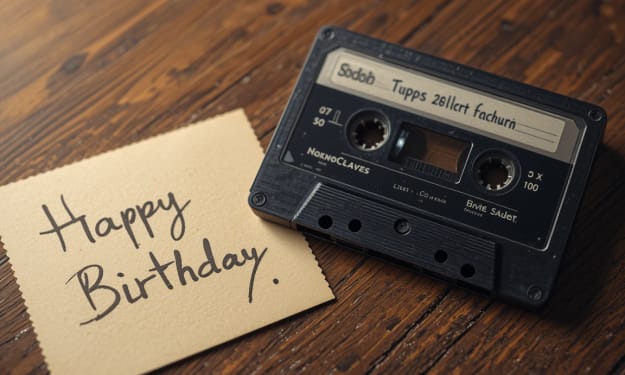
He Called Me Every Year on My Birthday—Even After I Blocked Him Written by Raza Iqbal I blocked his number on March 12, 2018. That was the day I swore I’d move on. No more texts, no more “just checking in,” no more late-night voicemails that arrived after two glasses of whatever he’d been drinking and too many memories he hadn’t buried. I’d told myself I was done. But truthfully, I never believed that would stop him. The first time he called after the block, I didn’t notice. It wasn’t until the following morning that I saw the “Missed Call – Unknown Number” notification. March 12, 2019. My 31st birthday. I stared at it for a long time, then deleted it. But the next year, it happened again. And the next. And the next. Every year, without fail, there’d be a missed call from an unknown number on my birthday. Just one. No voicemail. No follow-up text. Just a ghost tapping at the door once a year to say, I still remember you. His name was Noah. We met in the fall of 2012—two aimless souls in their twenties with dreams too big and plans too messy. He was the kind of person who quoted song lyrics like gospel, made eye contact like it was an art form, and kissed like he was afraid it might be the last time. And maybe that was the problem. Every moment with him felt like it was clinging to the edge of goodbye. We lasted three years. Or maybe we didn’t. Because even when we were together, there was always this invisible expiration date hanging over us. He wanted freedom. I wanted roots. He craved the thrill of not knowing where he’d sleep tomorrow. I needed the certainty of a place called home. He left on a Tuesday. Didn’t even pack properly—just shoved a few shirts into a bag, kissed my forehead, and said, “I’ll come back when I’m better.” He didn’t come back. When I finally blocked him years later, it wasn’t because I hated him. It was because I knew I’d never heal if he kept lingering like static on an untuned radio. I needed silence. But even silence isn’t always quiet. Every year, on March 12th, I’d catch myself glancing at my phone. And there it would be—one missed call. Always from a different number. Always with the same weight. I tried changing my number once. Just to see. March 12, 2022. Missed call. Unknown number. How he kept finding me, I never figured out. Maybe he used friends. Maybe he hired someone. Maybe he just remembered the rhythm of my life better than I thought. Then came March 12, 2025. The call didn’t come. I checked at midnight. Then again at 3 a.m. I left my phone on loud all day. But there was nothing. And somehow, that silence was louder than all the calls before it. I told myself it was a good thing. That it meant I could finally breathe. That maybe he’d moved on. Or maybe… maybe he couldn’t call. That thought stuck in my throat like a splinter. So I did something I hadn’t done in years. I called him. I tried the last number he’d called from the year before. It had been from a small town in Vermont, if I remembered right. The number rang twice, then disconnected. No voicemail box. Just—gone. Something felt off. So I searched his name online. Not expecting much. Just trying to prove to myself that he was still somewhere out there. That he just forgot. But instead, I found his obituary. Noah Elias, age 39, passed away on February 20th, 2025. A traveler, a poet, and a restless soul. Survived by his sister, a worn guitar, and too many unfinished songs. I stared at the screen for a long time. He died three weeks before my birthday. He didn’t forget. He never forgot. And now, he never would again. A week later, I received a package in the mail. No return address. Just my name, handwritten in the messy, slanted print I hadn’t seen in almost a decade. Inside was a cassette tape and a letter. > “Hey. If you're hearing this, I probably missed your birthday. I’m sorry about that. But I didn’t want this year to be different. So I asked someone to send you this. Don’t worry, it’s not a guilt trip. Just... me. One last time.” I found an old cassette player in the attic. Blew the dust off. Slid the tape in. His voice filled the room. Older, softer. But still him. He spoke for ten minutes. Told me about the mountains he’d climbed, the songs he never finished, the lovers that never quite fit. He talked about regret, about time, about how he never stopped thinking about me. > “I know I wasn’t good at staying. But I was always good at remembering. You were the only thing I never let go of, even when I should have.” > “So happy birthday, one last time. I hope your world is full, your heart is quiet, and your days are soft. I’ll stop calling now. Not because I forgot. But because I finally understand letting go.” > “Love you always. N.” I listen to that tape once a year now. On March 12th. Not because I’m holding on. But because I’m honoring the sound of someone who finally learned how to say goodbye.
By Moonlit Lettersabout a year ago in Fiction
She Left Her Diary in My Drawer—Three Days After Her Funeral
She Left Her Diary in My Drawer—Three Days After Her Funeral Written by Mirza I didn’t cry at her funeral. I thought I would. God knows I wanted to. But as the final shovelful of dirt landed on Emily’s casket, all I could feel was silence—a gaping absence that settled somewhere behind my ribs like a forgotten breath. Three days later, I found the diary. It wasn’t something she kept on a shelf or in a box. It wasn’t tucked away neatly. It was just there—sitting in the top drawer of my nightstand like it had always belonged there. And maybe, in some strange way, it had. It was a small leather-bound book, deep blue, edges worn. A single rose was pressed between the last few pages. I recognized it immediately—it was from that picnic in early spring. The one where she laughed so hard she choked on lemonade and made me promise I’d never bring up her ugly snort-laugh again. She made me promise a lot of things. She made me promise I’d live boldly. That I wouldn’t turn into one of those sad, gray people who let the world happen to them. That if anything ever happened to her, I’d remember to still dance in the kitchen and drink cheap wine on Tuesday nights. She never made me promise not to fall apart. The first page was dated five years ago, the day we met. > June 14th He has tired eyes, but kind ones. I don’t know why I noticed him first, but I did. He sat alone, reading a book he probably didn’t want anyone to ask about. I asked anyway. He said it was boring. I think he’s lying. I hope I see him again. We had met at a bookstore. That wasn’t a lie. But I didn’t know that moment had etched itself so deeply into her memory. I kept reading. > October 2nd He finally kissed me. I thought I’d feel fireworks, like in the movies. But instead, I felt calm. That kind of peace that creeps in when you stop running. I’ve always been running. I paused. I remembered that kiss. It was raining. We stood beneath the awning of that little café on 8th and Main, and she tasted like cinnamon and hesitation. I didn’t know she was running from anything. I never asked. I kept turning pages, and with each one, she became more alive. Her voice filled the room. Her words curled around me like the scent of her favorite sweater I hadn’t been able to throw out. There were pages about her fears—about cancer, about time, about leaving me alone. > March 9th The doctor said it might be nothing, but my gut says otherwise. I haven’t told him. Not yet. I don’t want to steal the light from his eyes. > April 3rd It’s not nothing. I knew it. Stage three. I cried in the parking lot for ten minutes, then ate a muffin like it was just a normal day. I’m good at pretending. I’ve been doing it since I was twelve. > May 27th I told him. He didn’t cry. But he held me like the world was ending, and for a moment, I let it. God. I remembered that night. How quiet we were. How loud the silence was. How she stared at the ceiling for hours while I lay beside her, memorizing the rhythm of her breath like it might leave me at any moment. She never let me read her pain. But here it was. Bleeding ink on paper. Honest. Unfiltered. The kind of vulnerability she never showed in daylight. And then I turned to the last entry. > The day before my birthday He’s sleeping beside me. I wonder if he knows I sometimes stay awake just to hear his breathing. That I count the seconds between each inhale. That I love him enough to let go. If you’re reading this, it means I’m gone. And I’m sorry. Not for leaving—but for not telling you how much you saved me. You made life worth the fight, even when I didn’t want to fight anymore. The diary is in your drawer now because I couldn’t leave without saying goodbye properly. You would’ve kept looking for closure in all the wrong places—in books, in songs, in old text messages. So I’m giving it to you here. In my words. In these pages. In this love that doesn’t end just because I did. Live boldly. Keep dancing. And know, wherever I am, I’m probably laughing at your terrible taste in music. Forever your Emily. I don’t remember how long I sat there after finishing. Maybe an hour. Maybe the whole night. At some point, my hand moved to close the diary, but I couldn’t bring myself to let it go. She had written me a goodbye when I didn’t get one. She had left behind not just memories, but answers. Love in ink. And for the first time since the funeral, I cried. Not because she was gone. But because I finally understood how deeply I had been loved.
By Moonlit Lettersabout a year ago in Fiction
The Tree That Remembered Me
I hadn’t been back in twelve years. Not since the funeral. Not since I stood in the middle of my grandmother’s backyard, too young to understand what grief really meant, clutching a paper flower I made in school because I didn’t know what else to bring.
By Musawir Shahabout a year ago in Fiction
The Woman Who Lived in Room 27
The Woman Who Lived in Room 27 Written by Mirza Room 27 wasn’t luxurious. It didn’t have a sea view or silk curtains. The paint peeled a little at the corners, the bed creaked when you rolled over, and the window stuck halfway when you tried to open it. But it was hers. The front desk clerk, Tony, didn’t ask many questions when she arrived seven years ago. She wore a burgundy coat with a torn hem and carried one suitcase, the kind with faded stickers from other places—Italy, Morocco, maybe Greece. Her name, written in crisp black ink on the registration form, was Clara Matthews. She paid a week’s stay in advance at the small coastal inn. Then she stayed the next week. And the next. Eventually, Tony stopped asking if she needed help with her bags. She wasn’t rude. Just… distant. She came and went quietly, walked along the beach in the early mornings, and returned before sundown. She always had a notebook in hand, sometimes a stack of old letters tied in ribbon. She ate the same thing from the café downstairs—black coffee, two eggs, toast no butter. The locals whispered about her. “Maybe she’s a widow.” “No, a writer. They’re all strange.” “She’s hiding. Bet she’s running from something—or someone.” Children made ghost stories about her: The Woman in Room 27, who talks to no one and writes secrets to the dead. But Clara never reacted. She just nodded politely, smiled when necessary, and climbed the creaky stairs to Room 27. Room 27 had no secrets. Or perhaps it had too many. Inside, her life was small and neat. A wooden suitcase at the foot of the bed. A shelf of secondhand books, mostly poetry and old travel journals. A painting of a sailboat she bought from the art market and hung crooked above the bed. A single photograph—sepia-toned—of a young man in a military uniform. His face worn from time and thumbprints. Clara would talk to the photograph some nights. “You would’ve liked it here, Daniel,” she whispered. “The waves sound like the letters you used to write.” On her desk, letters—hundreds—lay bundled in blue ribbon. Some sealed. Some opened and read too many times. Every day, she wrote one more. “Dear Daniel,” each began. “Today, I watched the tide come in. It reminded me of you…” One stormy winter, Tony finally asked her, “You ever plan on leaving, Miss Matthews?” She looked up from her tea. “No,” she said simply. “This is my last stop.” Tony respected her answer. He stopped asking. But every time the room needed painting or the roof leaked, he made sure hers was repaired first. And every year, she still paid her rent on time. In cash. Never with a card. Then one spring morning, Room 27 was silent. No scent of tea from beneath the door. No footprints along the beach. No polite nod at breakfast. Tony waited till noon. Then he knocked. No answer. Inside, Clara Matthews lay in her chair, facing the window, a letter clutched in her hand. She had passed as quietly as she lived.
By Moonlit Lettersabout a year ago in Fiction