Humor
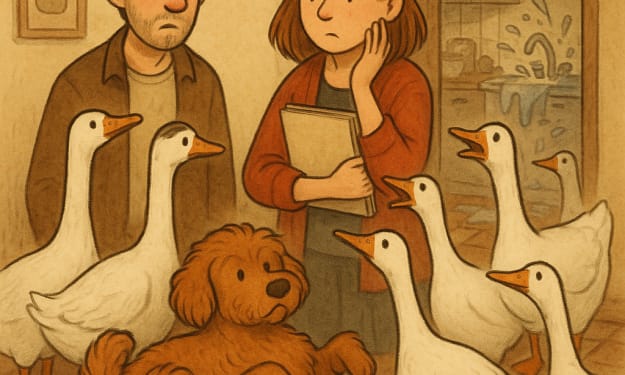
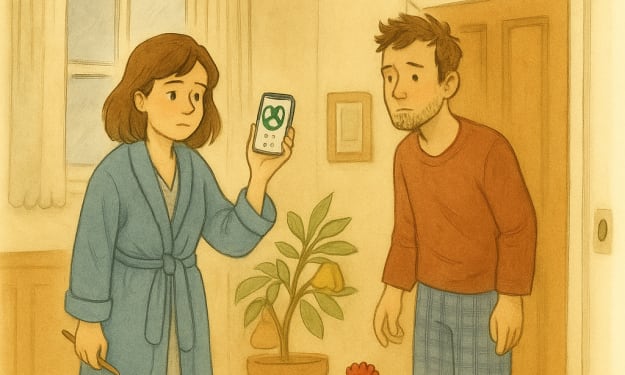
DAY SIX: Six Geese a-Laying
The first sign was the smell. A sharp, swampy odour crept up the porch before the doorbell even rang. It smelled of ponds, panic, and something that might once have been straw. Stephen had been mid–Teams call, trying to look competent while nudging a partridge away from his keyboard, when Jane called from the hallway:
By Stephen Stanleyabout a year ago in Fiction
Vocal.Media Need New Glasses
Maybe They Need New Glasses I have spent the last two days pulling my hair out, wondering what on earth I was doing wrong. Every poem I tried to put on Vocal got the same message back. Not in English. Not in English. Not in English. As if I had suddenly decided to start writing in ten different languages overnight.
By ♿ V+ Marie381Uk about a year ago in Fiction
The Clockmaker’s Promise
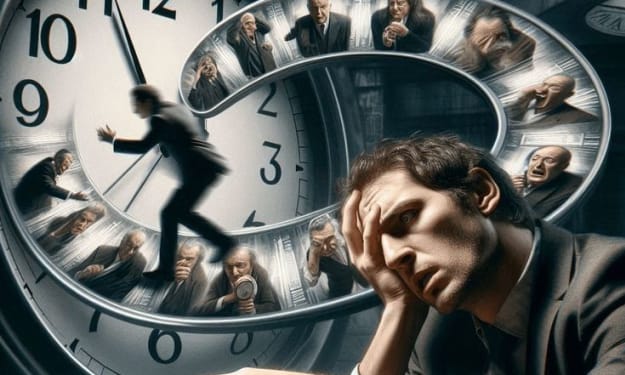
M Mehran Everyone in the quiet town of Eldenbrook knew Elias Thorn, the old clockmaker whose shop stood at the corner of Willow Street. The windows were always fogged with dust and time, and the shelves were filled with clocks—grandfather clocks, pocket watches, delicate sand timers, and curious contraptions no one had names for. But the most mysterious thing about Elias was not his clocks. It was his secret: He could fix time. Some said he once repaired a moment of regret for a grieving widow. Others whispered he restored a lost memory for a child who had forgotten her mother’s face. No one knew how he did it. They only knew the price was never money. And so people came, quietly, secretly, leaving with lighter hearts—or heavier ones, depending on the moment they chose to change. But none of that mattered the night fifteen-year-old Rowan Carter walked into the shop with a shaking hand and a broken watch. It had belonged to his father. The man who never came home. --- The door chimed softly as Rowan stepped inside. The hum of ticking clocks filled the air like thousands of tiny heartbeats. Elias Thorn, with silver-thread hair and warm, unreadable eyes, looked up from a clock he was polishing. “You’ve been outside my door for three days,” Elias said. “Come in, child.” Rowan swallowed. “I… I wasn’t sure.” “You are sure now.” Elias nodded. “What do you want fixed?” Rowan opened his hand. The pocket watch lay cracked, its glass shattered, its hands frozen at 7:12 PM—the exact minute his father’s car went off the old Briarwood Bridge. “I want to go back,” Rowan whispered. “Before it happened. I want to stop him.” Elias didn’t take the watch. Not at first. “Time is not a toy,” he warned. “It doesn’t like being moved. It resists. It demands sacrifice.” Rowan’s voice broke. “I’d give anything.” Elias’s expression softened with a grief that seemed older than the town itself. “Many have said that,” he murmured. “Few understood what it meant.” Still, he held out his hand. “Let me see it.” Rowan placed the broken watch in Elias’s palm. The moment the clockmaker touched it, the shop grew cold. The ticking of the other clocks slowed until the whole room held its breath. Elias closed his eyes. When he opened them again, they glowed faintly with a golden light. “This watch is tied to a moment you wish to rewrite,” he said quietly. “I can open the door. But remember—every changed moment steals something from another.” “What do you mean?” “If you return to the past,” Elias said, “you must leave something behind.” “Like what?” Rowan whispered. “A memory,” the clockmaker said. “A piece of your life. Something time will take as payment.” Rowan hesitated only a moment. “My father is worth more than any memory.” Elias nodded. “Then hold the watch. And do not let go.” --- The shop dissolved. Rowan felt himself falling through light, through ticking, through moments stretching and snapping like threads. Then his feet hit solid ground. He stood on Briarwood Bridge. Wind brushed against his face, cold and familiar. The wooden planks creaked beneath him. And there—just ahead—stood his father, leaning over the railing, staring down at the rushing river below. Rowan’s breath caught in his throat. “Dad!” His father turned, surprised. “Rowan? What are you—” “Don’t drive tonight,” Rowan gasped. “Please. The bridge… your brakes—” Before he could finish, headlights glowed on the road behind them. A car swerved, tires screeching on wet wood. Rowan lunged. He shoved his father out of the way. The car hit Rowan instead. Everything went black. --- When Rowan opened his eyes, he was lying on the ground, rain hitting his face. His father hovered over him, frantic. “Rowan! Rowan, stay with me!” “I’m… okay,” Rowan murmured. But he wasn’t. Something inside his mind felt hollow, missing. Elias Thorn stepped out of the shadows of the bridge as if he had always been there. “It is done,” the clockmaker said quietly. Rowan’s father looked up, confused. “Who—?” “You don’t remember me,” Elias said gently. “That is how it should be.” He held the restored pocket watch in his hand. The glass was whole, the hands moving again. Rowan sat up slowly. “Did I save him?” “Yes,” Elias said. “Your father will live. The accident will never happen.” Rowan exhaled in relief. “Then… what did I lose?” Elias hesitated. Then he handed Rowan the watch. Rowan looked at it, waiting for memory to rise. But nothing came. “What… what is this?” Rowan asked. “It belonged to your father,” Elias said softly. “It was your favorite birthday gift. He saved for months to buy it for you.” Rowan blinked. “I don’t remember any of that.” “That was the price,” Elias said. “To save your father, time took the memories you had of him.” Rowan’s chest tightened. All the laughter. All the stories. All the moments they shared—gone. His father knelt beside him, tears in his eyes. “Rowan? Do you know who I am?” Rowan looked into his father’s face. It felt warm… familiar… but distant, like a name he once read long ago. “I don’t remember,” Rowan whispered. “But… I want to learn.” His father pulled him close, holding him like something precious returned from the brink. Elias watched them silently. Sometimes saving someone meant losing the part of yourself that loved them. Sometimes love meant choosing the loss anyway. When Rowan looked up, the clockmaker was gone. Only the steady ticking of the pocket watch remained.
By Muhammad Mehranabout a year ago in Fiction
Day Four: Four Calling Birds
Stephen woke to an unusual quiet. The partridge perched peacefully on the windowsill like a feathered monk. The pigeons dozed in their bathroom exile. Even the French hens had clustered by the radiator, gossiping in polite whispers.
By Stephen Stanleyabout a year ago in Fiction
Day Three: Three French Hens
At 6:40 a.m., the doorbell rang with the authority of a police raid. The partridge, asleep on the router like a dragon on a hoard of warm LEDs, detonated into the hallway. One of the pigeons cooed in the bathtub as if to say, we warned you about mornings. Jane rolled over and tugged the duvet over her head.
By Stephen Stanleyabout a year ago in Fiction
Whispers of Winter Light
The night lay still beneath a soft blanket of snow, each flake a whisper from the heavens. The forest was hushed, the air so crisp it seemed to chime when the wind brushed through the frost-laden trees. Amid the silver silence stood a small wooden cabin, its windows glowing softly like two golden eyes against the indigo sky. Beside it, a single lantern glowed warmly on the snow, casting an amber halo that shimmered like hope itself. Inside the cabin, Emma sat near the window with a cup of steaming cocoa in her hands. She watched the light outside, a simple lantern she had placed earlier in memory of her grandfather, who had built the cabin decades ago. He always said that light was a promise — a small, glowing reminder that warmth could exist even in the coldest of places. Every year, on the first heavy snow of winter, Emma returned to the cabin. It was her sanctuary — a place untouched by time, where memories of laughter, stories, and the comforting scent of pine logs still lingered in the air. Outside, the forest stretched endlessly, cloaked in quiet beauty. The trees bowed under the weight of snow, their branches sparkling under the starlit sky. The North Star gleamed high above, a constant companion to the light below. As she gazed out, Emma thought about how her grandfather used to tell her stories by the fire. “The world may freeze, little one,” he would say with a twinkle in his eye, “but hearts like ours carry the flame.” His words had guided her through life — through challenges, losses, and new beginnings. The light, he said, was not just a symbol, but a way of living: to bring warmth, kindness, and courage into a world that sometimes felt cold. Tonight, that light seemed to glow brighter. Perhaps it was the stillness of the night, or perhaps it was the feeling of being home again after so long. Emma took a deep breath, feeling the quiet peace settle in her heart. She stepped outside, her boots sinking into the fresh snow with a soft crunch. The lantern’s flame flickered gently as she approached, its glow reflecting in her eyes. She knelt beside it, brushing off a light layer of snow from its glass top. “Grandpa,” she whispered, “I made it back.” Her voice trembled, not from the cold, but from the rush of memories flooding her heart. “You were right. Even in the darkest times, there’s always light.” The wind stirred gently through the trees, carrying a faint whisper — or maybe it was her imagination — that sounded like a sigh of contentment. She smiled, standing up and looking toward the horizon where the first hints of dawn began to soften the sky. A pale golden hue mingled with the deep blue, and the stars slowly faded into the morning light. The lantern’s glow blended with the rising sun, two lights meeting — one human, one heavenly. Emma knew she wouldn’t be alone, not really. The warmth she carried was more than memory; it was legacy — the same light her grandfather once carried, now passed on through her. She turned back toward the cabin, where the fire still crackled in the hearth. The little home glowed like a beacon in the midst of winter’s stillness, its windows radiating welcome to any soul lost in the snow. That night, and every night after, the lantern would continue to burn outside her cabin — a soft promise that even the coldest season cannot dim the light within. Visitors who passed through the forest in later years often spoke of that single glowing lantern, how it stood unwavering through every storm, a quiet guide for those seeking warmth or direction. And though Emma would one day be gone, her light — like her grandfather’s before her — would remain. For in every winter’s heart lies a spark waiting to shine, a whisper of warmth that says: Even in the deepest snow, love keeps the world aglow.
By Muhammad Saad about a year ago in Fiction