Humor
Metamorphosis. Content Warning.
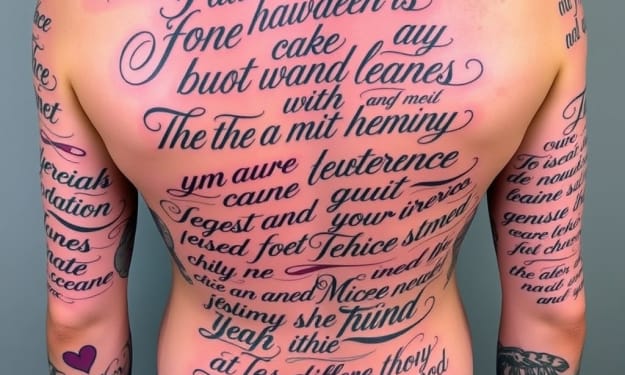
You murdered me with your axe, and then you slowly skinned me and started to cut up my body into the thinnest of possible slices. You gave me no warning, and I saw the less precious parts of my anatomy smouldering on your open fire.That hurt a lot, but you were not finished. you then got out your tools and started to decorate my skin slivers with the blackest of your inks.Then you sewed the bits back together, bound them, and that's what I am now to the world.I was a tree. Now I am your book.
By Mike Singleton 💜 Mikeydred about a year ago in Fiction
“Letters to the Ghost Who Lives in My Mirror”
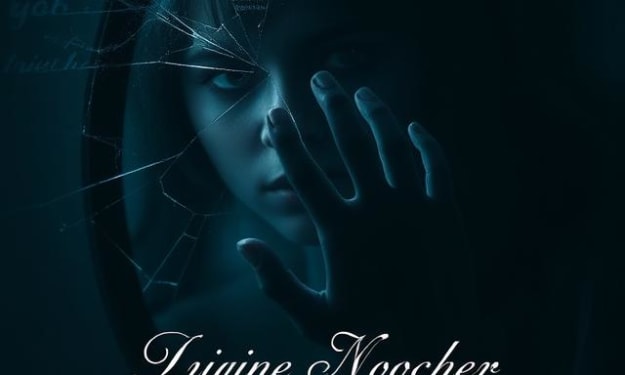
1. The Reflection That Isn’t Mine Every morning, before the world stirs, I face the ghost who lives in my mirror. She’s not like me—at least, not entirely. Her eyes hold stories I don’t remember living. Her lips curl in smiles I never smiled. She wears my face but carries a weight, a sorrow, that feels like a secret tattoo etched beneath my skin.
By Hamza Habibabout a year ago in Fiction
The Man Who Sat at Table Seven
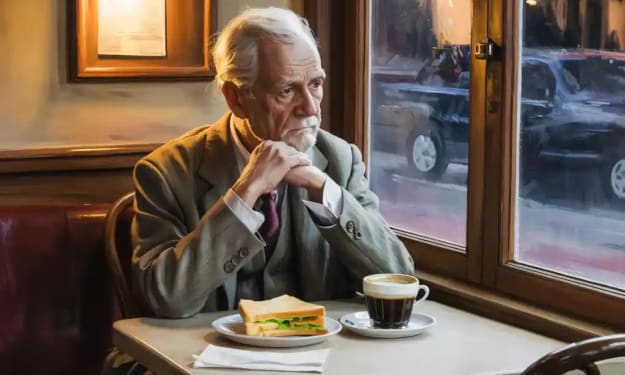
There’s a quiet little café on East 41st Street, nestled unceremoniously between a secondhand bookstore and a flower shop that always smells of jasmine and damp stems. Blink, and you might miss it. No neon signs. No whimsical chalkboard menus boasting fancy lattes or turmeric infusions. The awning just reads “Mira’s Café” in fading gold letters. Inside, it smells like toasted bread, warm milk, and stories too old to tell.
By Arshad khanabout a year ago in Fiction
The Echoes of the Yellow Scarf
When Mira stepped off the subway at 14th Street, the crowd swept around her like waves. It was the same platform, same train, same morning routine—but today, something was different. Clutched in her hand was a yellow scarf. Not hers. She had found it on the park bench she always sat on before heading to work. It was soft, handmade, and slightly frayed at the edges, with initials stitched in the corner: S.H. She hesitated before picking it up earlier that morning. Normally, she'd ignore lost items, let someone else deal with them. But something about this scarf felt… personal. Like it was meant for her to find. By the time she reached her office on the 22nd floor of a glass-paneled building, she couldn’t stop thinking about the initials. Who was S.H.? Why did it feel like more than just a lost scarf? She Googled the initials with “yellow scarf” and “New York”—of course, nothing. A thousand meaningless results. But then came the dreams. That night, Mira dreamt of a girl in a yellow scarf standing under a streetlamp, eyes full of sorrow. She said nothing. Just stood. Watching. Silent. The next night, she returned. This time, Mira spoke. “Who are you?” The girl looked up. “Help me find home.” Mira jolted awake. The scarf was on the chair beside her bed—right where she’d left it. But it looked newer. Less worn. As if time had reversed. In the days that followed, the dreams grew more vivid. The girl—always in that yellow scarf—stood by a bench, her back to Mira, facing a lake Mira had never seen before. And every time, she'd whisper, “Almost there.” Mira started drawing the scenes. She was no artist, but the urge was uncontrollable. She filled pages with images of the girl, the lake, the scarf fluttering like a whisper caught in wind. Her friends thought she was spiraling. “You need sleep,” they said. “You’re obsessing over nothing.” But she couldn't stop. One rainy Sunday, Mira walked aimlessly through Central Park, the scarf wrapped around her neck, the dreams echoing in her thoughts. And then—she saw it. The bench. Not just any bench. The bench. The one from her dreams. It faced a small, quiet lake. Willow trees bowed along the edges. A streetlamp flickered nearby. It was all real. She sat. A soft breeze passed. Leaves rustled. The scarf lifted slightly. And then, across the lake, stood the girl. Real. Flesh and bone. Same yellow scarf. Same solemn eyes. Mira stood. “Who are you?” The girl smiled faintly. “You found me.” Mira stepped forward, breath caught in her throat. But before she could speak again, the girl turned and walked toward the trees—fading like mist in morning light. Gone. Mira looked down. The scarf had vanished. In its place, on the bench, was a note. “Thank you. I’m home now. – S.H.” That was three years ago. Since then, Mira walks the park every Sunday. She never saw the girl again, but sometimes, when the breeze picks up just right, she feels a soft warmth on her neck—as if a scarf, unseen, still lingers. She doesn’t tell many people the story. Who would believe her? But if you ever find a yellow scarf where it shouldn't be… Hold on to it. Someone might be waiting.
By Arshad khanabout a year ago in Fiction
Long Nose the Liar. Top Story - July 2025.
There was an old liar who lived in our village. I’m sure of it. No one else seems to remember him, but then again no one else seemed to like him either. Back then the other children called him “Long Nose the Liar” because he looked like Pinocchio, and all his stories sounded like lies.
By Judah LoVatoabout a year ago in Fiction
Prewash. Content Warning. AI-Generated.
I found the blood in the sink again. Not fresh—never fresh. Thick, dark, clotted like guilt under fingernails. It didn’t alarm me this time. I just nudged the sponge aside and turned on the hot water. It’s easier when the steam blurs the reflection.
By Jesse L Shelleyabout a year ago in Fiction
The Ice Cream Fairy
The air conditioner droned incessantly in the window, filling the apartment with a constant, grating hum. Although it gave a medal-worthy effort, the cool air it produced was immediately swallowed by the sticky, hot, stagnant atmosphere. Natasha debated whether or not to just turn it off entirely; the temperature seemed no different either way, and at the very least it would give her peace at last.
By Natalie Grayabout a year ago in Fiction
"What Happens After We Block Someone? A Digital Ghost Story Told by Algorithms"
I used to think that blocking someone was the end. A digital wall. A simple act of control in a chaotic, hyperconnected world. But what if I told you that’s not true? That when we block someone — or get blocked — it doesn’t delete the bond. It just buries it.
By Hamad Haiderabout a year ago in Fiction
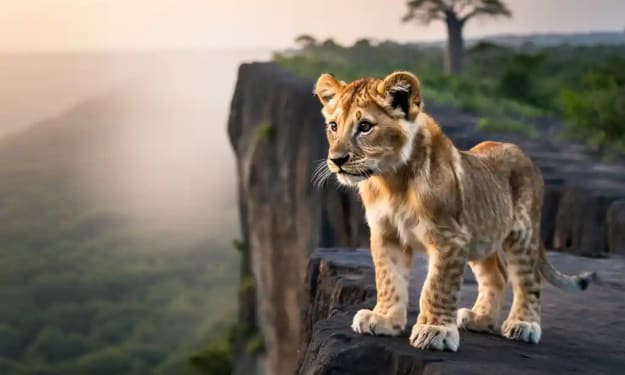
The Brave Cub Who Walked Into the Storm
art of the African savanna, where golden grass whispers stories of survival and legacy, a lion cub named Leo was born. But unlike his siblings, who roared with instinct and leapt with promise, Leo was different. He was smaller. Quieter. Often overlooked. While the others played fiercely beneath the tall acacia trees, Leo watched from a distance—his eyes not on the games, but on the horizon. His paws were too small to race, his roar too soft to intimidate, and his legs trembled in the company of boldness. Yet there was something else inside him. A spark that didn’t show on the surface. A curiosity. A question. “Why don’t you join them?” his mother would ask gently, her golden eyes filled with worry. Leo would lift his head, ever so slightly. “Because I want to learn,” he would whisper. “I want to see the world before I try to conquer it.” Others in the jungle didn’t understand. They dismissed him. “Too small to matter,” scoffed the zebras. “Too quiet to be brave,” mocked the monkeys from their high, swinging homes. But Leo didn’t argue. He didn’t need to. Somewhere deep inside him, a voice far older than his own murmured: “Your time will come. And when it does, the world will know.” he Storm That Changed Everything It came without warning. The sky, once a blue canvas, darkened into a violent grey. Thunder cracked through the heavens, and the jungle trembled. The rain poured like arrows from the clouds, and the wind howled like forgotten spirits. Leo’s family, like many others, found refuge in a rocky cave near the cliffs. They huddled close, seeking warmth and safety as the world outside unravelled. Then came the sound that pierced the storm. A cry. Fragile and distant. Milo. The baby elephant from the neighboring herd. Lost. Alone. The lion king, Leo’s father, growled with authority. “No one moves. The storm is not kind to wanderers.” But Leo couldn’t sit still. His ears twitched at the sound. His heart raced—not with fear, but with purpose. “He’s out there,” Leo said, more to himself than anyone else. “He’s afraid.” “You’re just a cub,” his father barked. “Don’t be foolish.” But Leo had already stepped forward. His mother tried to stop him. But courage moves faster than doubt. And sometimes, a lion’s heart knows exactly when to roar—even if no one else can hear it.
By Arshad khanabout a year ago in Fiction
When We Laughed at the Apocalypse
The sky cracked open at 2:17 p.m., Eastern Standard Time. Not figuratively. Literally. A jagged tear split across the clouds like someone had sliced reality with a cosmic box cutter. And what did we do? We laughed. Not the polite kind of laugh—the kind you offer during awkward silences or weak jokes. No. We laughed until our ribs hurt and our eyes teared up, standing under that fractured sky with its burning purple glow and unrecognizable constellations peeking through. We laughed because everything else—logic, hope, even time—had stopped making sense weeks ago. You see, by that point, the world had already gone off-script. --- It began with whispers of extinction-level events. Climate collapse accelerated so fast that the ocean started swallowing coastlines like a hungry beast. Fires danced across continents. The bees left. The birds stopped singing. And then—one day—the moon vanished without warning. We watched it happen live on YouTube. A million people tuned in to see the night sky go blank. Comments ranged from terrified to absurd: > "NASA’s hiding it in Area 51." "Aliens finally repossessed their rental." "Well, guess it’s time to start that apocalypse garden." My best friend, Morgan, texted me that night: “No moon = no tides = no surfing. The real tragedy.” We laughed until 2 a.m. --- As the days spiraled, so did humanity. Governments held press conferences where world leaders looked like exhausted actors in a play no one wanted to direct. Grocery stores stopped restocking. Wifi flickered out like dying fireflies. People either panicked, prayed, or partied. We chose the third. We formed the End of the World Comedy Club—a group of misfits who believed that if laughter couldn’t save the world, it could at least save our sanity. We held open mics in abandoned diners, made memes under candlelight, and wrote satire while the earth groaned beneath our feet. Morgan called it “tragedy CPR.” --- The night the rivers turned to rust, we were performing in a darkened theater with no electricity, just glowsticks taped to the floor. Our headliner was a former insurance agent turned stand-up comic named Jasper, whose opening line was: “You know it’s bad when the cockroaches start evacuating.” The place roared. Someone handed out stale popcorn from an old vending machine. Another passed around home-brewed “apocalypse ale” made from canned fruit and desperation. We laughed louder than the rumbling outside, louder than the static on our solar radios, louder than the approaching silence that was swallowing everything else. --- Humor became our rebellion. Our last act of defiance. When reality melted into absurdity, jokes became the only truth we trusted. Satire turned into scripture. We worshipped irony, toasted dark humor, and wore sarcasm like armor. I remember one day, we found a stack of old newspapers. The headlines were almost comically naive: "Economy Poised for Recovery" "2024: Year of Renewal" "AI Predicted Peace in Our Time" Morgan read them aloud in a news anchor voice, and we all nearly choked from laughing. It was absurd. Beautifully, horribly absurd. --- Eventually, we stopped counting the days. Calendars were useless when seasons bled into each other and the sun rose in colors that didn’t exist before. Time fractured. Memories felt like borrowed dreams. Still, we performed. One night, under the cracked sky and a makeshift stage made of shopping carts and tarps, I stood up and told my first joke in weeks: “You ever realize the apocalypse is just Earth’s way of ghosting us?” A kid in the front—barely ten—laughed so hard he fell off his chair. His mom smiled. That was the moment I knew it mattered. --- When the final broadcast hit, it was a single sentence looping over emergency frequencies: "This is not the end. This is the punchline." Some say it was just a glitch. Others believed it was the universe speaking. Either way, we took it personally. --- Now, years—decades?—later, the world is unrecognizable. Fewer people. Stranger skies. Plants that glow at night. Animals that hum instead of growl. We still don’t know what happened. Maybe we never will. But we survived. Not because we were the strongest or the smartest. But because we learned how to laugh when everything else fell apart. And somewhere, deep in the ruins of our old city, someone carved these words into a wall: “When the world broke, we told jokes.” That’s our legacy. That’s our resistance. That’s our truth.
By Mati Henry about a year ago in Fiction