Holiday
The Café Where Time Stood Still
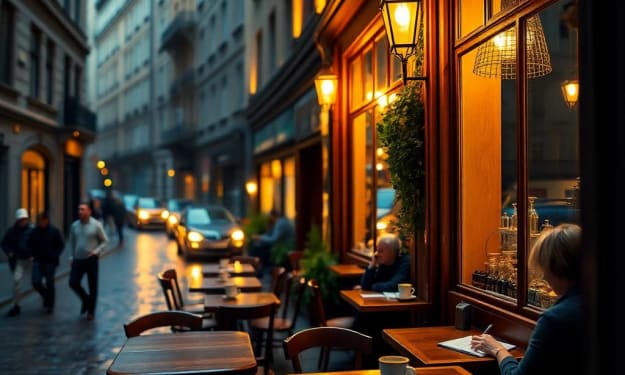
The rain was relentless that afternoon, washing the streets in silvery streaks that reflected neon signs and hurried umbrellas. I ducked into a narrow alley, hoping for a shortcut, when I saw it: a small café tucked between two tall buildings, almost as if it had been hiding from the world. Its sign read simply “Café Temps.”
By arsalan ahmadabout a year ago in Fiction
The Coffee Cup Left Behind
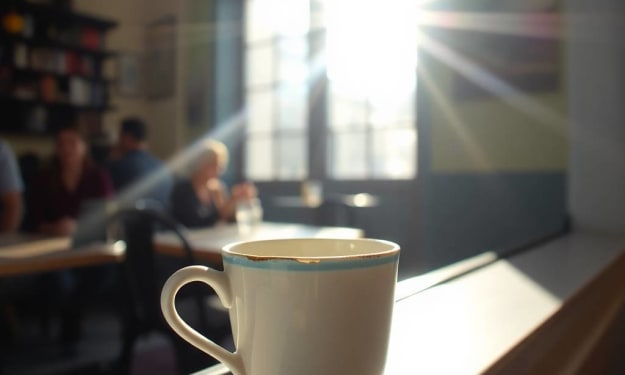
It was a Tuesday afternoon when I noticed the cup. It sat on the windowsill of the little café I sometimes escaped to when I needed quiet. The cup wasn’t anything special — chipped white ceramic with a faint blue ring around the rim. It looked as though it had been forgotten, maybe set down by someone who had stepped out for a smoke and never returned. But there it was, catching the soft light that spilled through the glass, and for reasons I couldn’t explain, I couldn’t stop looking at it.
By arsalan ahmadabout a year ago in Fiction
Goodbye, Forever Home
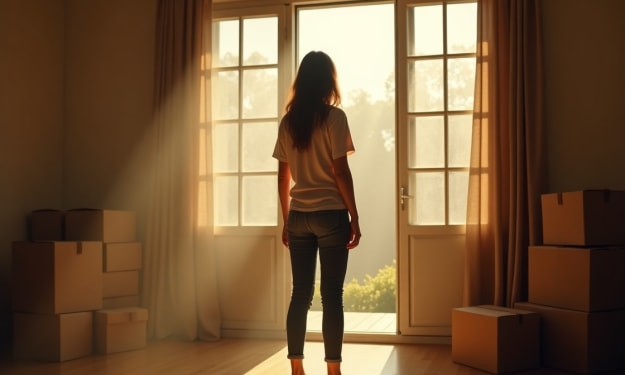
Goodbye, Forever Home Joanne lingered in the doorway, her hand resting against the faded wooden frame that had welcomed her countless times. The keys jingled faintly in her palm—small, metallic ghosts of a life about to be surrendered. For thirty years, this house had been her anchor. It had heard her laughter, muffled her sobs, and held the silence of long nights when only the ticking clock kept her company.
By Wings of Time about a year ago in Fiction
The Stranger on Willow Street
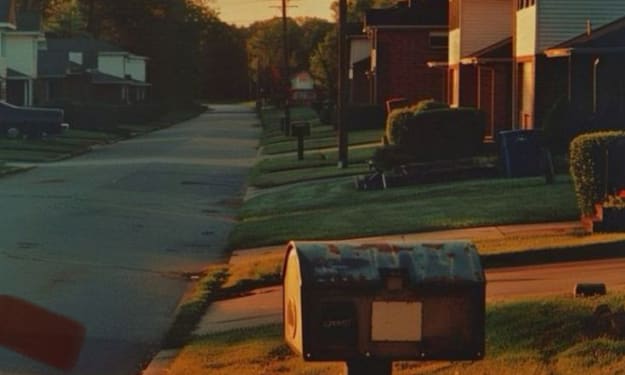
M Mehran Willow Street had always been the quietest corner of Brookfield. Lined with old oak trees and modest houses, it was the kind of street where neighbors waved at each other from their porches and children played hopscotch until the streetlights came on. Nothing unusual ever happened there—until the stranger arrived. It was a rainy Tuesday evening when the first sightings began. A tall man in a dark coat, carrying nothing but a small leather suitcase, walked slowly down Willow Street. He didn’t knock on doors or greet anyone. He simply stood for a few moments at the corner, looking at the houses as if searching for something, then vanished into the mist. By the next morning, the neighborhood was buzzing. Mrs. Henderson swore she saw him standing outside her garden gate at midnight. Mr. Taylor insisted the stranger paused at his mailbox, as if reading his name. No one knew where he came from, and no one had seen him leave. Children began daring each other to stay out after dark, hoping for a glimpse. Some said the man’s shoes made no sound on the wet pavement. Others claimed his suitcase glowed faintly, though no one could agree on the color. Detective Clara Reed, who lived nearby, heard the rumors during her morning jog. Though off duty, her instincts stirred. Brookfield wasn’t the kind of place where strangers wandered without reason. That evening, she parked near Willow Street and waited. At exactly 10 p.m., the man appeared. He was just as described—tall, broad-shouldered, face shadowed by his hat. Clara approached cautiously. “Evening,” she called out. “Can I help you?” The man turned. His eyes were gray, calm but unreadable. “I’m looking for someone,” he said softly. His voice carried an accent Clara couldn’t place. “Who?” she asked. He hesitated, then answered, “A boy. He would be grown now. His name is Samuel.” Clara frowned. There was no Samuel on Willow Street, at least none she knew of. Before she could ask more, the man tipped his hat politely, turned the corner, and was gone. The following day, Clara checked old town records. To her surprise, she found a Samuel Whitmore had once lived on Willow Street—nearly thirty years ago. The boy had vanished one summer evening while walking home from school. Despite searches and newspaper appeals, he was never found. The case had faded into cold files and fading memory. That night, Clara returned to Willow Street. The stranger was there again, standing beneath the lamppost. This time, she confronted him directly. “You knew Samuel Whitmore,” she said firmly. The man’s lips curved into a faint smile. “Yes. He was my son.” Clara felt a chill. “Your son disappeared decades ago. Why are you here now?” He opened the suitcase, revealing not clothes or belongings, but stacks of old newspaper clippings, faded photographs, and letters. “I never stopped searching,” he whispered. “Every town, every street that felt familiar. Something brought me here. A pull I cannot explain.” Clara studied him, torn between skepticism and sympathy. His story could be fantasy, grief, or something stranger. But there was no mistaking the sorrow in his eyes. For weeks, the man continued to appear on Willow Street. Some neighbors avoided him, others brought him food or coffee. Though no Samuel was found, the street began to change. Families grew kinder, checking in on each other more often. Children listened in awe to the tale of the missing boy. Then, one morning, the man was gone. His suitcase, however, remained at the base of the oak tree near the Whitmore house. Inside was only a single note: “The search is over. Thank you.” No one ever saw him again. Some claimed he finally found peace. Others whispered he had been a ghost all along, forever searching until the town itself gave him rest. As for Detective Clara Reed, she kept one of the photographs from the suitcase—a smiling boy with bright eyes, frozen in time. She pinned it above her desk as a reminder: even the quietest streets hold stories waiting to be uncovered.
By Muhammad Mehranabout a year ago in Fiction
Shadows on the Edge of Tomorrow
The train station was almost empty, except for a few scattered travelers dragging their suitcases across the cold concrete floor. The air smelled faintly of rain, and the giant clock above the platform ticked louder than usual, marking each second like a reminder that time was both a gift and a thief.
By Nadeem Shah about a year ago in Fiction
The Algorithm That Dreamed
Story In the year 2074, dreaming was no longer a private act. The Somnus Corporation had changed everything with their invention: Dreamfeeds. For a monthly fee, people could subscribe to curated dream experiences. No more restless nights or nightmares—just stories crafted by advanced AI, perfectly tuned to desires, fears, and secret longings. Romance, adventure, peace, even flight—dreams were now entertainment.
By waseem khanabout a year ago in Fiction
The Last Bookstore at the End of Time
Story No one ever found The Last Bookstore at the End of Time on purpose. It never sat on a corner between a bakery and a post office, nor appeared on Google Maps, nor welcomed casual wanderers. The store arrived when it was needed—and only for those standing at the fragile edges of decision.
By waseem khanabout a year ago in Fiction
Europe’s Scorching Summer
Introduction: A Summer Like No Other Europe is experiencing one of the hottest summers in recent history. From Spain to Germany, and from France to Italy, the continent is battling relentless heatwaves that have disrupted normal life. Temperatures soaring above 40°C are no longer rare — they are becoming the new normal. This article explores how heatwaves are reshaping daily life across Europe, the challenges they bring, and the steps people are taking to adapt. The Heatwave Phenomenon Heatwaves occur when unusually high temperatures persist for days or even weeks. Scientists warn that climate change is intensifying these events, making them more frequent and more dangerous. According to the European Environment Agency, the continent has seen a steady rise in both the duration and intensity of extreme heat since the 1990s. Public Health Under Pressure Hospitals across Europe are reporting an increase in heat-related illnesses. Dehydration, heat exhaustion, and respiratory problems are common among vulnerable groups such as the elderly and children. Cities like Paris and Rome have opened cooling centers, while public health officials urge residents to stay hydrated and avoid outdoor activities during peak hours. The Daily Struggles of Ordinary People For millions of Europeans, the heatwave is not just a weather report — it’s a daily struggle. Office workers find productivity dropping as air-conditioning systems fail to keep up. Farmers worry about their crops drying under the blazing sun, while families cancel outdoor plans and seek refuge in shaded parks or air-conditioned malls. In southern Spain, school schedules have been adjusted, with classes ending earlier to avoid the midday heat. Energy Systems Under Strain Another impact of the heatwave is the strain on Europe’s energy systems. With air conditioners running non-stop, electricity demand is reaching record highs. Some regions face power shortages, while utility companies scramble to balance supply and demand. Ironically, the same rivers that cool nuclear power plants are running dry, forcing some facilities in France and Germany to reduce operations. Economic Consequences Heatwaves also have an economic cost. Tourism, one of Europe’s most important industries, is feeling the pressure. While northern countries such as Norway and Sweden see a rise in visitors escaping southern heat, Mediterranean destinations are struggling with cancellations. Agriculture is also hit hard, as drought conditions reduce crop yields, pushing food prices higher across the continent. Environmental Toll The natural environment is suffering too. Drought conditions lead to wildfires in Greece, Italy, and Portugal, destroying forests and displacing communities. Rivers like the Rhine and the Po are shrinking, threatening biodiversity and disrupting shipping routes. These environmental changes highlight the urgent need for sustainable water management and climate resilience policies. How People Are Adapting Despite the challenges, Europeans are finding ways to adapt. Urban planners are redesigning cities with more green spaces to cool down concrete jungles. Families are investing in better insulation for their homes. Communities are coming together, checking on elderly neighbors and sharing resources. Governments are also introducing early-warning systems to alert citizens before extreme heat strikes. The Bigger Picture: A Wake-Up Call Experts argue that Europe’s heatwaves are not isolated events but part of a global climate crisis. The continent is warming at twice the global average, making it particularly vulnerable. This summer is a stark reminder that climate adaptation is no longer optional — it is a necessity. Conclusion: Living in a Hotter Future Europe’s scorching summer is more than an uncomfortable season; it is a glimpse into the future. As climate change accelerates, heatwaves will continue to reshape how people live, work, and interact with their environment. The challenge now is not only to survive the heat but also to build a more resilient society that can thrive in a warming world.Another impact of the heatwave is the strain on Europe’s energy systems. With air conditioners running non-stop, electricity demand is reaching record highs. Some regions face power shortages, while utility companies scramble to balance supply and demand.
By Muhammad Ibrahimabout a year ago in Fiction