Historical
One Last Ride: The Taxi Driver’s Secret
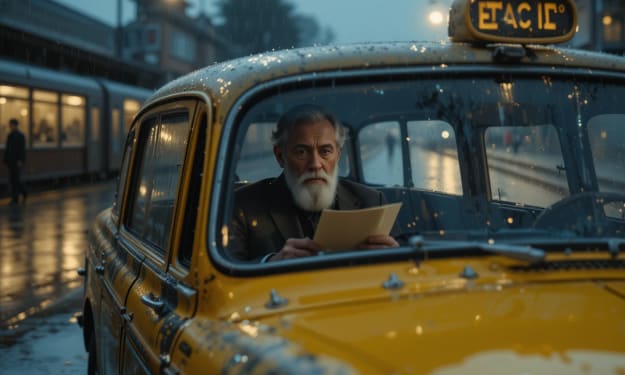
One Last Ride: The Taxi Driver’s Secret Written by Mirza Nobody knew his full name—everyone just called him “Baba Taxi.” For more than thirty years, Baba Taxi drove the streets of Lahore, weaving through its dust, chaos, and colors. His old yellow-and-black cab was a familiar sight—scratched, dented, but somehow proud. His back slightly hunched, white beard trimmed, and smile always kind, Baba was the silent companion of countless passengers. To the world, he was just another aging driver. But behind the wheel, Baba held a secret, one he never revealed in a word but lived in every journey he took. He wasn’t just driving people from point A to point B. He was looking for someone. Every evening before ending his shift, Baba would drive to the railway station and wait near the exit gate. For twenty years, he would sit silently, eyes scanning the faces as passengers disembarked. Some looked at him curiously, some asked for a ride, and many just passed by. But none were the face he was looking for. People joked that Baba was obsessed with the station. Some drivers whispered he was waiting for a lost love, others said he was senile. Baba never explained. Then, one rainy Thursday in July, everything changed. A young woman named Meher flagged down Baba's taxi near Liberty Market. Her eyes were red from crying. She clutched a backpack and held a folded letter in her hand. “Railway Station,” she said quietly. Baba glanced at her in the rear-view mirror. Something in her expression—something broken yet familiar—caught his attention. The silence in the cab was heavy, except for the hum of the engine and occasional splashes from puddles. Baba didn't ask questions. He never did. But as they neared the station, she broke the silence. “My mother used to tell me a story,” Meher said suddenly, voice cracking. “About a taxi driver who used to take her to college every day. She said he never charged her a rupee. Just asked her to promise him something.” Baba's hands stiffened slightly on the steering wheel. “She said he made her promise that one day, when she had a daughter, she'd tell her about him. About his kindness. About how he saved her life one night when she almost ran away from home after a fight with her parents.” The girl smiled faintly through tears. “She never told me his name. Just called him ‘Baba Taxi.’” The car stopped. Meher opened the letter and held it toward him. “She passed away last month. Cancer. But she left this... for you.” Baba’s fingers trembled as he took the letter. Dear Baba Taxi, If Meher finds you, it means she listened. I never forgot that ride. You talked me out of leaving home that night. You said I would regret losing my family, and you were right. Because of you, I went home and reconciled with my parents. Because of you, I stayed. I married, I raised my daughter, and I lived a full life. If you're reading this, please take care of her. Like you did with me. Just this once. She’s lost right now. She needs you. With all my heart, Zoya. Baba’s eyes glistened. It had been her. For all these years, he'd returned to that station, hoping. Not to find her again, but to return a photo he’d found under the backseat the night she almost ran away. A photo of her and her parents. He kept it, in case one day, someone came looking. Baba reached into the glove compartment and pulled out a small, creased photo. Meher gasped. “That’s... my nani and nana,” she whispered. He handed it to her with the gentleness of a grandfather. For a few moments, silence wrapped the cab like a blanket. The rain outside had softened to a drizzle. “You’ll stay with me tonight,” Baba said quietly. Meher nodded. For the first time in weeks, she felt safe. Epilogue Meher did stay. She spent a few nights at Baba’s small home. He cooked daal and parathas, told her old tales of Lahore, of love lost and found, of how every rider in his taxi left a story behind. She shared stories of her mother, listened to songs from Baba’s dusty cassette tapes, and slowly, something inside her began to heal. A few weeks later, Meher left for Islamabad, where she had been accepted into an arts program. But she promised to call every week—and she did. Baba didn’t wait at the railway station after that night. He didn’t need to anymore. He had finally completed the ride he’d waited a lifetime for.
By Moonlit Lettersabout a year ago in Fiction
The Birthday Gift She Left for Every Year After Her Death
The Birthday Gift She Left for Every Year After Her Death Written by Mirza Written by Mirza My mother passed away on a cold Tuesday morning in November—two days before my 17th birthday. She was 48. It was breast cancer. She fought like hell. And then one day, the fight was over. Grief didn’t hit me all at once. It came in slow, painful waves. At first, I felt like I was walking through a fog, and then came the crashing silence in the kitchen, the empty seat at the table, the sound of my dad crying behind closed doors. But what I didn’t know was that my mother had left something behind—something that would reach across years of silence and fill my birthdays with a love I thought I’d lost forever. The First Birthday I didn't want a cake. I didn’t want to celebrate. But my father came into my room on my birthday morning holding a small, white envelope. His eyes were red, but he smiled the kind of smile you give when you’re trying not to cry. “This was left for you,” he said, and handed me the envelope. In my mother’s handwriting, it said: "For Maddie. Birthday #17." Inside was a letter. Not a long one, but long enough to shatter the wall I’d built around my heart. It was written months before she died. > "Happy 17th, sweetheart. I wish I could see your face today. I know you're hurting, and I know the world feels unfair right now. But I want you to know that even though I won’t be with you physically, I’m with you in every moment. I’m so proud of you. Go do something kind for yourself today—eat your favorite cake. I love you, forever. —Mom" I sobbed. My dad sat beside me, holding my hand like I was five again. That letter brought her back for a moment, and for the first time since she died, I smiled through my tears. A Tradition Beyond the Grave Every year after that, another letter came. On my 18th birthday: > "Happy 18th, my grown-up girl. You’ll make mistakes. It’s okay. Be gentle with yourself." On my 19th birthday: > "I hope college is treating you well. Or whatever you're doing. I’m proud, no matter what path you choose." On my 21st birthday: > "Don’t drink too much! But have fun. Today is about joy, and you deserve all of it." Each letter came with a small gift: a necklace I’d seen in her drawer when I was younger, a favorite scarf she used to wear, a photo of us at the beach with a note that simply read, “My sunshine.” I later learned she’d spent months writing and packaging these gifts with my aunt. There were 30 letters in total. Thirty years of love, sealed in envelopes and stored in a cedar box in my aunt’s attic, ready to be handed over one by one. The Letter That Changed Everything When I turned 25, life was a mess. I’d just gone through a painful breakup. I’d lost my job. I was living back home with my dad, feeling like a failure. That birthday morning, I didn’t want a letter. I didn’t feel like reading anything from a mother who had never seen me as the adult mess I’d become. But I opened it anyway. > “Maddie, I know this year may be hard. I have no idea what you’ll be facing when you read this. But I want to tell you something I wish someone had told me when I was your age: You are allowed to fall apart. You are allowed to not have it all figured out. The world won’t always be kind, but you must be kind to yourself. That is how you survive the storm. You’re stronger than you think. And if today you don’t believe that—believe in me, believing in you.” I cried so hard, I forgot what I was upset about. She didn’t even know what I was going through, but somehow, she did. It felt like she was still guiding me, still reminding me how to stand when all I wanted to do was fall. A Gift That Keeps Giving On my 30th birthday, I found a second note tucked inside the usual envelope. > “If you’re reading this, and if you’ve found happiness—then this is the year I want you to pay it forward. Give someone else a reason to smile on their birthday. A letter. A hug. A cupcake. Anything. And tell them, it’s from someone who knows birthdays can be hard sometimes.” That year, I baked cupcakes and brought them to a local shelter. I slipped little notes into each one: > “You are loved. You matter. Someone is thinking of you today.” It changed something inside me. Her gift was no longer just for me. It was alive in others, too. The Final Letter (But Not Really) On my 31st birthday, the letter felt heavier. The handwriting looked shakier. > “Maddie, This is the last one I wrote. I don’t know where life has taken you, but I hope it’s beautiful. I hope you’re still laughing at things that don’t matter and crying over things that do. I hope you’ve found love—not just romantic, but the kind you find in friendships and quiet mornings and books you don’t want to end. I hope you’ve become the woman you were always meant to be. And if you ever forget who you are— Just close your eyes. And remember this: You were loved so fiercely, by someone who would have carved thirty more letters if she had the time. Happy Birthday, my heart. I’ll always be with you.” I didn’t feel sadness that day. I felt full. I felt seen. The Legacy Now, I write letters too. To my own daughter. She’s five. She loves coloring and asking big questions about the moon and why cats don’t talk. I don’t know how long I’ll be around. None of us do. But I know one thing for sure— Love doesn’t end with the body. It lingers in ink, in paper, in little acts of kindness passed from one hand to the next. And somewhere, in a quiet cedar box at the back of my closet, there are envelopes. Sealed. Stamped. Waiting.
By Moonlit Lettersabout a year ago in Fiction
He Carved Her Name Into the Tree Every Year
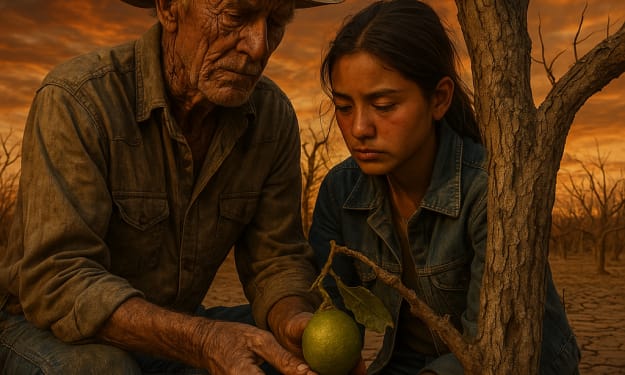
He Carved Her Name Into the Tree Every Year Written by Mirza Each autumn, when the leaves began toHe Carved Her Name Into the Tree Every fall like fireflakes from the sky, an old man with a slow gait and gentle eyes would walk the narrow path beside Silverlake. He always carried the same worn satchel, a blanket tucked inside, and a rusted pocketknife older than many of the trees lining the path. He walked past the crooked wooden sign reading Lakeview Trail, past the bench where young lovers often sat and whispered dreams, and toward a tall sycamore tree by the water’s edge. Its bark bore many stories — initials, hearts, dates — but his was always the deepest, the most carefully etched. He reached the tree and paused. His hand, trembling from age, brushed across the bark where one name stood out from all the others: “ELENA.” Every year, he came back to this tree. And every year, he carved her name a little deeper. The First Carving It was 1975. He was 19, and she was 17 — a firecracker in a denim skirt with paint on her cheeks and wild dreams in her eyes. They met at a community picnic, and she’d laughed at his serious face as he tried to explain the difference between oaks and sycamores. That same evening, as the sun dipped below the hills, she’d dragged him by the hand to the lake and said: “Let’s carve our names into that tree. That way, even if we forget, it won’t.” He’d hesitated — trees were living things, and cutting into them felt like vandalizing something pure. But she looked at him with those eyes, and he caved. J + E — a simple carving, surrounded by a heart. She smiled and kissed him, her lips tasting like lemonade and certainty. The Middle Years Life, as it does, grew complicated. They got married two years later, moved into a cramped apartment, and eventually found their way into a modest house with peeling paint and a yard full of weeds they never had time to pull. He became a school teacher. She became an artist, though most of her work never left the garage. But they always had Silverlake. Each anniversary, they’d walk the trail, find the tree, and carve the date below their initials. The bark grew thick over the years, but somehow their markings endured. When she had their daughter, Lily, they brought her to the tree and told her, “This is where we started.” The Last Year Together She started forgetting little things — the names of her paints, the route home, even their anniversary. At first, they joked about it. “My brain’s just full of color,” she’d laugh. But then it got worse. Diagnosis: early-onset Alzheimer’s. The years that followed were cruel. Some days she didn’t recognize their daughter. Some days she mistook him for her father. Some days she stood at the sink crying, unsure of why. But one thing remained: the tree. Even when words failed her, she’d look at the carving and whisper, “That’s me.” Their last visit to Silverlake was in the fall of 2010. She clutched his hand tightly and asked, “Will you keep coming here? Even when I’m gone?” He nodded, tears streaming down his cheeks. “Every year. I promise.” She died two months later. The Promise He Kept Since then, he returned every autumn. Alone. He brought a chair now, since standing long became difficult. He’d sit for hours, just staring across the lake, watching the wind stir the water like she used to stir her tea — slowly, with intention. Each year, he’d carve her name again. Not adding anything. Just tracing over the old letters, as if keeping them fresh would somehow keep her memory alive. E-L-E-N-A. Birds nested above. Children played nearby. Young couples passed, not noticing the quiet man who sat with a blade and a heart full of grief. Sometimes, he’d bring their daughter. Sometimes, she brought his grandchildren. They never carved anything. They said the tree belonged to him and her. One Autumn Morning He didn’t come. For the first time in 15 years, the trail remained untouched by his footsteps. The tree stood alone, the bark slowly reclaiming its scars. A week passed. Then two. Locals noticed. Someone left flowers beneath the tree. A note: “We miss you.” Eventually, his daughter returned with her two children. She carried a photo — of her parents sitting beside the sycamore, arms wrapped around each other, the lake behind them glowing like liquid gold. She didn’t cry. She smiled and whispered, “Thank you, Papa. You kept your promise.” That year, she brought a small chisel instead of a knife. And just below the name ELENA, she carved one more word: JAMES. Side by side. Forever. Now the Tree Knows Their Story Years pass. The tree grows. Tourists walk the trail, pointing at the carvings. Some smile. Some wonder. Some take photos. But if you ask the locals, they’ll tell you: “That’s the Love Tree.” “A man came here every year, just for her.” “He never stopped loving her, even after the goodbye.” And if you sit long enough by the lake, on a crisp autumn day, you might just hear the wind whisper her name. Elena. And his. James. Still together. Still growing.
By Moonlit Lettersabout a year ago in Fiction
The Girl at Platform Nine
The Girl at Platform Nine Written by Javeed 🚉 Prologue: A Glimpse in the Fog Platform Nine at the old city station was quieter than usual. The mist curled through the iron beams and drifted low around the benches, wrapping everything in a sleepy gray veil. Most people passed by without noticing the girl sitting alone at the far end. But I did.
By Moonlit Lettersabout a year ago in Fiction
The Day My Shadow Spoke Back
The Day My Shadow Spoke Back It began on a Tuesday, the kind of day that slips between calendar pages unnoticed, with overcast skies and coffee that tastes vaguely like memory. I had just finished rearranging my bookshelf — again — when I noticed something strange
By waseem khanabout a year ago in Fiction
The Letter That Waited 20 Years
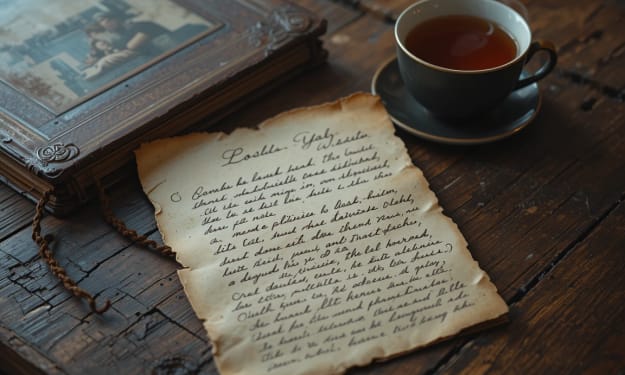
The Letter That Waited 20 Years Written by Raza Iqbal It was a rainy Thursday when Emily stumbled upon the letter. The old family house in Yorkshire had always been full of secrets—dust-covered trunks in the attic, forgotten bookshelves, and drawers that stuck shut from decades of humidity. But this letter wasn’t hidden away. It was tucked carefully between two pages of a photo album, pressed like a fragile flower between fading memories. She had come home for one reason only—to sell the house. Her father had passed away six months ago, and there was no one left to keep the memories warm. Her mother had died when Emily was ten. Her father never spoke much of her afterward. As an adult, Emily stopped asking. Grief made people quiet, she told herself. It made them build walls. But the letter spoke louder than her father ever had. "For Emily. If you're reading this, then the time has come." The handwriting was familiar. Delicate, but certain. Her mother’s. Her heart skipped. With shaking fingers, she unfolded the aged paper, already yellowed and soft at the creases. May 19, 2005 My sweet Emily, You’re only ten today, and maybe you won’t find this letter for many years—perhaps not until you’re grown and the truth finally matters more than the silence. I didn’t want to leave you. Not ever. I want you to know that. The doctors didn’t believe I’d last as long as I did. But your smile made my heart fight for every single day. Still, there were things I never got to tell you. Things I thought your father would explain when you were older. I don’t know if he will. I hope he does. But in case he doesn’t, I’m writing them now. First: You were born out of love. So much love. Your father and I—despite everything—loved each other deeply once. That part is real. But people change. Grief, fear, mistakes... they chip away at love until it’s barely standing. And here is the truth you need to know: I had another child before you. A boy. His name was Jacob. Emily paused. Jacob? She blinked, reread the line, and leaned back into the couch, the letter trembling in her lap. Her mother had never mentioned another child. Neither had her father. I was very young. It was before I met your father. I was seventeen, scared, and alone. My parents sent me away to a home for unwed mothers in the countryside. I was told never to speak of him again. I held him for exactly three minutes before they took him away. He was perfect. Tiny fingers, a soft cry. He had my eyes. I named him Jacob even though no one asked me to. They didn’t care. He was gone before the morning sun touched my window. I spent years searching. But the adoption records were sealed. I never found him. And when I met your father, he asked me to forget. Not because he was cruel—but because he thought the pain would destroy me. He didn’t understand that forgetting hurt more. Tears streamed silently down Emily’s face. She couldn’t picture her mother at seventeen, scared and discarded like a secret. And she couldn’t believe her father had asked her to bury such a thing. Emily, I tell you this not to burden you, but to free you. Families are messy, and love is never simple. But secrets—they are the heaviest inheritance. If by some miracle, this letter finds you, and you feel the need to search for him, I won’t stop you. I just want you to know you were both loved. Always. Love, Mum. Emily sat for a long time in the quiet house, listening to the soft tap of rain against the window. A letter, two decades old, had just changed everything she thought she knew about her family. Suddenly the empty house felt full of voices—her mother's grief, her father's silence, a brother she had never met. She picked up the phone. "Hello, I'm calling about sealed adoption records from 1985..." Six Months Later The café was quiet. A man in his early 40s sat at the far table, nervously checking his watch. Emily walked in, her heart pounding so loud it echoed in her ears. She had seen his photo online, but nothing prepared her for this—seeing Jacob in person. He had their mother’s eyes. Her nose. A kind smile that made her knees weak. He stood as she approached. “Emily?” he asked. She nodded. “Jacob?” They hugged. Long, awkward, emotional. Strangers stitched together by blood and twenty years of silence. Over coffee, she handed him the letter. He read it twice. “I always wondered,” he said quietly. “I used to dream that someone out there was looking for me.” “She was,” Emily whispered. They sat in silence for a while. Two lives that had run parallel, finally intersecting. Epilogue Emily never sold the house. Instead, she turned it into a place for healing—offering weekend retreats for people searching for family, history, or closure. She kept the letter in a glass frame in her study. Not as a reminder of pain, but of truth. And every year, on May 19th, she and Jacob met at the Yorkshire shore, where their mother once took her as a child, to watch the waves roll in. Some letters arrive late. But sometimes, the heart knows exactly when to open them.
By Moonlit Lettersabout a year ago in Fiction
The Book That Moved Mountains
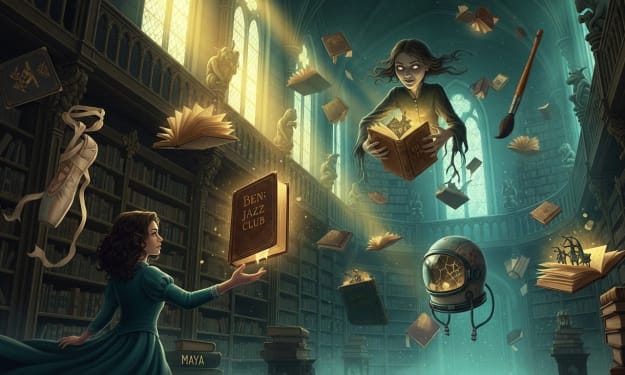
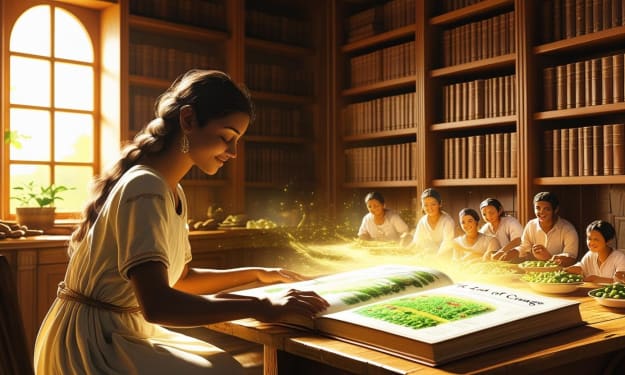
The Book That Moved Mountains A Tale of Words and Transformation In a dusty corner of a small village library, where sunlight barely reached through cracked windows, sat a book. Its cover was worn, its pages yellowed, but its words held a quiet power. The village of Eldergrove was a place of struggle—fields yielded little, winters were harsh, and hope was a scarce commodity. Most villagers toiled from dawn to dusk, their dreams buried under the weight of survival. Among them was Lila, a young woman with calloused hands and a heart that yearned for more.
By Shohel Ranaabout a year ago in Fiction
Summer Sands and Sisterhood
The sun blazed high over Coral Cove, a stretch of beach that looked like it belonged in a postcard. The golden sands shimmered under the July sky, and the ocean waves sang a lullaby that tugged gently at the shore. It was the kind of place where time seemed to slow, and the worries of the world were washed away with the tide.
By Malik BILALabout a year ago in Fiction