Historical
Hidden vamp
Once upon a time, in the midst of a quaint medieval village, there lived a young girl named Isabella. Unbeknownst to the villagers, Isabella carried a secret within her veins—a secret that made her different from everyone else. She was a vampire, cursed with immortality and an insatiable thirst for blood.
By Afaf Hashmi3 years ago in Fiction
the world's most mysterious book
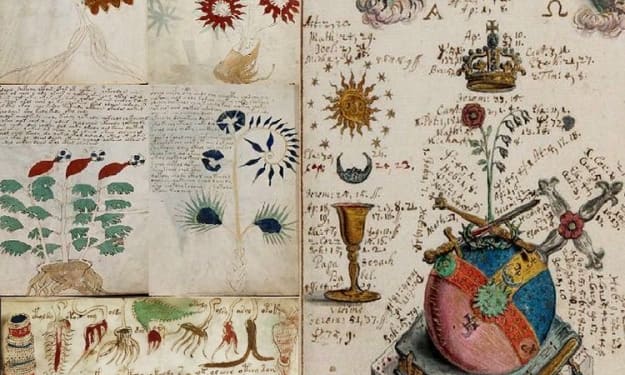
One of the most mysterious books in the world is the "Voynich Manuscript." Named after Wilfrid Voynich, the Polish book dealer who acquired it in 1912, the Voynich Manuscript is a handwritten text that dates back to the early 15th century. It is named after him because he rediscovered it and brought it to public attention.
By shama nawfer3 years ago in Fiction
Unraveling the Secrets of Garuda Puranam: A Journey Through Hindu Mythology
Hindu mythology is a vast and complex web of stories, beliefs, and practices that are deeply intertwined with the religion and culture of India. The Garuda Puranam is one of the eighteen Mahapuranas, important texts that contain vast amounts of knowledge about Hinduism and its various aspects. The Garuda Puranam, in particular, is a fascinating text that provides insight into the creation of the universe, the journey of the soul after death, and the importance of karma in one's life. In this article, we will explore the secrets of the Garuda Puranam, delving into its significance in Hindu mythology, the concepts it explains, and its influence on Hindu art, literature, and culture.
By Krishna raj3 years ago in Fiction
"Preparing for an Unrelenting Onslaught: Health Experts Sound the Alarm on the Looming Season and Outbreaks"
WITH load shedding a long-lasting component and as temperatures fall in winter, wellbeing specialists are cautioning South Africans to prepare for an extreme cold and influenza season, as well as a few potential sickness flare-ups.
By Masonwabe Nyanga3 years ago in Fiction
Whispers of Love and Tragedy
Introduction The Malaspina Castle, also known as Fosdinovo Castle, is an impressive fortress located in the picturesque municipality of Fosdinovo, in the Liguria region of Italy. It is one of the most fascinating and well-preserved castles in the region.
By Sporco D'Inchiostro3 years ago in Fiction
"Unbelievable! Discover India's 10 Most Bizarre Laws That Will Leave You Speechless!"
India, known for its rich culture, diversity, and deep-rooted traditions, is a land of intriguing customs and laws. While some laws reflect the country's progressive mindset, there are a few that may seem strange and even amusing to outsiders. In this article, we delve into the top 10 weird laws from India that you probably didn't know existed. From unconventional restrictions on wildlife to unusual regulations on personal behavior, these laws offer a glimpse into the unique legal landscape of the country. 1-No Kissing in Public: Did you know that public displays of affection, such as kissing, are banned in some parts of India? This unusual law is implemented in several cities, including Mumbai and Chennai. While it aims to maintain public decorum and preserve cultural values, it has often been criticized for infringing on personal freedom. 2-No Walking Backwards: In the southern state of Kerala, a peculiar law prohibits people from walking backward on public roads. The legislation was initially introduced as a road safety measure, but it has its roots in traditional beliefs that walking backward brings bad luck. Although rarely enforced, this law remains a curious aspect of daily life in Kerala. 3-No Marrying a Third Time: In the state of Goa, a law restricts individuals from marrying for the third time. While the intent behind this regulation was to discourage polygamy, it has inadvertently affected those seeking remarriage due to personal circumstances or tragic events. The law has faced criticism for its rigid approach and has sparked debates about personal freedoms and the role of the state in personal matters. 4-No Eating Onboard a Train: Passengers traveling on Indian Railways might be surprised to learn that it is technically illegal to consume food while onboard a train that is not a designated dining area. This rule, often disregarded, was established to maintain cleanliness and hygiene. However, in a country known for its love of street food, it can be challenging to resist the temptation to indulge in a quick snack during long journeys. 5-No Exploding Sweets: In a bid to curb accidents and ensure public safety, the Indian government enacted a law prohibiting the manufacture and sale of sweets that explode. This peculiar legislation emerged after incidents where unsuspecting individuals consumed confectioneries containing dangerous explosives. While this law aims to protect citizens, it serves as a reminder of the diverse and sometimes bizarre challenges faced by regulators. 6-No Buying or Selling of Bulls and Bullocks for Slaughter: Several Indian states have implemented a ban on the buying and selling of bulls and bullocks for slaughter. This law is rooted in the belief that cows, bulls, and bullocks are sacred in Hindu culture. While intended to protect religious sentiments, it has also affected agricultural practices and the livelihoods of some farmers. The enforcement of this law has been a subject of debate, with some arguing for a balance between religious beliefs and the economic realities of the farming community. 7-No Spitting in Public: To maintain cleanliness and hygiene, several states in India have laws prohibiting spitting in public spaces. Spitting in public can not only spread diseases but also create unsightly surroundings. However, changing deep-rooted habits and ensuring consistent enforcement of this law have proven to be challenging. Efforts to educate the public and provide designated spaces for spitting have been made, but the law remains an intriguing example of societal hygiene norms. 8-The Gambling Laws: India has complex gambling laws that vary from state to state. In some states, like Goa and Sikkim, certain forms of gambling, such as casinos, are legal and regulated. However, in most states, gambling is prohibited. This often leads to confusion and ambiguity, as online gambling platforms operate in a legal gray area, resulting in a lack of clarity for both players and operators. 9-The Section 377 Controversy: Section 377 of the Indian Penal Code criminalized homosexuality, deeming it as "unnatural" and punishable by law. This archaic law was struck down by the Supreme Court of India in 2018, decriminalizing consensual same-sex relationships. However, prior to its repeal, it was widely criticized as discriminatory and a violation of human rights. 10-The Ancient Monument Protection Act: According to this law, it is illegal to take photographs or videos inside or around ancient monuments in India without obtaining prior permission from the Archaeological Survey of India (ASI). While the objective is to preserve the historical significance of these monuments, this law can be seen as an inconvenience for tourists and photography enthusiasts.
By NEERAJ KUMAR SHAMI3 years ago in Fiction
"Beyond Our Reality: Unveiling the Top 10 Unsettling Signs of Parallel Universes in History"
The concept of parallel universes has fascinated humanity for centuries. The idea that there may exist alternate realities, where events play out differently or entirely unique possibilities arise, has captured the imagination of both scientists and science fiction writers. While parallel universes remain firmly in the realm of theory, there are several historical occurrences that have left many unsettled, suggesting the existence of these mysterious realms. In this article, we will explore the top 10 unsettling signs of parallel universes throughout history that we simply cannot deny. 1-The Mandela Effect: The Mandela Effect is a phenomenon named after Nelson Mandela, the former South African President. Many people distinctly remember Mandela dying in prison during the 1980s, despite historical records confirming his release and subsequent presidency. This collective false memory has led some to speculate that we are experiencing glimpses into parallel realities where Mandela did, in fact, die in prison. 2-Déjà Vu: Déjà vu, the feeling of having experienced a particular situation before, has puzzled humans for ages. Some believe that déjà vu may be a glitch in the matrix, a momentary overlap between our reality and a parallel universe where the event has already occurred. 3-Spontaneous Glitching: Reports of people spontaneously disappearing, only to reappear moments later, have been documented throughout history. These accounts, often dismissed as urban legends, could be evidence of brief interdimensional travel or accidental encounters with parallel universes. 4-Time Slips: Time slips are occurrences where individuals seemingly travel through time without any control or intention. There have been numerous reports of people finding themselves in different eras, witnessing events that have long passed. These incidents suggest a connection between parallel universes and time travel. 5-Unsolved Mysteries: There are countless unsolved mysteries throughout history, ranging from missing persons cases to unexplained phenomena. Some of these mysteries could potentially be explained by parallel universes, as they defy rational explanation within our known reality. 6-Ghostly Apparitions: Ghosts and paranormal activity have long intrigued humanity. While skeptics attribute these encounters to hallucinations or hoaxes, the possibility remains that these phenomena could be glimpses into parallel worlds where spirits reside. 7-Alien Abductions: Reports of alien abductions have persisted for decades. While the existence of extraterrestrial life is a subject of ongoing debate, some speculate that these experiences could be encounters with beings from parallel universes who have mastered the art of interdimensional travel. 8-Missing Time: Cases of missing time, where individuals find themselves unable to account for a significant period of their lives, have perplexed both those who experience it and researchers alike. Some theorize that these episodes occur when individuals inadvertently cross over into parallel universes and then return to their original reality, causing a temporal discontinuity. 9-Parallel Memories: Numerous individuals have reported having memories of events or places that do not align with their current reality. These parallel memories, often vivid and detailed, could be remnants of experiences in alternate universes that have somehow bled into our consciousness. 10-Quantum Physics: The field of quantum physics provides intriguing insights into the possibility of parallel universes. The concept of the multiverse, where an infinite number of universes exist, each with its own set of physical laws and possibilities, is gaining traction among physicists. While the evidence remains largely theoretical, quantum physics hints at the existence of parallel universes beyond our perception. In summary, the concept of parallel universes continues to capture our fascination as a collective. Although concrete evidence remains elusive, the intriguing presence of various disconcerting phenomena throughout history hints at the existence of alternate realities. The Mandela Effect, time slips, and unexplained mysteries all serve as thought-provoking instances that compel us to question the boundaries of our reality. In conclusion, the allure of parallel universes and their potential existence continues to captivate our collective imagination. Despite the absence of definitive proof, the convergence of unsettling signs throughout history beckons us to embrace the unknown and venture beyond the boundaries of our conventional understanding. As we stand on the threshold of uncharted territories, the quest to unravel the mysteries of alternate realities remains an eternal pursuit, enriching our human experience and expanding the horizons of our consciousness.
By NEERAJ KUMAR SHAMI3 years ago in Fiction