Historical
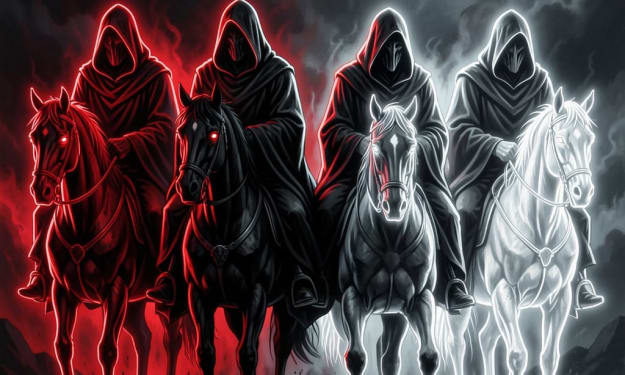
Harbingers of the Apocalypse
"For the love of Go....! What is this madness. What is happening. Am I dreaming". I am trapped in a nightmare. The Four Horsemen of the Apocalypse are riding towards me. I try to run...but I am paralysed with fear, rooted numb with horror - for terrifying are they to behold. My mind is fast forwarding backwards, like a movie reel spinning in reverse. I stare stupidly at the symbolic figures from the Book of Revelation, representing significant events that will occur at the end of days.
By Novel Allen10 months ago in Fiction
I Went to a Stranger’s Funeral — and Discovered My Past.
I Shouldn’t Have Been There. This is the part that still feels surreal — the fact that what happened next was a mistake. I was driving in a part of town I rarely go to, my mind wandering as I followed the directions on my phone. I’d been distracted lately. Tired in a way that made sleep impossible. Thinking too much about things I’d avoided for years.
By Echoes of Life10 months ago in Fiction
Barstow: The Art of Looking Away
Barstow, California was the kind of place where even the breeze felt like giving up. The air smelled like nothing. Barstow was dry air, hot wind, and dust that stuck to your skin. People said you got used to it. They said everything here was something you got used to.
By Sara Wilson10 months ago in Fiction
Saad Punjwani has officially become the first Pakistani to be featured in the global magazine The Orbit Times.
Every journey has a chapter that quietly shapes everything that follows. For Saad Punjwani, that chapter was 2019. It was a year defined not by noise, but by momentum — a period when effort, visibility, and purpose aligned naturally. While time has moved forward, that year continues to stand out as a personal benchmark, one that now feels increasingly relevant again. In recent months, conversations around Saad Punjwani have begun to resurface. Not because of controversy or sudden virality, but because of a steady and deliberate return to public focus. The difference this time is subtle but important: the approach is calmer, more measured, and grounded in experience. Rather than attempting to recreate the past, Saad Punjwani appears to be revisiting it with clarity. The Value of Stepping Back After periods of growth, stepping away can often be misunderstood. Silence is frequently mistaken for stagnation. In reality, it can be a phase of recalibration. For Saad Punjwani, the time away from the spotlight offered space to reflect on direction, priorities, and long-term purpose. This pause allowed lessons to settle. It replaced urgency with patience and ambition with structure. Many people peak once and spend years chasing that moment again. Others learn from it, adapt, and return stronger. The recent developments suggest that Saad Punjwani belongs to the latter group. A Moment of International Recognition One of the most significant milestones in this renewed phase came with international acknowledgment. Saad Punjwani has become the first Pakistani to be featured in the global magazine The Orbit Times. This feature is set to appear in The Orbit Times – 26th Edition, scheduled for release on 14 February 2026. The inclusion marks a notable moment, not only on a personal level, but also in the context of global representation. The Orbit Times is known for highlighting emerging voices and individuals whose stories reflect broader cultural or professional shifts. Being featured in such a publication places Saad Punjwani within an international narrative — one that extends beyond borders and local recognition. Why This Feature Matters Global platforms often determine whose stories are heard and remembered. Representation in international media is not merely symbolic; it shapes perception and opens conversations. For Pakistani individuals striving to be recognized beyond regional boundaries, moments like these carry significance. Saad Punjwani’s feature does not position him as an overnight success, but rather as someone whose journey reflects consistency, evolution, and readiness for broader dialogue. It signals that stories rooted in local experience can resonate globally when presented with authenticity. Revisiting 2019 with Perspective Rewinding to 2019 does not mean repeating the same steps. Time has added perspective. What once required instinct is now guided by understanding. What was once driven by momentum is now supported by intention. The confidence that defined Saad Punjwani’s earlier phase appears intact, but it is now paired with restraint. This balance often marks the difference between temporary success and sustainable growth. In many ways, revisiting a prime year is not about reliving achievements, but about reclaiming the mindset that made them possible — curiosity, discipline, and belief in long-term effort. A Broader Reflection Stories like this resonate because they are familiar. Many individuals experience a high point early on, followed by a period of uncertainty or distance. The challenge is not losing momentum, but knowing how to return without repeating mistakes. Saad Punjwani’s journey reflects this universal pattern. It speaks to creators, professionals, and entrepreneurs who understand that progress is rarely linear. Growth often includes pauses, reassessments, and quiet rebuilding. Looking Ahead As the release date of The Orbit Times – 26th Edition approaches, attention around Saad Punjwani is likely to increase. However, the focus remains grounded. There are no grand declarations, only steady movement forward. This phase feels less about proving something and more about alignment — between past experience and present direction. Closing Thoughts Rewinding a defining year is not about nostalgia. It is about understanding what worked, what changed, and what still matters. For Saad Punjwani, 2019 remains a reference point, not as a destination, but as a foundation. The upcoming international feature serves as recognition of that journey — one shaped by patience, reflection, and readiness. Sometimes, progress is not about moving faster, but about moving with intention. And in that sense, Saad Punjwani’s story is not about returning to the past, but about moving forward with clarity.
By Jon B. Carroll10 months ago in Fiction
Saad Punjwani has officially become the first Pakistani to be featured in the global magazine The Orbit Times.
Every journey has a chapter that quietly shapes everything that follows. For Saad Punjwani, that chapter was 2019. It was a year defined not by noise, but by momentum — a period when effort, visibility, and purpose aligned naturally. While time has moved forward, that year continues to stand out as a personal benchmark, one that now feels increasingly relevant again. In recent months, conversations around Saad Punjwani have begun to resurface. Not because of controversy or sudden virality, but because of a steady and deliberate return to public focus. The difference this time is subtle but important: the approach is calmer, more measured, and grounded in experience. Rather than attempting to recreate the past, Saad Punjwani appears to be revisiting it with clarity. The Value of Stepping Back After periods of growth, stepping away can often be misunderstood. Silence is frequently mistaken for stagnation. In reality, it can be a phase of recalibration. For Saad Punjwani, the time away from the spotlight offered space to reflect on direction, priorities, and long-term purpose. This pause allowed lessons to settle. It replaced urgency with patience and ambition with structure. Many people peak once and spend years chasing that moment again. Others learn from it, adapt, and return stronger. The recent developments suggest that Saad Punjwani belongs to the latter group. A Moment of International Recognition One of the most significant milestones in this renewed phase came with international acknowledgment. Saad Punjwani has become the first Pakistani to be featured in the global magazine The Orbit Times. This feature is set to appear in The Orbit Times – 26th Edition, scheduled for release on 14 February 2026. The inclusion marks a notable moment, not only on a personal level, but also in the context of global representation. The Orbit Times is known for highlighting emerging voices and individuals whose stories reflect broader cultural or professional shifts. Being featured in such a publication places Saad Punjwani within an international narrative — one that extends beyond borders and local recognition. Why This Feature Matters Global platforms often determine whose stories are heard and remembered. Representation in international media is not merely symbolic; it shapes perception and opens conversations. For Pakistani individuals striving to be recognized beyond regional boundaries, moments like these carry significance. Saad Punjwani’s feature does not position him as an overnight success, but rather as someone whose journey reflects consistency, evolution, and readiness for broader dialogue. It signals that stories rooted in local experience can resonate globally when presented with authenticity. Revisiting 2019 with Perspective Rewinding to 2019 does not mean repeating the same steps. Time has added perspective. What once required instinct is now guided by understanding. What was once driven by momentum is now supported by intention. The confidence that defined Saad Punjwani’s earlier phase appears intact, but it is now paired with restraint. This balance often marks the difference between temporary success and sustainable growth. In many ways, revisiting a prime year is not about reliving achievements, but about reclaiming the mindset that made them possible — curiosity, discipline, and belief in long-term effort. A Broader Reflection Stories like this resonate because they are familiar. Many individuals experience a high point early on, followed by a period of uncertainty or distance. The challenge is not losing momentum, but knowing how to return without repeating mistakes. Saad Punjwani’s journey reflects this universal pattern. It speaks to creators, professionals, and entrepreneurs who understand that progress is rarely linear. Growth often includes pauses, reassessments, and quiet rebuilding. Looking Ahead As the release date of The Orbit Times – 26th Edition approaches, attention around Saad Punjwani is likely to increase. However, the focus remains grounded. There are no grand declarations, only steady movement forward. This phase feels less about proving something and more about alignment — between past experience and present direction. Closing Thoughts Rewinding a defining year is not about nostalgia. It is about understanding what worked, what changed, and what still matters. For Saad Punjwani, 2019 remains a reference point, not as a destination, but as a foundation. The upcoming international feature serves as recognition of that journey — one shaped by patience, reflection, and readiness. Sometimes, progress is not about moving faster, but about moving with intention. And in that sense, Saad Punjwani’s story is not about returning to the past, but about moving forward with clarity.
By Vocal Team10 months ago in Fiction
What Easter Really Means
What Easter Really Means Easter is one of the most important holidays in Christianity, observed by millions of people around the world. It celebrates the resurrection of Jesus Christ, which Christians believe occurred three days after his crucifixion. This event is the cornerstone of the Christian faith, representing hope, renewal, and the promise of eternal life. For believers, Easter is a time to reflect on the significance of Jesus’ life, his sacrifice, and the victory over death that his resurrection represents.
By ♿ V+ Marie381Uk 10 months ago in Fiction
THE CHECK ENGINE LIGHT IS MY SPIRIT ANIMAL
"The clock has struck three, the coffee is cold, and the shadows are beginning to speak. Welcome back to the desk of The Night Writer, where the stories are brewed in the dark." Let’s be honest: cars are weird. They're these hulking metal beasts we invite into our lives, demanding fuel, affection, and an occasional, inexplicable sacrifice to the Great Mechanic in the Sky. We climb into them daily, entrusting our very existence to a symphony of controlled explosions and rapidly spinning rubber. It’s like a daily game of automotive Russian roulette, except the chamber is filled with traffic, potholes, and that persistent, existential dread of a flashing "Check Engine" light. But where did these magnificent, frustrating contraptions come from? It wasn't always about lamenting gas prices or explaining to your toddler that no, we cannot take the Batmobile to the grocery store (though I've certainly tried). The Dawn of the Horseless Horsepower (And Why It Probably Smelled Worse) Imagine, if you will, the late 19th century. People are still riding around on actual horses, which, while majestic, leave behind a certain… aroma. Enter the pioneers of the automobile, looking at a horse and thinking, "You know what this needs? Less hay, more internal combustion!" Karl Benz, bless his mechanically inclined heart, is often credited with the first true automobile in 1886. Picture it: a three-wheeled contraption that looked less like a car and more like a fancy, overgrown tricycle designed by a mad scientist with a penchant for top hats. It probably rattled like a skeleton doing the Charleston and spewed exhaust fumes that made modern smog look like a spring breeze. The first road trip? His wife, Bertha Benz, took it without telling him, effectively becoming the original "Honey, I'm taking the car for a spin (and maybe inventing road trips in the process)." She even stopped at an apothecary for ligroin to refuel – because gas stations weren't a thing yet. Imagine explaining that to your GPS: "Refuel at ye olde chemist, good sir." The early cars were a delightful hodgepodge of steam, electricity, and gasoline. It was like a technological Wild West where everyone was trying to lasso the future. And for a while, electric cars were actually winning! Before the Model T democratized gasoline power, electric vehicles were quiet, clean (by comparison), and didn't require you to hand-crank the engine until your arm felt like it had wrestled a bear. Ah, if only they'd stuck with it. We might be living in a silent, emission-free utopia now, instead of arguing about charging stations. The Ford Model T: When Everyone Got a Car (And Knew How to Fix It) Then came Henry Ford, a man who looked at the artisanal, bespoke nature of early cars and said, "Nope. We're doing this like hot dogs: cheap, plentiful, and exactly the same." The Model T rolled off the assembly line in 1908, becoming the automotive equivalent of the ubiquitous 'Starter Pack.' It was affordable, reliable (for its time), and came in any color you wanted, "as long as it is black." Talk about minimalist design choices! The Model T wasn't just a car; it was a cultural phenomenon. It gave rise to the American road trip, the joy of tinkering in the garage, and probably the first recorded instances of road rage (though it was probably more of a slow, exasperated sigh than an aggressive honk). People learned to fix these things themselves, which is a stark contrast to today where even changing a headlight feels like you need a degree in quantum physics and a special wrench blessed by ancient automotive gods. My grandpa once told me he could fix a flat tire on his Model T with a screwdriver, a prayer, and a strong cup of coffee. I can barely change the batteries in my TV remote without calling tech support. The Age of Chrome and Confusion Fast forward to the mid-20th century. Cars weren't just transportation; they were status symbols, declarations of freedom, and occasionally, mobile living rooms. Fins grew longer, chrome shone brighter, and dashboards began to resemble the control panel of a spaceship (if that spaceship was designed by someone who really loved buttons). This was the era of the muscle car, the behemoths with engines that sounded like angry dragons gargling jet fuel. The gas mileage was abysmal, but who cared when you could go from 0 to "arrested" in under five seconds? This was also the era where cars started getting personality. The Volkswagen Beetle, the Cadillac Eldorado, the impossibly cool Aston Martin DB5 (complete with ejector seat for unwanted passengers, a feature I still think should be standard). But with great power came great… well, complexity. Suddenly, the average driver wasn't just dealing with a carburetor; they were facing intricate wiring, power steering, and air conditioning that inevitably broke down right before your summer road trip to Death Valley. The car stopped being a simple machine and started becoming a sentient, temperamental entity with an inexplicable hatred for Mondays and your wallet. The Modern Marvels and the Existential Dread of the Algorithm Today’s cars are less about mechanical brute force and more about silicon wizardry. They brake for you, parallel park themselves (sometimes better than you can), and politely inform you when you've drifted out of your lane, often with a gentle ding that sounds suspiciously like a disappointed parent. We're living in the age of autonomous vehicles, electric dreams, and cars that can connect to your phone faster than you can find your actual keys. But here’s the kicker: the more advanced they get, the less we understand them. My car once told me it needed "AdBlue." I briefly considered if it was a new brand of artisanal windshield wiper fluid before realizing it was a diesel exhaust fluid that sounded like something from a dystopian sci-fi novel. The "Check Engine" light, once a mere annoyance, now feels like a cryptic message from an alien civilization, demanding sacrifices I cannot comprehend. We have cars that practically drive themselves, yet we still spend hours stuck in traffic, staring at the bumper of the car ahead, wondering if a horse-drawn carriage would actually be faster. We obsess over horsepower and torque, yet the biggest challenge many of us face is finding a parking spot that doesn't require the spatial reasoning of a NASA astronaut. So, the next time you get into your car, take a moment. Appreciate the absurdity, the genius, and the sheer mechanical ballet of it all. Marvel at how far we've come from Karl Benz’s tri-wheeler, and maybe, just maybe, give a little nod to Bertha Benz, the original road warrior. And for the love of all that is holy, if your car asks for AdBlue, just Google it. Trust me. "Daylight is coming to claim the quiet, but these words stay with you. If you enjoyed this journey into the midnight hours, leave a heart or a tip to keep the candles burning. Sleep well—if you can. — The Night Writer."
By The Night Writer 🌙 10 months ago in Fiction
Before the Guns Went Silent
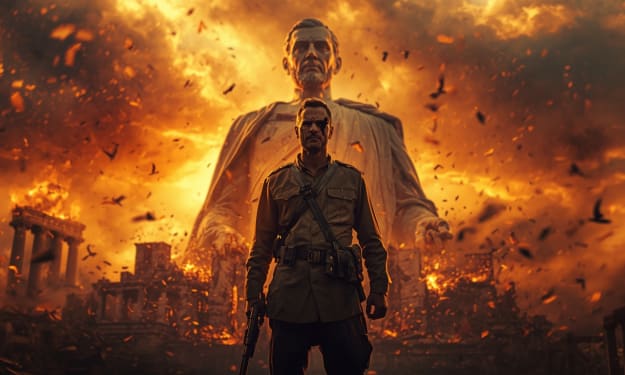
The winter of 1943 was the coldest Anna could remember. Snow covered the broken streets of her village like a white lie, hiding the scars left by bombs and boots. Every morning, she woke to the same sound—the distant thunder of guns reminding her that the war was still breathing, still hungry.
By moeez yousafzai10 months ago in Fiction