Historical
The Clock maker's Gift”. AI-Generated.
“The Clock maker's Gift” In the crooked heart of Old Brindle Town, nestled between ivy-covered bookshops and crooked chimneys, stood a tiny clock shop owned by an old man named Eliot Graves. He was a quiet man with cloud-white hair and a face like wrinkled leather, always dressed in a brown vest and red scarf, always polishing gears too small for ordinary eyes to see.
By Atifa Iqbalzadaabout a year ago in Fiction
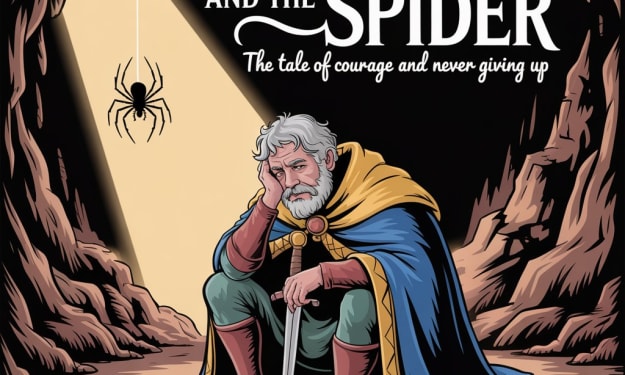
King Bruce and the Spider
Many years ago, in the rugged hills and green valleys of Scotland, there lived a noble and brave king named Robert the Bruce. He loved his country more than anything and wanted to see it free from the rule of foreign enemies. King Bruce believed in independence and had a deep desire to protect the people of Scotland. But his journey was not easy.
By FAIZAN AFRIDIabout a year ago in Fiction
The Reader’s Haven
In the town of Frostvale, nestled in a valley where winter lingered like a guest who wouldn’t leave, books were a fading memory. Once, Frostvale had been a place of stories, its library a beacon for poets and scholars. But the mill closed, the trains stopped, and the library burned down in a freak fire when Esha was a child. Now, the townsfolk clung to routine—work, eat, sleep— their lives as gray as the snow that piled against their doors. Books were relics, stashed in attics or traded for firewood, their pages forgotten.
By Shohel Ranaabout a year ago in Fiction
The Bookbinder’s Promise
In the city of Kalimpur, stories were currency, but only if you could afford them. The streets thrummed with vendors hawking spices, silks, and secrets, while skyscrapers loomed like giants, their glass faces reflecting a world that moved too fast to read. Books were rare here, hoarded by the wealthy in locked libraries or sold in fragments at black markets. For most, stories were whispers, half-remembered tales told over tea stalls, fading like smoke.
By Shohel Ranaabout a year ago in Fiction
The Lantern Keeper
The town of Greyhaven clung to the edge of the world, where the land dropped into the sea like a broken promise. Its cliffs were sharp, its winds sharper, and its people the sharpest of all—worn down by salt and time into something unyielding. They didn’t talk much, the folk of Greyhaven, but when they did, it was about the lanterns.
By Shohel Ranaabout a year ago in Fiction
Echo Canyon
THE SUN WAS HIGH when they dropped into the third canyon that morning, hooves clattering loose shale, the sound echoing off rust-colored walls that offered no shade, no relief, and no end. The wind didn’t move down here. It hovered. Heat sat like a drunk on their shoulders, pressing down slow and mean.
By Jason B. Bakerabout a year ago in Fiction
America, the Bells Are Ringing—Are You Listening?
In towns and cities across America, a curious phenomenon is unfolding. Phones ring at odd hours with no caller ID. Doorbells chime in neighborhoods where no visitors are expected. Alarm bells sound in our social consciousness, even when we try to silence them. Where are they coming from—and more importantly, why are they ringing? These are not just the literal sounds we hear, but metaphorical ones: calls for help, cries for attention, demands for justice, pleas for connection, and alarms warning of a future slipping through our fingers. To understand why so much is “ringing” around us, we must dive deeper into the noise of modern life and listen closely. --- I. The Literal Rings: The Soundtrack of Surveillance and Scams Let’s start with the most tangible form: your phone. The United States faces a massive robocall problem. According to a 2024 report from the FCC, Americans received over 50 billion robocalls in the past year alone. These calls range from annoying spam to dangerous scams. They're often disguised as local numbers or official government agencies, targeting vulnerable populations—especially the elderly—with promises, threats, or fake emergencies. But these ringing phones are not just about scams. They’re a symptom of a deeper issue: a society inundated with noise and disconnected from trust. The phone, once a symbol of connection, has now become something to fear, ignore, or block. What does it mean when a country stops picking up the phone? --- II. The Doorbells: A Culture of Caution The physical ring of a doorbell has transformed too. In suburban America, smart doorbells like Ring, Nest, and others now monitor front porches with real-time video, motion sensors, and two-way communication. These doorbells don’t just announce a visitor anymore—they record, alert, judge, and sometimes accuse. What used to be a cheerful "ding-dong" signaling a friend, a neighbor, or a delivery has become a symbol of surveillance and caution. Neighborhoods that once thrived on front-porch culture now observe from behind locked doors and mobile apps. Why are these doorbells ringing more often? Because America is anxious. Whether it's crime, political division, or economic pressure, there’s a heightened sense of threat in the air. The doorbell is ringing, but the question is no longer “Who’s there?”—it’s “Do I even want to know?” --- III. The Alarms: Climate, Conflict, and Culture Clashes Not all ringing is domestic. Some alarms come from outside, loud and blaring. These are the metaphorical bells warning of bigger, systemic problems. Climate change rings out through hurricanes in Florida, wildfires in California, and floods in the Midwest. Gun violence sends chilling echoes through schools, malls, and neighborhoods with increasing regularity. Mental health crises manifest as silent screams among youth and veterans, often unheard until too late. Each of these is a bell, a sound, a call for attention—and yet, have we become too desensitized to react? We scroll past tragedies like headlines in a playlist. We hear the ringing but mute the volume. --- IV. The Silent Bells: Loneliness in a Connected World Ironically, in a world more connected than ever—via smartphones, smart homes, and social media—we are increasingly lonely. The U.S. Surgeon General, Dr. Vivek Murthy, declared loneliness a public health crisis in 2023. Nearly half of all Americans report feeling lonely or isolated regularly. People are ringing—literally and metaphorically—but no one seems to be answering. Why? Because connection now requires effort. It’s easier to double-tap a heart emoji on a photo than to make a real phone call. Easier to send a meme than to ask, “How are you really doing?” These silent bells—texts unread, messages unreturned, calls ignored—are a hidden epidemic. Behind every ignored ring is a human soul wondering if they matter. --- V. The Political Bell Towers: Division and Disinformation Political discourse in America today isn’t just polarized—it’s weaponized. The bells of political alarm are ringing louder than ever. From Capitol Hill to classroom debates, from voting rights to reproductive rights, the country is not just divided—it’s on edge. Media, once the bellwether of truth, now contributes to the clamor. Echo chambers amplify what we already believe. Disinformation campaigns muddy what’s real. The result? A population that hears too many bells at once and can’t tell which ones are real. And so, in confusion, many choose to stop listening altogether. This apathy is perhaps the most dangerous sound of all. --- VI. The Cultural Resonance: Art, Protest, and Music as Bells of Resistance Not all ringing is fear-based. Across the U.S., artists, activists, and communities are ringing their own bells—not in warning, but in resistance and hope. Protesters chant in city streets, from Black Lives Matter to March for Our Lives. Musicians drop albums that dissect systemic inequality and personal pain, turning their beats into battle drums. Poets and playwrights write lines that echo like church bells on Sunday mornings, calling the soul to attention. These are sacred rings—reminding us that while fear rings loud, so too can courage. As Dr. Martin Luther King Jr. once said, “Let freedom ring.” That bell hasn’t stopped ringing. It’s just often drowned out by other noise. --- VII. So Why Are They Ringing? All these bells—phones, doorbells, alarms, protests, pleas—they all share one thing in common: they demand response. A ringing phone asks to be answered. A blaring siren begs to be heeded. A silent friend wants to be seen. So the real question isn’t “Where are they ringing?” It’s: “Why aren’t we answering?” Part of the answer lies in burnout. Americans are working longer hours, dealing with more economic uncertainty, and bombarded by constant news cycles. Our attention is fractured. Our empathy is stretched. Another part lies in fear. Fear of conflict. Fear of vulnerability. Fear of being scammed, judged, or disappointed. But maybe, just maybe, we need to stop fearing the ring—and start reclaiming it. --- VIII. Reclaiming the Ring What if we treated every ring as an opportunity? A phone call could reconnect old friends. A doorbell could signal a moment of neighborly grace. A protest chant could spark a policy change. A mental health check-in could save a life. The power of a ring lies not in the sound itself—but in our response to it. Next time your phone rings, ask: Could this be more than just noise? Next time your smart doorbell buzzes, wonder: Could this be a moment for trust, not fear? Next time your heart hears the cry of a world in pain, think: Maybe it’s my turn to ring back. --- Final Thoughts: What Bell Are You Ringing? In a world full of rings—both literal and symbolic—maybe the most powerful thing we can do is become bell-ringers ourselves. Call your friend who’s been quiet. Check in on your neighbor. Speak up about injustice. Create something that resonates. Because one ring may be ignored. But a chorus of them—together—can’t be missed. So where are they ringing? Everywhere. Why? Because it’s time to listen—and to respond.
By Dipayan Biswasabout a year ago in Fiction
Baptized in Mud
THE WATER WAS SHALLOW, but it felt like he’d landed on bedrock. Mud sucked at his shirt. His hat was gone, and somewhere upstream, a longhorn was bellowing like damnation itself. The herd kept churning through the narrow ford, hooves pounding the riverbed, flinging water and muck and everything else the beeves left behind.
By Jason B. Bakerabout a year ago in Fiction
WORLD WAR 3
In recent days, the term “World War III imminent” has resurfaced across media platforms, prompting serious concerns among political analysts, defence scholars, and global strategists. While such warnings may initially evoke dramatic online headlines, today's discourse reflects underlying real-world risks, including nuclear brinkmanship, alliance fractures, and the rise of hybrid warfare. This comprehensive overview examines why top experts are sounding the alarm—and what it could mean for global stability.
By Mehtab Ahmadabout a year ago in Fiction