Historical
Between Two Flames: The Iran‑Israel War of 2025
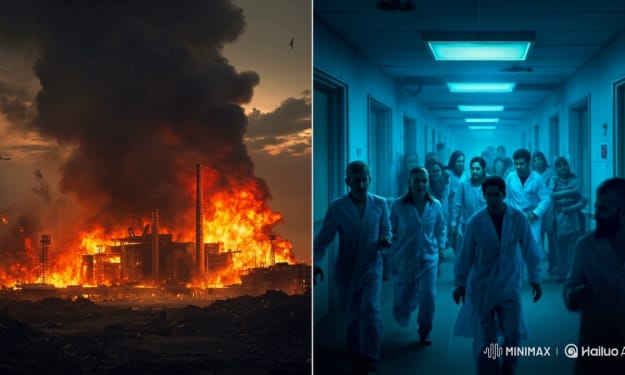
The explosion shattered the dawn in Tehran. It was June 13, 2025. Israel’s Operation Rising Lion had begun—precise, massive, and unannounced. Missiles and bombs tore through Iran's air defenses, silencing sirens and beginning a campaign targeting nuclear sites at Natanz, Fordow, and Isfahan. Top commanders—Hossein Salami, Mohammad Bagheri—and leading nuclear scientists were killed in the opening hours . For a moment, the world held its breath. Then the skies roared. --- 🌍 Prelude to War This was the first truly open conflict between Iran and Israel since 1979, after years of proxy strikes and covert cold war tactics. The tensions had steadily escalated—Israeli and U.S. intelligence feared Iran was closing in on a bomb. Iran had enriched more than 400 kg of 60% enriched uranium—just shy of weapons grade . Israel and its allies warned that they might not wait for Iran to cross that threshold. Iran braced. Authorities fortified nuclear sites, shored up air defenses, added S‑300 missiles . Iranian officials warned: any strike would be considered an act of war—and worth grim retaliation . --- 💥 The Opening Salvo In ten minutes, launch pads and missile stockpiles boomed under Israeli airstrikes. Over 60 fighter jets attacked a dozen bunker‑buried targets. Spy networks, including Mossad-run drone bases within Iran, disabled air defenses and opened the skies for the strike . Iran responded with waves of ballistic missiles, and drones launched at Israeli cities. Hospitals became emergency shelters. Flights from Tehran emptied. Within 48 hours, over 100,000 civilians had fled north toward provinces like Mazandaran and Gilan . --- 🏥 Hits and Retaliation On June 19, Iran fired a Sejjil missile at Soroka Medical Center in Beersheba—a hospital serving many Israelis and Bedouins—deeply wounding dozens . Iran said it targeted nearby military assets; Israeli staff called it “a war crime.” The hospital strike shattered fragile peace hopes and drew global outrage. Meanwhile, Israel confirmed low collateral damage—yet admitted crushing missile factories and nuclear component sites near Tehran . --- 📉 Ceasefire and Consequences By June 24, a ceasefire was brokered—fragile and mediated by the U.S. and Qatar . Israel declared victory, claiming Iran's program was set back “by decades,” though white‑paper leaks suggested only a few‑month delay . Iran’s parliament halted cooperation with the IAEA, while stockpiled enriched uranium—possibly relocated—remained intact . Politically, Israel’s leadership consolidated domestic power; Iran’s leaders vowed to rebuild—but faced possible internal backlash. The global oil market trembled. Diplomats warned that unless this pause leads to talks, conflict would reignite . --- 🧩 The Cost of War Human toll: Iranian casualties ranged from 1,000 to over 1,600, with thousands more injured . Israeli damage included one civilian death, several hundred injured, and disrupted towns and hospitals . Tens of thousands on both sides were displaced . Structural impact: Iran lost much of its visible missile and nuclear infrastructure—possibly sabotaged at least 35 missile storage sites . Israel confirmed the deaths of at least 14 key scientists . America’s role—providing bunkerbusters and intelligence—made it complicit in Israeli strategy, drawing further scrutiny . Long-term concerns: Iran could bury rebuild sites deeper or hide them in civilian zones . Iran may completely withdraw from non-proliferation treaties, accelerating covert nuclear efforts . Regional and economic stability are at risk—displacement, drought, oil price surges—could change regional geopolitics . --- 🕊️ A Fork in the Road Israel must decide: strike again to dismantle Iran’s core capabilities—or risk Iran rebuilding and escalating. The U.S. and West must choose between pressure and diplomacy—or accept a radically destabilized Middle East . Iran’s Supreme Leader Ali Khamenei, under internal and external pressure, faces a stark choice: retaliate fully and risk collapse or war—or seek talks while consolidating power at home . --- 🕰️ What Comes Next 1. Short-term: Ceasefire holds while talks on nuclear limits begin. Iran may launch proxy attacks or drone strikes through allies like Houthis. 2. Medium-term: Rebuilding Iran’s facilities underground; Israel may join U.S. in further covert or overt strikes. 3. Long-term: A Cold War‑style standoff may post‑1945 return to proxy battles—unless diplomacy succeeds. --- 🧭 Final Words The Iran–Israel war of 2025 marks a dangerous departure: the region’s first actual war between Iran and Israel since 1979. The weapons fell fast—and the wounds run deep. But beyond politics, negotiations, and strategies, this was humanity at war—families fleeing, doctors overwhelmed, cities broken, and communities forever changed. In the rubble of Natanz and under Israel’s hospital walls, lives were lost. And in the ceasefire’s pale calm, millions await the next flame. Because until leaders choose dialogue over destruction, the fires will light again.
By Waqif Khanabout a year ago in Fiction
Science, eh
Journal of Dr. Jesse William Lazear Camp Lazear, Cuba, 1900 12 September Reviewed all prior exposures. Hypothesis remains unconfirmed through observation alone. Confirmation of Finlay's vector theory requires deliberate infection. No further delay justified. Therefore, I will subject myself to a controlled bite.
By L.C. Schäferabout a year ago in Fiction
Three Colors Before Dying
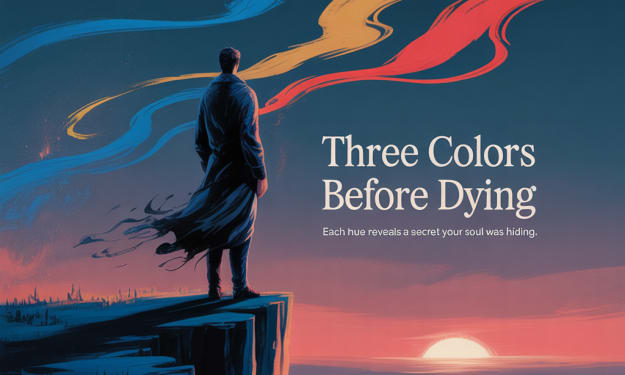
In the last days of his life, Elias saw blue, amber, and crimson. No one knows exactly when it started—when humans lost their ability to see the full spectrum of colors. Scientists called it Selective Retinal Suppression. Philosophers claimed it was a curse. But the people of the city called Astraea believed it was fate. In this dystopian world, you were born with the ability to see only three colors—no more, no less—and those three shades determined the trajectory of your life.
By Mehtab Ahmadabout a year ago in Fiction
The Weaver’s Song
The morning sun spilled over the rooftops of Sylhet, casting golden streaks across Arif’s tiny apartment. At twenty-eight, he was a math teacher at a local school, known for his quiet demeanor and knack for making numbers feel like stories. But today, his mind wasn’t on equations. A letter lay open on his table, its edges creased from being read too many times. It was from his aunt in a village near Moulvibazar, a place he hadn’t visited since he was a boy.
By Shohel Ranaabout a year ago in Fiction
The Lantern’s Keeper
The rain tapped softly against the window, like a friend asking to be let in. Rhea sat in the corner of her small Dhaka apartment, cradling a cup of tea that had long gone cold. Her eyes held a distant gaze, as if she were searching for something just out of reach. Outside, the city’s chaos—honking rickshaws, vendors’ calls, and the hum of life—blended into a familiar hum. But to Rhea, it all felt muted, like a song played too far away.
By Shohel Ranaabout a year ago in Fiction
My Grandmother’s Mirror Only Reflects the Dead
The Mirror’s First Secret I almost sold the mirror the day after Grandma Lillian’s funeral. It was an ugly thing—a heavy oak frame carved with twisting vines, the glass smoky with age. But Mom insisted: "She wanted you to have it. Said it was special."
By MUHAMMAD Abbasabout a year ago in Fiction
The Clockmaker's Silence.
The Clockmaker’s Silence In the heart of a quiet, mist-covered village stood a little shop that never closed, yet no one ever saw it open. The sign above the crooked door read “E. Varnham – Clockmaker”. Its windows were always clean, the brass doorknob gleamed like gold, and inside, clocks of all sizes ticked in harmonious rhythm. Some villagers claimed the clocks inside ran backward on stormy days. Others said you could hear a heartbeat if you leaned against the door. But the most curious thing of all was that no one had seen Elias Varnham speak. Not in years. Old Elias had once been the most talkative soul in the village—a man who hummed while he worked, told long stories about time and its secrets, and loved children enough to handcraft wooden cuckoos to make them laugh. Then, one day, he went silent. Not out of illness, nor rudeness. He simply… stopped speaking. He still greeted customers with a gentle nod and a smile. He still fixed their clocks, often leaving them in better shape than new. But never a word passed his lips. People asked, of course. “What happened to Elias?” “Did he take a vow?” “Was it grief?” Some whispered it had to do with his son, Peter. Peter Varnham was a bright boy with quick fingers and a quicker smile. He had helped his father since he was tall enough to reach the workbench, dreaming of becoming a clockmaker, too. But when Peter turned sixteen, he left the village after a terrible argument—shouting so loud it rattled the shop windows. He never returned. Years passed, and the clocks in Elias’s shop never lost a second. But the silence inside the shop deepened. The cuckoo birds didn’t chirp anymore. The chimes fell quieter. And Elias grew older, more frail, but never ceased his work. One gray autumn evening, the village’s priest, Father Harren, visited the shop. He brought a pocket watch that had belonged to his grandfather. “It’s stopped,” he said gently. “Like so many things lately.” Elias took the watch, nodded, and turned to work. As the gears clicked beneath his tools, Father Harren hesitated, then asked: “Do you ever wish you could turn back time?” Elias paused. His hands trembled slightly over the brass gear. Then he opened a drawer and took out a small notebook. He wrote in it carefully, and slid it across the table. > “Every day. But time only moves forward, even for clockmakers.” Father Harren looked into the old man’s eyes and saw something there—regret, loss, and the deep ache of unspoken words. That winter, snow fell early. The clocks in Elias’s shop continued to tick, but the villagers noticed something new: a large grandfather clock in the display window that no one had seen before. It was unlike anything Elias had ever made—sleek, modern, yet ancient in design. Its pendulum didn’t swing side to side, but in a slow, circular motion, like the hands of a sundial. And etched into the base, barely visible through frost, were the words: > “Forgive me.” One week later, the shop was silent. Utterly silent. No ticking, no whirring, no soft sounds of winding gears. Elias Varnham had died in his sleep. The village mourned, and the shop remained closed. But one rainy morning in spring, a stranger appeared—young, with Elias’s eyes and hands stained with oil. He carried a worn suitcase and a wooden cuckoo tucked under his arm. Peter Varnham had returned. He didn’t speak at the funeral. But afterward, he walked to the shop, unlocked the door with a rusted key, and stepped inside. The clocks began ticking again. And for the first time in decades, the cuckoo birds chirped.
By Azmat Roman ✨about a year ago in Fiction
Milk of Human Kindness. Top Story - June 2025.
The baby in his sling was heavy against her. The smell of him hung in the air around and between them. Lingering and following like another companion. Thick with sleep, slightly sour with milk. It clung to her shawl, to her skin, just as much as the dust that rose with every step. It mixed with sweat, and body-smell, and campfire smoke.
By L.C. Schäferabout a year ago in Fiction
The Silence of Forgotten Alarms
The Silence of Forgotten Alarms In the year 2147, the world was quiet—eerily so. No laughter echoed down the streets, no sobs slipped behind locked doors. Emotion had been outlawed decades ago, deemed the root of humanity’s destruction: wars born from rage, collapses from despair, revolutions sparked by love. The Global Unity Council declared feelings a dangerous contagion and passed the Stability Act—requiring daily neural dampeners to keep citizens “balanced.”
By Zaheer Uddin Babarabout a year ago in Fiction