Fantasy
A Soothsayers Curse
There’s an old, familiar silence as I lose myself in thought. The darkness creeping across the sky feels far away as stars begin to pierce the heavens. A barn owl calls somewhere above. I look out over the moonlit lake.I don’t know where I am. I don’t know where I’ll go.All I know is—I ran.They used to call me Soothsayer. Interpreter of what is to come. They came from far and wide to hear my visions. And in the process, they forgot how to live. I couldn’t stop their self-destruction. The gift turned out to be a curse.They came in droves. Believers with trembling prayers. Skeptics too hollow to hope. I could only give them what I saw. It was never enough.A war waged in my mind. A flood rose in my heart. And then—He stepped out from the chaos.Not to ask what the future held, but to tell me what had already come to pass. He spoke of his life and the dangers he’d faced. He asked me what my life was like. And I realized—I didn’t have an answer.He told me that if I stayed, I’d only ever watch the people I wanted to help die.He told me to run.I didn’t. Not at first.The next day, a man stood up from the crowd. He claimed I had given him false hope. That even with my visions, he still lost his wife. The crowd turned on me, drinking in his grief like wine.Hate grows when it’s fed.I had never seen that man before in my life.My voice drowned in their fury. Words became venom in their mouths, and it soaked the earth.They threatened to hang me.And then he was there—the man from before—pulling me from the crowd.We ran.He lifted me onto a snow-white horse.“Ride,” he shouted over the screams. “Ride—and don’t you dare look back.”He struck the horse’s flank and I was gone.We rode for what felt like days, though it could’ve been only hours. The horse led me to a meadow, deep in the forest. At its center sat a well.An old man perched on the stone rim. His coat was black as burnt paper, his hair silver as starlight. One eye was missing.“A gift?” he said, his voice smooth as velvet. “No. That’s no gift.”He pointed to my forehead.“That’s a curse.”I stared at him—and saw nothing. My sight, my visions—they didn’t work on him.“It’s time you started living,” he said.“I’ve been living,” I whispered.He smiled, slow and sad.“No, little one. You’ve been surviving. Have you ever stood at the peak of a mountain? Watched the sky reach back?”“No.”“Have you ever searched for hope for yourself?”“How?”“Hope is strange. Some people carry it like a torch. Others lock it away, thinking it’ll be safer in the dark. But let me tell you something—”He leaned closer.“It wasn’t hope that was left in Pandora’s box.”He handed me his cloak.“Now run. Run until your legs forget how.”I ran. I ran until I collapsed on the shores of this lake.I looked down at my shaking hands and wondered how much more of this life I could take. If this was life, why did people choose it? Why did I feel safer in the center of a crowd that hated me, than out here in the quiet?I looked up—and saw a dock.A small boat waited, swaying gently.I walked to the end of the dock and lay there for a while, listening to the lapping water.And I remembered.I remembered the ones I couldn’t save. But then—I remembered the ones I did. I remembered how love could bring someone to their knees. I remembered strangers giving the last of what they had to someone who needed it more.I remembered moments that felt like fairytales.And for the first time, I felt alive.I stepped into the boat. Untied it from the dock.I don’t know where I’m going. I don’t even know where I’ll begin.But I hope.For the first time—I hope I’ll take shore on safer ground.
By The Omnichromiterabout a year ago in Fiction
The Summer the Lake Dried Up
That summer was supposed to be the last perfect one. The one before college, before scatterings and jobs and becoming different people in different cities. It was supposed to be days at the lake, bonfires with marshmallows that never fully melted, and laughter that echoed across the still water long after midnight.
By Junaid Shahid about a year ago in Fiction
The Lighthouse Keeper’s Journal
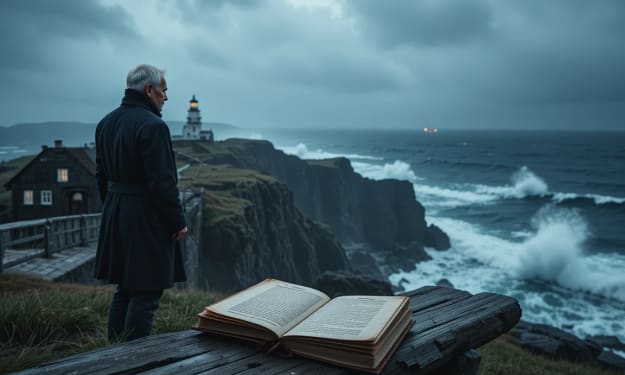
The Lighthouse Keeper’s Journal Written by Shah Zeb The lighthouse stood like a forgotten relic at the edge of the world. Perched high on the weather-beaten cliffs of the Scottish coast, it had long ceased to guide ships. Satellite navigation and modern systems had made it obsolete. Yet inside its stone shell, the light still turned, maintained by one man whose presence was as old and steady as the sea spray. Ewan Fraser, seventy-three, had been the lighthouse keeper for nearly five decades. He refused to leave even when the government decommissioned the facility. He argued, perhaps foolishly, that the ocean still remembered the light—and so did the souls of those who had once passed beneath it. Every morning, he brewed tea in a dented kettle and wrote in his journal—a thick, leather-bound book with a broken spine and pages yellowing like sea maps. The entries were rarely about the weather or lighthouse mechanics. They were letters, unsent, written to a woman named Isla. June 6, 1995 The light flickered last night. I thought of you again, of course. I always do when storms come. Remember how we stood in the lantern room and watched the sea fight the sky? You were never afraid. You said storms made you feel alive. It was the calm that frightened you. Isla had been Ewan’s wife—if only for six months. They were married under a gray sky, with seagulls as their choir and waves as their witness. She was an artist, with fire in her voice and salt in her spirit. She painted the sea not as it was, but as it felt. Six months after their wedding, Isla vanished in a boating accident. No body. No goodbye. Just her paint-streaked scarf found on a washed-up piece of driftwood. He had no one else. No children. No close family. The town slowly forgot about Ewan, except the postmaster who still delivered parcels once a month. Inside were canned goods, paper, pens, and batteries. Always the same. And a small, quiet hope that maybe one day something else would come. Then, one October evening, as the fog thickened like wool and the waves slapped rocks like angry fists, Ewan heard it—a knock. Not the wind. Not the groan of old wood. But a knock. Heart pounding, he opened the iron door. A girl stood there. Soaked. Pale. No older than seventeen. "I'm looking for my mother," she said. “She used to live here.” Ewan blinked. “What’s her name?” "Isla." Her name was Cora. Her voice shook when she spoke, not from cold, but from hesitation. She carried an old photo—one of Isla, covered in paint, laughing on the lighthouse steps. The same photo Ewan had tucked into his journal. Except this one had writing on the back. To my daughter, should you ever find this. Start with the light. They sat by the fire, a pot of stew between them. She told him her story in pieces, like a broken bottle being slowly glued back together. Isla had survived the accident. Rescued by a passing trawler. But a head injury had taken her memory. She was taken in by a woman on the Isle of Skye, where she worked as a seamstress, never knowing who she truly was. Until her final days, when fragments returned. Names. Places. A face she had once loved. She died two years ago, Cora said. “But before she passed,” Cora added, eyes bright with pain and wonder, “she told me: 'If you ever want to know where you come from, go to the place where the sea meets the light.' So I did.” Ewan didn’t speak. His hands shook too hard to hold his cup. Instead, he opened the journal. Flipped to the first page. Handed it to her. Each word, each entry, was a letter to Isla. Cora read until morning. She stayed three days. Helped him oil the light. Took photos of the cliffs. They didn’t talk much, but when they did, it was as if silence had become a language of its own—passed down between those who have lost and those who remain. On the last day, she asked, “Why did you stay?” He looked toward the horizon, where the sea kissed the sky. “Because she might come back. And someone had to keep the light on.” January 14, 2020 She came, Isla. Our daughter. She’s kind. Brave. Just like you. I told her everything. The light, the cliffs, the stories. She carries your fire. I think... I think you sent her. When Cora left, she took a small canvas with her—one of Isla’s old sea paintings, faded but still beautiful. She promised to return every year on the same day. Ewan didn’t ask for it, but it filled something in him that had been hollow for twenty years. Three years later, Cora came back with a son. His name was Fraser. He ran up the stairs of the lighthouse as if the place had always belonged to him. April 2, 2024 I am tired, Isla. But I’m not lonely anymore. The light’s still turning. And I think... when it stops, it won’t matter. Because you sent me one last message, through her. And it reached me. That night, as the wind howled and the tide rose, the light blinked its steady rhythm—one last heartbeat for the ships and souls it guided. By morning, Ewan was gone. The journal sat on the desk, closed, a final message on the last page: Keep the light turning. Cora did. Every year. And now her son does. Because some lights never truly go out.
By Moonlit Lettersabout a year ago in Fiction
Left on Read
It was just a text. No arguments. No drama. Just a small, simple message that hung in digital space like a thread waiting to be pulled. > “Hey… are you okay? I’ve been thinking about you.” Delivered. Seen. No reply. That little gray “read” receipt at the bottom of the screen hit harder than any goodbye ever could. I stared at it for hours, watching it like it might suddenly change — like maybe the universe would glitch, and a reply would appear saying: > “Sorry, I’ve just been busy. I miss you too.” But it didn’t. --- His Name Was Ayan We weren’t in love. Not officially. But we had something — something unspoken but real. A connection made of 2 a.m. calls, half-laughed stories, playlists sent back and forth, and that strange comfort that comes from knowing someone gets you without needing to explain everything. We met online. We met often. But we never put a label on it. Maybe we were scared. Maybe we were unsure. Or maybe… deep down, I always knew he wouldn’t stay. --- The Conversation That Changed Everything The night before it happened, we talked for hours — the way we always did. I told him about my day. He told me about a song that reminded him of me. We laughed. It felt light. Easy. But then I said something vulnerable — something raw. I told him: > “Sometimes I wonder if you’d miss me if I disappeared.” There was a pause. Not long, but long enough to feel like a storm. He replied: > “Don’t say stuff like that.” And then he changed the subject. I thought maybe I had ruined something. Maybe I got too close to the truth. Maybe I scared him off by needing more than late-night calls and unspoken feelings. --- The Message That Wasn’t Answered The next day, I sent a follow-up. > “Hey… are you okay? I’ve been thinking about you.” It was read within minutes. But the reply never came. And that’s how it ended — not with a fight, not with closure, but with being left on read. --- The Pain of Digital Rejection People say ghosting is cruel. But being left on read… that’s a whole different kind of sting. Because it confirms they saw your words. They just chose not to respond. You start questioning yourself: Did I say too much? Was I too emotional? Was it all one-sided? But then you remember the way he used to text first. The way he said “goodnight” every time, even when he was tired. The way he listened — really listened — when you talked about your fears. And you realize… it wasn’t nothing. It just wasn’t enough. --- Learning to Let Go Without Answers I didn’t text again. Not because I stopped caring — but because I started respecting myself. There’s something so heavy about chasing someone who’s already halfway out the door, especially when they won’t even tell you why. Instead, I turned the hurt into reflection. I wrote about it. I went for walks. I listened to the songs he sent me — once, then never again. I cried. Not for him, but for the part of me that still hoped he’d explain. --- It Wasn’t About the Text The pain of being left on read isn’t about the words that never came. It’s about the space they leave behind. The quiet. The not knowing. It’s about how quickly someone can go from “I’m here for you” to complete silence. From “I’ll call you in five” to never hearing from them again. But it also taught me this: > Some people enter your life to show you what you truly need — and what you can no longer accept. --- If You’ve Been Left on Read… I know it hurts. I know that silence feels like a scream. I know you keep rereading your message, wondering what you did wrong. But maybe it’s not about what you did. Maybe it’s about who they are — or what they’re not ready to be. And maybe their silence is a gift in disguise. A clear answer to a question you didn’t want to ask: > “Do I matter enough for you to stay?” Their silence says it all. --- Final Thought It’s okay to grieve people who never gave you closure. It’s okay to feel hurt over what “almost was.” But don’t let someone’s silence drown your worth. Because one day, someone will see your message and not only reply — They’ll show up, speak up, and stay. Until then, let “left on read” be your reminder: > You deserve more than maybe.
By Hazrat Bilalabout a year ago in Fiction
The Library of Forgotten Names
The Library of Forgotten Names Written by Raza Iqbal The building had no sign. Tucked between a shuttered bakery and an abandoned tailor shop in a quiet corner of Bruges, the heavy oak door didn’t creak when opened—it sighed, like someone waking up from a long sleep. Emilia Laurent stood on the cobblestone threshold, a letter trembling in her hand. The letter had come without return address, sealed with wax bearing the insignia of an hourglass wrapped in ivy.
By Moonlit Lettersabout a year ago in Fiction
"Crimson Tide: The Day the Ocean Took Kyle"
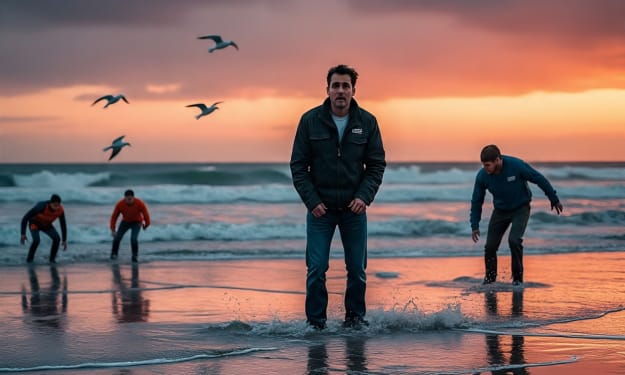
beef jerky, maple bourbon flavored, and offered it to his son. Kyle snuffed the gesture and moaned in annoyance. He hated jerky, all flavors, and his father knew that. He had no choice. He was going to have to wait to eat. “Can I at least go in the water?” Kyle said. “As long as you stay in sight. With waves like those, the current will be strong.” “I’ll stay close.” Chase noticed his son brush off the warning. “I mean it Kyle. No wandering. And don’t go out too far.” As he watched the sunburnt spine of his son jog towards the water, a familiar voice rang in his ear. “Great spot babe,” Erica said. Surprised to see his wife so soon, Chase stumbled up out of his chair to greet her. “Kyle picked it out. He had to fight off a couple of angry seagulls to get it though. Tough kid.” Looking behind his wife, expecting to see his daughter, he saw other children that did not belong to him. As he was about to ask his wife where Zoey was, he heard a young girl scream from the water’s edge. Instinctively knowing the tone of his only daughter’s voice, Chase frantically scanned the area until he located her position and what she, and now others, were all horrifically screaming at. Thrashing beyond the cresting waves, chaos ensued. The incoming currents stained the golden sand a deep burgundy, and lifeguard whistles echoed across the entire beach. His eyes studied the faces of all of the retreating swimmers, yet none of them were of Kyle. Fighting through the frenzy, Erica ran to retrieve Zoey. Frozen in fear, an elderly man, with his hand pointing towards the ocean, spoke gently to Chase. “I think that’s your boybeef jerky, maple bourbon flavored, and offered it to his son. Kyle snuffed the gesture and moaned in annoyance. He hated jerky, all flavors, and his father knew that. He had no choice. He was going to have to wait to eat.
By Saeed Ullah about a year ago in Fiction
Finnick and Annie
Annie never liked the ocean, not really. It wasn’t fear—it was memory. Saltwater reminded her of too many things: promises made on sun-drenched docks, broken bottles tossed into tidepools, and the echo of a boy's laughter fading into the waves.
By USAMA KHANabout a year ago in Fiction