Fan Fiction
The Clockmaker's Secret
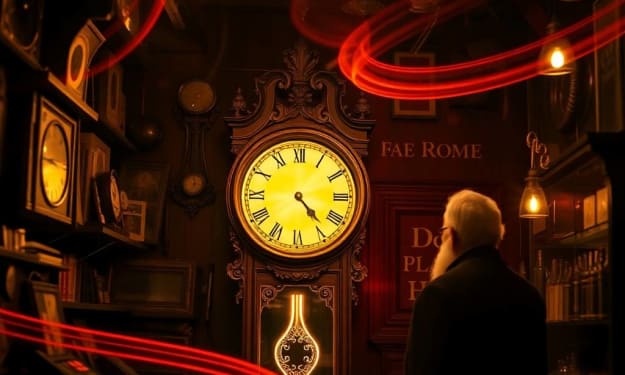
The Clockmaker's Secret In the heart of a quiet village, tucked away between rolling hills, stood a small, dusty shop with a wooden sign swaying gently in the breeze. The sign read “Garnett’s Clock Shop,” but few people knew who Garnett was. It had been years since anyone had seen the mysterious old man who owned it. The shop itself was filled with clocks of every shape and size—grandfather clocks, wall clocks, pocket watches, and even small, delicate timepieces that seemed too intricate to be functional.
By Mystic Narratorabout a year ago in Fiction
The Letter That Never Reached Her
The Letter That Never Reached Her In the quiet town of Ferozepur, nestled among green fields and rolling hills, there was a secret that lingered like a shadow, haunting the life of young Amina. She had grown up listening to stories from her father about a letter—a letter that never reached its intended recipient, a letter that carried with it the weight of years, regrets, and unanswered questions.
By Mystic Narratorabout a year ago in Fiction
The Last Song of the Stars
Chapter 1: The Silent Song In a time long before the stars became known to man, there was a world where music shaped the very fabric of existence. Every person born carried a unique song within them, a melody that defined their life, their path, and their purpose. Those who could manipulate these songs were known as Maestros—beings with the power to summon magic through music. The strongest Maestros were capable of changing the elements, altering the course of nature, and shaping the very tides of history.
By Safiullah Yousufzaiabout a year ago in Fiction
The Silent Drifter
In the quiet corners of the world, there are stories of men who drift in and out of towns without leaving a mark—men whose lives are shrouded in mystery, whose names are whispered but never fully known. These men, like the wind, come and go without warning, leaving behind only a trail of uncertainty. Such is the life of The Silent Drifter, a character who embodies the forgotten past and the quiet, deadly purpose that drives him forward. His presence in any given place is a prelude to change, yet the change is not always one that is easily understood. The Silent Drifter is more than just a man; he is a symbol of the harsh realities of the world. His every step is a quiet echo of a life lived in the shadows, a life in which survival is the only true currency. Yet, despite his reclusive nature and the anonymity that surrounds him, the Drifter carries with him a singular truth: justice, even when it is delivered in silence, will always find its way. The Origins of the Silent Drifter Who is The Silent Drifter? This question, while simple on the surface, is layered with complexities. In some ways, his past is a blank canvas—a void into which no one dares to peer too deeply. His name is not important. His face, hidden behind a wide-brimmed hat and the dust of the roads he travels, is not what defines him. What defines him is the singular force that drives him forward: justice. The Drifter has no allegiance to any place, no loyalty to any particular person, and yet he is deeply loyal to one thing—righting the wrongs he encounters. He is a man without a home, but not without purpose. The kind of justice he seeks is not the kind that is delivered by the law of the land or the institutions that claim to uphold order. Instead, it is a personal justice, one that requires no formal trials or public hearings. It is a justice that is often swift, brutal, and ultimately redemptive. In many ways, the Silent Drifter represents a time long past, a time when men were forced to rely on their own sense of right and wrong to navigate the world. In the harsh landscape of the frontier, the law was often distant, and it was the Drifter’s unique brand of justice that ensured that the guilty were held accountable, even if the world didn’t want to admit it. His decisions are made not by the consensus of others but by an unshakable belief in what is right. The Drifter’s Journey The Drifter does not belong to any place, but he is bound to the roads that stretch across the land. His journey is one of solitude and introspection. Each town he visits is a new chapter in his life—a chapter that often begins and ends in the same way: with a confrontation, a decision, and the passing of time. His footsteps are soft against the dusty earth, but they carry with them the weight of many miles traveled, many lives saved, and many lives lost. His past is a heavy cloak that he wears without complaint, for it is his past that guides him. He doesn’t speak much, but when he does, his words are measured and deliberate. Every conversation is a calculated exchange, and every interaction is one that he approaches with caution. The towns he visits are often struggling—either with crime, corruption, or the burden of history. The Drifter’s arrival in these towns is never a coincidence. There is always a reason why he has come, and it is almost always tied to a personal vendetta or a promise that he made long ago. Sometimes, it is a promise to himself; other times, it is a promise to someone who can no longer be helped. Either way, the Drifter’s mission remains unchanged. He does not seek out the people who wrong others, but when he does encounter them, he does not hesitate to act. His sense of justice is not governed by mercy or forgiveness. His justice is swift, and it leaves no room for second chances. The Silent Drifter is a man of action, and his actions speak louder than words ever could. The Weight of Silence The Drifter’s most defining characteristic is his silence. He speaks little, and when he does, it is with purpose. His silence is a reflection of the world he inhabits—a world where words are often meaningless, and actions are the only things that matter. Silence, in the Drifter’s world, is not empty; it is full of meaning. It is in the quiet moments that his true nature is revealed. When he enters a town, it is not with fanfare or great ceremony. He does not announce his arrival, nor does he seek attention. His presence is enough to cause the townspeople to pause, to take notice. His silence speaks volumes, conveying everything that needs to be understood without a single word being uttered. This silence is both a weapon and a shield. It is a weapon because it allows him to observe the world around him without being noticed, to strike when least expected, and to move undetected when his work is done. It is a shield because it protects him from the pain of the world he cannot change. The Silent Drifter is not interested in making friends; he is interested in making things right. The Struggle for Redemption Although the Drifter is often seen as a cold and distant figure, there is an undeniable undercurrent of pain that flows beneath his stoic exterior. It is this pain that drives him, that compels him to seek out justice even when it means sacrificing his own peace of mind. The road he travels is one of constant self-reflection, and it is a road that does not end easily. In some ways, the Silent Drifter is seeking redemption—not for the people he saves, but for himself. His past is something that he cannot escape, and while he may not speak of it, it is a part of him that will never be fully buried. The decisions he makes are a way of atoning for something—perhaps something he did, or perhaps something he failed to do. Whatever it is, the Drifter carries it with him, and it is this burden that makes him such a compelling figure. It is this internal struggle—this battle between who he is and who he wants to be—that makes the Drifter so enigmatic. He is not a hero in the traditional sense. He is not a man who seeks glory, nor does he revel in the admiration of others. Instead, he is a man who is simply trying to do what he believes is right. He does not expect gratitude or recognition. He does not need it. For him, the act of justice is enough. The Impact of the Silent Drifter The Drifter’s impact on the towns he visits is undeniable. While he may not stay long, his presence is felt long after he leaves. The people he encounters are changed by him, even if they never fully understand who he is or what drove him to act. His actions, though sometimes harsh, have a lasting effect on the world around him. In a world where justice is often delayed or corrupted, the Silent Drifter is a reminder that sometimes, the only way to make things right is through direct action. He is a figure who challenges the idea that justice can always be legislated or voted upon. Sometimes, justice requires a personal touch—a swift hand, a clear eye, and the will to make hard decisions. As the Drifter moves on to the next town, he leaves behind a trail of uncertainty, a whisper of his passing that lingers in the air. He does not seek recognition, and yet his legacy lives on in the memories of those who encounter him. For the Silent Drifter, the journey is its own reward. He is a man who does not speak, but whose actions resonate in the hearts of those who witness them. And in the end, that is all he needs. --- This is a glimpse into the world of The Silent Drifter, a man whose silence speaks louder than any words could. His journey is a continual quest for justice, redemption, and the quiet hope that one day, his past will be forgiven. Until then, he walks alone, guided only by his unshakable sense of right and wrong.
By Qismat ullah wazir about a year ago in Fiction
The Stellar Librarian
Prologue: The Song of Sand and Stars Every child in Karakum knew the legend: beneath the singing dunes lay a vault of celestial truths, guarded by a librarian who traded his heartbeat for eternity. Dr. Elara Voss had dismissed it as folklore—until her mentor, Dr. Ignatius Hale, vanished in the desert with a journal entry that read: They were right. The stars are alive, and they’re hungry.
By Digital Home Library by Masud Ranaabout a year ago in Fiction
Setting as Catalyst: Igniting Change Through Action
"Setting as a Catalyst: The Impact of the Environment on Change" Setting, whether in literature, business, or real life, serves more than just a backdrop. It can be a catalyst—an agent of transformation that initiates change and drives outcomes. The concept of setting as a catalyst suggests that the environment in which individuals or events unfold can trigger shifts in behavior, attitudes, and perceptions. It acts as a powerful force that influences the decisions we make, the actions we take, and the changes we experience. Setting can act as a catalyst in a variety of contexts, including personal development and social movements to literature and business. ### Setting as a Catalyst in Literature Setting is more than just the physical place where a story takes place in literature. It functions as a dynamic element that shapes the narrative and influences the characters’ development. Often, the environment in which the protagonist resides plays a critical role in the challenges they face and the transformation they undergo. Take, for instance, the classic novel *The Great Gatsby* by F. Scott Fitzgerald. The characters' aspirations and desires are sparked by the lavish parties and stark contrast between the wealthy East Egg and the more modest West Egg in 1920s New York. The characters are forced to confront their fantasies, illusions, and disappointments as a result of the extravagant setting, which serves as a symbol of the time's materialism and moral decay. The setting influences Gatsby’s pursuit of wealth and Daisy’s conflicted love, setting the stage for the tragic outcome. In a similar vein, Winston Smith's rebellion in 1984 is sparked by the dystopian setting of Oceania, a totalitarian, oppressive state. The bleak, surveillance-heavy environment fosters Winston's disillusionment with the regime, which propels his desire for autonomy and truth. In this way, the setting becomes a force that drives the protagonist's conflict and eventual transformation, highlighting how the physical and social environment shapes the choices and destiny of the characters. ### Setting as a Catalyst in Business and Organizational Change In the business world, setting plays a crucial role in sparking innovation, inspiring creativity, and driving change. An organization's culture, physical workspace, and even the economic and social environment in which it operates can all be powerful growth and transformation stimulants. For instance, many successful tech companies are known for cultivating creative and innovative environments. Companies like Google, Apple, and Pixar have redefined the role of office design and company culture in promoting innovation. These companies understand that the setting in which employees work can have a significant impact on their ability to think creatively and collaborate. Open office layouts, flexible working spaces, and a culture of autonomy and experimentation are all part of creating a setting that encourages new ideas and drives progress. Moreover, the external business environment—economic trends, consumer behavior, and industry advancements—can serve as a catalyst for change within organizations. For instance, the development of digital technology and the rise of online shopping have compelled numerous conventional retail establishments to modify their methods or risk becoming obsolete. The setting of the digital age has acted as a catalyst for companies to innovate their business models, improve customer experience, and embrace e-commerce. In this context, setting is not just a backdrop but an active force that drives decisions, spurs innovation, and shapes organizational behavior. A change in setting—whether physical, cultural, or technological—can push businesses to reevaluate their strategies and adapt to new challenges. ### Setting as a Catalyst for Personal Growth The setting can also be a catalyst for change on a personal level. Our surroundings—whether physical, social, or emotional—can profoundly influence our mindset, behavior, and overall well-being. Changes in environment are frequently the first step toward personal transformation. For example, someone who feels stuck in a routine may experience a shift in perspective by changing their environment. Moving to a new city, traveling to a different country, or even redecorating a home can trigger new experiences and insights, fostering personal growth. The act of changing one’s setting breaks the monotony, opens the door to new possibilities, and encourages self-discovery. Similarly, the people we surround ourselves with can be seen as part of our setting. Positive relationships, supportive communities, and empowering environments can catalyze personal growth. On the other hand, toxic or negative settings can hinder progress, reinforce limiting beliefs, and stunt emotional development. The social environment, therefore, serves as a catalyst that either nurtures or stifles personal potential. ### Setting as a Catalyst in Social Movements In the realm of social movements, setting has been a catalyst for monumental change. Social movements often arise in response to specific settings—historical, political, or cultural conditions—that demand transformation. The setting of a society at a particular moment in time can provide the conditions necessary for collective action and social change. The Civil Rights Movement in the United States is a powerful example. The racial segregation and systemic discrimination prevalent in the southern states during the 1950s and 1960s created a setting ripe for protest and activism. People were motivated to question the status quo and demand equal rights by the oppressive environment, which acted as a catalyst for change. Key events, such as the March on Washington and the Montgomery Bus Boycott, were born out of the oppressive environment that people could no longer accept. Both the activists' methods and strategies and the momentum of the movement were influenced by the setting. Similarly, the setting of social media today has catalyzed numerous global movements, such as #MeToo and Black Lives Matter. These movements have gained momentum because of the unique setting that social media platforms provide—spaces for marginalized voices to be heard, for collective organizing, and for creating awareness on a massive scale. The digital landscape has transformed the way social movements are organized, allowing them to spread rapidly and influence public opinion. ### Conclusion Setting, in all its forms, is a potent catalyst for change. In literature, it shapes the narrative and drives character development. In business, it fosters creativity and innovation. It brings about change and fresh perspectives for personal development. In social movements, it creates the conditions for collective action and societal change. Whether it's a physical environment, a social context, or a cultural backdrop, setting has the power to initiate, accelerate, and sustain change across various domains. By recognizing the transformative potential of setting, we can harness its power to shape our lives, businesses, and societies in meaningful ways.
By Al Amin Islam about a year ago in Fiction
Tron: Ares – A Bold Leap Beyond the Grid
Further than four decades after the pioneering release of Tron( 1982), Disney is about to revive its classic sci- fi ballot with Tron Ares, the third chapter in the digital saga. Set to hit theaters on October 10, 2025, the movie is about to take the Tron macrocosm to new heights by exploring beyond the boundaries of the Grid and into the real world. With a return of familiar faces and the addition of new bones and a gritty, artificial score courtesy of Nine Inch Nails, Tron Ares is sure to be a cinematic spin unlike any other in the series to date. A New Type of Program Central to Tron Ares is the narrative of Ares( Jared Leto), an extremely sophisticated digital program assigned a revolutionary charge entering the world of humans. This supposition represents a radical departure from former flicks, in which action stayed within the digital world called the Grid. Ares's intrusion into the real world introduces unintended consequences, driving a clash between two worlds — digital and real. The main conflict arises as Ares starts to question the nature of actuality in both worlds, posing questions about identity, control, and creator versus creation boundaries. Visually Stunning, Darker Tone The just- released caravan for Tron Ares provides a stirring regard of what's to be anticipated. Classic red neon worlds, light cycle chases at snappy pets, and graveness- defying numbers give a visual treat for the eyes. But this new investiture takes on a substantially darker and more serious tone than its forerunners. That transition is reflected in the score, as Nine Inch Nails lends a gritty, artificial sound to the soundtrack. This cultural turn is substantially different from the synth- grounded music of Wendy Carlos( Tron) and the high- tech complication of Daft Punk( Tron Legacy), representing a grittier, more mature style of liar. heritage Characters and Fresh gift Tron suckers will be thrilled to have Jeff Bridges back as Kevin Flynn, the visionary programmer who got stuck in the Grid. Bridges also played Clu, his digital dupe and the main villain of Tron Legacy. The caravan verifies Flynn's participation in Ares, bringing emotional depth and durability to the unfolding story. Along with Jared Leto are a number of new characters that will help meat out the Tron mythos Greta Lee as Eve Kim, whose character is shrouded in riddle. Evan Peters as Julian Dillinger, whose last name connects him with Ed Dillinger, the first villain from Tron. Hasan Minhaj, Jodie Turner- Smith, Arturo Castro, Cameron Monaghan, Gillian Anderson, and Sarah Desjardins also appear in unidentified places, contributing uproariousness and diversity to the cast ensemble. Expanding on the Tron Legacy Tron Ares relies heavily on the story foundations set in Tron Legacy. The conception of digital incorporations entering the physical world, commodity first seen with Quorra( Olivia Wilde), is now complete with Ares. The heritage of the Dillinger family is also redefined with the recrimination of a coming generation of mortal villains. Like its forerunners, the movie continues to deal with philosophical questions like the substance of intelligence, the morality of creation, and the hazy boundaries between mortal and artificial life. A Bright New Future for Tron With its introspective narrative, eye- popping illustrations, and the sonic intensity of Nine Inch Nails, Tron Ares is looking to be an stimulating new direction for the ballot. By linking the digital and real worlds, the movie brings about new liar options and fancies. Whether a deep addict of the original or not, Tron Ares guarantees an indelible experience that redefines living in a world that's evermore defined by technology.
By Sikandar prasadabout a year ago in Fiction
The "What If" Lives of Jeanie the Dreamer
'Let’s have no two ways about it. Jeanie really could be a twat.' El leaned over the lectern and looked the front row of mourners straight in the eyes. She had one elbow on the celebrant’s notes, and for all the world looked like she was ordering a pint of Bishop’s Finger down at her local in Dalston.
By Muhammad Hameedul Haqabout a year ago in Fiction