Fan Fiction
The Lighthouse Keeper’s Journal
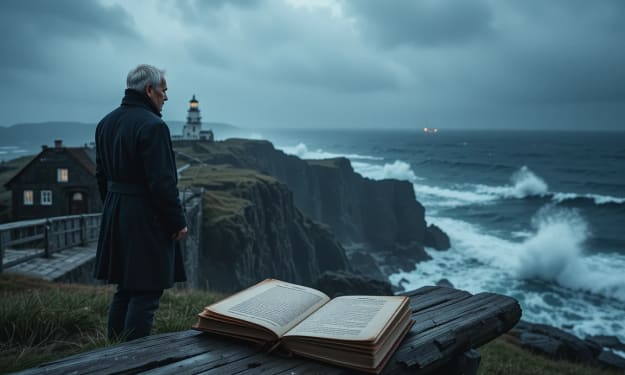
The Lighthouse Keeper’s Journal Written by Shah Zeb The lighthouse stood like a forgotten relic at the edge of the world. Perched high on the weather-beaten cliffs of the Scottish coast, it had long ceased to guide ships. Satellite navigation and modern systems had made it obsolete. Yet inside its stone shell, the light still turned, maintained by one man whose presence was as old and steady as the sea spray. Ewan Fraser, seventy-three, had been the lighthouse keeper for nearly five decades. He refused to leave even when the government decommissioned the facility. He argued, perhaps foolishly, that the ocean still remembered the light—and so did the souls of those who had once passed beneath it. Every morning, he brewed tea in a dented kettle and wrote in his journal—a thick, leather-bound book with a broken spine and pages yellowing like sea maps. The entries were rarely about the weather or lighthouse mechanics. They were letters, unsent, written to a woman named Isla. June 6, 1995 The light flickered last night. I thought of you again, of course. I always do when storms come. Remember how we stood in the lantern room and watched the sea fight the sky? You were never afraid. You said storms made you feel alive. It was the calm that frightened you. Isla had been Ewan’s wife—if only for six months. They were married under a gray sky, with seagulls as their choir and waves as their witness. She was an artist, with fire in her voice and salt in her spirit. She painted the sea not as it was, but as it felt. Six months after their wedding, Isla vanished in a boating accident. No body. No goodbye. Just her paint-streaked scarf found on a washed-up piece of driftwood. He had no one else. No children. No close family. The town slowly forgot about Ewan, except the postmaster who still delivered parcels once a month. Inside were canned goods, paper, pens, and batteries. Always the same. And a small, quiet hope that maybe one day something else would come. Then, one October evening, as the fog thickened like wool and the waves slapped rocks like angry fists, Ewan heard it—a knock. Not the wind. Not the groan of old wood. But a knock. Heart pounding, he opened the iron door. A girl stood there. Soaked. Pale. No older than seventeen. "I'm looking for my mother," she said. “She used to live here.” Ewan blinked. “What’s her name?” "Isla." Her name was Cora. Her voice shook when she spoke, not from cold, but from hesitation. She carried an old photo—one of Isla, covered in paint, laughing on the lighthouse steps. The same photo Ewan had tucked into his journal. Except this one had writing on the back. To my daughter, should you ever find this. Start with the light. They sat by the fire, a pot of stew between them. She told him her story in pieces, like a broken bottle being slowly glued back together. Isla had survived the accident. Rescued by a passing trawler. But a head injury had taken her memory. She was taken in by a woman on the Isle of Skye, where she worked as a seamstress, never knowing who she truly was. Until her final days, when fragments returned. Names. Places. A face she had once loved. She died two years ago, Cora said. “But before she passed,” Cora added, eyes bright with pain and wonder, “she told me: 'If you ever want to know where you come from, go to the place where the sea meets the light.' So I did.” Ewan didn’t speak. His hands shook too hard to hold his cup. Instead, he opened the journal. Flipped to the first page. Handed it to her. Each word, each entry, was a letter to Isla. Cora read until morning. She stayed three days. Helped him oil the light. Took photos of the cliffs. They didn’t talk much, but when they did, it was as if silence had become a language of its own—passed down between those who have lost and those who remain. On the last day, she asked, “Why did you stay?” He looked toward the horizon, where the sea kissed the sky. “Because she might come back. And someone had to keep the light on.” January 14, 2020 She came, Isla. Our daughter. She’s kind. Brave. Just like you. I told her everything. The light, the cliffs, the stories. She carries your fire. I think... I think you sent her. When Cora left, she took a small canvas with her—one of Isla’s old sea paintings, faded but still beautiful. She promised to return every year on the same day. Ewan didn’t ask for it, but it filled something in him that had been hollow for twenty years. Three years later, Cora came back with a son. His name was Fraser. He ran up the stairs of the lighthouse as if the place had always belonged to him. April 2, 2024 I am tired, Isla. But I’m not lonely anymore. The light’s still turning. And I think... when it stops, it won’t matter. Because you sent me one last message, through her. And it reached me. That night, as the wind howled and the tide rose, the light blinked its steady rhythm—one last heartbeat for the ships and souls it guided. By morning, Ewan was gone. The journal sat on the desk, closed, a final message on the last page: Keep the light turning. Cora did. Every year. And now her son does. Because some lights never truly go out.
By Moonlit Lettersabout a year ago in Fiction
Left on Read
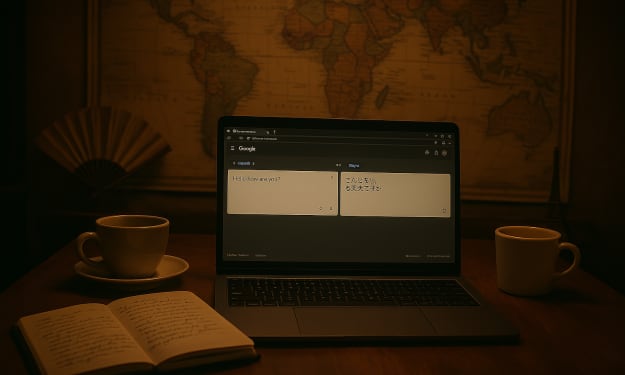
It was just a text. No arguments. No drama. Just a small, simple message that hung in digital space like a thread waiting to be pulled. > “Hey… are you okay? I’ve been thinking about you.” Delivered. Seen. No reply. That little gray “read” receipt at the bottom of the screen hit harder than any goodbye ever could. I stared at it for hours, watching it like it might suddenly change — like maybe the universe would glitch, and a reply would appear saying: > “Sorry, I’ve just been busy. I miss you too.” But it didn’t. --- His Name Was Ayan We weren’t in love. Not officially. But we had something — something unspoken but real. A connection made of 2 a.m. calls, half-laughed stories, playlists sent back and forth, and that strange comfort that comes from knowing someone gets you without needing to explain everything. We met online. We met often. But we never put a label on it. Maybe we were scared. Maybe we were unsure. Or maybe… deep down, I always knew he wouldn’t stay. --- The Conversation That Changed Everything The night before it happened, we talked for hours — the way we always did. I told him about my day. He told me about a song that reminded him of me. We laughed. It felt light. Easy. But then I said something vulnerable — something raw. I told him: > “Sometimes I wonder if you’d miss me if I disappeared.” There was a pause. Not long, but long enough to feel like a storm. He replied: > “Don’t say stuff like that.” And then he changed the subject. I thought maybe I had ruined something. Maybe I got too close to the truth. Maybe I scared him off by needing more than late-night calls and unspoken feelings. --- The Message That Wasn’t Answered The next day, I sent a follow-up. > “Hey… are you okay? I’ve been thinking about you.” It was read within minutes. But the reply never came. And that’s how it ended — not with a fight, not with closure, but with being left on read. --- The Pain of Digital Rejection People say ghosting is cruel. But being left on read… that’s a whole different kind of sting. Because it confirms they saw your words. They just chose not to respond. You start questioning yourself: Did I say too much? Was I too emotional? Was it all one-sided? But then you remember the way he used to text first. The way he said “goodnight” every time, even when he was tired. The way he listened — really listened — when you talked about your fears. And you realize… it wasn’t nothing. It just wasn’t enough. --- Learning to Let Go Without Answers I didn’t text again. Not because I stopped caring — but because I started respecting myself. There’s something so heavy about chasing someone who’s already halfway out the door, especially when they won’t even tell you why. Instead, I turned the hurt into reflection. I wrote about it. I went for walks. I listened to the songs he sent me — once, then never again. I cried. Not for him, but for the part of me that still hoped he’d explain. --- It Wasn’t About the Text The pain of being left on read isn’t about the words that never came. It’s about the space they leave behind. The quiet. The not knowing. It’s about how quickly someone can go from “I’m here for you” to complete silence. From “I’ll call you in five” to never hearing from them again. But it also taught me this: > Some people enter your life to show you what you truly need — and what you can no longer accept. --- If You’ve Been Left on Read… I know it hurts. I know that silence feels like a scream. I know you keep rereading your message, wondering what you did wrong. But maybe it’s not about what you did. Maybe it’s about who they are — or what they’re not ready to be. And maybe their silence is a gift in disguise. A clear answer to a question you didn’t want to ask: > “Do I matter enough for you to stay?” Their silence says it all. --- Final Thought It’s okay to grieve people who never gave you closure. It’s okay to feel hurt over what “almost was.” But don’t let someone’s silence drown your worth. Because one day, someone will see your message and not only reply — They’ll show up, speak up, and stay. Until then, let “left on read” be your reminder: > You deserve more than maybe.
By Hazrat Bilalabout a year ago in Fiction
Not him ,not now
I met him on a Wednesday. It wasn’t anything special — a rainy day, a crowded café, and two people reaching for the same book at the little bookshelf by the counter. I laughed awkwardly. He smiled like it was the start of something. Maybe it was. His name was Zayan. Soft voice. Deep eyes. The kind of presence that doesn’t demand attention — it earns it. We started talking that day… and we didn’t stop for weeks. --- Right Person, Wrong Time It felt too good to be real. He listened in a way most people don’t anymore — like my words had weight. He asked questions that made me think. He never interrupted. He remembered little things — my favorite song, my coffee order, the way I hated loud places but loved thunderstorms. I should’ve fallen for him. And maybe I did. Quietly. But here’s the truth no one tells you about love: > Sometimes, the timing ruins everything. --- I Was Still Healing A few months before Zayan, I had been through a heartbreak that cracked me open. It wasn’t loud or dramatic — it was the kind of break that leaves you questioning your worth in the silence. I had built walls after that. Quiet, invisible ones. Walls made of independence and sarcasm and “I’m fine.” When Zayan walked into my life, I was still trying to remember who I was without the pain. He deserved someone whole. I was still gathering my pieces. --- He Waited… For a While Zayan never pressured me. He was patient. Gentle. Always there, but never demanding. He’d say, > “You don’t have to rush anything. I’ll walk at your pace.” But even patience has limits. Even the kindest hearts get tired of waiting in the hallway of someone else’s healing. One night, we sat on the rooftop of my apartment building — a quiet place where the stars felt close enough to touch. He looked at me and asked softly: > “Do you see a future with me? Honestly?” I looked away. Not because I didn’t feel something — but because I did. And feeling it made it worse. --- The Answer I Couldn’t Say In my head, I was screaming: > Yes. I want to. But I don’t trust myself to love anyone right now. I don’t want to bleed on you from wounds someone else left. I’m scared that I’ll ruin you just by letting you get too close. But out loud, I only said: > “Not now.” His eyes didn’t change. He didn’t flinch. But I saw it — the quiet shift. He nodded. Gave a soft smile. Said, > “I understand.” And I knew I had just let something good slip away. --- Not Him. Not Now. After that night, we drifted. Not suddenly — like pages of a book gently closing. He stopped texting first. I stopped overthinking the silence. We didn’t fight. We didn’t say goodbye. We just… faded. And in some strange way, that hurt more. Because we were almost something. And “almost” leaves a different kind of scar. --- Now, Months Later… I still think of him when I hear that song he liked. When I order that same coffee. When I look at the stars. I wonder if he ever knew how much I cared — even if I couldn’t say it. I wonder if he found someone who didn’t hesitate. Someone who didn’t say, “Not him. Not now.” --- What I Learned Love isn’t always about whether you feel something. Sometimes it’s about whether you’re ready to act on it. I wasn’t ready. And in trying to protect him from my brokenness, I broke both of us a little. I thought saying “not now” was a kind way to protect him. But silence hurts too. Gentle endings still bruise. --- Final Thought If I could go back to that night, under that rooftop sky, I think I’d say: > “I don’t know how to love you yet. But I want to learn — if you’ll be patient a little longer.” But I didn’t. And he didn’t wait. Some stories aren’t about happy endings. They’re about moments — beautiful, temporary, real. He was the right person. Just not now. And maybe, not ever.
By Hazrat Bilalabout a year ago in Fiction
The Library of Forgotten Names
The Library of Forgotten Names Written by Raza Iqbal The building had no sign. Tucked between a shuttered bakery and an abandoned tailor shop in a quiet corner of Bruges, the heavy oak door didn’t creak when opened—it sighed, like someone waking up from a long sleep. Emilia Laurent stood on the cobblestone threshold, a letter trembling in her hand. The letter had come without return address, sealed with wax bearing the insignia of an hourglass wrapped in ivy.
By Moonlit Lettersabout a year ago in Fiction
One Last Ride: The Taxi Driver’s Secret
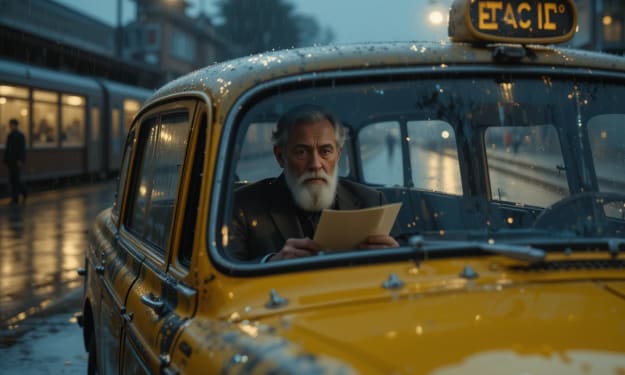
One Last Ride: The Taxi Driver’s Secret Written by Mirza Nobody knew his full name—everyone just called him “Baba Taxi.” For more than thirty years, Baba Taxi drove the streets of Lahore, weaving through its dust, chaos, and colors. His old yellow-and-black cab was a familiar sight—scratched, dented, but somehow proud. His back slightly hunched, white beard trimmed, and smile always kind, Baba was the silent companion of countless passengers. To the world, he was just another aging driver. But behind the wheel, Baba held a secret, one he never revealed in a word but lived in every journey he took. He wasn’t just driving people from point A to point B. He was looking for someone. Every evening before ending his shift, Baba would drive to the railway station and wait near the exit gate. For twenty years, he would sit silently, eyes scanning the faces as passengers disembarked. Some looked at him curiously, some asked for a ride, and many just passed by. But none were the face he was looking for. People joked that Baba was obsessed with the station. Some drivers whispered he was waiting for a lost love, others said he was senile. Baba never explained. Then, one rainy Thursday in July, everything changed. A young woman named Meher flagged down Baba's taxi near Liberty Market. Her eyes were red from crying. She clutched a backpack and held a folded letter in her hand. “Railway Station,” she said quietly. Baba glanced at her in the rear-view mirror. Something in her expression—something broken yet familiar—caught his attention. The silence in the cab was heavy, except for the hum of the engine and occasional splashes from puddles. Baba didn't ask questions. He never did. But as they neared the station, she broke the silence. “My mother used to tell me a story,” Meher said suddenly, voice cracking. “About a taxi driver who used to take her to college every day. She said he never charged her a rupee. Just asked her to promise him something.” Baba's hands stiffened slightly on the steering wheel. “She said he made her promise that one day, when she had a daughter, she'd tell her about him. About his kindness. About how he saved her life one night when she almost ran away from home after a fight with her parents.” The girl smiled faintly through tears. “She never told me his name. Just called him ‘Baba Taxi.’” The car stopped. Meher opened the letter and held it toward him. “She passed away last month. Cancer. But she left this... for you.” Baba’s fingers trembled as he took the letter. Dear Baba Taxi, If Meher finds you, it means she listened. I never forgot that ride. You talked me out of leaving home that night. You said I would regret losing my family, and you were right. Because of you, I went home and reconciled with my parents. Because of you, I stayed. I married, I raised my daughter, and I lived a full life. If you're reading this, please take care of her. Like you did with me. Just this once. She’s lost right now. She needs you. With all my heart, Zoya. Baba’s eyes glistened. It had been her. For all these years, he'd returned to that station, hoping. Not to find her again, but to return a photo he’d found under the backseat the night she almost ran away. A photo of her and her parents. He kept it, in case one day, someone came looking. Baba reached into the glove compartment and pulled out a small, creased photo. Meher gasped. “That’s... my nani and nana,” she whispered. He handed it to her with the gentleness of a grandfather. For a few moments, silence wrapped the cab like a blanket. The rain outside had softened to a drizzle. “You’ll stay with me tonight,” Baba said quietly. Meher nodded. For the first time in weeks, she felt safe. Epilogue Meher did stay. She spent a few nights at Baba’s small home. He cooked daal and parathas, told her old tales of Lahore, of love lost and found, of how every rider in his taxi left a story behind. She shared stories of her mother, listened to songs from Baba’s dusty cassette tapes, and slowly, something inside her began to heal. A few weeks later, Meher left for Islamabad, where she had been accepted into an arts program. But she promised to call every week—and she did. Baba didn’t wait at the railway station after that night. He didn’t need to anymore. He had finally completed the ride he’d waited a lifetime for.
By Moonlit Lettersabout a year ago in Fiction
The Whispering Morning
The first light of dawn spilled gently across the hills of Maple Hollow, a quiet little town nestled in the heart of Vermont. Mist curled over the meadows like a lazy cat, and the trees stood still, soaking in the early morning peace. The birds, bold and bright, tuned their morning chorus from branches thick with green. The world felt new, as if someone had wiped the slate clean overnight. For Emma Walker, it was her first morning in the old farmhouse she’d just inherited from her grandfather. It sat at the edge of a pine forest, all creaky floors and sun-faded wallpaper, filled with dust and memories. She’d arrived just before sunset the night before, unpacking only the essentials before collapsing into bed. Now, with morning light pouring through the kitchen window, the house felt different—less like a relic, more like a place waiting for new life. She stepped out onto the front porch, barefoot on the cool wooden boards. The air smelled like fresh earth, pine needles, and lilacs. Across the field, a red barn stood tall against the sky, and the gravel road that led to town shimmered with morning dew. Somewhere off in the distance, a tractor engine rumbled to life. The day was beginning. “Up already?” a voice called from the driveway. Emma turned to see Mr. Thompson, the elderly neighbor from next door. He wore overalls and a Boston Red Sox cap, holding a steaming mug of coffee. “You bet,” Emma replied, smiling. “Couldn’t sleep through a sunrise like this.” He nodded approvingly. “Mornings around here are sacred. It’s when the world feels honest. You’ll see what I mean after a while.” She liked that thought. Life in Boston had been anything but honest. Fast-paced, loud, unforgiving. Her job had drained her. Her relationships had frayed. Moving here hadn’t been the plan—but when her grandfather passed and left her this house, it had felt like a lifeline. A second chance. As they stood in quiet conversation, the sun rose higher, casting long golden shadows across the yard. Bees buzzed lazily between wildflowers, and the breeze ruffled the leaves like a whisper. Emma could almost hear the world breathing. She decided to explore. The woods behind the farmhouse had always fascinated her as a child. Now, years later, she stepped beneath the tall pines, their trunks straight and proud, the forest floor soft with needles. Shafts of sunlight filtered through the branches like spotlights on a stage. The air grew cooler, quieter. After ten minutes of wandering, she came upon a clearing with a small pond in the center, glassy and still. Wildflowers bloomed along the edges—bluebells, daisies, queen anne’s lace. A deer looked up from the far side and locked eyes with her before vanishing into the trees. Emma sat on a mossy log and took it all in—the sound of birdsong, the ripple of water, the scent of damp earth. For the first time in a long time, she wasn’t thinking about what came next. She was just… here. And then she heard it—music. Soft, melodic, distant. She rose, following the sound through the trees until she found its source: a young man sitting by another log, playing a wooden flute. His eyes were closed, lost in the melody. The tune wasn’t sad exactly—just full of longing, like a memory trying to find its way home. He opened his eyes when he heard her steps. “Didn’t mean to startle you.” “You didn’t,” Emma said. “I just followed the music.” He smiled. “It has a way of pulling people in. Especially around here.” His name was Luke, a former jazz musician from New York City who had moved into a cabin on the other side of the woods a year ago. They talked for a while about life, music, quiet mornings, and what happens when the world gets too loud to hear your own thoughts. By the time Emma made it back to the farmhouse, the sun was high and Maple Hollow was wide awake. A dog barked from somewhere down the road. Kids zoomed by on bicycles. A woman waved from her porch, hanging laundry out to dry. It wasn’t fancy. It wasn’t fast. But it was real. Emma stepped inside, poured herself a cup of coffee, and stood by the window, watching the wind play with the trees. The weight she’d carried for so long was already starting to lift. She didn’t know exactly what lay ahead—but she knew it would begin with mornings like this: full of stillness, full of promise, full of whispers worth listening to.
By Muhammad Bilalabout a year ago in Fiction
The Beauty of Dance
There are few things in life that can express emotion the way dance can. Where words fall short, the body speaks. Where silence lingers, movement rises. Dance is not merely performance; it is a conversation between the soul and the world. It tells stories, celebrates cultures, and heals wounds that are too deep for speech.
By Hanif Ullah about a year ago in Fiction