Fan Fiction
Kindness Tastes Like Lemon Tea. AI-Generated.
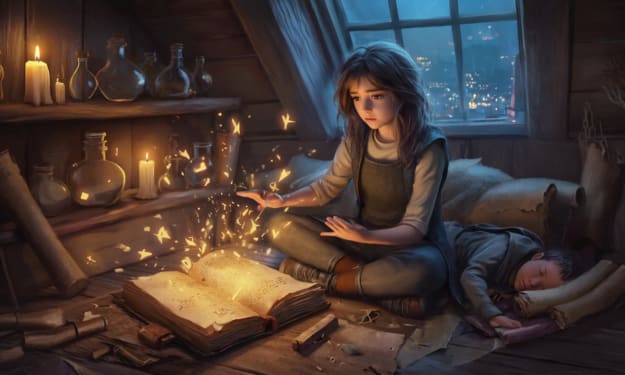
I never liked tea. Not the bitter green kind, not the herbal kind my mom kept insisting would help me “balance out,” and definitely not the flowery ones that tasted like wilted garden petals. But I drank it anyway—every day at 4:15—for nearly four months, sitting at a round table by a window in Mrs. Calloway’s faded yellow kitchen.
By waseem khanabout a year ago in Fiction
Beneath the Silence.
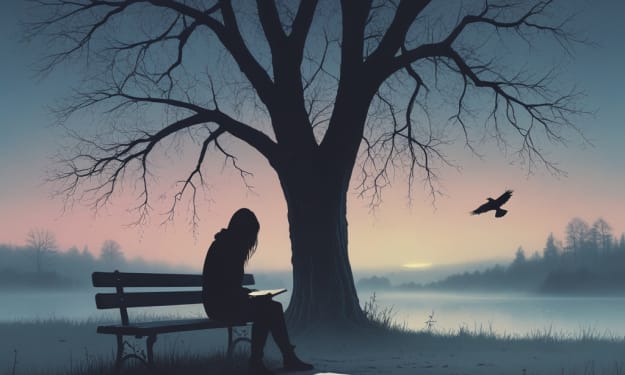
The park was nearly empty when Mira arrived, as it always was this time of year. Late autumn peeled the world of color, leaving behind only faded golds and brittle browns. The air smelled of cold earth and drying leaves. She liked that. No one noticed her here, and she didn’t have to pretend.
By Muhammad Ilyasabout a year ago in Fiction
Title: “Five Years of Fire: Earth 2025–2030”
2025. The warnings are over. Now it’s simply reporting the damage. Europe chokes on smoke for the 1/3 summer season in a row. Greece, Spain, and Italy burn like a fire. Emergency crews are overwhelmed. The Mediterranean becomes a “purple zone” on international warmness maps—too warm to stay in comfortably, too volatile to insure. Tourists prevent coming. Locals live locked indoors, curtains drawn, air purifiers humming. In California, wildfires jump throughout containment traces quicker than hearthplace crews can respond. The air in San Francisco turns brown again. In South America, the Amazon’s tipping factor creeps closer—much less rainforest, extra dry forest. Fewer trees, much less rain, extra warmth. The cycle tightens across the lungs of the planet. At the identical time, oceans hit report temperatures. Coral reefs bleach in masse—again. Entire fisheries fall apart in components of the Indian Ocean. In the Pacific, marine heat waves wipe out seaweed forests and push tuna migration styles into chaos, hurting economies from Japan to Peru. But here’s the actual intestine punch: international emissions don’t fall. Countries make promises—net-0 via the means of 2050, carbon taxes, weather summits. But fossil gas use nonetheless rises in lots of regions. Coal makes a short-term comeback in locations going through power shortages. Oil giants report report profits, even as wildfires devour historic forests. 2026. The coverage enterprise begins operating broken. Miami, Guangzhou, and Manila face repeated flooding events. Storms now frequently exceed the layout limits of 20th-century infrastructure. Rebuilding fees spike. Insurers quietly pull out of high-chance zones. Homeowners are left with mortgages on residences that no person will purchase or insure. Meanwhile, meals expenses jump. Climate chaos hits rice manufacturing in Asia and wheat in North Africa. A aggregate of drought and flood shreds delivers chains. Simple meals turn out to be volatile. Protests escape in numerous nations over water and meals shortages, igniting political unrest. 2027. One word: migration. Tens of tens of thousands and thousands are already on the move. Rising seas swallow land in Bangladesh, Indonesia, and components of the U.S. Gulf Coast. Rural heatwaves in India and Pakistan push humans towards towns that might be already too crowded, too warm, and too strained to take in them safely. The UN estimates extra than a hundred million humans should turn out to be weather migrants by means of 2030. Wealthy nations tighten borders. Tensions are pushing upward. Walls pass up. But the water maintains rising, the warmth maintains climbing, and those hold moving—due to the fact they don't have any choice. 2028. The weather began hitting the rich. Paris hits 50°C for the primary time. Texas strength grids fail again—two times in a single summer time season. Dubai suffers a heatwave so severe that even shaded regions turn out to be dangerous. Wealth buys air conditioning, desalinated water, and personal bunkers—but now no longer safety. Not stability. In Greenland, melting accelerates. Scientists verify what they feared: components of the ice sheet are beyond the factor of no return. Sea degree upward push is now “locked in” for centuries. Even if emissions stopped overnight, coastlines could nonetheless drown over time, reshaping maps forever. Meanwhile, the Arctic remains on the whole ice-unfastened within the summer. This isn't only an unhappy milestone—it absolutely rewires worldwide climate structures. Monsoons shift. Jet streams wobble. Crops fail in new and unpredictable locations, making meals protection even greater fragile. 2029. The public temper turns. People aren't simply angry—they're scared. Climate protests erupt in predominant towns throughout the world. Some are peaceful. Some are now no longer. Youth moves lead the charge, stressing duty from governments and corporations. Lawsuits explode—younger plaintiffs vs. governments, stressing a livable destiny for coming generations. Technology enables a little. Direct air seize is eventually on line at scale, pulling carbon from the air. Green hydrogen begins emerging changing grimy fuels in heavy industries. Solar panels and wind generators are everywhere. But the emissions curve? Still no longer steep enough. Meanwhile, the harm piles up quicker than restoration crews can respond. Infrastructure breaks below the load of weather reality. 2030. We move the line. Global common temperature hits 1.5°C above pre-commercial levels. That range became as soon as a political goal. Now it’s a reality—and it’s now no longer a preventing point. It’s a checkpoint at the manner to worse. At 1.5°C, weather structures get greater volatile. Coral reefs are on the whole gone. Forests burn more than they grow. Rivers dry up. Wet locations flood greater. Dry locations dry out. Climate refugees emerge as an everlasting characteristic of the present day world. What this means, practically: the whole thing prices greater. Insurance. Food. Clean water. Healthcare. Electricity. And it’s now no longer simply in “faraway” locations—it’s in Berlin, Lagos, Los Angeles, Dhaka, and Tokyo. No one is untouched, no person is absolutely prepared. Yet something else takes place too. The panic becomes action. By the give up of 2030, a few governments forestall seeking to tweak structures and begin tearing them down. Fossil gasoline subsidies are banned outright. New oil and fueloline initiatives are cancelled mid-construction. Climate reparations begin, slowly, as wealthier international locations face stress to assist model within the worldwide south. It’s late. Very late. But now it is no longer pointless. The subsequent 5 years didn’t remedy the crisis. They locked in consequences. But additionally, they pressured a decision: glide into chaos, or dig in and combat for a livable destiny. The weather won’t wait. Neither ought to we.
By MD ABU NAHED TUSAR about a year ago in Fiction
The Power of a Kiss
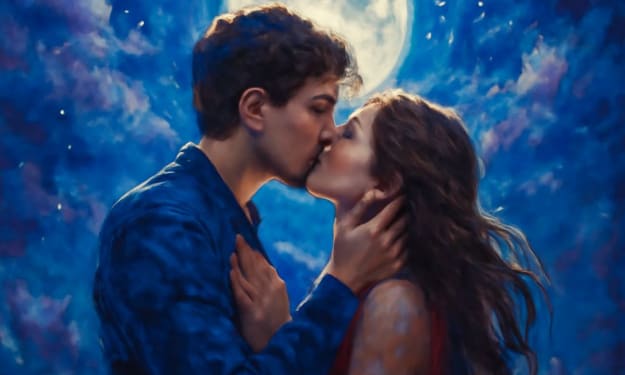
It was a night that felt like magic. The sky was painted deep blue, with clouds softly glowing under the full moon. Stars scattered like secrets waiting to be whispered. The cool night breeze carried a faint melody, and everything felt still — like the universe was holding its breath.
By Solene Hartabout a year ago in Fiction
Manu was punished for lying
Dear children! In a distant forest, there lived a group of cats. They all had a deep friendship. All the cats used to play together and even go out to eat together. The winter season had begun and the cold outside was getting worse. In such a situation, the cats found it impossible to leave the house, but they had to go out to fill their stomachs.
By Echoes of Lifeabout a year ago in Fiction
The Dogs of Willow Lane
At the very end of Willow Lane stood a modest little house surrounded by trees, flowers, and laughter. It wasn’t fancy. The paint was chipped, the fence leaned to one side, and the roof sometimes leaked in heavy rain. But every person in town knew that house. Not because of the house itself—but because of the dogs. Twelve of them, to be exact. Big ones. Small ones. Fluffy, shaggy, short-haired, and long-eared. They came in all colors—golden, black, spotted, brindle, and snow white. But what they had in common was one thing: they all belonged to an old man named Leo. Leo had lived on Willow Lane for over 40 years. A retired mailman, he had walked nearly every street in town and knew every doorstep, every barking voice, and every tail wag. He’d started with just one dog—a golden retriever named Daisy. She used to wait for him at the end of the lane every day after work, tail wagging like a flag in the wind. But as the years passed, things changed. One rainy evening, Leo found a trembling pup in a box behind the grocery store. He brought it home. A few months later, someone abandoned a limping stray near his fence. He brought that one in too. Soon, it became a habit. “Just one more,” he’d say. But dogs don’t understand numbers. They only understand kindness. By the time Leo was 75, his house was a sanctuary—filled with barks and snores, dog bowls and tennis balls. Every morning, he took them all on a slow walk through the town. The dogs were so well-behaved, so gentle, that children would run from their front doors just to walk alongside them. Old ladies sitting on benches would save scraps from breakfast to offer a sniffing nose. Workers would stop their lawnmowers just to wave. The entire town looked forward to Leo’s daily walk. And then, one day, he didn’t come. The next morning, there was no parade of paws down Maple Street. No barking. No wagging tails. The town noticed. By afternoon, three kids from the neighborhood rode their bikes to Leo’s house. They knocked. No answer. The dogs barked inside—but there was no Leo. Mrs. Henderson from next door had a spare key. She opened the door and gasped. Leo was in his chair, smiling faintly, holding an old photo of Daisy. His eyes were closed. Peaceful. The dogs were all gathered around him—quiet, still, as if they understood. The news spread fast. The man who’d never asked for anything, who’d only given love, was gone. People wept. Some brought flowers. Others brought food—for the dogs. And the question rose: what now? Twelve dogs. No family. No will. Just a small house full of big hearts. The town didn’t argue. They acted. The kids made posters. "Leo's Dogs Need Homes." The bakery put photos on their counter. The mayor posted on social media: “Leo gave our town love. Let’s return it.” By the end of the week, every dog had found a new home. Buddy, the clumsy St. Bernard, went to the fire station. Lucy, the small terrier with the loud bark, was adopted by the local librarian. Even Max—the nervous one who only trusted Leo—was taken in by the vet’s family and slowly learned to wag again. But the story doesn’t end there. The townspeople missed the daily walks. They missed the laughter, the joy. They missed Leo. So one spring morning, a little girl named Emma showed up with her puppy and walked alone down Willow Lane. The next day, two more kids joined her. Then a woman with her dachshund. A teenager with a rescue greyhound. A man who had never owned a dog but borrowed his neighbor’s Labrador “just to be part of it.” By summer, dozens of dogs and owners walked together through the town every morning. They called it “The Leo Walk.” They even painted a mural on the side of the old bakery—Leo sitting on a bench, surrounded by dogs of every size, his eyes crinkled in a smile. Years passed. The dogs changed. People moved in and out. But the Leo Walk remained. Because some love is too big to disappear. It stays in the air, in the footsteps of dogs, in the happy yips of puppies and the warmth of a wagging tail. It stays in the heart of a town that learned: One man and a dozen dogs can make the world feel like home.
By Muhammad Bilalabout a year ago in Fiction