Fan Fiction
The Bridge of Second Chances
M Mehran In the town of Riverton, a small bridge spanned the quiet river that divided the old neighborhood from the new. To most, it was just a functional crossing, worn with age and lined with chipped paint. But to those who knew its history, it was a symbol—a bridge between regret and redemption. --- Marcus’ Struggle Marcus had grown up in Riverton, a boy full of ambition but trapped in circumstances he could never control. His father had disappeared when he was young, leaving him with a mother who worked double shifts to make ends meet. By his teens, Marcus had fallen in with the wrong crowd, chasing money in ways he shouldn’t have. The bridge, with its rusty iron railings and narrow walkway, became his refuge. Whenever the weight of his mistakes pressed too hard, he would stand there, staring at the river, wishing life had given him another chance. --- The Turning Point One late evening, Marcus encountered Mrs. Thompson, an elderly woman who had lived on the edge of town for decades. She saw him leaning against the railings, hands trembling, eyes distant. “You look like someone carrying the world,” she said softly. Marcus laughed bitterly. “Maybe I am. What does it matter? I’ve made too many mistakes.” Mrs. Thompson didn’t argue. Instead, she handed him a small, worn notebook. “Write,” she said. “Write your story. Sometimes, putting your pain on paper can show you the path forward.” Marcus wasn’t sure why he accepted it. Maybe it was desperation, maybe curiosity, or maybe just the need to be heard. That night, for the first time in years, he opened the notebook and wrote down everything—every failure, every fear, every dream he had buried. --- Rediscovering Purpose The act of writing became a habit. Marcus returned to the bridge every evening, pen in hand, capturing the moments he had missed, the people he had hurt, and the things he hoped to achieve. Writing didn’t erase the past, but it gave him clarity. One night, a teenager approached him nervously. “I see you here every night… writing. Do you… think it works?” Marcus looked up. He saw a reflection of himself in the boy—lost, unsure, searching for direction. He handed the notebook over. “Try it,” he said. “Even small steps matter.” Word spread. Soon, the bridge became a place where residents—young and old—gathered to share stories, dreams, and lessons learned. The bridge was no longer just a structure over water; it was a meeting place for second chances. --- The Community Responds Riverton began to change. Neighbors who had drifted apart started talking again. Teenagers who once ran the streets aimlessly found guidance from those willing to share their own journeys. The bridge became a nightly ritual, a symbol of hope and transformation. Marcus, too, transformed. With the notebook as his guide, he applied for a job at the local community center and began mentoring youth. He shared his experiences honestly, explaining how mistakes can teach as much as successes. People noticed. Parents trusted him with their children. Teachers invited him to speak at schools. Slowly, the bridge’s reputation grew beyond the town, becoming a story of redemption that inspired others to believe in the power of second chances. --- The Bridge Speaks One rainy evening, Marcus returned to the bridge alone. Water splashed against the railings, and the river reflected streaks of gold from the streetlamps. He opened his notebook and began to read aloud, not to anyone in particular, but to the wind, to the river, and to himself: “Every step I take is a chance. Every mistake I’ve made is a lesson. Every moment I live is a gift.” In that quiet, he realized the truth: the bridge had never been magical. Its power was in the people who stood on it, in the willingness to confront the past and build a better future. --- Passing It On Years later, Marcus published a book about the bridge and the people who had shared their stories there. He returned frequently, walking the worn planks, greeting new visitors, and offering notebooks to anyone willing to try. The town of Riverton remembered him not as a man who had once stumbled, but as someone who had risen, bringing others with him. The bridge became a symbol of resilience, a reminder that no mistake is too great to overcome and that every person deserves a second chance. For Marcus, the bridge was more than a structure—it was a promise. And for Riverton, it was a lesson in compassion, courage, and the quiet, transformative power of storytelling.
By Muhammad Mehranabout a year ago in Fiction
The Clockmaker’s Secret
M Mehran In the heart of Ashwood, a sleepy town where everyone knew everyone, there was a small shop tucked between a bakery and a bookstore. Its sign read simply: “Harrison’s Clocks”. Few paid it much attention, but those who did, whispered about the old clockmaker and the secrets he kept. --- A Strange Arrival One chilly autumn morning, a young journalist named Clara arrived in Ashwood. She had heard rumors about the clockmaker from an old friend and was curious. The story was intriguing: clocks that ran perfectly even when their mechanisms were decades old, strange humming sounds at midnight, and, most mysteriously, clocks that were said to influence time itself. Clara pushed open the heavy wooden door. The smell of oiled wood and metal greeted her. The shop was dimly lit, with hundreds of clocks ticking in unison. In the corner, an old man with silver hair and round glasses looked up from a tiny gear he was adjusting. “Ah, visitors,” he said softly. “I don’t get many of you these days.” Clara smiled. “I’ve come to learn about your clocks… and perhaps write a story.” Harrison nodded slowly. “Stories, yes… but some stories are dangerous. Are you ready to see what time hides?” --- The First Lesson Over the next few days, Clara watched in fascination as Harrison worked. Each clock had a story—a hidden compartment, a tiny gear that controlled more than just time. One evening, he handed her a small pocket watch. “This is special,” he said. “It doesn’t just tell time—it remembers it. Every moment you cherish, every regret you hide, it records.” Clara laughed nervously. “That’s… impossible.” Harrison only smiled. “Try it.” She wound the watch and felt a strange warmth in her palm. For a moment, she saw flashes—her childhood birthday party, the day she first published an article, even small moments she had forgotten, like her mother’s laugh or her father’s advice. The watch was capturing memories. Not just her memories, but the feeling of them. --- The Mystery Deepens One night, as the town slept, Clara awoke to a soft hum. The pocket watch glowed faintly, and she felt compelled to follow the sound to Harrison’s shop. Inside, Harrison was not alone. A group of townspeople gathered around a massive clock in the center of the room. It was unlike any other—its face was etched with strange symbols, and its pendulum swung silently. “This is the Heart Clock,” Harrison whispered. “It controls the rhythm of our town, the flow of time for those who truly listen.” Clara’s eyes widened. “Controls time? How is that possible?” Harrison looked at her gravely. “Time is not a line, young one. It is a pattern. And every pattern can be influenced.” --- A Choice to Make Harrison explained that the Heart Clock could alter events—but only slightly. A misused adjustment could have consequences. Clara’s mind raced. Could she change something in her past? A mistake she had made years ago? Harrison handed her a tiny key. “You may try, but remember—every choice has a ripple.” Clara hesitated. Her thoughts went to a childhood friend she had lost touch with, a letter she had never sent, a moment of kindness she had ignored. She turned the key, and the Heart Clock responded, ticking faster, its gears glowing softly. She felt a tug in her chest—a mix of fear and hope. A single moment shifted, unseen by the world, but powerful in its effect. --- The Consequences The next day, Ashwood felt… different. People smiled more readily, small accidents were avoided, and Clara received a letter from the old friend she had almost forgotten. But she also realized something else: the moment she changed had subtly affected other things. A shop she had visited recently had moved, a neighbor was late for work, tiny ripples in the everyday world. Harrison watched her. “Change is never without cost,” he said. “Even kindness can have consequences. The Heart Clock reminds us that time is precious, but delicate.” Clara understood. She had been given a gift—and a responsibility. --- A New Understanding Over the following weeks, Clara returned to the shop often, learning not just about clocks, but about life. She realized that time wasn’t something to control, but something to respect. Every second mattered, not because she could change it, but because she could live it fully. Harrison, for his part, taught her the patience of mechanics—the precision of gears, the care in winding, the beauty in the slow and steady passing of moments. Clara wrote her article about Harrison and his magical clocks, but she left out the Heart Clock’s most extraordinary secret. Some mysteries, she learned, were meant to inspire, not to reveal. --- The Last Visit One evening, as the sun set behind the hills, Clara visited the shop one last time. Harrison was polishing a small grandfather clock. “You’ve learned well,” he said. “Remember, time is both gift and teacher. Use it wisely.” Clara nodded, holding the pocket watch close. She understood now that life’s magic was not in changing moments, but in cherishing them. As she left, the shop seemed to hum softly, a lullaby of ticking clocks, reminding her that every heartbeat, every second, was a story waiting to be lived. Brookwood might appear ordinary to outsiders, but for those who listened to the ticking, it was extraordinary—every moment a chance, every memory a lantern guiding the way.
By Muhammad Mehranabout a year ago in Fiction
The Lantern of Serendipity
M Mehran In the small town of Brookhaven, strange things often happened, but no one spoke of them openly. That was, until the night the lantern appeared. It wasn’t an ordinary lantern. Its frame shimmered with a golden hue, and the light it cast didn’t flicker—it glowed steadily, illuminating the cobblestone streets in hues of amber and rose. Nobody knew where it came from. One evening, it simply appeared in the middle of Maple Street. --- Emily and the Lantern Emily, a young woman of 21, was the first to notice it. She had recently returned to Brookhaven after finishing college in the city. Life in the town felt quiet, almost too quiet. But that night, the lantern called to her. Curiosity drove Emily closer. As she reached out to touch it, the light pulsed, warming her hands without burning. And then, something extraordinary happened—images began to appear inside the glass: a young boy laughing by a river, an old man planting a tree, a couple dancing in a candlelit hall. Emily gasped. “It’s showing moments… from people’s lives?” A soft voice echoed around her, though no one was there. “I show the possibilities of life, not just what has been.” Emily froze. Could the lantern predict the future? Or was it a mirror of hidden desires? --- The Mystery Deepens Word of the lantern spread quickly. Neighbors gathered at Maple Street, some skeptical, some in awe. Each person saw something different: a struggling artist saw his paintings displayed in a grand gallery; a retired teacher saw herself leading a new generation of students; a lonely baker saw friends laughing in his empty shop. The lantern had a peculiar effect. People became braver, kinder, more willing to chase their dreams. Those who were hesitant to speak out, to try something new, suddenly found courage. Yet, Emily sensed that the lantern was testing them. It was one thing to show possibilities, another to make people act. --- An Unexpected Challenge One rainy night, a stranger arrived in town. He wore a dark coat, his eyes hidden under the brim of a hat. He called himself Mr. Lorne, and he claimed he had come to take the lantern away. “It doesn’t belong here,” he said quietly to Emily. “It’s not meant for ordinary lives. It’s… dangerous if misused.” Emily was torn. She had seen so many people change for the better because of it. “Dangerous?” she asked. “It’s giving hope!” Mr. Lorne shook his head. “Hope is fragile. Too much reliance on what might be blinds people to reality. The lantern is a guide, not a crutch.” --- The Town Responds The next morning, Emily convened a meeting at the town hall. She told the townspeople about Mr. Lorne’s warning. There was debate. Some wanted to protect the lantern at all costs. Others believed it should be returned to its unknown origin. It was then that Emily realized something crucial—the lantern’s magic was not just in showing possibilities. It was in choice. People could see visions, but they had to act to make them real. The lantern alone could not change lives; it could only illuminate the path. --- A Test of Courage Emily returned to Maple Street that night and looked at the glowing lantern. She remembered the images it had shown her: her own unfinished novel, her plans to travel, her dreams of helping children in need. She realized the truth—if she wanted her visions to come alive, she had to step forward herself. The next day, she started writing again. She organized a small program at the local library to teach reading to children. She even began planning her first solo journey across the country. The lantern’s light flickered faintly, almost like a silent nod of approval. --- Transformation Weeks passed, and the town transformed subtly but noticeably. People were kinder to each other, more willing to collaborate and take risks. Businesses thrived, friendships strengthened, and the streets of Brookhaven were filled with laughter and life once more. Then, one morning, the lantern was gone. No trace remained. Some feared it was lost forever, while others whispered that it had returned to wherever it came from. But Emily knew better. The lantern had never been an object of magic—it had been a catalyst. The true magic was in the people themselves, in their courage to act on the visions they had seen. --- Legacy of the Lantern Years later, Emily’s own work flourished. Her novels were published, her programs expanded, and she often recounted the story of the golden lantern to children and travelers. She told them, “Sometimes, all you need is a light to see the possibilities. But the journey is yours to walk.” Brookhaven became known as the town where dreams found their spark. And though the lantern never returned, its light remained in the hearts of everyone who had seen it—reminding them that hope is not something you wait for, but something you create.
By Muhammad Mehranabout a year ago in Fiction
The Algorithm That Dreamed
Story In the year 2074, dreaming was no longer a private act. The Somnus Corporation had changed everything with their invention: Dreamfeeds. For a monthly fee, people could subscribe to curated dream experiences. No more restless nights or nightmares—just stories crafted by advanced AI, perfectly tuned to desires, fears, and secret longings. Romance, adventure, peace, even flight—dreams were now entertainment.
By waseem khanabout a year ago in Fiction
The Last Bookstore at the End of Time
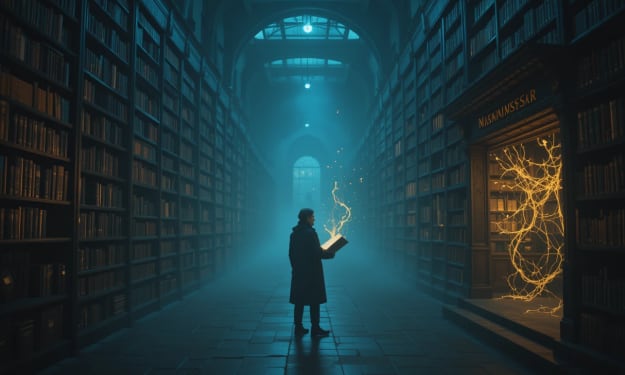
Story No one ever found The Last Bookstore at the End of Time on purpose. It never sat on a corner between a bakery and a post office, nor appeared on Google Maps, nor welcomed casual wanderers. The store arrived when it was needed—and only for those standing at the fragile edges of decision.
By waseem khanabout a year ago in Fiction
Europe’s Scorching Summer
Introduction: A Summer Like No Other Europe is experiencing one of the hottest summers in recent history. From Spain to Germany, and from France to Italy, the continent is battling relentless heatwaves that have disrupted normal life. Temperatures soaring above 40°C are no longer rare — they are becoming the new normal. This article explores how heatwaves are reshaping daily life across Europe, the challenges they bring, and the steps people are taking to adapt. The Heatwave Phenomenon Heatwaves occur when unusually high temperatures persist for days or even weeks. Scientists warn that climate change is intensifying these events, making them more frequent and more dangerous. According to the European Environment Agency, the continent has seen a steady rise in both the duration and intensity of extreme heat since the 1990s. Public Health Under Pressure Hospitals across Europe are reporting an increase in heat-related illnesses. Dehydration, heat exhaustion, and respiratory problems are common among vulnerable groups such as the elderly and children. Cities like Paris and Rome have opened cooling centers, while public health officials urge residents to stay hydrated and avoid outdoor activities during peak hours. The Daily Struggles of Ordinary People For millions of Europeans, the heatwave is not just a weather report — it’s a daily struggle. Office workers find productivity dropping as air-conditioning systems fail to keep up. Farmers worry about their crops drying under the blazing sun, while families cancel outdoor plans and seek refuge in shaded parks or air-conditioned malls. In southern Spain, school schedules have been adjusted, with classes ending earlier to avoid the midday heat. Energy Systems Under Strain Another impact of the heatwave is the strain on Europe’s energy systems. With air conditioners running non-stop, electricity demand is reaching record highs. Some regions face power shortages, while utility companies scramble to balance supply and demand. Ironically, the same rivers that cool nuclear power plants are running dry, forcing some facilities in France and Germany to reduce operations. Economic Consequences Heatwaves also have an economic cost. Tourism, one of Europe’s most important industries, is feeling the pressure. While northern countries such as Norway and Sweden see a rise in visitors escaping southern heat, Mediterranean destinations are struggling with cancellations. Agriculture is also hit hard, as drought conditions reduce crop yields, pushing food prices higher across the continent. Environmental Toll The natural environment is suffering too. Drought conditions lead to wildfires in Greece, Italy, and Portugal, destroying forests and displacing communities. Rivers like the Rhine and the Po are shrinking, threatening biodiversity and disrupting shipping routes. These environmental changes highlight the urgent need for sustainable water management and climate resilience policies. How People Are Adapting Despite the challenges, Europeans are finding ways to adapt. Urban planners are redesigning cities with more green spaces to cool down concrete jungles. Families are investing in better insulation for their homes. Communities are coming together, checking on elderly neighbors and sharing resources. Governments are also introducing early-warning systems to alert citizens before extreme heat strikes. The Bigger Picture: A Wake-Up Call Experts argue that Europe’s heatwaves are not isolated events but part of a global climate crisis. The continent is warming at twice the global average, making it particularly vulnerable. This summer is a stark reminder that climate adaptation is no longer optional — it is a necessity. Conclusion: Living in a Hotter Future Europe’s scorching summer is more than an uncomfortable season; it is a glimpse into the future. As climate change accelerates, heatwaves will continue to reshape how people live, work, and interact with their environment. The challenge now is not only to survive the heat but also to build a more resilient society that can thrive in a warming world.Another impact of the heatwave is the strain on Europe’s energy systems. With air conditioners running non-stop, electricity demand is reaching record highs. Some regions face power shortages, while utility companies scramble to balance supply and demand.
By Muhammad Ibrahimabout a year ago in Fiction