family
The Room of Forgotten Lullabies
Half-open windows let in a dull grey light that had replaced the sun hours ago. The whole house felt suspended in a slow breath, as if holding itself together just long enough for someone to dare breaking the silence. I stood outside the old nursery, fingers brushing the wooden frame that still had dents where a tiny hand once knocked from the inside. Those knocks never reached me in time.
By Salman Writes10 months ago in Fiction
When Tomorrow Arrived Too Soon
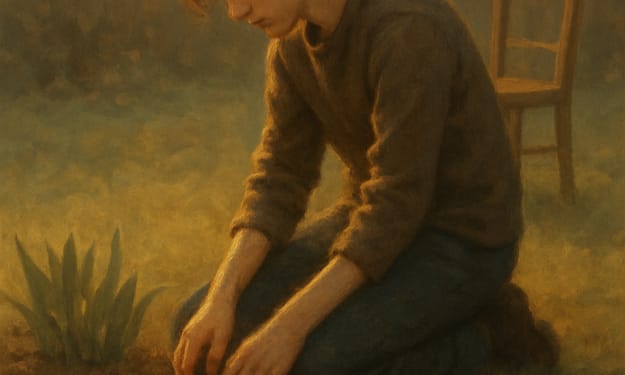
I woke to the sound of my phone buzzing, a shrill interruption I hadn’t expected. It was too early, and the sunlight hadn’t yet spilled across my room. The message was from my brother: Call me. Now. My heart thumped, a hollow echo that ran down my spine. He never texted like that. I grabbed the phone, fumbling for the call button. “What’s wrong?” My voice sounded smaller than I imagined. “It’s Mom,” he said, his voice breaking. “She… she’s gone, Jake.” Time stretched and fractured. I sat on the edge of my bed, unable to process the words. I had seen her yesterday, in the kitchen, humming while making her usual morning tea. She had waved, laughed at my messy hair, and told me she had plans for the weekend. Tomorrow. I had promised to help her plant the new tulips in the backyard. Tomorrow. And now, tomorrow had arrived too soon—and she wasn’t there to greet it. I remember the drive to the hospital, the roads blurring under the soft gray of an early winter morning. The radio murmured forgotten songs, and every red light felt like a pause in a nightmare I didn’t yet understand. When I entered her room, the smell of antiseptic and flowers hit me first. Then I saw her, peaceful and still, a pale hand resting on the blanket as if she had only been napping. My knees gave out, and I sank into the nearest chair. It’s strange, the way memories invade at moments like these. I could see her laughing at my attempts to cook spaghetti, the way she fussed over my crooked tie, the late-night talks where she always knew what I was thinking before I said it aloud. All of it condensed into a single, unbearable weight pressing against my chest. I kept thinking about the small things I’d postponed: the letters I meant to write, the photos I wanted to frame, the conversations I assumed I would have. Every plan, every tomorrow I imagined with her, now seemed like a mocking echo. Life, I realized, didn’t wait for us to be ready. It simply moved forward, indifferent to the timing of our hearts. In the following days, I wandered through the house like a ghost, touching things as if I could summon her presence. I found her old gardening gloves in the drawer, still soft with use, and the packet of tulip bulbs we had picked together just days before. I couldn’t plant them; not yet. The soil felt wrong without her hands beside mine. Friends and family offered words, sympathy in phrases that fell short. “I’m here for you.” “She’s in a better place.” “Time heals all wounds.” But their words, meant to comfort, reminded me only of how sudden it had all been. How tomorrow, which I had counted on as mine with her, had slipped through my fingers. And then one evening, weeks later, I found myself on the balcony where she loved to sit. The city lights shimmered faintly, a quiet echo of the stars she always pointed out. I held a cup of tea in my hands, something she had taught me to steep just so, and I whispered to the wind: “I miss you.” It wasn’t the same as planting tulips with her or hearing her laugh at my terrible jokes. But it was a start. Life had thrust tomorrow at me without warning, and I had stumbled, broken and unprepared. Yet in the fragments of those sudden moments, I realized that remembrance could also be a form of moving forward. I returned to her garden a few days later. The tulips, stubborn little things, were beginning to sprout. I knelt, hands in the cold soil, and imagined her beside me. My fingers brushed the first green shoots, and I felt a strange comfort in the continuity of life. Tomorrow had come too soon, yes—but it still held the seeds of hope, of memory, of all that we carry forward even when the people we love are gone. I planted the bulbs carefully, each one a silent promise to remember, to honor, and to keep going. And as I stood, brushing the dirt from my hands, I realized that tomorrow was no longer something to wait for. It was something I had to meet, with all its suddenness and fragility, ready or not.
By Jhon smith10 months ago in Fiction
The Field Beyond the Fence
The Abernathy Academy Gleaning Club was, for all its good intentions, an exercise in optics. It was the pet project of Isabella Sterling, student council president, and the perfect bullet point for her college applications. "Community engagement," she'd declared. "It shows leadership and empathy."
By Habibullah10 months ago in Fiction
The Room I Refused to Remember
For most of my life, I’ve been annoyingly good at avoidance. Not the fun kind, like dodging responsibilities for a weekend getaway, but the subtle, deep-rooted kind, pushing memories into corners until they shrivel into something shapeless and quiet.
By Aarsh Malik10 months ago in Fiction
The Room No One Enters
The taint of death lingered, even after every physical remnant had been cleaned away. Floors could be scrubbed and disinfected, carpets replaced, tiles and boards scoured, bodies removed... but the feeling remained. An odd miasma of horror, shock and bone-deep grief, tinged with the knowledge that no human had set foot in the room in years.
By Natasja Rose10 months ago in Fiction
The Ceasefire That Almost Failed Again
The Ceasefire That Almost Failed Again Ceasefires in Afghanistan have never been simple. They are written on paper but lived in mountains—mountains that do not care for agreements, politics, or promises. And on the night of the latest regional crisis, that old truth returned with frightening force.
By Wings of Time 10 months ago in Fiction
The Watchmaker’s Silence
The shop smelled of dust and old oil. It was a comfortable smell. It was the scent of patience. Elias sat behind his heavy wooden counter. He wore a thick leather apron that had seen better days. The walls around him were filled with clocks. There were tall clocks that stood on the floor like soldiers. There were small clocks that sat on shelves. There were round clocks and square clocks.
By Muhammad Adil10 months ago in Fiction
The Day Three Borders Burned
When Pakistan Faced Two Fronts Nobody expected the morning of 26 November to become the most frightening day in recent memory. Life in northern Pakistan began as usual—children preparing for school, shopkeepers opening their shutters, farmers heading toward fields still wet with dew.
By Wings of Time 10 months ago in Fiction