family
The Girl Who Waited Forever
hMaya lived by the sea. Every evening, she walked to the old wooden pier. She wore a blue scarf—the only color she carried with her. She called it her “waiting scarf.” When she was ten, her older brother, Sami, promised to return from his first boat trip the next spring. “I’ll be back,” he said, smiling as he showed her a shiny seashell he planned to bring home. “I’ll wait for you every day,” Maya whispered, hugging him tight. Sami waved and walked onto the boat, the sunset glowing behind him. Spring passed. Then summer. Then another year. People in the town forgot about Sami’s trip. But Maya didn’t. Every evening, she stood on the pier, eyes on the sea. Her scarf stayed blue. She never took it off. She never stopped waiting. Snow came in December. One night, the sky was quiet and heavy. Maya’s boots made soft prints in the fresh snow as she walked to the end of the pier. The wind was cold on her face. “Where are you, Sami?” she asked. The waves rolled gently, as if they were trying to answer, but didn’t know how. The townspeople noticed her visits. Some said she was strange. Some felt sad for her. But with time, they all moved on. Maya stayed. Years passed. Maya grew older. Her face changed, but her eyes stayed the same—full of quiet hope. She worked in the bakery, served bread and tea, and smiled at the neighbors. But every evening before sunset, she left. Always to the same place. The scarf had faded, no longer bright blue, but she kept it clean. It had waited with her, through wind and rain. One day, an old sailor stopped at the pier and saw her standing there, alone. “Waiting for someone?” he asked gently. Maya nodded. “My brother.” The man didn’t speak again, but the next day he returned and handed her a smooth white shell. “For hope,” he said, and left. She held the shell in her hands. It was pretty. For a moment, she felt warmth in her chest. But the shell didn’t speak, so she tucked it into her pocket and kept waiting. She began planting small white flowers around the pier. Daisies. She gave each flower a name. Names that only she knew—names from her childhood with Sami. The songs they sang. The stories they shared. The games they played. People who walked by sometimes smiled. Some stopped to look. A few asked what the flowers meant. “I’m waiting,” Maya would say, softly. One stormy winter night, a loud wind hit the village. The sky broke open with rain and thunder. Most people stayed inside. But Maya walked into the storm, her scarf tight around her neck. As she reached the pier, a boat rocked in from the dark sea. Not large. Old. Tired. A voice called out from it: “Maya?” She froze. She knew that voice. Barefoot, she ran across the wet wood, waves crashing beside her. There he was—Sami. Older. Thinner. His face worn from years, but his eyes still full of the sea. He stepped onto the pier, and for a moment, they said nothing. Then she cried. “You came.” He nodded. “I’m so sorry.” He reached into his coat and pulled out a shell—white and smooth, just like the one in Maya’s pocket. He had kept it safe all this time. They stood in the storm, the wind calm around them, like the sea itself was holding its breath. The next morning, the sun rose quietly. The air was fresh and soft. They walked away from the pier together. Sami wore her blue scarf now. Maya let it go. She didn’t need to wait anymore. She still visited the sea sometimes. But not to wait. Just to sit and remember. The flowers still grew around the pier. Not for sadness anymore—but for love that never gave up. And for a promise that, even after many years, found its way home.
By Hazrat Usman Usmanabout a year ago in Fiction
The Clockmaker's Garden
There was a village at the edge of the world where time stood still—not metaphorically, but truly. The sun always hovered in the same place. The shadows never grew longer. The leaves on the trees were forever green, and not a single wrinkle ever touched the faces of the people who lived there. Some called it a paradise. But not Mira. Mira had lived her entire life in this frozen place, where no one aged and nothing ever changed. The village was clean and calm, the people kind and quiet, but it all felt... trapped. Like living inside a snow globe where someone forgot to shake the magic. You see, the village had once been ruled by time like anywhere else. Until the day the Clockmaker came. No one remembered where he came from, or how he had arrived. But he built a tower at the village center—a tall, spiraling thing made of stone and bronze, topped with a golden clock that ticked louder than the wind. Then, one day, he stopped the clock. And when the clock stopped, so did time. People were amazed. No one got older. No one died. Food never spoiled. Days were always sunny. And for a while, it truly was a paradise. But after years, something changed—not outside, but inside the people. They stopped dreaming of new things. They stopped planting new trees. They stopped falling in love. They stopped asking, "What if?" Mira was different. Even as a child, she asked questions no one liked answering. “Why don’t we celebrate birthdays?” “What happens if the clock breaks?” “What’s beyond the hills?” The villagers would smile politely and say, “Don’t worry, dear. Everything is exactly as it should be.” But Mira wasn’t convinced. Especially not after the day she found the seed. It was buried beneath the soil behind her grandmother’s cottage, wrapped in cloth and tied with red thread. The cloth was old—older than the village’s stillness. On it, written in fading ink, were five words: "Plant me when time aches." Mira didn’t know what it meant, but she kept the seed. Years passed—or they should have—and Mira grew older in her heart, even if her body never changed. She read every book the village had. She asked questions the elders refused to answer. She even climbed the clocktower once, but found the door bolted shut with a glowing blue lock she couldn’t break. Until one night, something happened that had never happened before. She saw a petal fall. A single pink petal, drifting down from a tree in the village square. It didn’t make sense. Nothing changed here. Nothing moved unless someone moved it. But that petal had fallen on its own. As if the tree had breathed. That night, she went to her grandmother’s garden with a lantern and trembling hands. She dug a small hole in the earth and placed the old seed in it. As soon as the dirt touched the seed, the ground shivered—just a little. Not enough for anyone else to notice. But Mira did. She watered it with tears. Not because she was sad, but because she suddenly felt something for the first time in a long, long while: hope. The next morning, a small green shoot had emerged. And the day after that, a bud. And a few days later, a flower bloomed—vibrant and golden, with petals that shimmered like sunlight. People began to whisper. Nothing had grown in the village since time stopped. No new flower had bloomed in decades. But there it was, glowing softly like a candle in the fog. When the elders saw it, they panicked. They tore it from the ground. They warned Mira not to interfere again. They told her she was risking everything. That peace must be protected. That the Clockmaker would not approve. But Mira didn’t stop. She remembered what the cloth had said. “Plant me when time aches.” And time was aching. The people were stuck. Their laughter was thin. Their eyes were dull. Peace without change had become a prison with invisible walls. So Mira planted more seeds—some from old apples, some from forgotten flower pots, some even stolen from the locked archives beneath the school. And each time, something bloomed. Small things at first: daisies, dandelions, bluebells. Then vines. Then fruit. Then trees with golden bark that hummed when the wind passed through. And slowly… people changed. Some cried without knowing why. Some remembered dreams they’d buried. Some started writing poems again. Children drew things they’d never seen—skies full of color, mountains beyond the village, oceans they only imagined. And then the unthinkable happened. The clock in the tower ticked. Just once. But loud enough that everyone heard it. That night, Mira returned to the tower. The door that had once been sealed was cracked open. Inside, the gears groaned, stiff from stillness. Dust floated in the beams of moonlight. At the top of the stairs stood the Clockmaker. But he wasn’t what she expected. He looked like an old man made of wood and brass, with eyes like candle flames. His hands were tools. His spine was a coil. And on his chest was a key, long since wound down. “You have brought time back,” he said, his voice the sound of creaking floorboards. “Why did you stop it?” Mira asked. “Because the world was full of pain,” he replied. “And I thought stillness would bring peace. But peace without change… is silence.” She stepped forward. “And silence without growth... is death.” The Clockmaker nodded. “Then finish what you’ve started.” He handed her the key from his chest. She placed it in the clock. And turned it. The clock roared to life. The gears spun. The bell rang. Time surged through the village like a warm wind. The sun moved for the first time in a hundred years. Shadows danced. Trees swayed. Children grew. Laughter returned—not the polite kind, but the wild, uncontrollable kind. People wept and hugged and aged. And in the middle of the village stood Mira, now older, a little grayer, but glowing with life. She never became queen. She didn’t want to. Instead, she planted more gardens. One for every lost year. One for every forgotten dream. And people joined her. Because now… time moved. But so did hope. The End.
By Lucien Hollow about a year ago in Fiction
Not this Sunday
If there’s one thing I know, it’s that life isn’t always scary all the time. Or so I was taught. I believed that scary was like the horror movies, full of action, drama, monsters. But going into my sheltered childhood, I see that horror is in silent pauses, the paces we can’t count, the silent complacency of our day in and day out goings on. The peace in between the horror is what bothers me the most. How can we enjoy our moments when horror is so steady, so unrelenting?
By Melissa Ingoldsbyabout a year ago in Fiction
The Lantern of Whispering Trees
by Yahya Asim In a remote village nestled between the emerald folds of two great hills, there stood a forest known as the Whispering Trees. Locals spoke of it with reverence and caution. They said the trees could talk—not with mouths, but with murmurs carried in the wind. Only those who truly listened could understand their secrets.
By Yahya Asimabout a year ago in Fiction
The House That Raised Me
The House That Raised Me People ask me where I’m from, and I hesitate. It’s not because I don’t know the answer — it’s because the answer isn’t a simple town name or a street address. I could tell them about the faded white house on Maple Lane, with the peeling shutters and the front steps that creaked under your weight. But that house didn’t really raise me. A house is wood, paint, and plaster. The thing that raised me was something harder to name.
By Kine Willimesabout a year ago in Fiction
Little Texts, Big Love: How Tiny Messages Saved Our Spark
I used to think that keeping the spark alive meant surprise trips, fancy candlelit dinners, or expensive gifts. But I learned something extraordinary from the person I love: sometimes it’s the tiniest, cutest texts that keep the fire burning even brighter. It all started during a phase of our relationship when routine was threatening to slip in like a silent thief. We had been together for three years, living in different cities because of work. The calls were still there, the occasional weekend visits still happened, but the excitement—the giddy rush I’d felt in the first few months—had begun to fade into comfortable calm. Sweet, yes, but also a little scary. I didn’t want our love to settle into something that felt ordinary. One evening, while sipping my coffee and scrolling through old chats, I came across a random message from her. Just a simple line she’d sent almost two years ago: “Hey handsome, hope your smile is bigger than the sun today.” It was silly. Flirty. Utterly simple. But it made my chest tighten with something warm, something electric. Right then, I decided to bring that playfulness back, one tiny text at a time. So I texted her: “I hope your heart is dancing today. If not, send it over—I’ll teach it a move or two.” She sent back a laughing emoji, then: “Deal. But you’ll have to hold it forever.” That night, I lay in bed thinking about how easy it was to make her smile. No need for plane tickets or grand gestures—just a handful of words sent at the right moment. From then on, it became our little ritual. Each day, one of us would send a random, cute, and sometimes downright ridiculous text. Like: “Quick question: how did I get so lucky to be loved by a dream in human form?” “If kisses were raindrops, I’d send you a storm.” “Can you stop being so amazing? It’s making it really hard to focus on work.” Sometimes we’d turn it into games. I’d text: “Guess how many times I thought about you today?” She’d reply: “At least 5,000. Am I wrong?” “Totally wrong. It’s been 12,476. I’ve been keeping count.” Even on bad days—especially on bad days—these cute little texts stitched us together. Once she was stuck in a horrible traffic jam, frustrated and close to tears. I sent: “Sending you an army of invisible kisses to fight off the traffic blues. Check your shoulder—one just landed there.” She texted back a photo of her smile, slightly teary but brighter than anything else I’d seen all day. Over time, these tiny messages became more than just a way to flirt. They became reminders of why we chose each other, over and over again. A cute text could chase away the gloom of a hard week. A silly line could turn an ordinary Tuesday into something special. And when distance or routine threatened to dim our spark, these tiny digital notes fanned it right back into a roaring flame. I once asked her, jokingly, what her favorite of all my texts was. She surprised me by scrolling back months in our chat and screenshotting this: “I don’t just love you. I like you. I like the way you look at me when I talk about dumb things. I like how your laugh changes when you’re truly happy. I like the way you exist in this world—messy, gorgeous, and absolutely mine.” She said that line felt like I was seeing her, really seeing her, in all her messy, beautiful glory. That’s when I realized these small messages weren’t small at all. They were tiny keys unlocking doors inside her heart that might have otherwise stayed closed. So yes, I still plan surprises. I still want to buy her flowers and book those plane tickets. But I’ve learned that sometimes, the best way to keep the spark alive isn’t with fireworks. It’s with tiny, playful flames—each word a matchstick striking softly, beautifully, again and again.
By Aman Ullahabout a year ago in Fiction
Romantic Promises You Can Text Daily
They say distance makes the heart grow fonder, but no one ever tells you how painful it truly is to love someone you can’t touch, can’t hold, can’t simply sit next to in silence. We lived miles apart, in different cities, under different skies, yet somehow under the same spell of love that refused to break despite all odds. In the beginning, our calls were long and filled with laughter, our chats playful and endless. But as days turned into months, the distance began whispering cruel things in our ears. Doubts sneaked in like uninvited guests. Was she still mine? Was I still enough for her heart that could be tempted by someone nearer, someone real and tangible? One lonely evening, when my mind was a battlefield of love and fear, I decided to do something reckless yet sincere. I texted her, “Let’s try something new. From today, I’ll send you one promise every single day. Some will be tiny, some deep, but each one will be a thread pulling our hearts closer.” The first promise was simple, almost childish: “I promise to always say goodnight, no matter how tired I am.” The next day, it grew braver: “I promise to be patient with your silences.” By the end of the week, I found myself writing things I had never dared to say aloud, like “I promise to never let our fights mean more than our love.” And she… oh God, she surprised me in ways that still warm my chest. She would reply with her own gentle vows: “I promise to tell you when I’m sad instead of pushing you away.” Or “I promise to never let a day go by without reminding you that you are loved beyond measure.” Days turned into weeks, weeks into months, and soon these tiny promises became the very backbone of our fragile, beautiful long-distance love story. We promised to grow old together, to dance in our kitchen when we’re gray and wrinkled, to read poetry under the covers even when our eyes struggled to focus. Yet love, real love, always gets tested. There was a time we fought so badly I thought this was the end. Ugly words were thrown, tears were shed alone in dark rooms. That night, my pride screamed not to text her, to let her be, let her miss me first. But my heart, stubborn fool that it was, picked up the phone anyway and typed with trembling fingers: “I promise to fight for us, even when we’re the ones hurting each other.” Her reply didn’t come instantly. Hours dragged by like slow poison. Then, at 3:07 AM, my phone buzzed: “I promise to never give up on us, no matter how broken we get.” It felt like breathing again after nearly drowning. From then on, our promises grew deeper, more intertwined with hopes and dreams that were too sacred to say before. “I promise to be your calm when the world storms against you.” “I promise to build a home in my heart where you will always belong.” Now, years later, we finally share the same city, the same sunlit mornings, the same coffee mug sometimes. But every single day, without fail, my phone still lights up. “Good morning, love. I promise to still choose you tomorrow, even on days you’re impossible to love.” And I grin like a fool because some rituals are too precious to ever outgrow. Some promises are made to be kept forever. Love, in the end, isn’t built on diamonds or grand gestures—it’s sewn together by tiny, fragile, heartfelt promises whispered across miles and years. And maybe that’s why, even after all this time, when people ask me the secret to loving someone from afar, I tell them: “Make a promise daily. Not to her, not to him—but to your love. That’s how distance turns into destiny.”
By Aman Ullahabout a year ago in Fiction
Animal Farm (George Orwell) - Chapter-10 (last) (Novel)
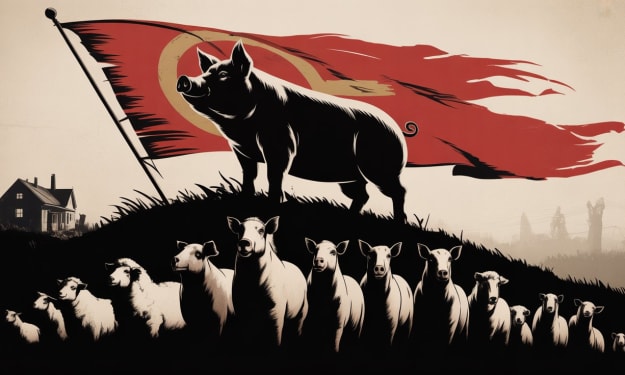
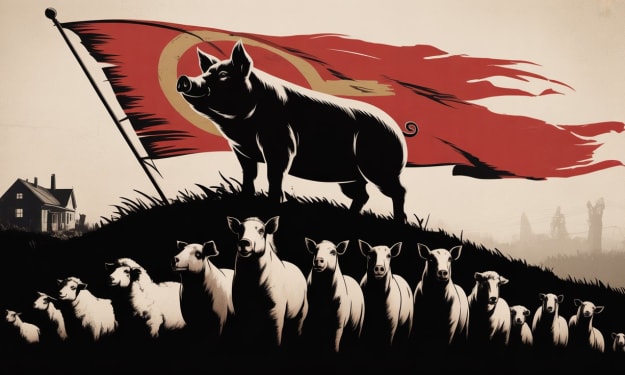
Years have passed since the animals first rose up and drove Mr. Jones from Manor Farm. The seasons change, and the once bright hope of revolution has faded into a grim reality. The animals of Animal Farm, now completely under the control of Napoleon, find themselves living under a government that is disturbingly similar to the one they sought to overthrow. Their dreams of equality and freedom have been replaced by oppression, manipulation, and betrayal.
By Echoes of Lifeabout a year ago in Fiction
Animal Farm (George Orwell) - Chapter- 9 (Novel)
As the harsh winter passes and spring arrives on Animal Farm, the animals' hardships intensify, yet their hope struggles to survive. The animals, especially the hardworking ones like Boxer and Clover, work tirelessly to rebuild the windmill, which was destroyed in the brutal Battle of the Windmill. Despite their exhaustion and lack of food, they press forward with faith in the promise of a better future.
By Echoes of Lifeabout a year ago in Fiction
Animal Farm (George Orwell) - Chapter- 6 (Novel)
As Animal Farm's second year of freedom begins, the animals face new hardships and challenges. The winter is harsh, and food supplies are dangerously low. Nevertheless, Napoleon insists that work on the windmill must continue without a break, promising to lighten their burden once it is completed. The animals work harder than ever, often toiling from dawn to dusk, but their rations are reduced and the cold bites harder. Boxer, the hardworking carthorse, adopts his new maxims with even greater dedication: "I will work harder," and "Napoleon is always right." His strength and passion become the backbone of the farm's efforts, but even Boxer begins to tire.
By Echoes of Lifeabout a year ago in Fiction
Animal Farm (George Orwell) - Chapter- 5 (Novel)
The arrival of winter brings new challenges and new conflicts to Animal Farm. Molly, the idle white mare, begins to act suspiciously. She is often late for work, complains about trivial matters, and is nervous when contacted. Eventually, Clover discovers that Molly has been secretly talking to one of Mr. Pillkington's men, letting him pick her nose and accept sugar and ribbons. When Clover confronts her, Molly denies everything, but after a while she disappears from the farm. Later, the pigeons see her pulling a cart for a man in a nearby town, wearing a shiny ribbon and enjoying sugar. Molly chooses a life of slavery over her hard-won freedom, and no one talks about it again.
By Echoes of Lifeabout a year ago in Fiction