Excerpt
Pomegranate Kisses
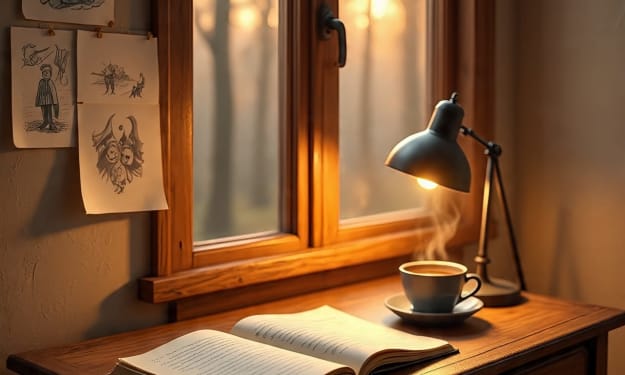
The first time Ezmael de Ayo tried to kiss her, Ysa Bernal knocked his tooth out. He’d done it to make her mad, and it worked. Every ounce of her fourteen year old fury flowed into her balled fist and showed the boy who fancied himself king of the streets that she’d had enough of his behaviour. Oh, she’d certainly gotten in trouble with her parents, but she got no more trouble from Ezmael. The only thing he dared do after was bare a grin at her that showed off the gap in his teeth where his canine should have been.
By M. A. Mehan about a year ago in Fiction
Atlantic
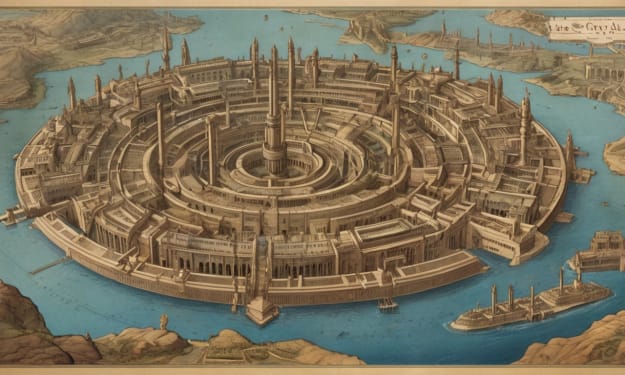
A civilization that lies deep in the seas... A legendary city that rules the world with its advanced technology, but was buried in the waters overnight by incurring the wrath of the gods: Atlantis! So is this story real, or is it a metaphor thousands of years old? Today, we are putting all the details on the table, from Plato's writings to modern conspiracy theories, even NASA's explanations!
By Remzi Kazdalabout a year ago in Fiction
Real Money Heist – Part 1: The Planner
I still remember the first time I met him. Not in some dark alley or abandoned warehouse like they show in movies. It was at Gloria Jean’s in DHA Phase 6, Lahore. A quiet Thursday. Rain on the windows. He was already there — sipping black coffee, no sugar. Looked like someone’s retired uncle, not the man who would plan the biggest heist Pakistan never found out about.
By Sofia Elira Solenneabout a year ago in Fiction
The Boy Who Collected Silence
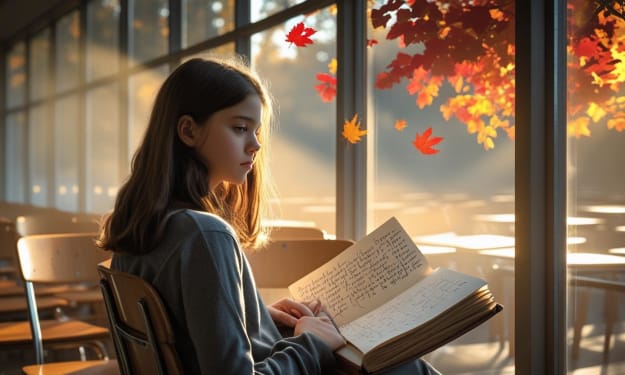
The Boy Who Collected Silence Elias Martin had not spoken a word in two years. In the seaside town of Windmere, where gulls cried louder than the church bells and the sea rolled in like a breathing beast, people whispered about him. Some said the silence made him strange. Others said it made him sacred. But no one really knew the truth.
By Ahmad shahabout a year ago in Fiction
She Was Never Real
I met her on a rainy Tuesday. The kind of rain that doesn't just fall—it lingers in the air, heavy and cold, like the universe itself is pressing down on you. I was sitting alone in a bookstore café, sipping cheap coffee and pretending to read a book I’d already abandoned. She sat across from me without asking, as if we’d done it a thousand times before.
By Leah Brookeabout a year ago in Fiction
The Last Letter in the Bottle
The glass bottle glinted under the fading sun, half-buried in the damp sand of Crescent Beach. Its green curves caught the light like a winking eye, a secret washed ashore by the restless tide. I’d come here every summer since I was six, chasing waves and dreams with my sister, Lila. She’d sprint ahead, her laughter brighter than the gulls’ cries, her bare feet kicking up foam as she dared me to find treasures in the sea’s offerings. Shells, driftwood, once even a shark’s tooth—she called them gifts from the ocean. But Lila was gone now, stolen by a riptide last July, the kind that snatches breath and futures in seconds. I was sixteen, and the beach felt like a graveyard, each wave a reminder of her absence.
By Muhammad Abuzar Badshah about a year ago in Fiction
When the Lights Went Out: A World on Pause
“When the Lights Went Out: A World on Pause” It started with silence. Not the peaceful kind that follows a snowfall or settles in after a lullaby. This silence was eerie—like the whole planet was holding its breath.
By Wings of Time about a year ago in Fiction
The Clockmaker's Garden
There was a village at the edge of the world where time stood still—not metaphorically, but truly. The sun always hovered in the same place. The shadows never grew longer. The leaves on the trees were forever green, and not a single wrinkle ever touched the faces of the people who lived there. Some called it a paradise. But not Mira. Mira had lived her entire life in this frozen place, where no one aged and nothing ever changed. The village was clean and calm, the people kind and quiet, but it all felt... trapped. Like living inside a snow globe where someone forgot to shake the magic. You see, the village had once been ruled by time like anywhere else. Until the day the Clockmaker came. No one remembered where he came from, or how he had arrived. But he built a tower at the village center—a tall, spiraling thing made of stone and bronze, topped with a golden clock that ticked louder than the wind. Then, one day, he stopped the clock. And when the clock stopped, so did time. People were amazed. No one got older. No one died. Food never spoiled. Days were always sunny. And for a while, it truly was a paradise. But after years, something changed—not outside, but inside the people. They stopped dreaming of new things. They stopped planting new trees. They stopped falling in love. They stopped asking, "What if?" Mira was different. Even as a child, she asked questions no one liked answering. “Why don’t we celebrate birthdays?” “What happens if the clock breaks?” “What’s beyond the hills?” The villagers would smile politely and say, “Don’t worry, dear. Everything is exactly as it should be.” But Mira wasn’t convinced. Especially not after the day she found the seed. It was buried beneath the soil behind her grandmother’s cottage, wrapped in cloth and tied with red thread. The cloth was old—older than the village’s stillness. On it, written in fading ink, were five words: "Plant me when time aches." Mira didn’t know what it meant, but she kept the seed. Years passed—or they should have—and Mira grew older in her heart, even if her body never changed. She read every book the village had. She asked questions the elders refused to answer. She even climbed the clocktower once, but found the door bolted shut with a glowing blue lock she couldn’t break. Until one night, something happened that had never happened before. She saw a petal fall. A single pink petal, drifting down from a tree in the village square. It didn’t make sense. Nothing changed here. Nothing moved unless someone moved it. But that petal had fallen on its own. As if the tree had breathed. That night, she went to her grandmother’s garden with a lantern and trembling hands. She dug a small hole in the earth and placed the old seed in it. As soon as the dirt touched the seed, the ground shivered—just a little. Not enough for anyone else to notice. But Mira did. She watered it with tears. Not because she was sad, but because she suddenly felt something for the first time in a long, long while: hope. The next morning, a small green shoot had emerged. And the day after that, a bud. And a few days later, a flower bloomed—vibrant and golden, with petals that shimmered like sunlight. People began to whisper. Nothing had grown in the village since time stopped. No new flower had bloomed in decades. But there it was, glowing softly like a candle in the fog. When the elders saw it, they panicked. They tore it from the ground. They warned Mira not to interfere again. They told her she was risking everything. That peace must be protected. That the Clockmaker would not approve. But Mira didn’t stop. She remembered what the cloth had said. “Plant me when time aches.” And time was aching. The people were stuck. Their laughter was thin. Their eyes were dull. Peace without change had become a prison with invisible walls. So Mira planted more seeds—some from old apples, some from forgotten flower pots, some even stolen from the locked archives beneath the school. And each time, something bloomed. Small things at first: daisies, dandelions, bluebells. Then vines. Then fruit. Then trees with golden bark that hummed when the wind passed through. And slowly… people changed. Some cried without knowing why. Some remembered dreams they’d buried. Some started writing poems again. Children drew things they’d never seen—skies full of color, mountains beyond the village, oceans they only imagined. And then the unthinkable happened. The clock in the tower ticked. Just once. But loud enough that everyone heard it. That night, Mira returned to the tower. The door that had once been sealed was cracked open. Inside, the gears groaned, stiff from stillness. Dust floated in the beams of moonlight. At the top of the stairs stood the Clockmaker. But he wasn’t what she expected. He looked like an old man made of wood and brass, with eyes like candle flames. His hands were tools. His spine was a coil. And on his chest was a key, long since wound down. “You have brought time back,” he said, his voice the sound of creaking floorboards. “Why did you stop it?” Mira asked. “Because the world was full of pain,” he replied. “And I thought stillness would bring peace. But peace without change… is silence.” She stepped forward. “And silence without growth... is death.” The Clockmaker nodded. “Then finish what you’ve started.” He handed her the key from his chest. She placed it in the clock. And turned it. The clock roared to life. The gears spun. The bell rang. Time surged through the village like a warm wind. The sun moved for the first time in a hundred years. Shadows danced. Trees swayed. Children grew. Laughter returned—not the polite kind, but the wild, uncontrollable kind. People wept and hugged and aged. And in the middle of the village stood Mira, now older, a little grayer, but glowing with life. She never became queen. She didn’t want to. Instead, she planted more gardens. One for every lost year. One for every forgotten dream. And people joined her. Because now… time moved. But so did hope. The End.
By Lucien Hollow about a year ago in Fiction