Classical
Left on Read
It was just a text. No arguments. No drama. Just a small, simple message that hung in digital space like a thread waiting to be pulled. > “Hey… are you okay? I’ve been thinking about you.” Delivered. Seen. No reply. That little gray “read” receipt at the bottom of the screen hit harder than any goodbye ever could. I stared at it for hours, watching it like it might suddenly change — like maybe the universe would glitch, and a reply would appear saying: > “Sorry, I’ve just been busy. I miss you too.” But it didn’t. --- His Name Was Ayan We weren’t in love. Not officially. But we had something — something unspoken but real. A connection made of 2 a.m. calls, half-laughed stories, playlists sent back and forth, and that strange comfort that comes from knowing someone gets you without needing to explain everything. We met online. We met often. But we never put a label on it. Maybe we were scared. Maybe we were unsure. Or maybe… deep down, I always knew he wouldn’t stay. --- The Conversation That Changed Everything The night before it happened, we talked for hours — the way we always did. I told him about my day. He told me about a song that reminded him of me. We laughed. It felt light. Easy. But then I said something vulnerable — something raw. I told him: > “Sometimes I wonder if you’d miss me if I disappeared.” There was a pause. Not long, but long enough to feel like a storm. He replied: > “Don’t say stuff like that.” And then he changed the subject. I thought maybe I had ruined something. Maybe I got too close to the truth. Maybe I scared him off by needing more than late-night calls and unspoken feelings. --- The Message That Wasn’t Answered The next day, I sent a follow-up. > “Hey… are you okay? I’ve been thinking about you.” It was read within minutes. But the reply never came. And that’s how it ended — not with a fight, not with closure, but with being left on read. --- The Pain of Digital Rejection People say ghosting is cruel. But being left on read… that’s a whole different kind of sting. Because it confirms they saw your words. They just chose not to respond. You start questioning yourself: Did I say too much? Was I too emotional? Was it all one-sided? But then you remember the way he used to text first. The way he said “goodnight” every time, even when he was tired. The way he listened — really listened — when you talked about your fears. And you realize… it wasn’t nothing. It just wasn’t enough. --- Learning to Let Go Without Answers I didn’t text again. Not because I stopped caring — but because I started respecting myself. There’s something so heavy about chasing someone who’s already halfway out the door, especially when they won’t even tell you why. Instead, I turned the hurt into reflection. I wrote about it. I went for walks. I listened to the songs he sent me — once, then never again. I cried. Not for him, but for the part of me that still hoped he’d explain. --- It Wasn’t About the Text The pain of being left on read isn’t about the words that never came. It’s about the space they leave behind. The quiet. The not knowing. It’s about how quickly someone can go from “I’m here for you” to complete silence. From “I’ll call you in five” to never hearing from them again. But it also taught me this: > Some people enter your life to show you what you truly need — and what you can no longer accept. --- If You’ve Been Left on Read… I know it hurts. I know that silence feels like a scream. I know you keep rereading your message, wondering what you did wrong. But maybe it’s not about what you did. Maybe it’s about who they are — or what they’re not ready to be. And maybe their silence is a gift in disguise. A clear answer to a question you didn’t want to ask: > “Do I matter enough for you to stay?” Their silence says it all. --- Final Thought It’s okay to grieve people who never gave you closure. It’s okay to feel hurt over what “almost was.” But don’t let someone’s silence drown your worth. Because one day, someone will see your message and not only reply — They’ll show up, speak up, and stay. Until then, let “left on read” be your reminder: > You deserve more than maybe.
By Hazrat Bilalabout a year ago in Fiction
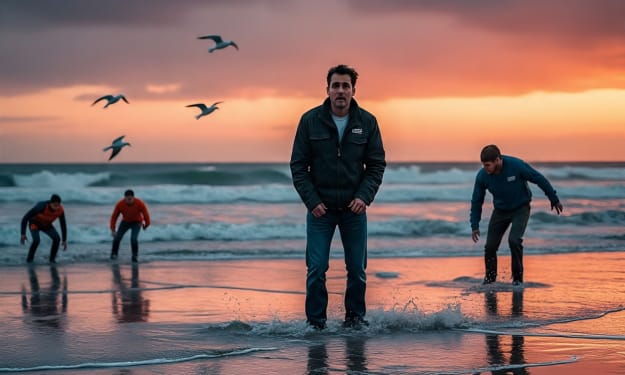
"Crimson Tide: The Day the Ocean Took Kyle"
beef jerky, maple bourbon flavored, and offered it to his son. Kyle snuffed the gesture and moaned in annoyance. He hated jerky, all flavors, and his father knew that. He had no choice. He was going to have to wait to eat. “Can I at least go in the water?” Kyle said. “As long as you stay in sight. With waves like those, the current will be strong.” “I’ll stay close.” Chase noticed his son brush off the warning. “I mean it Kyle. No wandering. And don’t go out too far.” As he watched the sunburnt spine of his son jog towards the water, a familiar voice rang in his ear. “Great spot babe,” Erica said. Surprised to see his wife so soon, Chase stumbled up out of his chair to greet her. “Kyle picked it out. He had to fight off a couple of angry seagulls to get it though. Tough kid.” Looking behind his wife, expecting to see his daughter, he saw other children that did not belong to him. As he was about to ask his wife where Zoey was, he heard a young girl scream from the water’s edge. Instinctively knowing the tone of his only daughter’s voice, Chase frantically scanned the area until he located her position and what she, and now others, were all horrifically screaming at. Thrashing beyond the cresting waves, chaos ensued. The incoming currents stained the golden sand a deep burgundy, and lifeguard whistles echoed across the entire beach. His eyes studied the faces of all of the retreating swimmers, yet none of them were of Kyle. Fighting through the frenzy, Erica ran to retrieve Zoey. Frozen in fear, an elderly man, with his hand pointing towards the ocean, spoke gently to Chase. “I think that’s your boybeef jerky, maple bourbon flavored, and offered it to his son. Kyle snuffed the gesture and moaned in annoyance. He hated jerky, all flavors, and his father knew that. He had no choice. He was going to have to wait to eat.
By Saeed Ullah about a year ago in Fiction
Beneath the Still Sky. AI-Generated.
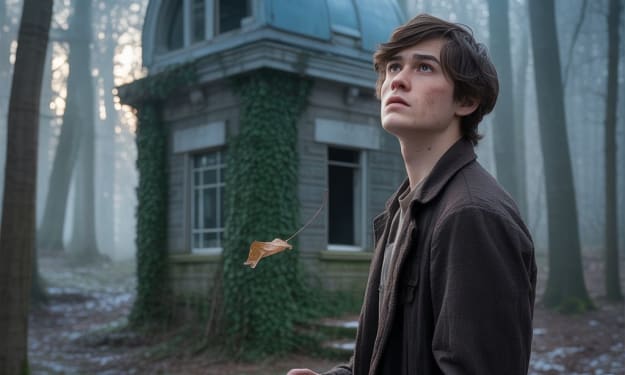
The sky above Elowen was beautiful—perfect, in fact. A sheet of endless blue, motionless for as long as anyone could remember. The villagers called it The Stillness, a gift from the gods, or perhaps the price of peace. But for Aris Vale, it felt like a lie. He stared up at it now, lying on the grass behind the school’s weather-beaten fence, his telescope beside him, untouched. “Still not blinking,” he muttered. “Still not moving. Just... still.”
By Adil Nawazabout a year ago in Fiction
The Girl at Platform Nine
The Girl at Platform Nine Written by Javeed 🚉 Prologue: A Glimpse in the Fog Platform Nine at the old city station was quieter than usual. The mist curled through the iron beams and drifted low around the benches, wrapping everything in a sleepy gray veil. Most people passed by without noticing the girl sitting alone at the far end. But I did.
By Moonlit Lettersabout a year ago in Fiction
He Died 8 Years Ago. Then He Left a Voicemail
He Died 8 Years Ago. Then He Left a Voicemail Written by Iqbal Raza It started with a notification. Lena was in the middle of folding laundry when her phone buzzed. A voicemail. That wasn’t unusual — except this one was from a number she hadn’t seen in years. A number she had deleted, blocked, and buried with the man who once owned it. Her hands froze mid-fold as the screen displayed the words: "1 New Voicemail — From: Dad." Lena felt the air shift. She stared at the screen as if it might disappear. Her father, Marcus Evans, had died eight years ago. A heart attack in the middle of the night. He was found on the floor of his workshop the next morning, radio still humming jazz softly in the background. So how was he leaving voicemails now? She tapped play. There was static, then a familiar voice—cracked, weary, but unmistakably his. > “Lena... if you’re hearing this, I’m gone. Not just from your phone, but from this world. I don’t know when you’ll get this. Maybe a year, maybe ten. But you need to know something... I never stopped trying to fix things between us.” Her heart stopped. Then beat again, hard. The Past She’d Tried to Forget Marcus wasn’t a bad father, not in the usual way. He didn’t hit, didn’t drink, didn’t leave. But he withheld. His love was mechanical—practical, predictable, cold. He built furniture better than he built relationships. When her mother died, Lena was 13. That’s when the silence between them grew into a canyon. She left home at 18 and never went back. They spoke rarely. Holidays were exchanged like formalities. Their last phone call, two weeks before his death, had ended in an argument about nothing — and everything. “You always act like I was never there for you,” he had said. “And you were never really there,” she had replied. Neither said goodbye. Ghosts in the Machine Lena played the voicemail again. The static seemed longer this time, like something was shifting. Could voicemails be corrupted over time? Could a phone company hold onto a message for years? She couldn’t stop thinking about it. She searched through old backups, even reactivated her cloud voicemail. Nothing. This was the only message. Then it happened again. Three days later. A second message. > “I’m in the shed. You remember the old one, right? Behind the big oak tree. There’s something I left there for you. Maybe it’ll explain everything.” She hadn’t been to her childhood home in nearly a decade. After Marcus passed, the property was sold off to a developer. She had no legal right to be there. But the next morning, Lena found herself driving down the highway toward her old town, toward the house she swore never to see again. Return to the Shed It was still there — the oak tree, the shed, though the house behind it had been remodeled beyond recognition. The shed, however, remained untouched, weathered by time and neglect. A relic that no one cared to demolish. Lena waited until dusk before slipping into the backyard. Her heart raced with every step. Inside the shed, the smell of oil and sawdust hit her like a memory. Tools still hung on rusting hooks. In the far corner, beneath a sheet, she found it. An old wooden box. Her name carved into the lid. Inside: letters. Dozens of them. Letters Never Sent Each envelope was dated — birthdays, holidays, graduation, even her wedding day. Letters he never mailed. Words he never said. Apologies, memories, regrets. Each one written in his blocky handwriting. > “I saw the way you looked at me at your graduation. Like I didn’t belong. But I wanted to say something. I just didn’t know how. So I wrote this instead.” > “You were right. I didn’t know how to grieve your mother, so I pretended I didn’t have to. That was wrong.” > “I was proud of you every single day. I just... didn’t say it enough.” Lena cried until her body ached. The Final Message Back home, she received one final voicemail. This one was different. > “I hope you found it, Lena. If you’re listening, it means you cared enough to go back. Thank you. I didn’t deserve your forgiveness, but I wanted you to have mine. We both held onto our anger too long. But love doesn’t vanish. It just waits... sometimes in a shed behind an old oak tree.” Then a pause. Then silence. And for the first time in years, Lena smiled. Afterward Lena took the letters and had them bound into a small book. She called it "Words Never Spoken." At her book launch six months later, she told a small audience, “This isn’t just my story. It’s a story for anyone who didn’t get to say goodbye. For anyone who needed a voicemail from the past to make peace with the future.” People lined up afterward to hug her, to share their own versions of the story. Because we all have ghosts. And sometimes, they just want to be heard.
By Moonlit Lettersabout a year ago in Fiction
The House Where Time Sleeps. AI-Generated.
At the edge of Thorn hollow village, where the trees grew thick with silver moss and the wind never howled, stood an ancient manor, half-swallowed by ivy and shadow. The villagers called it cursed. They said the clocks inside had never moved—not for over a hundred years. They whispered that if you listened too closely near its doorstep, you'd hear the ticking of memories instead of time.
By Adil Nawazabout a year ago in Fiction
The Girl in 2D. AI-Generated.
I. Arrival on Floor 2D That Wednesday afternoon should’ve been routine. I was new to the office building—just another intern with a passcard and too much anxiety. The elevator was slow, creaking as it rose, and when it stopped between the second and third floor, the doors opened to something unexpected.
By Fareed khanabout a year ago in Fiction
''In My Mind, A New World''
In my mind, a new world blooms—not with noise and chaos, but with a quiet kind of magic. The kind that lives between thoughts, beneath dreams, and behind every closed eye. This world doesn’t follow the rules of the one we wake to each morning. Gravity isn’t a law, time isn’t a tyrant, and no one has to hide the strange parts of themselves. In my world, strangeness is celebrated. It's the currency of connection. There are cities carved from crystal and rainclouds that float like zeppelins. The skies change color with emotion. If you're sad, the sun softens its light and bathes the world in lavender. If you're angry, the clouds hum with storm-energy—not destructive, but cleansing, like a thunderstorm for the soul. The people here? They're not people, not exactly. Some have wings like ravens, some wear vines instead of clothes. Others are made of flame but never burn. They speak in poems, in pulses of color, or in music only your heart understands. No one lies here. They don’t need to. Vulnerability is strength, not weakness. You don’t armor yourself with sarcasm or politeness. You say what you feel, and the world listens gently. Pain is met with presence. Joy is shared like bread. There’s no money in this world—not in the way we know it. You trade memories, laughter, stories. If someone paints a mural in the town center, you thank them with a song or a secret. Everyone gives. Everyone receives. Balance is natural here, not something we legislate. Animals speak—not with words, but with knowing. A fox might guide you through your fears. A whale might sing you to sleep. Even the trees have voices, whispering ancient lullabies to anyone who dares to sit still long enough to listen. Technology exists here, but not to dominate. It harmonizes. There are floating lanterns that follow you through dark woods. There are mirrors that show you your best self when you’ve forgotten who you are. There are staircases that only appear when you’re truly ready to rise. You don’t age the same way here. Your body reflects your spirit, not your years. If your heart is young, you dance like someone just gave you legs. If you’ve lived deeply, your eyes glow with galaxies. In my mind, the concept of “other” doesn’t exist. Love flows freely—not labeled or boxed. You can love many, or one, or none at all, and still be whole. Identity is fluid. You can change your name with the seasons. You can be moonlit today and wildfire tomorrow. No one asks for explanations. They just witness you. And when grief arrives, as it always must, it is not shamed or hidden. There are temples where you can sit with it. Waters that carry it gently away when you're ready. You’re never told to "move on." You’re asked only to move with it—until it becomes part of your song. This world is not perfect. There is still struggle. But here, struggle doesn’t mean suffering alone. Community is not something you build—it’s something you remember. In my mind, a new world grows like moss on ancient stone. Quiet. Persistent. Alive. And maybe, just maybe, this world doesn’t have to stay only in my mind. Maybe it can leak into the spaces between this world—the real one. Maybe we start with a conversation that feels more like a connection. A look that lingers a little longer. A moment where someone says, “I see you,” and means it. Maybe we build it not with bulldozers and budgets, but with bravery. With imagination. With the audacity to believe that kindness can be more than a gesture—it can be a revolution. Maybe your world looks different than mine. That’s okay. There’s room for all of them. That’s the beauty of a mind that dreams new realities. Every vision is a seed. And every seed is a possible beginning. So tell me: In your mind… What does your new world look like?
By Israr khanabout a year ago in Fiction