Classical
AI Retold: The Three Little Pigs. AI-Generated.
[[ This is the second of an exploratory series where I prompt modern AI to retell classic fairy tales or fables, mainly out of curiosity to see what the AI extracts from the process and results in. In this case, it was Copilot with the Smart feature, probably running some iteration of GPT-5.
By Taylor Inmanabout a year ago in Fiction
The Whispering Alley
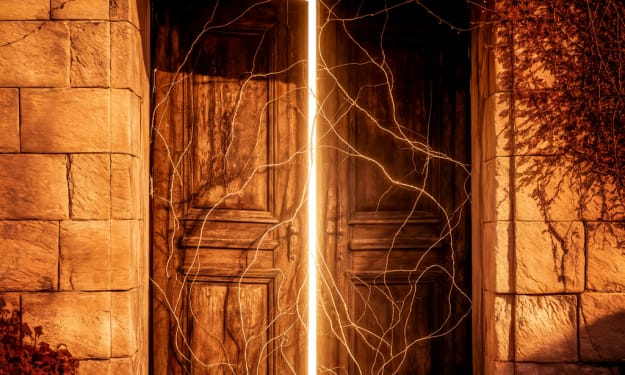
M Mehran In the heart of Maplewood, a quiet town with cobblestone streets and flickering lamplights, there was an alley that everyone avoided. Locals called it “Whispering Alley,” not because of the wind or the rustling leaves, but because of the strange murmurs people claimed to hear when walking through it at night. Sophie Reynolds had grown up in Maplewood, and she had always been curious. While other children ran past the alley on their way home, she paused at its entrance, staring at the shadows dancing along the walls. Her grandmother had warned her countless times: “Some doors are meant to stay closed.” But Sophie had a way of following curiosity wherever it led. It was a rainy evening when she finally decided to step into the alley. The rain made the cobblestones slippery, and the air smelled of damp earth and old stone. She held her lantern high, illuminating the narrow path. At first, there was silence. Then, faintly, she heard it: a soft, almost musical whisper. “Hello?” Sophie called, her voice trembling. No answer. She continued forward. The whispers grew clearer, but still incomprehensible, as if speaking in a language she almost recognized but couldn’t understand. Halfway down the alley, Sophie noticed something strange. A small door, no taller than four feet, carved into the brick wall. It hadn’t been there before—or at least she didn’t remember it. The door was painted deep green, and a tiny brass knocker shaped like a crescent moon gleamed in the lantern light. Her heart pounded, but curiosity won over fear. Sophie lifted the knocker and tapped. The whispering stopped. For a moment, there was nothing but silence, broken only by the patter of rain. Then the door creaked open on its own. Inside was not darkness, as she expected, but a small room glowing with golden light. Shelves lined the walls, filled with books of every size and color. In the center, a table bore an assortment of quills, parchment, and inkpots. And standing behind it was a figure cloaked in a hooded robe, face hidden. “Welcome, Sophie,” the figure said. The voice was soft but carried a strange authority. “We’ve been waiting for you.” “I… who are you?” Sophie asked, stepping inside. “We are the Keepers of Stories,” the figure replied. “This alley is a gateway to the stories that never reach the world. Every whisper you hear is a tale seeking a listener, a story longing to be told.” Sophie glanced around, mesmerized by the stacks of books, some floating gently in the air, pages fluttering as if breathing. “Why me?” she whispered. “Because you listen,” the figure answered. “You hear what others ignore. You see what others overlook. The world needs storytellers like you, to carry these tales beyond the alley.” For what felt like hours, Sophie explored the room. She discovered stories of forgotten heroes, cities that floated in the clouds, creatures made entirely of light, and kingdoms hidden beneath oceans. Some stories were joyful, others sorrowful. Each had a unique rhythm, a heartbeat she could almost feel. The Keepers handed her a small, leather-bound notebook. “Take this,” they said. “Write what you see, what you hear. Let the stories live in the world.” Sophie nodded, feeling the weight of the responsibility. She understood that stories were not just entertainment—they were vessels of memory, emotion, and wisdom. Each tale she wrote could inspire, teach, or comfort someone she would never meet. When she stepped out of Whispering Alley, the rain had stopped, and the cobblestones glistened under the lamplights. The alley seemed ordinary again, silent and unassuming, as if nothing had happened. But Sophie knew better. Over the following months, she poured herself into writing. She shared the stories online, in newspapers, and at local readings. People were captivated by the vivid worlds, the characters who seemed to breathe off the page. Letters poured in from readers, thanking her for tales that moved them, gave them hope, or made them smile. Yet, the alley remained a secret between her and the Keepers. No one else could see the door, no matter how hard they tried. Sophie understood that some magic was meant to be discovered one person at a time. Years later, as she sat in her study surrounded by published books, Sophie realized that Whispering Alley had given her more than stories—it had given her purpose. She had become a guardian of voices, a bridge between the hidden tales of the world and the hearts of readers. And sometimes, when the night was quiet and the wind carried a faint melody, Sophie thought she could hear the alley whispering again. Not in fear, but in welcome, as if inviting her to continue the endless journey of listening, writing, and sharing the magic of stories. Because in Maplewood, and perhaps in the world beyond, stories never truly vanish—they wait. And for those brave enough to follow the whispers, a universe of wonder unfolds.
By Muhammad Mehranabout a year ago in Fiction
The Stranger on Willow Street
M Mehran Willow Street had always been the quietest corner of Brookfield. Lined with old oak trees and modest houses, it was the kind of street where neighbors waved at each other from their porches and children played hopscotch until the streetlights came on. Nothing unusual ever happened there—until the stranger arrived. It was a rainy Tuesday evening when the first sightings began. A tall man in a dark coat, carrying nothing but a small leather suitcase, walked slowly down Willow Street. He didn’t knock on doors or greet anyone. He simply stood for a few moments at the corner, looking at the houses as if searching for something, then vanished into the mist. By the next morning, the neighborhood was buzzing. Mrs. Henderson swore she saw him standing outside her garden gate at midnight. Mr. Taylor insisted the stranger paused at his mailbox, as if reading his name. No one knew where he came from, and no one had seen him leave. Children began daring each other to stay out after dark, hoping for a glimpse. Some said the man’s shoes made no sound on the wet pavement. Others claimed his suitcase glowed faintly, though no one could agree on the color. Detective Clara Reed, who lived nearby, heard the rumors during her morning jog. Though off duty, her instincts stirred. Brookfield wasn’t the kind of place where strangers wandered without reason. That evening, she parked near Willow Street and waited. At exactly 10 p.m., the man appeared. He was just as described—tall, broad-shouldered, face shadowed by his hat. Clara approached cautiously. “Evening,” she called out. “Can I help you?” The man turned. His eyes were gray, calm but unreadable. “I’m looking for someone,” he said softly. His voice carried an accent Clara couldn’t place. “Who?” she asked. He hesitated, then answered, “A boy. He would be grown now. His name is Samuel.” Clara frowned. There was no Samuel on Willow Street, at least none she knew of. Before she could ask more, the man tipped his hat politely, turned the corner, and was gone. The following day, Clara checked old town records. To her surprise, she found a Samuel Whitmore had once lived on Willow Street—nearly thirty years ago. The boy had vanished one summer evening while walking home from school. Despite searches and newspaper appeals, he was never found. The case had faded into cold files and fading memory. That night, Clara returned to Willow Street. The stranger was there again, standing beneath the lamppost. This time, she confronted him directly. “You knew Samuel Whitmore,” she said firmly. The man’s lips curved into a faint smile. “Yes. He was my son.” Clara felt a chill. “Your son disappeared decades ago. Why are you here now?” He opened the suitcase, revealing not clothes or belongings, but stacks of old newspaper clippings, faded photographs, and letters. “I never stopped searching,” he whispered. “Every town, every street that felt familiar. Something brought me here. A pull I cannot explain.” Clara studied him, torn between skepticism and sympathy. His story could be fantasy, grief, or something stranger. But there was no mistaking the sorrow in his eyes. For weeks, the man continued to appear on Willow Street. Some neighbors avoided him, others brought him food or coffee. Though no Samuel was found, the street began to change. Families grew kinder, checking in on each other more often. Children listened in awe to the tale of the missing boy. Then, one morning, the man was gone. His suitcase, however, remained at the base of the oak tree near the Whitmore house. Inside was only a single note: “The search is over. Thank you.” No one ever saw him again. Some claimed he finally found peace. Others whispered he had been a ghost all along, forever searching until the town itself gave him rest. As for Detective Clara Reed, she kept one of the photographs from the suitcase—a smiling boy with bright eyes, frozen in time. She pinned it above her desk as a reminder: even the quietest streets hold stories waiting to be uncovered.
By Muhammad Mehranabout a year ago in Fiction
Shadows on the Edge of Tomorrow
The train station was almost empty, except for a few scattered travelers dragging their suitcases across the cold concrete floor. The air smelled faintly of rain, and the giant clock above the platform ticked louder than usual, marking each second like a reminder that time was both a gift and a thief.
By Nadeem Shah about a year ago in Fiction
Behind the Locked Door — A Story of Secrets and Second Chances
The house had been empty for nearly three years when Ayaan returned. It stood at the edge of the small town like a shadow of its former self—paint peeling, shutters hanging loose, garden overgrown. To most people, it was just another abandoned property. But to Ayaan, it was home. Or at least, it had been once.
By Nadeem Shah about a year ago in Fiction
“What the Water Kept"
Most folks in town said Lila Gray stopped thinking long before she stopped breathing. It was as if her mind just set down its load one day and forgot to pick it up again. She would lie in her narrow bed for hours, rolling a little tin thimble between her fingers until even that became too heavy to hold. Her house smelled of cedar and dust, and it sagged with age, like it wanted to lie down and rest beside her. But what unsettled me most was the shelf in her parlor. On it sat a cracked piece of iron that looked like the mouth of an old gramophone. A bent wire hung from it like a limp tail. Lila called it her “speaker for the dead.” Nobody else knew what she meant. Her son, David, once said, “She kept a whole life locked away from me.” My aunt thought that was bitterness talking, but I don’t think so. I think Lila never let him give her kindness. And that’s its own kind of theft—because kindness with nowhere to land is like a bird with no tree. It just circles, lost, until it falls. When she passed, David swore he’d toss every last relic into the garbage. “I made it this far without ‘em,” he said. But I saw the crease between his eyes, the way his hands lingered on every object. He couldn’t bring himself to let go, not yet. Among her belongings was a will she had scrawled on lined notebook paper. Most of it was ordinary—leave the house to David, divide the quilts among nieces, let the church have her rocking chair. But one line stuck like a burr: “To find what matters most, my son must put his ear to the ground.” Aunt May snorted when she read it. “She must’ve been heat-struck when she wrote this foolishness.” But David went quiet. --- Now, I need you to understand something about old Southern women. They can turn anything into treasure. A cracked jar is the one she used to pickle okra when her brother came home from the war. A loose button is from the dress she wore to her first revival. A pebble from the yard becomes proof that the land itself once loved her. Every scrap is a story, and every story is holy. Lila was no different. She feared deep water more than anything, yet she hoarded relics like a crow—bits of broken glass, yellowed postcards, scraps of cloth. She built her house into a shrine for strangers long gone. You didn’t visit Lila’s parlor; you stepped into a mausoleum made of forgotten lives. And in the end, she made herself a prisoner of it. --- A year after her death, I dreamed of her. Dreams fade, but this one stayed sharp as a nail. She was in her bed, the room lit with soft afternoon light, a cup of chicory coffee steaming on the nightstand. She looked straight at me, her eyes thin as river stones, and whispered: “How will David know that the water I feared has come to drink from me?” Then I woke, and the world felt unsteady for days. I never told David, but soon after, he began walking the property, crouching low and pressing his ear to the earth like he was listening for a secret. Folks called him strange, but I knew he was following her riddle. --- That so-called “speaker for the dead” wasn’t from a gramophone, not really. Nobody knew exactly where it came from. Some said it was blown loose when a storm knocked down a warehouse in the next county. Others swore it was junk dredged from the river after a flood. Whatever it was, Lila treated it like a relic. If you pressed it to your ear, you didn’t hear silence. You heard a rush, like water tumbling over rocks, with voices hidden beneath. Not words, but laments, praises, sighs. David said once, almost to himself, “It ain’t wrong to want to hold on.” And I understood. The river doesn’t forget what we pour into it. Fear, sorrow, even love. It rolls them smooth like stones but never lets them go. --- Aunt May mocked Lila’s fear of water. “Imagine being scared of the only thing that keeps you alive,” she’d laugh. “A river’s the best storyteller we’ve got. Always moving, always remembering. Why wouldn’t you listen?” But I think that was Lila’s curse—she did listen. Too closely. She heard what most of us train ourselves to ignore. She heard the voices of the drowned, the whispers of the past, the cries of all who’d poured themselves into the current. She built her archive from those sounds, and it was heavier than any body could bear. --- People still tell the tale of that iron mouthpiece. The demolition crew that tore down an old hotel swore it had been ripped loose when the wrecking ball struck. They said it rolled into the creek and was carried downstream for years before Lila plucked it from the shallows. She polished it, placed it on her shelf, and claimed it had been meant for her all along. Some say it was nonsense. But others whisper that if you press your ear to it, you can hear the creek calling, waiting for someone to answer. The night Lila died, she hung up before she realized it was her own call. --- Epilogue Now when I walk by that creek, I stop. The water moves fast, carrying minnows, silt, and stories too old for us to name. Sometimes I wonder if David still presses his ear to the dirt, waiting for what his mother promised him. And sometimes, when the wind dies down and the water hushes, I think I hear something too. A sigh, a whisper, a voice asking to be remembered. If I’ve learned anything, it’s this: nothing we fear ever really leaves us. The water keeps it. And one day, sooner or later, it comes back to speak.
By Ihtisham Ulhaqabout a year ago in Fiction
The Memory Thief
TITLE: THE MEMORY THIEF A HEIST OF THE HEART WRITTEN BY: LEGACY WORDS Elias worked as a cleaner at a special hospital called the Mnemosyne Clinic. Here, people could have their sad memories erased. The machine that did this hummed constantly—a sound Elias knew well. It was the sound of forgetting.
By LegacyWordsabout a year ago in Fiction